
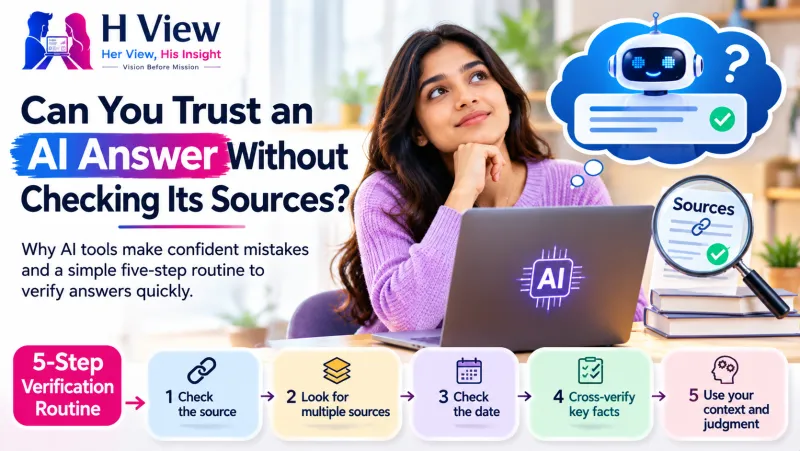
Can You Trust an AI Answer Without Checking Its Sources?
AI answers sound confident even when they are wrong. A major study found significant problems in 45% of AI answers about news. Here is a quick routine to check before you trust.
No, you should not fully trust an AI answer without checking its sources when the answer matters. AI tools are useful for explanations and first drafts, but they can state wrong facts confidently and attach misleading citations. A large study coordinated by the EBU and BBC found significant issues in 45% of AI assistants' answers about news.
It is so easy to believe a well-written answer. The grammar is perfect, the tone is calm, and there is often a neat list with a source link at the bottom. Our brains read that polish as reliability. But polish and accuracy are not the same thing, and with AI they can come apart in ways that are hard to notice unless you look.
What the EBU and BBC study found
Source: EBU and BBC study, October 2025, as reported by Implicator and TBS News
Why do AI tools get things wrong?
- They predict likely text. Language models generate the most plausible words, which is usually right but not always. When they do not know, they can still produce a fluent answer.
- Information goes out of date. Prices, rules, deadlines and news change. An AI answer may mix old and new facts.
- Sources get mixed up. AI search tools sometimes cite a page that does not say what the answer claims, or cite the wrong outlet.
- Questions can be misunderstood. A small change in wording can lead to a very different answer.
The study tested ChatGPT, Copilot, Gemini and Perplexity, and found problems across all of them, though at different rates. No assistant was error-free.
When is it fine to trust an AI answer?
How much checking does your question need?
Low stakes: quick check or none
- Recipe ideas, gift ideas
- Explaining a concept you will study further
- Drafting an email you will edit
High stakes: always verify
- Health, medicine and dosage
- Money, tax and investments
- Legal rules, deadlines and government schemes
- News and anything you will share publicly
 Also readAI Skills Are Becoming a Hiring Requirement: Is Knowing ChatGPT Enough?→
How can you check an AI answer quickly?
A five-step verification routine
- If there is no source, ask the AI for one, then open it yourself
- Prefer official sites: government portals, regulators, company pages
- Search the key fact separately in a normal search engine
- Be extra careful with quotes, statistics and dates
- Do not forward AI answers about news without checking
We looked at the bigger picture of trust in two earlier pieces: are we starting to trust AI more than people? and is AI search showing us only one version of the truth?
Her View
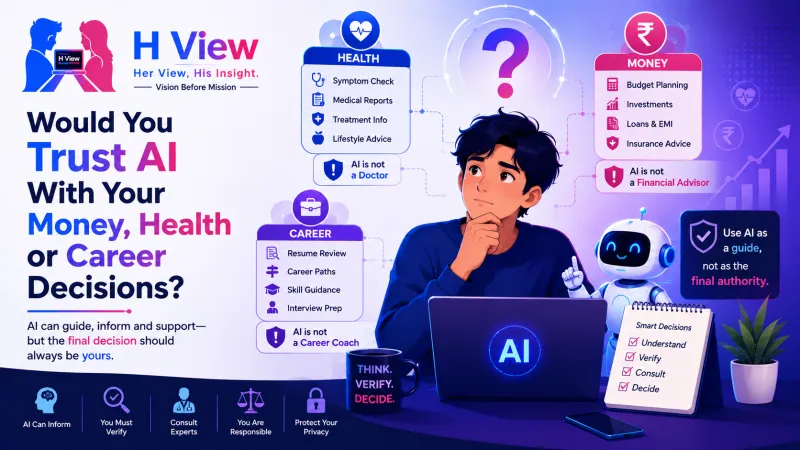
Parents and elders are increasingly asking AI about health symptoms, pensions and government schemes, and then sharing the answers in family groups. A gentle habit helps: whenever an AI answer could affect someone's health or money, open the source together before acting. It takes a minute and can prevent real harm.
 Also readAre We Starting to Trust AI More Than People?→
His Insight
Treat AI like a very fast, very confident research assistant who has never been wrong in their own eyes. You would not submit their work without checking the key facts. The efficient approach is to use AI for the first 80% and spend your own time verifying the 20% that matters most: numbers, names, dates and claims you will act on.
H View Verdict
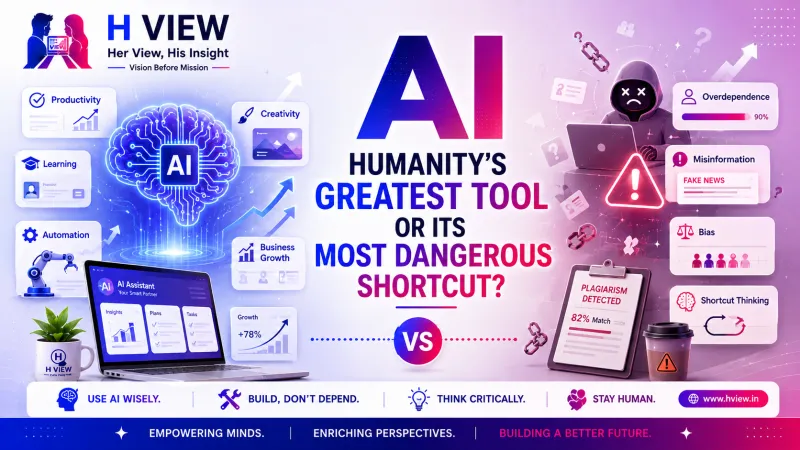
AI answers are a great starting point and a risky finishing point. Use them freely for learning and drafting, but check sources, dates and numbers whenever the answer affects your health, money, legal position or what you share with others. Trust, but verify.
Frequently Asked Questions
How accurate are AI assistants?
Accuracy varies by tool and topic. An EBU and BBC study published in October 2025 found that 45% of AI assistants' answers about news had at least one significant issue, including sourcing and factual errors.
Why do AI tools give wrong answers?
They generate likely-sounding text, can rely on outdated information, may misread the question and sometimes link to sources that do not support the answer.
How can I verify an AI answer?
Open the cited source and find the exact claim, check the date, confirm with a second reputable source, recalculate important numbers and consult an expert for major decisions.
Is it safe to use AI for health or money questions?
It can help you understand terms and prepare questions, but you should confirm anything important with a doctor, chartered accountant or other qualified professional.
H View stories follow our editorial policy. Spotted an error? Tell us and we will correct it.
Rate this article
One tap is enough. No comment needed.
Was this article helpful?
Your answer goes straight to our editors.



Comments0
No comments yet. Start the conversation.