

Best Digital Marketing Tools in 2026: What Marketers Actually Need and What They Can Skip
Open LinkedIn for a few minutes and you will probably come across a colourful graphic…
 Harika October 6, 2026
  By HarikaUpdated September 20, 202611 min read27 views
A convincing video no longer needs a camera, a studio or even the person who appears in it. With a few photographs, a sample of someone’s voice and increasingly capable generative AI tools, it is possible to create a clip that looks familiar enough to be believed before anyone stops to question whether it is real.
That has changed the problem of misinformation on social media. A badly edited photograph can often be dismissed in seconds. A realistic video of a recognised person apparently making a statement, endorsing an investment scheme or appearing in an event that never happened is much harder to process, particularly when it arrives through Instagram, Facebook or WhatsApp surrounded by likes, comments and reposts that make it look socially validated.
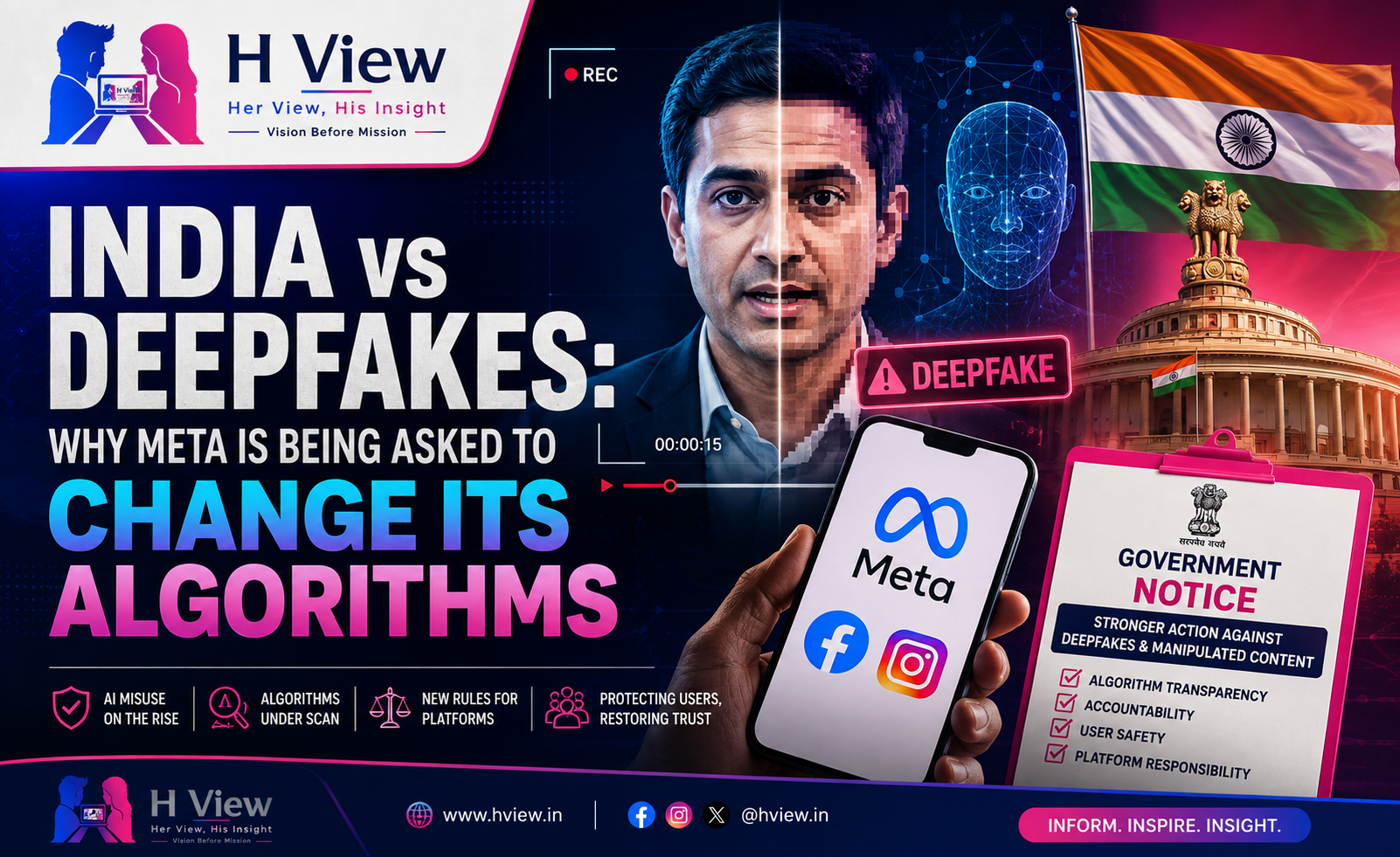
India is now putting more pressure on large platforms to deal with that problem before manipulated content spreads widely. Recent reports say the Ministry of Electronics and Information Technology has asked Meta to provide a roadmap for changes to its algorithms and content-moderation systems aimed at reducing the circulation of deepfakes, propaganda and other manipulated material. The government is also reportedly examining the role recommendation algorithms play when harmful content is amplified rather than simply hosted.
For ordinary users, this discussion is much bigger than a disagreement between a government and a technology company. It asks a question that affects almost everyone using social media today: when an algorithm chooses what millions of people see, how much responsibility should the platform carry when something convincingly false becomes viral?
For many people, the word “deepfake” still brings to mind humorous celebrity clips, movie-style face swaps or AI-generated videos shared mainly for entertainment. That was easier to dismiss when the technology produced unnatural facial movements, strange hands or voices that clearly sounded artificial.
The gap between real and synthetic content has narrowed quickly. Modern systems can generate or alter faces, voices and entire scenes with very little technical skill required from the person using them. Meta itself continues expanding generative AI capabilities across its products. In July 2026, the company announced Muse Image, which can create and edit sophisticated images through Meta AI and is being integrated into experiences across Instagram and WhatsApp.
There is nothing inherently wrong with such technology. Someone can restore an old family photograph, design a poster, test an outfit idea or create artwork without needing professional editing skills. The difficulty begins when synthetic material is presented as evidence of something that actually happened.
Imagine seeing a Reel where a well-known business leader appears to recommend a new investment platform. The person looks correct, the lip movement matches the voice, and comments beneath the video say things such as “I already invested” and “Thanks for sharing this opportunity.” A viewer may never realise that the face, voice, comments and financial offer are all parts of the same fraud.
That is no longer simply misinformation. It can become financial crime built around manufactured trust.
The latest pressure on Meta is not happening in isolation. India has already modified its intermediary rules to deal more directly with AI-generated and synthetically altered information.
Updated Information Technology Rules published by MeitY in February 2026 introduced specific obligations concerning “synthetically generated information.” Among other requirements, platforms that enable the creation or modification of synthetic material are expected to use reasonable technical measures against unlawful synthetic content and prominently label permitted AI-generated material. The rules also provide for metadata or technical provenance mechanisms where feasible so that synthetic content can be identified later.
The important shift is that regulation is moving beyond asking platforms to remove obviously illegal content after somebody complains. It increasingly asks what platforms should do before and during distribution.
That distinction matters enormously.
If a fake video receives five hundred views before being labelled, the damage may be limited. If the recommendation system pushes the same video into millions of feeds because users are reacting strongly to it, correction becomes much harder. By the time a fact check arrives, screenshots and downloaded copies may already be circulating through WhatsApp groups, Telegram channels and other platforms.
Content moderation deals with what exists. Recommendation algorithms influence how far it travels.
When people talk about Facebook or Instagram, they often imagine enormous libraries where users upload material and other people choose what to open. Modern social media does not really work that way.
The platform actively decides what appears next.
Two people following similar accounts can open Instagram and receive completely different Reels because the system continuously evaluates behaviour such as what they watch, skip, save, comment on and share. Material that produces unusually high engagement can receive greater distribution.
That works wonderfully when the content is useful or entertaining. A small creator can suddenly reach a huge audience without already having millions of followers.
The same mechanism creates difficulty when outrage, fear or surprise makes false information unusually engaging.
A deepfake claiming that a bank is collapsing, a celebrity is giving away money or a public figure has made an inflammatory statement may provoke exactly the behaviour an engagement-driven system recognises as interesting. People pause, replay it, send it to friends and argue in the comments. Even users criticising the video can unintentionally contribute signals showing that the content is attracting attention.
This is where the government’s reported demand for algorithmic changes becomes more interesting than a simple request to delete deepfakes. It suggests that regulators are looking at amplification, not merely publication.
Meta is not starting from zero.
The company has developed systems for labelling AI-generated material and requires users to disclose certain realistic AI-created video and audio. Meta’s published misinformation policy says users should disclose photorealistic video or realistic-sounding audio when it has been digitally created or altered, while its wider approach has included labels and reduced distribution when content is judged false or altered.
That is useful, but labels have practical limitations.
Think about how people actually consume Reels. A person may spend two or three seconds deciding whether to continue watching. If the emotional message lands before the disclosure is noticed, the label is already competing with the content rather than preventing the initial impression.
There is also the problem of copied material. An AI-generated video can be downloaded, cropped, screen-recorded or reposted through another account. Metadata can disappear during that process. A visible label can be deliberately removed. Detection therefore cannot depend entirely on the original creator honestly declaring that AI was used.
India’s revised rules recognise some of this difficulty by requiring prominent disclosures and technical provenance mechanisms where feasible.
Even then, no technical label can answer every question. AI-generated satire, film effects and harmless creative edits should not automatically be treated like fraud. Platforms have to distinguish between synthetic content and harmful deception, which is much harder than merely detecting that AI was involved.
Consider a situation that could happen in almost any Indian household.
An uncle receives a video on Facebook apparently showing a respected financial personality discussing a “government-backed” investment that doubles money quickly. He forwards it to the family WhatsApp group with the message, “Please check this. Looks useful.”
His intention is helpful.
A younger family member notices that the speech feels slightly unnatural and searches for the original interview. Nothing exists. By then, however, another relative has already clicked the link beneath the video and entered a mobile number.
No one in this example behaved recklessly in an obvious way. The original video simply borrowed enough authority from a familiar face to make verification feel unnecessary.
This is why telling users to “be careful online” is not a complete solution. Digital literacy is necessary, but platforms also control the environment in which the deception reaches the user.
A dangerous video recommended by an algorithm arrives with an invisible endorsement: the platform decided this was worth showing you.
Users do not necessarily interpret it that way consciously, but the psychological effect matters.
There is another reason algorithms cannot solve the entire problem: detection tools are chasing technology that continues changing.
Research into deepfake detection repeatedly shows that systems can struggle when they encounter manipulation techniques that were not represented in their training data. New generation methods appear, compression changes visual clues, and audio-video combinations create additional challenges.
This is especially relevant in a country such as India, where synthetic content can appear across many languages, accents and cultural contexts. A detection system trained mainly on English-language datasets may perform differently when analysing Hindi, Telugu or Tamil speech patterns.
So expecting one perfect “deepfake detector” button is unrealistic.
A better defence probably involves several layers: origin information, visible labelling, automated detection, reduced amplification of suspicious material, user reporting, fact checking and faster action in high-risk situations. None is sufficient alone.
There is also a legitimate concern on the other side.
When governments demand stronger moderation and technology companies make decisions about what users can see, the risk of overreach deserves attention. A system designed to suppress harmful synthetic misinformation could also wrongly restrict parody, criticism, journalism or legitimate AI-assisted creative work.
Meta has previously argued that labelling is often more appropriate than automatic removal when synthetic content does not violate another policy. Its public position has emphasised allowing expression while providing users with context and reserving removal for higher-risk violations.
That is not an unreasonable concern.
People should not want every unusual video automatically deleted because an opaque algorithm suspects manipulation. False positives can damage creators just as false negatives can damage victims.
The real regulatory challenge is therefore not “remove all AI content.” It is establishing what platforms should do when synthetic material is likely to deceive people about real individuals, events, money or public safety.
Transparency may matter as much as enforcement. Users should know why something was labelled, creators should have a meaningful appeal process, and platforms should explain what happens to content after it is identified as manipulated.
The most disturbing thing about deepfakes is not that technology can create a fake face. It is that the fake often borrows trust from relationships we already have.
A mother may believe a video because it appears to feature a person she has watched on television for years. A relative may trust a forwarded clip because it came from someone in the family group. A young user may assume a Reel is legitimate because thousands of people have already liked it.
Expecting every person to become a forensic investigator before believing anything online is unrealistic. Platforms that make synthetic media easier to create also have a responsibility to make manipulation easier to recognise.
At the same time, warning labels should be designed for ordinary people, not policy experts. If someone has to open a menu and read three paragraphs to discover that a video was artificially generated, the disclosure has already failed.
The deeper issue is incentives.
A platform can improve its ability to identify deepfakes and still struggle if the recommendation system rewards content that produces intense reactions before verification is complete. Removing one viral fake after several hours does not reverse every repost, download or financial decision made during those hours.
That is why examining recommendation algorithms makes sense. The question is not whether Instagram or Facebook should stop recommending content altogether; recommendation is fundamental to how these services work. The more practical question is whether potentially manipulated high-risk content should be allowed to accelerate through the system before authenticity signals are checked.
The difficult part will be designing that friction without making legitimate creators invisible or turning platforms into cautious feeds where nothing new can gain reach.
Deepfakes are becoming a test of how social media itself should work in the AI era.
India’s approach is increasingly focused on traceability, labelling and platform responsibility, while the latest reported discussions with Meta bring recommendation algorithms into the centre of that debate. That is significant because harmful content becomes powerful not simply when somebody creates it, but when technology distributes it at scale.
For users, the practical habit remains simple: a realistic video should no longer be treated as proof merely because it looks convincing. When a clip involves money, an extraordinary statement, a public figure or an urgent request, search for the original source before acting or forwarding it.
For platforms, however, “users should verify everything themselves” is no longer enough.
If generative AI makes deception easier to produce, social networks will have to make authenticity easier to understand.
A deepfake is synthetic or manipulated audio, video or imagery created with AI or related techniques to make a person, voice or event appear different from reality. Some deepfakes are harmless creative content, while others are used for impersonation, misinformation, fraud or harassment.
No. India’s rules do not amount to a general ban on synthetic media. The updated intermediary framework focuses on unlawful synthetic content, disclosure, labelling, due diligence and technical provenance where feasible.
Meta uses AI-related disclosures and labels on Facebook and Instagram and requires disclosure for certain realistic AI-generated or altered video and audio. The effectiveness of such labels, particularly after content is copied or reposted, remains part of the broader challenge.
Recent reporting says the government wants stronger measures against deepfakes and manipulated content and is examining the role recommendation systems play in amplifying such material. Meta has reportedly been asked to submit a compliance roadmap.
Look for the original source rather than relying on the repost. Check whether credible organisations or the person shown in the video have published the same material, watch for AI or altered-content labels, and avoid acting on financial or urgent claims until they are independently verified.
No. AI is widely used for harmless creative work, editing, advertising and entertainment. The important distinction is whether synthetic content is being presented in a way that falsely represents a real person or event and could deceive someone into making a decision.
Harika is the co-founder of H View and covers AI, technology, gadgets, digital tools, online platforms, and modern internet trends. Her articles focus on simplifying complex topics with practical explanations, balanced opinions, and reader-first insights.
Share your real experience and help other readers decide better.
No community views yet. Be the first to share yours.

Open LinkedIn for a few minutes and you will probably come across a colourful graphic…
Harika October 6, 2026 
When an employee resigns, many organisations move quickly into replacement mode. The manager informs HR,…
Harika October 6, 2026 
For many corporate employees, the workday begins long before they actually start working. They wake…
Harika October 5, 2026 
Many projects begin with an assumption that sounds reasonable on paper: the client will explain…
Harika October 1, 2026