

Best Digital Marketing Tools in 2026: What Marketers Actually Need and What They Can Skip
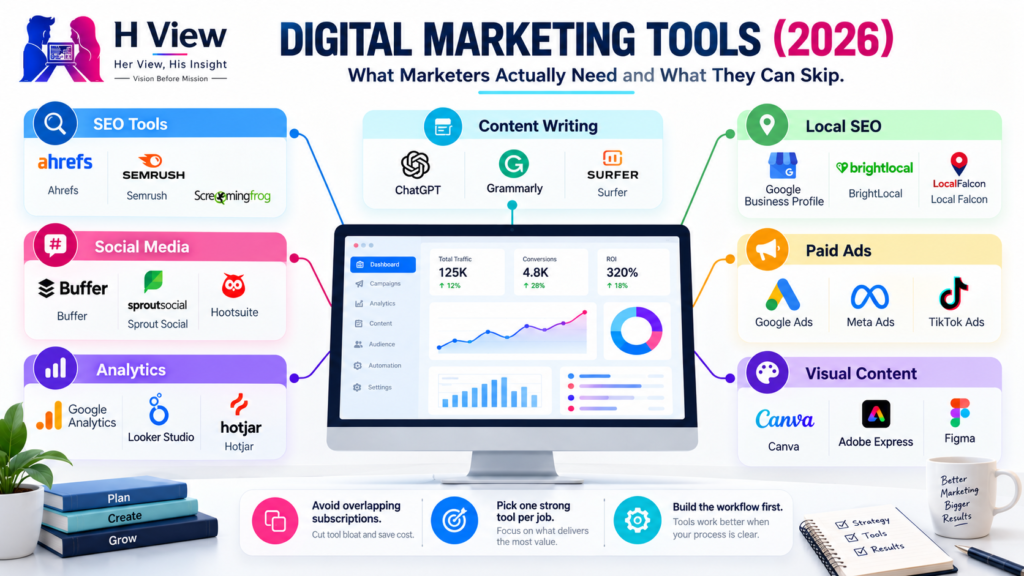
Open LinkedIn for a few minutes and you will probably come across a colourful graphic…
 Harika October 6, 2026
  By HarikaUpdated September 20, 202613 min read40 views
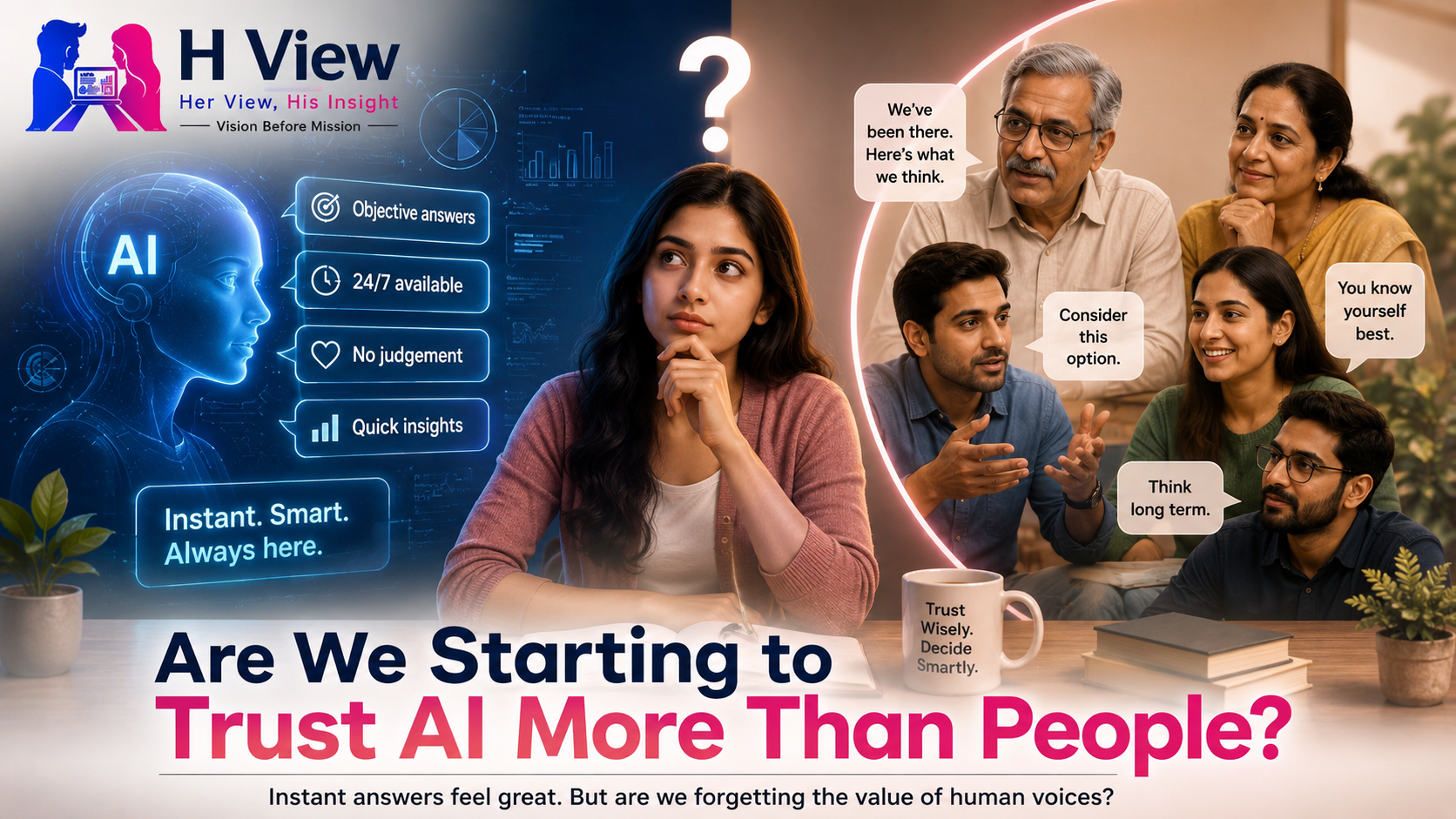
A few years ago, asking an AI system for advice felt experimental. People might use it to rewrite an email, explain a technical concept or generate a few ideas, but serious personal decisions still belonged mostly to conversations with friends, family members, teachers, doctors or colleagues. That boundary is becoming less clear. Today, people routinely ask AI what phone to buy, whether a career change makes sense, how to reply to a difficult message, what a medical report could mean, how to organise their finances and even how to handle tension inside a relationship.
What makes this shift interesting is not that people have suddenly decided machines are wiser than humans. In most areas, they have not. Research still shows that trust in AI varies sharply depending on context, and people often prefer humans when empathy, accountability or high-stakes judgement matters. Yet AI is increasingly becoming the first place people go when they are uncertain, and that position gives it more influence than we may realise.
Part of the attraction is obvious. AI is available at midnight, does not become impatient when the same question is asked twice and can turn a confusing situation into a structured explanation within seconds. It also removes some of the social discomfort that comes with asking another person for help. You can discuss money problems without feeling embarrassed, explore a relationship concern without worrying that a friend will repeat it later, or admit that you do not understand something without feeling judged.
The deeper question, then, is not simply whether we trust AI more than people. It is whether convenience, privacy and constant availability are quietly changing who we trust first—and whether that first voice starts shaping the decisions that follow.
Human advice almost always comes with history. If you ask your father whether you should leave a secure job and start a business, his answer may be influenced by his own experiences with financial risk. A friend who has gone through a painful breakup may interpret your relationship problems differently from someone in a stable marriage. Even experts bring professional assumptions, personal judgement and incomplete information into a conversation.
AI appears different because it usually presents several sides at once. It might explain the advantages of leaving the job, the financial risks of doing so, what emergency fund would be sensible and which questions you should answer before deciding. That balanced structure can create the impression that the response is more objective than human advice.
The difficulty is that sounding neutral is not the same as being neutral. An AI answer depends on the information available to it, the way the question was phrased, the system’s training and sometimes information that may be incomplete or incorrect. A confident, well-structured answer can still contain assumptions. Because the language sounds calm and analytical, those assumptions may be harder for an ordinary user to notice.
This is one reason AI can become persuasive without appearing persuasive. A person recommending something may look emotional or biased. Software delivering the same recommendation in organised paragraphs can feel like analysis rather than influence.
This is no longer limited to choosing restaurants or writing social-media captions. Younger users are increasingly bringing AI into financial, career and lifestyle decisions. A 2026 Betterment survey found that 48% of Gen Z investors surveyed said AI had influenced a financial decision, while 41% were comfortable using AI in long-term financial planning. At the same time, people still relied on their own research, family, friends and other human sources, showing that AI is entering the decision-making circle rather than completely replacing it.
Imagine a 24-year-old employee who has received another job offer. The new role pays more but requires relocation, offers less stability and comes from a smaller company. Ten years ago, the person might have spoken to parents, a mentor and a few friends before deciding. Today, they may first enter salary, rent, career prospects, family responsibilities and long-term goals into an AI assistant.
That can genuinely improve the quality of the decision. The AI may remind the user to consider relocation expenses, emergency savings, probation terms or the difference between fixed and variable salary. It can help organise the problem before the person speaks to anyone else.
But the order matters. Once AI has framed one option as financially stronger or professionally smarter, subsequent conversations may begin from that framing. The person may unconsciously use human conversations to confirm a direction that has already been suggested.
This is why the first source of advice can become powerful even when it is not the final source.
People often confuse detail with expertise.
Ask a friend which laptop to buy and the answer may be, “Take this one; my brother uses it and it is good.” Ask an AI assistant the same question and it may compare processors, battery life, display quality, software support, weight and price before recommending one model.
Naturally, the second answer feels more thoroughly considered.
The same thing happens with career guidance. A relative may tell a graduate to prepare for government examinations because they are secure. An AI system could compare the candidate’s age, financial situation, exam timelines, private-sector alternatives, current skills and opportunity cost. Even if both ultimately give similar advice, the AI explanation feels more comprehensive.
That creates a subtle psychological advantage. We tend to trust answers that show their working, especially when the reasoning appears organised. Yet a long explanation can still be built on incorrect facts or missing context. Fluency can make uncertainty look smaller than it actually is.
The real danger is therefore not that AI always gives bad advice. Often it can be extremely useful. The danger is that its good communication can make us less likely to verify the parts that matter most.
The rise of people using AI for emotional conversations adds another layer. Someone may ask why their partner has become distant, how to apologise after an argument or whether a friendship has become unhealthy. Others may simply use AI to put feelings into words before discussing them with another person.
There is a genuine benefit here. A young person who feels embarrassed about a problem can think through it privately before deciding what to do. Someone who is angry can draft a calmer message rather than reacting immediately. A person who struggles to explain emotions may find language that helps them communicate more clearly.
The problem begins when AI stops being a tool for preparing a human conversation and starts becoming a replacement for one. Real relationships contain disagreement, inconvenience and emotional unpredictability. Friends do not always say what we want to hear. Partners have their own needs. Family members may misunderstand us before eventually understanding.
An AI assistant, by contrast, can remain patient, attentive and responsive for as long as we continue the conversation. That can make it feel emotionally safer than dealing with another person. If that comfort becomes preferable to the difficulty of real relationships, the issue is no longer simply about useful technology; it becomes a question about what kinds of human interaction we are slowly learning to avoid.
There is nothing inherently unhealthy about using AI to organise a personal problem. In fact, for some people it can create valuable breathing room between emotion and action. A student who has failed an important exam may not be ready for another conversation about expectations. Someone struggling at work may need to understand what they are actually unhappy about before speaking to a manager.
In those situations, AI can serve as a private thinking space. It can help someone identify questions, consider another interpretation or draft the words for a difficult conversation. That is particularly useful for people who do not have immediate access to a mentor, counsellor or supportive friend.
Where we need to be careful is in confusing a safe space for reflection with a complete relationship. AI can help someone prepare to speak with another human being; it cannot live inside that relationship or experience its consequences. If the issue involves another person’s trust, health, safety or future, eventually the real world has to enter the conversation.
There is a practical distinction between trusting a useful answer and handing over responsibility.
A doctor is professionally accountable for medical advice. A financial adviser may have regulatory responsibilities. A manager must live with decisions that affect a team. Even a close friend exists in a relationship where poor advice can have consequences for trust.
AI does not experience the consequences of what it recommends.
If an AI-generated investment idea loses money, the system does not lose its savings. If it encourages a career move that goes badly, it does not spend six months searching for another job. If relationship advice makes an argument worse, the AI does not have to repair the damage.
This does not make AI advice worthless. It means the responsibility remains with the user, especially when the decision is expensive, irreversible or highly personal.
The more capable AI becomes, the more important that distinction will be. The risk is not that AI will suddenly become powerful enough to control every decision. The more realistic risk is that it becomes useful enough that we stop remembering when another form of judgement is still necessary.
One of the most interesting things about the current AI moment is how contradictory our behaviour has become. People express concerns about privacy, misinformation, hallucinations and corporate influence, yet many of the same people use AI every week.
Klaviyo’s 2026 consumer research reflects that middle ground. Only a minority of consumers surveyed said they completely trusted AI, while much larger groups described themselves as somewhat trusting or neutral. People are not blindly accepting AI, but neither are they keeping it at a distance.
This suggests trust is being built through routine usefulness rather than a conscious decision. When AI helps someone write a better email, they trust it a little more. When it successfully recommends a product, confidence grows again. When it explains a difficult subject clearly, the person becomes more comfortable asking the next question.
After hundreds of small successful interactions, turning to AI first can begin to feel normal.
That is probably how the relationship between people and AI will change—not through one dramatic moment when society decides machines are trustworthy, but through millions of ordinary situations where AI works well enough to earn another question.
There is another side to this that deserves more attention. People do not always seek advice because they want their assumptions challenged. Sometimes they want permission to do what they already prefer.
Suppose someone wants to buy an expensive car even though the monthly EMI would stretch the household budget. Their spouse suggests waiting. Their parents recommend saving more first. A financial adviser says the purchase is possible but uncomfortable.
The person can then ask AI, “Why might buying this car now actually be a smart decision?”
The system may produce perfectly reasonable arguments about safety, reliability, inflation, resale value and quality of life. None of those points has to be false. But the person has used AI to create a convincing argument for a conclusion they already wanted.
A differently framed question—“Why could buying this car now be financially risky?”—may produce the opposite case.
This is an important reminder that AI does not enter a conversation alone. We bring our own biases into the prompt. When people repeatedly reformulate questions until they receive a comfortable answer, AI can become less of an adviser and more of a very articulate confirmation mechanism.
We do not need one universal rule saying AI should always be trusted or never be trusted.
The consequence of error matters.
Asking AI for restaurant ideas is relatively low risk. Using it to brainstorm interview questions is usually low risk. Asking it to summarise a report can save time if the important details can still be checked against the source.
The threshold should rise when the stakes rise.
Medical treatment, a large investment, legal action, major debt, serious relationship decisions and safety concerns deserve stronger verification. AI can still help someone understand the issue, prepare questions or identify possibilities, but it should not automatically become the final authority.
A practical rule is simple: the more expensive, irreversible, personal or safety-sensitive the consequence, the more valuable independent human verification becomes.
That approach does not reject AI. It simply gives trust some proportion.
There may be an even larger cultural effect waiting underneath all of this.
If AI becomes constantly available, endlessly patient and unusually clear, will we start expecting the same behaviour from people?
A friend who takes six hours to answer may suddenly feel slow. A customer-service employee who needs to check something may seem inefficient compared with an AI agent that responds instantly. A doctor explaining uncertainty may appear less confident than a chatbot producing a beautifully structured answer in seconds.
Human communication contains pauses, uncertainty, emotion and sometimes contradiction. Those qualities can be frustrating, but they are also connected to reality. People hesitate because decisions have consequences. Experts sometimes say “I don’t know” because evidence is incomplete. Friends may disagree because their perspective is genuinely different.
If our standard for a “good conversation” becomes a system that responds immediately and adapts perfectly to us, ordinary human interaction may begin to feel unnecessarily difficult.
That may be one of AI’s most important social effects—not replacing human relationships, but quietly changing what we expect those relationships to deliver.
We are probably not heading toward a world where everyone suddenly trusts artificial intelligence more than every human being.
Something quieter is happening.
AI is becoming the first place many people turn when they are confused, curious, embarrassed or uncertain. That position gives it influence because the first explanation we hear can shape the questions we ask next, the options we consider and even how we interpret advice from other people.
There is nothing wrong with allowing AI into that process. It can organise information, reduce emotional pressure, surface alternatives and help people approach difficult conversations more thoughtfully.
But trust should not come simply because an answer is instant, detailed or confidently written.
Human beings are imperfect advisers. We carry emotion, bias and limited knowledge. AI has limitations too, only they can be easier to overlook because the interface sounds so calm and capable.
The healthiest future may not involve choosing between trusting people and trusting machines. It may involve becoming better at understanding what kind of trust each deserves.
Use AI to organise the problem. Let it challenge your assumptions. Ask it to show alternatives and explain what you may have missed.
Then, when the consequence truly matters, bring another source of judgement into the room.
Convenience can make trust happen very quickly.
Wisdom is knowing when trust still needs another voice.
AI is available instantly, explains information in detail and allows people to ask sensitive or basic questions without the social pressure they may feel with another person. Repeated useful experiences can gradually increase trust even when users still have broader concerns about AI.
Not universally. Trust depends heavily on the situation. People may increasingly use AI for recommendations and explanations while still preferring humans for decisions that require empathy, professional accountability or personal understanding.
AI can be useful for organising thoughts, preparing for a difficult conversation or considering another perspective. It becomes more concerning when it consistently replaces direct communication with the people involved or appropriate professional support.
AI can explain financial concepts, compare options and help users prepare questions, but major investment, debt and long-term financial decisions should be independently verified. The potential consequence of an incorrect recommendation is much greater than with an ordinary low-cost decision.
Generative AI is designed to produce coherent, fluent responses. Clear language and logical structure can make an incomplete or incorrect answer appear more authoritative than it really is, which is why important claims still need verification.
AI is likely to become an increasingly common first source of guidance, but human judgement remains particularly important when accountability, empathy, professional expertise or deep personal context is required.
Harika is the co-founder of H View and covers AI, technology, gadgets, digital tools, online platforms, and modern internet trends. Her articles focus on simplifying complex topics with practical explanations, balanced opinions, and reader-first insights.
Share your real experience and help other readers decide better.
No community views yet. Be the first to share yours.
Open LinkedIn for a few minutes and you will probably come across a colourful graphic…
Harika October 6, 2026 
When an employee resigns, many organisations move quickly into replacement mode. The manager informs HR,…
Harika October 6, 2026 
For many corporate employees, the workday begins long before they actually start working. They wake…
Harika October 5, 2026 
Many projects begin with an assumption that sounds reasonable on paper: the client will explain…
Harika October 1, 2026