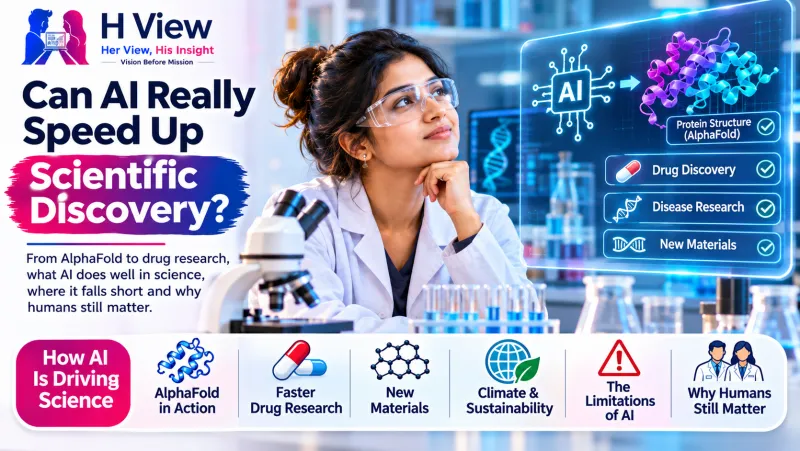
Yes, AI can speed up scientific discovery, especially in problems with huge amounts of data and clear patterns. The clearest example is AlphaFold, which predicted structures for almost all of the roughly 200 million known proteins and helped win the 2024 Nobel Prize in Chemistry. But AI speeds up parts of science. Asking the right questions, running experiments and judging results still need scientists.
For most of us, "science" means a lab, a white coat and years of patient work. That is still true. What has changed is that some steps that once took a PhD student years can now take a computer minutes. Understanding which steps, and which ones still cannot be rushed, is the honest way to answer the question.
AlphaFold in numbers
~200 Mknown proteins with predicted structures from the AlphaFold team
2024Nobel Prize in Chemistry shared by Demis Hassabis, John Jumper and David Baker
Sources: Science News Explores and Maginative
What did AlphaFold actually change?
Proteins are the tiny machines inside every living thing, and their 3D shape decides what they do. For decades, working out a single protein's shape could take years of lab work using methods such as X-ray crystallography. Google DeepMind's AlphaFold, and especially AlphaFold2, could predict many of those shapes nearly as accurately as the lab methods, according to Science News Explores.
The 2024 Nobel Prize in Chemistry recognised Demis Hassabis and John Jumper for protein structure prediction and David Baker of the University of Washington for computational protein design. As neuroscientist Leslie Vosshall put it, quoted in the same article: "What used to take decades or forever can now take a minute."
Where else is AI helping science?
| Field | How AI helps |
|---|
| Biology and medicine | Predicting protein structures, suggesting drug candidates, analysing medical images |
| Weather and climate | AI weather models, such as DeepMind's GraphCast described in the journal Science in 2023, can produce forecasts quickly once trained |
| Materials science | Screening huge numbers of possible materials for batteries or solar cells |
| Astronomy | Sorting enormous telescope datasets to find unusual objects |
| Agriculture | Spotting crop disease from images and analysing soil and weather data |
 Also readISRO Wants Four Launch Pads by 2029. Why Does India Need More Than One?→
What can't AI do in science?
Where AI fits in the scientific process
Ask a questionMostly human curiosity and judgement
Search and predictAI is very strong here
ExperimentStill needs labs, time and money
InterpretHumans judge what results mean
Peer reviewScience checks itself
- Predictions are not proof. An AI prediction is a hypothesis until an experiment confirms it.
- Bad data, bad results. AI learns from existing data, including its gaps and biases.
- The lab is still slow. Clinical trials for a new medicine, for example, take years regardless of how fast the first idea came.
- Errors can sound convincing. General AI chatbots can produce plausible but wrong scientific claims or citations. We explain how to check them in can you trust an AI answer?
What does this mean for India?
India has a large base of scientists, engineers and doctors, and many problems where AI-assisted research could matter: crop resilience, tropical diseases, monsoon forecasting and affordable medicines. The opportunity is for Indian labs and students to combine domain knowledge with AI tools, rather than treating AI as a separate subject. A biology student who can also use computational tools will be valuable in the coming decade.
Her View
It is inspiring to think that a student in a small college can now explore protein structures that once needed a well-funded lab. AI could make science more open to people from smaller towns and fewer resources, if access to tools and good teaching keeps up. That is a goal worth pushing for.
His Insight
The big shift is in the speed of the "search" step. When you can test a million possibilities on a computer before touching a pipette, experiments become more focused. But the bottleneck moves rather than disappears. Lab capacity, funding and careful validation become the new limits, and they deserve investment too.
H View Verdict
AI can genuinely speed up scientific discovery, as AlphaFold and the 2024 Nobel Prize showed. It is strongest at searching, predicting and spotting patterns. Experiments, interpretation and judgement still belong to scientists. The future of science looks less like AI replacing researchers and more like researchers who know how to use AI well.
Frequently Asked Questions
How does AI help scientific research?
AI analyses large datasets, predicts structures and outcomes, screens possibilities and spots patterns faster than traditional methods, helping scientists choose better experiments.
What is AlphaFold?
AlphaFold is an AI system from Google DeepMind that predicts the 3D shapes of proteins. Its team predicted structures for almost all of the roughly 200 million known proteins.
Who won the 2024 Nobel Prize in Chemistry?
David Baker, Demis Hassabis and John Jumper shared the prize, Baker for computational protein design and Hassabis and Jumper for protein structure prediction with AlphaFold.
Can AI replace scientists?
No. AI speeds up certain steps, but scientists still define questions, run experiments, interpret results and check each other's work through peer review.
Related on H View: Orionids Meteor Shower 2026 · More science on H View
हाँ, AI वैज्ञानिक खोज को तेज़ कर सकता है, ख़ासकर उन सवालों में जहाँ बहुत ज़्यादा डेटा और साफ़ पैटर्न होते हैं। सबसे साफ़ उदाहरण AlphaFold है, जिसने लगभग 20 करोड़ ज्ञात प्रोटीनों में से लगभग सभी की संरचना का अनुमान लगाया और 2024 के रसायन विज्ञान नोबेल पुरस्कार में अहम भूमिका निभाई। लेकिन AI विज्ञान के कुछ हिस्सों को ही तेज़ करता है। सही सवाल पूछना, प्रयोग करना और नतीजों को परखना आज भी वैज्ञानिकों का काम है।
हम में से ज़्यादातर लोगों के लिए "विज्ञान" का मतलब है लैब, सफ़ेद कोट और सालों की धैर्य भरी मेहनत। यह आज भी सच है। बदला यह है कि कुछ काम, जिनमें पहले किसी PhD छात्र के कई साल लग जाते थे, अब कंप्यूटर मिनटों में कर देता है। कौन-से काम तेज़ हुए हैं और कौन-से अब भी जल्दी नहीं हो सकते, यह समझना ही इस सवाल का ईमानदार जवाब है।
आँकड़ों में AlphaFold
~20 करोड़ज्ञात प्रोटीन, जिनकी संरचना का अनुमान AlphaFold टीम ने लगाया
2024रसायन विज्ञान का नोबेल पुरस्कार, डेमिस हसाबिस, जॉन जम्पर और डेविड बेकर को संयुक्त रूप से
स्रोत: Science News Explores और Maginative
AlphaFold ने असल में क्या बदला?
प्रोटीन हर जीव के अंदर काम करने वाली छोटी-छोटी मशीनें हैं, और उनका 3D आकार तय करता है कि वे क्या करेंगे। दशकों तक किसी एक प्रोटीन का आकार पता करने में X-रे क्रिस्टलोग्राफ़ी जैसे तरीक़ों से सालों का लैब का काम लग सकता था। Science News Explores के मुताबिक़ Google DeepMind का AlphaFold, ख़ासकर AlphaFold2, इनमें से कई आकारों का अनुमान लगभग लैब के तरीक़ों जितनी सटीकता से लगा सकता था।
2024 का रसायन विज्ञान नोबेल पुरस्कार डेमिस हसाबिस और जॉन जम्पर को प्रोटीन संरचना के अनुमान के लिए, और यूनिवर्सिटी ऑफ़ वॉशिंगटन के डेविड बेकर को कंप्यूटर से प्रोटीन डिज़ाइन करने के लिए मिला। उसी लेख में न्यूरोसाइंटिस्ट लेस्ली वॉसहॉल कहती हैं कि जिस काम में पहले दशकों लगते थे, या जो कभी हो ही नहीं पाता था, वह अब एक मिनट में हो सकता है।
AI विज्ञान में और कहाँ मदद कर रहा है?
| क्षेत्र | AI कैसे मदद करता है |
|---|
| जीव विज्ञान और चिकित्सा | प्रोटीन संरचना का अनुमान, दवा के संभावित उम्मीदवार सुझाना, मेडिकल इमेज का विश्लेषण |
| मौसम और जलवायु | AI मौसम मॉडल, जैसे DeepMind का GraphCast जिसका विवरण 2023 में Science जर्नल में छपा, ट्रेनिंग के बाद जल्दी पूर्वानुमान दे सकते हैं |
| पदार्थ विज्ञान | बैटरी या सोलर सेल के लिए बहुत सारे संभावित पदार्थों की छँटाई |
| खगोल विज्ञान | टेलीस्कोप के विशाल डेटा में असामान्य चीज़ें ढूँढना |
| कृषि | तस्वीरों से फ़सल की बीमारी पहचानना, मिट्टी और मौसम के डेटा का विश्लेषण |
विज्ञान में AI क्या नहीं कर सकता?
वैज्ञानिक प्रक्रिया में AI की जगह
सवाल पूछनाज़्यादातर इंसानी जिज्ञासा और समझ
खोज और अनुमानयहाँ AI बहुत मज़बूत है
प्रयोगअब भी लैब, समय और पैसा चाहिए
मतलब समझनानतीजों का अर्थ इंसान तय करते हैं
पीयर रिव्यूविज्ञान ख़ुद अपनी जाँच करता है
- अनुमान सबूत नहीं होता। AI का अनुमान तब तक सिर्फ़ एक परिकल्पना है, जब तक प्रयोग उसकी पुष्टि न करे।
- ख़राब डेटा, ख़राब नतीजे। AI मौजूदा डेटा से सीखता है, उसकी कमियों और पूर्वाग्रहों समेत।
- लैब का काम अब भी धीमा है। मसलन, नई दवा के क्लिनिकल ट्रायल में सालों लगते हैं, चाहे पहला विचार कितनी भी जल्दी आया हो।
- ग़लतियाँ भी भरोसेमंद लग सकती हैं। आम AI चैटबॉट ऐसे वैज्ञानिक दावे या हवाले दे सकते हैं जो सही लगें पर ग़लत हों। इन्हें कैसे जाँचें, यह हमने क्या आप AI के जवाब पर भरोसा कर सकते हैं? में बताया है।
भारत के लिए इसका क्या मतलब है?
भारत में वैज्ञानिकों, इंजीनियरों और डॉक्टरों की बड़ी संख्या है, और कई ऐसी समस्याएँ हैं जहाँ AI की मदद से रिसर्च फ़र्क़ ला सकती है: फ़सलों की मज़बूती, उष्णकटिबंधीय बीमारियाँ, मानसून का पूर्वानुमान और सस्ती दवाएँ। मौक़ा यह है कि भारतीय लैब और छात्र अपने विषय की जानकारी को AI टूल्स के साथ जोड़ें, AI को अलग विषय मानने के बजाय। जो जीव विज्ञान का छात्र कंप्यूटर टूल्स भी चला सकता है, उसकी आने वाले दशक में बहुत क़द्र होगी।
Her View
यह सोचकर ही प्रेरणा मिलती है कि किसी छोटे कॉलेज का छात्र अब उन प्रोटीन संरचनाओं को देख-समझ सकता है जिनके लिए पहले बड़े बजट वाली लैब चाहिए होती थी। अगर टूल्स तक पहुँच और अच्छी पढ़ाई साथ-साथ चलें, तो AI छोटे शहरों और कम साधनों वाले लोगों के लिए भी विज्ञान के दरवाज़े खोल सकता है। यह ऐसा लक्ष्य है जिसके लिए कोशिश करनी चाहिए।
His Insight
सबसे बड़ा बदलाव "खोज" वाले कदम की रफ़्तार में है। जब आप पिपेट छूने से पहले कंप्यूटर पर दस लाख संभावनाएँ परख सकते हैं, तो प्रयोग ज़्यादा सटीक हो जाते हैं। लेकिन रुकावट ख़त्म नहीं होती, बस जगह बदलती है। लैब की क्षमता, फ़ंडिंग और सावधानी से जाँच नई सीमाएँ बन जाती हैं, और उनमें भी निवेश ज़रूरी है।
H View Verdict
AI सच में वैज्ञानिक खोज को तेज़ कर सकता है, जैसा AlphaFold और 2024 के नोबेल पुरस्कार ने दिखाया। खोजने, अनुमान लगाने और पैटर्न पहचानने में यह सबसे मज़बूत है। प्रयोग, अर्थ समझना और फ़ैसला अब भी वैज्ञानिकों के हाथ में है। विज्ञान का भविष्य AI के रिसर्चरों की जगह लेने जैसा कम, और AI को अच्छे से इस्तेमाल करना जानने वाले रिसर्चरों जैसा ज़्यादा दिखता है।
अक्सर पूछे जाने वाले सवाल
AI वैज्ञानिक रिसर्च में कैसे मदद करता है?
AI बड़े डेटा का विश्लेषण करता है, संरचनाओं और नतीजों का अनुमान लगाता है, संभावनाओं की छँटाई करता है और पुराने तरीक़ों से तेज़ पैटर्न पहचानता है, जिससे वैज्ञानिक बेहतर प्रयोग चुन पाते हैं।
AlphaFold क्या है?
AlphaFold, Google DeepMind का एक AI सिस्टम है जो प्रोटीन के 3D आकार का अनुमान लगाता है। इसकी टीम ने लगभग 20 करोड़ ज्ञात प्रोटीनों में से लगभग सभी की संरचना का अनुमान लगाया।
2024 का रसायन विज्ञान नोबेल पुरस्कार किसे मिला?
डेविड बेकर, डेमिस हसाबिस और जॉन जम्पर को संयुक्त रूप से। बेकर को कंप्यूटर से प्रोटीन डिज़ाइन के लिए, और हसाबिस व जम्पर को AlphaFold से प्रोटीन संरचना के अनुमान के लिए।
क्या AI वैज्ञानिकों की जगह ले सकता है?
नहीं। AI कुछ कदमों को तेज़ करता है, लेकिन सवाल तय करना, प्रयोग करना, नतीजों का अर्थ समझना और पीयर रिव्यू से एक-दूसरे का काम जाँचना अब भी वैज्ञानिक ही करते हैं।
H View पर और पढ़ें: ओरियोनिड्स उल्का वर्षा 2026 · H View पर और विज्ञान
అవును, AI శాస్త్రీయ ఆవిష్కరణలను వేగవంతం చేయగలదు, ముఖ్యంగా భారీ డేటా, స్పష్టమైన ప్యాటర్న్లు ఉన్న సమస్యల్లో. దీనికి అత్యంత స్పష్టమైన ఉదాహరణ AlphaFold. తెలిసిన దాదాపు 20 కోట్ల ప్రోటీన్లలో దాదాపు అన్నింటి నిర్మాణాన్నీ ఇది అంచనా వేసింది, 2024 రసాయన శాస్త్ర నోబెల్ బహుమతికి దారి తీసింది. కానీ AI సైన్స్లో కొన్ని భాగాలనే వేగవంతం చేస్తుంది. సరైన ప్రశ్నలు అడగడం, ప్రయోగాలు చేయడం, ఫలితాలను అంచనా వేయడం ఇప్పటికీ శాస్త్రవేత్తల పనే.
మనలో చాలామందికి "సైన్స్" అంటే ల్యాబ్, తెల్ల కోటు, ఏళ్ల తరబడి ఓపికగా చేసే పని. అది ఇప్పటికీ నిజమే. మారిందల్లా ఏమిటంటే, ఒకప్పుడు PhD విద్యార్థికి ఏళ్లు పట్టిన కొన్ని పనులు ఇప్పుడు కంప్యూటర్ నిమిషాల్లో చేసేస్తోంది. ఏ పనులు వేగంగా అయ్యాయో, ఏవి ఇప్పటికీ తొందరపెట్టలేమో అర్థం చేసుకోవడమే ఈ ప్రశ్నకు నిజాయితీ గల జవాబు.
అంకెల్లో AlphaFold
~20 కోట్లుAlphaFold టీమ్ నిర్మాణాన్ని అంచనా వేసిన తెలిసిన ప్రోటీన్లు
2024రసాయన శాస్త్ర నోబెల్ బహుమతి, డెమిస్ హసాబిస్, జాన్ జంపర్, డేవిడ్ బేకర్లకు సంయుక్తంగా
ఆధారాలు: Science News Explores, Maginative
 Also readOrionids Meteor Shower 2026: What It Is and How to Watch It From India→
AlphaFold నిజంగా ఏం మార్చింది?
ప్రోటీన్లు ప్రతి జీవిలోనూ పనిచేసే చిన్న చిన్న యంత్రాలు. వాటి 3D ఆకారమే అవి ఏం చేస్తాయో నిర్ణయిస్తుంది. దశాబ్దాల పాటు, ఒక్క ప్రోటీన్ ఆకారాన్ని తెలుసుకోవడానికి X-రే క్రిస్టలోగ్రఫీ వంటి పద్ధతులతో ఏళ్ల తరబడి ల్యాబ్ పని పట్టేది. Science News Explores ప్రకారం, Google DeepMind రూపొందించిన AlphaFold, ముఖ్యంగా AlphaFold2, అలాంటి చాలా ఆకారాలను దాదాపు ల్యాబ్ పద్ధతులంత కచ్చితంగా అంచనా వేయగలిగింది.
2024 రసాయన శాస్త్ర నోబెల్ బహుమతి ప్రోటీన్ నిర్మాణ అంచనాకు గాను డెమిస్ హసాబిస్, జాన్ జంపర్లకు, కంప్యూటర్ ద్వారా ప్రోటీన్ డిజైన్కు గాను యూనివర్సిటీ ఆఫ్ వాషింగ్టన్కు చెందిన డేవిడ్ బేకర్కు దక్కింది. అదే వ్యాసంలో న్యూరోసైంటిస్ట్ లెస్లీ వాస్హాల్ చెప్పినట్టు, ఒకప్పుడు దశాబ్దాలు పట్టిన, లేదా అసలు జరగనే జరగని పని ఇప్పుడు ఒక్క నిమిషంలో అయిపోతోంది.
సైన్స్లో AI ఇంకా ఎక్కడ సాయపడుతోంది?
| రంగం | AI ఎలా సాయపడుతుంది |
|---|
| జీవశాస్త్రం, వైద్యం | ప్రోటీన్ నిర్మాణాల అంచనా, మందుల కోసం అభ్యర్థులను సూచించడం, మెడికల్ ఇమేజ్ల విశ్లేషణ |
| వాతావరణం, శీతోష్ణస్థితి | AI వాతావరణ మోడల్స్, ఉదాహరణకు 2023లో Science జర్నల్లో వివరించిన DeepMind GraphCast, శిక్షణ పూర్తయ్యాక వేగంగా అంచనాలు ఇవ్వగలవు |
| పదార్థ శాస్త్రం | బ్యాటరీలు లేదా సోలార్ సెల్స్ కోసం భారీ సంఖ్యలో సాధ్యమైన పదార్థాలను జల్లెడ పట్టడం |
| ఖగోళ శాస్త్రం | టెలిస్కోప్ల భారీ డేటాలో అసాధారణ వస్తువులను గుర్తించడం |
| వ్యవసాయం | ఫోటోల నుంచి పంట వ్యాధులను గుర్తించడం, నేల, వాతావరణ డేటా విశ్లేషణ |
సైన్స్లో AI ఏం చేయలేదు?
శాస్త్రీయ ప్రక్రియలో AI స్థానం
ప్రశ్న అడగడంఎక్కువగా మనిషి జిజ్ఞాస, విచక్షణ
అన్వేషణ, అంచనాఇక్కడ AI చాలా బలంగా ఉంది
ప్రయోగంఇప్పటికీ ల్యాబ్, సమయం, డబ్బు కావాలి
అర్థం చేసుకోవడంఫలితాల అర్థాన్ని మనుషులే నిర్ణయిస్తారు
పీర్ రివ్యూసైన్స్ తనను తానే పరీక్షించుకుంటుంది
- అంచనా అంటే రుజువు కాదు. ప్రయోగం నిర్ధారించే వరకు AI అంచనా ఒక పరికల్పన మాత్రమే.
- చెడ్డ డేటా, చెడ్డ ఫలితాలు. AI ఉన్న డేటా నుంచే నేర్చుకుంటుంది, దానిలోని లోపాలు, పక్షపాతాలతో సహా.
- ల్యాబ్ పని ఇప్పటికీ నెమ్మదే. ఉదాహరణకు, కొత్త మందు క్లినికల్ ట్రయల్స్కు ఏళ్లు పడతాయి, మొదటి ఆలోచన ఎంత త్వరగా వచ్చినా సరే.
- తప్పులు కూడా నమ్మదగినవిగా అనిపించొచ్చు. సాధారణ AI చాట్బాట్లు నిజమనిపించే కానీ తప్పుడు శాస్త్రీయ వాదనలు, ఆధారాలు ఇవ్వొచ్చు. వాటిని ఎలా తనిఖీ చేయాలో AI జవాబును నమ్మవచ్చా?లో వివరించాం.
భారతదేశానికి దీని అర్థం ఏమిటి?
భారతదేశంలో శాస్త్రవేత్తలు, ఇంజనీర్లు, డాక్టర్లు పెద్ద సంఖ్యలో ఉన్నారు. AI సాయంతో చేసే పరిశోధన మార్పు తేగల సమస్యలూ చాలా ఉన్నాయి: పంటల తట్టుకునే శక్తి, ఉష్ణమండల వ్యాధులు, రుతుపవనాల అంచనా, తక్కువ ధర మందులు. AIని వేరే సబ్జెక్టుగా చూడకుండా, తమ రంగ జ్ఞానాన్ని AI టూల్స్తో కలపడమే భారతీయ ల్యాబ్లకు, విద్యార్థులకు ఉన్న అవకాశం. కంప్యూటర్ టూల్స్ కూడా వాడగలిగే బయాలజీ విద్యార్థికి రాబోయే దశాబ్దంలో మంచి విలువ ఉంటుంది.
Her View
ఒకప్పుడు భారీ నిధులున్న ల్యాబ్ అవసరమైన ప్రోటీన్ నిర్మాణాలను ఇప్పుడు ఒక చిన్న కాలేజీ విద్యార్థి కూడా పరిశీలించగలరని ఆలోచిస్తేనే స్ఫూర్తిగా ఉంది. టూల్స్ అందుబాటు, మంచి బోధన కలిసి సాగితే, చిన్న పట్టణాల వారికి, తక్కువ వనరులున్న వారికి కూడా AI సైన్స్ తలుపులు తెరవగలదు. దాని కోసం కృషి చేయడం విలువైన లక్ష్యం.
His Insight
అసలైన మార్పు "అన్వేషణ" దశ వేగంలో ఉంది. పిపెట్ ముట్టుకోకముందే కంప్యూటర్లో పది లక్షల అవకాశాలను పరీక్షించగలిగితే, ప్రయోగాలు మరింత లక్ష్యంగా మారతాయి. కానీ అడ్డంకి మాయం కాదు, స్థానం మారుతుంది. ల్యాబ్ సామర్థ్యం, నిధులు, జాగ్రత్తగా చేసే ధృవీకరణ కొత్త పరిమితులుగా మారతాయి. వాటిపైనా పెట్టుబడి పెట్టాలి.
H View Verdict
AlphaFold, 2024 నోబెల్ బహుమతి చూపించినట్టు, AI నిజంగానే శాస్త్రీయ ఆవిష్కరణలను వేగవంతం చేయగలదు. అన్వేషించడం, అంచనా వేయడం, ప్యాటర్న్లు గుర్తించడంలో ఇది అత్యంత బలంగా ఉంది. ప్రయోగాలు, అర్థం చేసుకోవడం, తీర్పు ఇప్పటికీ శాస్త్రవేత్తలవే. సైన్స్ భవిష్యత్తు AI పరిశోధకుల స్థానాన్ని ఆక్రమించడం కాదు, AIని బాగా వాడటం తెలిసిన పరిశోధకులదే.
తరచుగా అడిగే ప్రశ్నలు
శాస్త్రీయ పరిశోధనకు AI ఎలా సాయపడుతుంది?
AI భారీ డేటాను విశ్లేషిస్తుంది, నిర్మాణాలను, ఫలితాలను అంచనా వేస్తుంది, అవకాశాలను జల్లెడ పడుతుంది, సంప్రదాయ పద్ధతుల కంటే వేగంగా ప్యాటర్న్లను గుర్తిస్తుంది. దీనివల్ల శాస్త్రవేత్తలు మెరుగైన ప్రయోగాలను ఎంచుకోగలరు.
AlphaFold అంటే ఏమిటి?
AlphaFold అనేది ప్రోటీన్ల 3D ఆకారాలను అంచనా వేసే Google DeepMind AI సిస్టమ్. తెలిసిన దాదాపు 20 కోట్ల ప్రోటీన్లలో దాదాపు అన్నింటి నిర్మాణాన్నీ దీని టీమ్ అంచనా వేసింది.
2024 రసాయన శాస్త్ర నోబెల్ బహుమతి ఎవరికి వచ్చింది?
డేవిడ్ బేకర్, డెమిస్ హసాబిస్, జాన్ జంపర్ పంచుకున్నారు. కంప్యూటర్ ద్వారా ప్రోటీన్ డిజైన్కు బేకర్, AlphaFoldతో ప్రోటీన్ నిర్మాణ అంచనాకు హసాబిస్, జంపర్.
AI శాస్త్రవేత్తల స్థానాన్ని భర్తీ చేయగలదా?
లేదు. AI కొన్ని దశలను వేగవంతం చేస్తుంది. కానీ ప్రశ్నలు నిర్ణయించడం, ప్రయోగాలు చేయడం, ఫలితాలను అర్థం చేసుకోవడం, పీర్ రివ్యూ ద్వారా ఒకరి పనిని మరొకరు తనిఖీ చేయడం ఇప్పటికీ శాస్త్రవేత్తలే చేస్తారు.
H Viewలో ఇంకా: ఓరియోనిడ్స్ ఉల్కాపాతం 2026 · H Viewలో మరిన్ని సైన్స్ వ్యాసాలు





Comments0
No comments yet. Start the conversation.