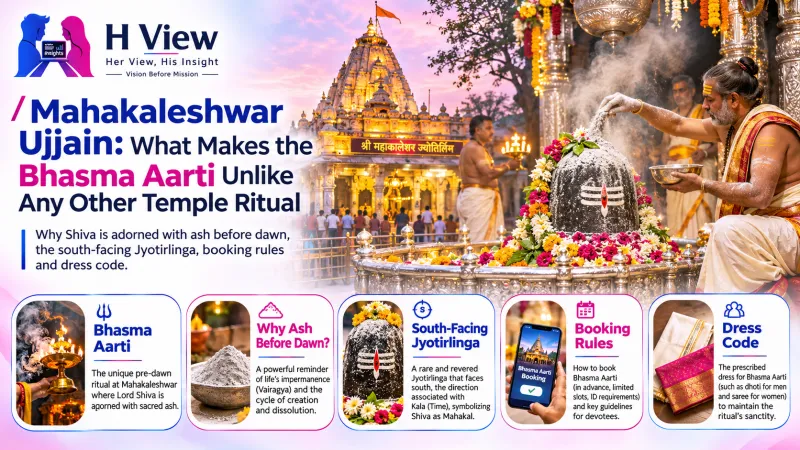
The Bhasma Aarti at Mahakaleshwar temple in Ujjain is a pre-dawn ritual in which the Jyotirlinga is adorned with sacred ash (bhasma) amid chanting, drums and bells. It honours Shiva as Mahakala, the lord of time and death, at the only Jyotirlinga facing south. Attending requires advance booking and a traditional dress code.
Ask devotees who have attended it and many will tell you the Bhasma Aarti is the most intense temple ritual they have ever witnessed. The hall is packed in near-darkness, the air thick with incense, drums and conches rising to a crescendo as ash settles on the lingam. To understand why it feels so different from an ordinary aarti, it helps to understand who Mahakala is, why ash matters, and why Ujjain has been sacred for so long.
Temple card
| Deity | Mahakaleshwar (Shiva as Mahakala) |
| Status | One of the 12 Jyotirlingas; dakshinamukhi (south-facing) |
| Location | Ujjain, on the Shipra river, Madhya Pradesh |
| Present temple | Largely rebuilt in the 18th century under Maratha rule (Ranoji Shinde) |
| Signature ritual | Bhasma Aarti, before dawn daily |
| Corridor | Shri Mahakal Lok, first phase opened October 2022 |
Who is Mahakala?
Kala means both time and death, and Mahakala means the great lord of time. In this form, Shiva is the power that brings everything to an end, and so the one who stands beyond endings. Puranic stories connect the Ujjain Jyotirlinga with Shiva appearing to protect the city and his devotees from a demon, then remaining there at their request as Mahakala. Whether read as legend or theology, the idea is the same: here Shiva is worshipped as master of time itself.
What happens during the Bhasma Aarti?
Very early each morning, before the city wakes, the sanctum is opened. The lingam is first bathed (abhishekam) with water, milk, curd, honey, ghee and other sacred substances, then decorated. Priests then offer and spread sacred ash over the lingam while Vedic mantras are chanted and drums, cymbals, conches and bells build in volume. Finally the aarti lamps are waved. The sequence and exact timings are set by the temple and can vary through the year, so always check current details when booking.
Devotees often describe a stillness after the noise ends, a sense of having watched something ancient and unchanged. That combination of sound, darkness and the image of ash is what sets the ritual apart.
 Also readKashi Vishwanath: Why Varanasi and Shiva Have Been Connected for Thousands of Years→
Why is ash offered to Shiva?
Ash is the final state of all things that burn. In Shaiva thought, it represents the impermanence of the body and the material world. Shiva, the great ascetic, is pictured with his body smeared in ash from cremation grounds, a sign that he has gone beyond attachment and fear of death. Offering ash to Mahakala reminds devotees that time consumes everything, and that liberation lies in the awareness beyond it.
Tradition says that in earlier times, ash from cremation grounds was used for the ritual. Today, the temple uses ash prepared through sacred fire rituals, in line with its current practice. Devotees also receive ash as prasad and apply it to the forehead in three horizontal lines (tripundra).
Why does it matter that Mahakaleshwar faces south?
In Hindu tradition, the south is associated with Yama, the god of death. Most temples face east, toward sunrise. Mahakaleshwar is the only Jyotirlinga facing south (dakshinamukhi), which devotees connect with Shiva’s role as conqueror of death. This is one reason the temple is associated with tantric worship and with prayers for protection from untimely death.
What makes Ujjain itself special?
- Sapta Puri: as Avantika, Ujjain is one of the seven sacred cities of Hinduism, believed to grant liberation.
- Kumbh city: it hosts the Simhastha Kumbh Mela on the Shipra every twelve years, when Jupiter is in Leo.
- Ancient capital: it was capital of the Avanti kingdom and later an important city of the Mauryas and Guptas.
- Astronomy: classical Indian astronomers treated Ujjain as their prime meridian; Maharaja Jai Singh II built an observatory (Vedh Shala) here in the 18th century.
- Literature: the poet Kalidasa is traditionally linked with Ujjain, and he described Mahakala’s temple in his poetry.
How old is the temple?
A temple to Mahakala in Ujjain is mentioned in ancient literature, and the city has been a Shaiva centre for well over a thousand years. The temple was damaged during Iltutmish’s raid on Ujjain in 1234–35. The present multi-storeyed structure was largely rebuilt in the eighteenth century after the Marathas took control of Malwa, with the Scindia general Ranoji Shinde credited with its revival. The temple has three levels, with Mahakaleshwar in the lowest, Omkareshwar in the middle and Nagchandreshwar at the top, the last opened to the public only on Nag Panchami.
How do you book and attend the Bhasma Aarti?
- Book online on the official Shri Mahakaleshwar temple website as soon as slots open; limited free and paid passes are released.
- Carry valid photo ID matching the booking; it is checked at entry.
- Follow the dress code: traditionally dhoti for men and saree for women for those entering certain areas. Check the latest rules.
- Reach early, well before the reporting time stated on your pass.
- Expect restrictions on phones, bags and photography.
- Watch on screens if you cannot get a pass; the temple often relays the aarti in outer halls and online.
| Also visit in and around Ujjain | Why |
|---|
| Shri Mahakal Lok | A long corridor with murals and sculptures of Shiva stories |
| Kal Bhairav temple | Known for liquor offered to the deity, a rare ritual |
| Harsiddhi temple | A Shakti Peetha with tall lamp pillars lit in the evening |
| Ram Ghat | Evening aarti on the Shipra |
| Sandipani Ashram | Where tradition says Krishna studied |
| Omkareshwar | Another Jyotirlinga, about 140 km away |
Her View: Most rituals celebrate life; the Bhasma Aarti looks death in the face and finds peace there. That is what makes it so moving.
His Insight: Demand far exceeds capacity, which is why online booking and ID checks now govern access to one of India’s oldest rituals.
Frequently asked questions
What time is the Bhasma Aarti at Mahakaleshwar?
It is held before dawn daily. Exact reporting and aarti times are set by the temple; check its website when booking.
Is booking required for the Bhasma Aarti?
Yes. Passes are booked in advance online, with ID verification at entry.
Why is Mahakaleshwar south-facing?
The south is linked with death in Hindu tradition, and Mahakala is worshipped as the lord who conquers time and death.
What is Mahakal Lok?
A temple corridor with sculptures and murals of Shiva stories, whose first phase opened in October 2022.
Sources and how this article was researched
This is a desk-research article. Puranic stories are presented as tradition.
Part of H View’s Devotion & Heritage series. See also: Kashi Vishwanath.
उज्जैन के महाकालेश्वर मंदिर की भस्म आरती भोर से पहले होने वाला अनुष्ठान है, जिसमें मंत्रों, ढोल और घंटियों के बीच ज्योतिर्लिंग का पवित्र भस्म से श्रृंगार किया जाता है। यह शिव को महाकाल, यानी समय और मृत्यु के स्वामी के रूप में पूजता है, और यह एकमात्र दक्षिणमुखी ज्योतिर्लिंग है। इसमें शामिल होने के लिए पहले से बुकिंग और पारंपरिक वेशभूषा ज़रूरी है।
जिन श्रद्धालुओं ने भस्म आरती देखी है, उनमें से कई कहते हैं कि यह उनके जीवन का सबसे गहन मंदिर अनुष्ठान था। लगभग अँधेरे में भरा हुआ हॉल, धूप की सुगंध, और ढोल-शंख का स्वर चरम पर, जब ज्योतिर्लिंग पर भस्म बिखरती है। यह आम आरती से इतना अलग क्यों लगता है, इसे समझने के लिए जानना होगा कि महाकाल कौन हैं, भस्म का क्या महत्व है, और उज्जैन इतने लंबे समय से पवित्र क्यों है।
मंदिर एक नज़र में
| देवता | महाकालेश्वर (महाकाल रूप में शिव) |
| महत्व | 12 ज्योतिर्लिंगों में से एक; दक्षिणमुखी |
| स्थान | उज्जैन, शिप्रा नदी के तट पर, मध्य प्रदेश |
| वर्तमान मंदिर | 18वीं सदी में मराठा शासन (राणोजी शिंदे) के दौरान बड़े पैमाने पर पुनर्निर्मित |
| विशेष अनुष्ठान | भस्म आरती, रोज़ भोर से पहले |
| कॉरिडोर | श्री महाकाल लोक, पहला चरण अक्टूबर 2022 में खुला |
महाकाल कौन हैं?
काल का अर्थ समय भी है और मृत्यु भी, और महाकाल का अर्थ है समय के महान स्वामी। इस रूप में शिव वह शक्ति हैं जो हर चीज़ का अंत करती है, और इसलिए वह जो हर अंत से परे हैं। पौराणिक कथाओं के अनुसार उज्जैन के ज्योतिर्लिंग में शिव ने एक राक्षस से नगर और भक्तों की रक्षा के लिए प्रकट होकर, भक्तों के आग्रह पर महाकाल रूप में वहीं निवास किया। इसे कथा मानें या दर्शन, भाव एक ही है: यहाँ शिव को स्वयं समय के स्वामी के रूप में पूजा जाता है।
भस्म आरती में क्या होता है?
हर सुबह, नगर के जागने से पहले, गर्भगृह खोला जाता है। पहले ज्योतिर्लिंग का जल, दूध, दही, शहद, घी और अन्य पवित्र पदार्थों से अभिषेक होता है, फिर श्रृंगार। इसके बाद पुजारी वैदिक मंत्रों के बीच ज्योतिर्लिंग पर पवित्र भस्म अर्पित करते हैं, और ढोल, झाँझ, शंख और घंटियों का स्वर बढ़ता जाता है। अंत में आरती के दीप घुमाए जाते हैं। क्रम और समय मंदिर तय करता है और साल भर में बदल सकते हैं, इसलिए बुकिंग के समय ताज़ा जानकारी ज़रूर देखें।
श्रद्धालु अक्सर बताते हैं कि शोर थमने के बाद एक गहरी शांति छा जाती है, जैसे कुछ बहुत प्राचीन और अपरिवर्तित देखा हो। ध्वनि, अँधेरे और भस्म के दृश्य का यही मेल इस अनुष्ठान को अलग बनाता है।
शिव को भस्म क्यों अर्पित की जाती है?
जलने वाली हर चीज़ अंत में भस्म बन जाती है। शैव दर्शन में भस्म शरीर और भौतिक जगत की नश्वरता का प्रतीक है। महान तपस्वी शिव को श्मशान की भस्म लगाए दिखाया जाता है, जो इस बात का संकेत है कि वह आसक्ति और मृत्यु के भय से परे हैं। महाकाल को भस्म अर्पित करना भक्तों को याद दिलाता है कि समय सब कुछ निगल लेता है, और मुक्ति उससे परे की चेतना में है।
परंपरा कहती है कि पहले इस अनुष्ठान में श्मशान की भस्म का उपयोग होता था। आज मंदिर अपनी वर्तमान पद्धति के अनुसार पवित्र अग्नि अनुष्ठानों से तैयार भस्म का उपयोग करता है। भक्तों को भी प्रसाद के रूप में भस्म मिलती है, जिसे वे माथे पर तीन आड़ी रेखाओं (त्रिपुंड) के रूप में लगाते हैं।
महाकालेश्वर का दक्षिणमुखी होना क्यों मायने रखता है?
हिन्दू परंपरा में दक्षिण दिशा मृत्यु के देवता यम से जुड़ी है। ज़्यादातर मंदिर पूर्व की ओर, सूर्योदय की दिशा में होते हैं। महाकालेश्वर एकमात्र ऐसा ज्योतिर्लिंग है जो दक्षिण की ओर (दक्षिणमुखी) है, जिसे भक्त शिव के मृत्युंजय रूप से जोड़ते हैं। यही एक कारण है कि यह मंदिर तांत्रिक उपासना और अकाल मृत्यु से रक्षा की प्रार्थनाओं से जुड़ा है।
उज्जैन अपने आप में खास क्यों है?
- सप्तपुरी: अवंतिका के नाम से उज्जैन हिन्दू धर्म की सात मोक्षदायिनी पुरियों में से एक है।
- कुंभ नगरी: हर बारह साल में, जब बृहस्पति सिंह राशि में होते हैं, शिप्रा तट पर सिंहस्थ कुंभ लगता है।
- प्राचीन राजधानी: यह अवंती राज्य की राजधानी और बाद में मौर्य और गुप्त काल का महत्वपूर्ण नगर था।
- खगोल विज्ञान: प्राचीन भारतीय खगोलशास्त्री उज्जैन को अपनी प्रमुख देशांतर रेखा मानते थे; 18वीं सदी में महाराजा जयसिंह द्वितीय ने यहाँ वेधशाला बनवाई।
- साहित्य: कवि कालिदास परंपरा से उज्जैन से जुड़े हैं, और उन्होंने अपनी कविता में महाकाल मंदिर का वर्णन किया है।
मंदिर कितना पुराना है?
उज्जैन में महाकाल मंदिर का उल्लेख प्राचीन साहित्य में मिलता है, और यह नगर एक हज़ार से ज़्यादा वर्षों से शैव केंद्र रहा है। 1234–35 में इल्तुतमिश के उज्जैन पर हमले में मंदिर क्षतिग्रस्त हुआ। मालवा पर मराठों के नियंत्रण के बाद 18वीं सदी में वर्तमान बहुमंज़िला ढाँचा बड़े पैमाने पर फिर बना, और इसके पुनरुद्धार का श्रेय सिंधिया सेनापति राणोजी शिंदे को दिया जाता है। मंदिर के तीन तल हैं: सबसे नीचे महाकालेश्वर, बीच में ओंकारेश्वर, और सबसे ऊपर नागचंद्रेश्वर, जो केवल नाग पंचमी पर दर्शन के लिए खुलता है।
भस्म आरती की बुकिंग और दर्शन कैसे करें?
- ऑनलाइन बुक करें: श्री महाकालेश्वर मंदिर की आधिकारिक वेबसाइट पर स्लॉट खुलते ही बुकिंग करें; सीमित निःशुल्क और सशुल्क पास जारी होते हैं।
- मान्य फ़ोटो पहचान पत्र साथ रखें, जो बुकिंग से मेल खाता हो; प्रवेश पर इसकी जाँच होती है।
- ड्रेस कोड का पालन करें: कुछ हिस्सों में प्रवेश के लिए परंपरा से पुरुषों के लिए धोती और महिलाओं के लिए साड़ी; ताज़ा नियम देख लें।
- जल्दी पहुँचें, पास पर लिखे रिपोर्टिंग समय से काफ़ी पहले।
- पाबंदियों के लिए तैयार रहें: फ़ोन, बैग और फ़ोटोग्राफ़ी पर रोक होती है।
- पास न मिले तो स्क्रीन पर देखें: मंदिर अक्सर बाहरी हॉल में और ऑनलाइन आरती का सीधा प्रसारण करता है।
| उज्जैन और आसपास और कहाँ जाएँ | क्यों |
|---|
| श्री महाकाल लोक | शिव कथाओं की मूर्तियों और चित्रों वाला लंबा कॉरिडोर |
| काल भैरव मंदिर | देवता को मदिरा अर्पण की अनोखी परंपरा |
| हरसिद्धि मंदिर | शक्तिपीठ, शाम को जलने वाले ऊँचे दीप स्तंभ |
| राम घाट | शिप्रा पर शाम की आरती |
| सांदीपनि आश्रम | परंपरा के अनुसार श्रीकृष्ण की शिक्षा का स्थान |
| ओंकारेश्वर | एक और ज्योतिर्लिंग, लगभग 140 किमी दूर |
Her View: ज़्यादातर अनुष्ठान जीवन का उत्सव मनाते हैं; भस्म आरती मृत्यु से आँख मिलाकर उसमें शांति खोजती है। यही इसे इतना मार्मिक बनाता है।
His Insight: माँग क्षमता से कहीं ज़्यादा है, इसलिए भारत के सबसे प्राचीन अनुष्ठानों में से एक तक पहुँच आज ऑनलाइन बुकिंग और पहचान जाँच से तय होती है।
अक्सर पूछे जाने वाले प्रश्न
महाकालेश्वर में भस्म आरती का समय क्या है?
यह रोज़ भोर से पहले होती है। रिपोर्टिंग और आरती का सटीक समय मंदिर तय करता है; बुकिंग के समय उसकी वेबसाइट देखें।
क्या भस्म आरती के लिए बुकिंग ज़रूरी है?
हाँ। पास पहले से ऑनलाइन बुक होते हैं, और प्रवेश पर पहचान की जाँच होती है।
महाकालेश्वर दक्षिणमुखी क्यों है?
हिन्दू परंपरा में दक्षिण दिशा मृत्यु से जुड़ी है, और महाकाल को समय और मृत्यु पर विजय पाने वाले स्वामी के रूप में पूजा जाता है।
महाकाल लोक क्या है?
शिव कथाओं की मूर्तियों और चित्रों वाला मंदिर कॉरिडोर, जिसका पहला चरण अक्टूबर 2022 में खुला।
स्रोत
यह लेख डेस्क रिसर्च पर आधारित है। पौराणिक कथाओं को परंपरा के रूप में प्रस्तुत किया गया है।
ఉజ్జయిని మహాకాళేశ్వర్ ఆలయంలో భస్మ హారతి తెల్లవారకముందే జరిగే పూజ. మంత్రాలు, డోలు, గంటల నాదం మధ్య జ్యోతిర్లింగాన్ని పవిత్ర భస్మంతో అలంకరిస్తారు. ఇది శివుణ్ని కాలానికి, మృత్యువుకు అధిపతి అయిన మహాకాళునిగా ఆరాధిస్తుంది. దక్షిణ దిశకు అభిముఖంగా ఉన్న ఏకైక జ్యోతిర్లింగం ఇదే. హాజరు కావాలంటే ముందుగా బుకింగ్, సంప్రదాయ దుస్తులు తప్పనిసరి.
భస్మ హారతి చూసిన భక్తుల్లో చాలా మంది, తాము చూసిన అత్యంత లోతైన ఆలయ పూజ అదేనని చెబుతారు. దాదాపు చీకటిగా ఉన్న, కిక్కిరిసిన మండపం, ధూపపు పరిమళం, జ్యోతిర్లింగంపై భస్మం జారుతున్నప్పుడు తారాస్థాయికి చేరే డోలు, శంఖనాదాలు. ఇది మామూలు హారతి కంటే ఎందుకంత భిన్నంగా అనిపిస్తుందో అర్థం కావాలంటే, మహాకాళుడు ఎవరో, భస్మానికి ఉన్న అర్థం ఏమిటో, ఉజ్జయిని ఇంత కాలంగా ఎందుకు పవిత్రంగా ఉందో తెలుసుకోవాలి.
ఆలయం ఒక్క చూపులో
| దైవం | మహాకాళేశ్వరుడు (మహాకాళ రూపంలో శివుడు) |
| ప్రాముఖ్యం | 12 జ్యోతిర్లింగాల్లో ఒకటి; దక్షిణాభిముఖం |
| ప్రదేశం | ఉజ్జయిని, శిప్రా నది ఒడ్డున, మధ్యప్రదేశ్ |
| ప్రస్తుత ఆలయం | 18వ శతాబ్దంలో మరాఠా పాలనలో (రాణోజీ షిండే) విస్తృతంగా పునర్నిర్మాణం |
| ప్రత్యేక పూజ | భస్మ హారతి, రోజూ తెల్లవారకముందే |
| కారిడార్ | శ్రీ మహాకాల్ లోక్, మొదటి దశ అక్టోబర్ 2022లో ప్రారంభం |
 Also readWhy South Indian Temples Have Giant Gopurams→
మహాకాళుడు ఎవరు?
కాలం అంటే సమయం, మృత్యువు రెండూ. మహాకాళుడు అంటే కాలానికి మహా అధిపతి. ఈ రూపంలో శివుడు ప్రతిదాన్నీ అంతం చేసే శక్తి, అందువల్లే ప్రతి అంతానికీ అతీతుడు. ఒక రాక్షసుని నుంచి నగరాన్ని, భక్తులను కాపాడటానికి శివుడు ఇక్కడ ప్రత్యక్షమై, భక్తుల కోరికపై మహాకాళునిగా ఇక్కడే కొలువై ఉన్నాడని పురాణ కథలు చెబుతాయి. దీన్ని కథగా చూసినా, తత్వంగా చూసినా భావం ఒకటే: ఇక్కడ శివుణ్ని స్వయంగా కాలానికే అధిపతిగా పూజిస్తారు.
భస్మ హారతిలో ఏం జరుగుతుంది?
ప్రతి రోజూ నగరం నిద్రలేవకముందే గర్భగుడి తలుపులు తెరుస్తారు. ముందుగా జ్యోతిర్లింగానికి నీరు, పాలు, పెరుగు, తేనె, నెయ్యి వంటి పవిత్ర ద్రవ్యాలతో అభిషేకం చేసి అలంకరిస్తారు. తర్వాత వేద మంత్రాలు జపిస్తూ అర్చకులు లింగంపై పవిత్ర భస్మాన్ని సమర్పించి పూస్తారు; డోలు, తాళాలు, శంఖాలు, గంటల నాదం క్రమంగా పెరుగుతుంది. చివరగా హారతి దీపాలు తిప్పుతారు. ఈ క్రమాన్ని, సమయాన్ని ఆలయమే నిర్ణయిస్తుంది, ఏడాది పొడవునా మారవచ్చు, కాబట్టి బుకింగ్ సమయంలో తాజా వివరాలు తప్పకుండా చూడండి.
శబ్దం ఆగిపోయాక ఒక నిశ్శబ్దం ఆవరిస్తుందని, ఏదో అతి పురాతనమైన, మారని దాన్ని చూసినట్టు అనిపిస్తుందని భక్తులు తరచూ చెబుతారు. నాదం, చీకటి, భస్మపు దృశ్యం కలయికే ఈ పూజను ప్రత్యేకం చేస్తుంది.
శివునికి భస్మం ఎందుకు సమర్పిస్తారు?
మండే ప్రతిదీ చివరకు బూడిదగా మారుతుంది. శైవ తత్వంలో భస్మం శరీరానికి, భౌతిక ప్రపంచానికి ఉన్న అశాశ్వతత్వానికి ప్రతీక. మహా తపస్వి అయిన శివుడు శ్మశాన భస్మం పూసుకుని కనిపిస్తాడు, అంటే ఆయన మమకారానికి, మృత్యుభయానికి అతీతుడు. మహాకాళునికి భస్మం సమర్పించడం కాలం అన్నింటినీ మింగేస్తుందని, ముక్తి దానికి అతీతమైన చైతన్యంలో ఉందని భక్తులకు గుర్తుచేస్తుంది.
పూర్వం ఈ పూజకు శ్మశాన భస్మం వాడేవారని సంప్రదాయం చెబుతుంది. నేడు ఆలయం తన ప్రస్తుత విధానం ప్రకారం పవిత్ర హోమాల ద్వారా తయారుచేసిన భస్మాన్ని వాడుతుంది. భక్తులకు కూడా భస్మం ప్రసాదంగా లభిస్తుంది, దాన్ని నుదుటిపై మూడు అడ్డ గీతలుగా (త్రిపుండ్రం) ధరిస్తారు.
మహాకాళేశ్వరుడు దక్షిణాభిముఖుడు కావడం ఎందుకు ముఖ్యం?
హిందూ సంప్రదాయంలో దక్షిణ దిశ మృత్యుదేవత యమునితో ముడిపడి ఉంటుంది. చాలా ఆలయాలు సూర్యోదయ దిశ అయిన తూర్పు వైపు ఉంటాయి. దక్షిణ దిశకు అభిముఖంగా (దక్షిణాభిముఖంగా) ఉన్న ఏకైక జ్యోతిర్లింగం మహాకాళేశ్వరుడే. భక్తులు దీన్ని మృత్యువును జయించిన శివుని రూపంతో ముడిపెడతారు. ఈ ఆలయం తాంత్రిక ఆరాధనతో, అకాల మృత్యువు నుంచి రక్షణ కోసం చేసే ప్రార్థనలతో ముడిపడి ఉండటానికి ఇదొక కారణం.
ఉజ్జయిని ప్రత్యేకత ఏమిటి?
- సప్తపురి: అవంతిక పేరుతో ఉజ్జయిని హిందూ ధర్మంలో మోక్షం ప్రసాదించే ఏడు పవిత్ర నగరాల్లో ఒకటి.
- కుంభ నగరం: ప్రతి పన్నెండేళ్లకు, గురుడు సింహ రాశిలో ఉన్నప్పుడు, శిప్రా ఒడ్డున సింహస్థ కుంభమేళా జరుగుతుంది.
- ప్రాచీన రాజధాని: అవంతి రాజ్యానికి రాజధాని, తర్వాత మౌర్య, గుప్తుల కాలంలో ముఖ్యమైన నగరం.
- ఖగోళ శాస్త్రం: ప్రాచీన భారతీయ ఖగోళ శాస్త్రవేత్తలు ఉజ్జయినిని ప్రధాన రేఖాంశంగా భావించేవారు; 18వ శతాబ్దంలో మహారాజా జయసింహ్-2 ఇక్కడ వేధశాల నిర్మించారు.
- సాహిత్యం: మహాకవి కాళిదాసు సంప్రదాయంగా ఉజ్జయినితో ముడిపడి ఉన్నాడు; ఆయన తన కావ్యంలో మహాకాళ ఆలయాన్ని వర్ణించాడు.
ఆలయం ఎంత పాతది?
ఉజ్జయినిలోని మహాకాళ ఆలయం ప్రాచీన సాహిత్యంలో ప్రస్తావనకు వస్తుంది, ఈ నగరం వెయ్యి సంవత్సరాలకు పైగా శైవ కేంద్రంగా ఉంది. 1234–35లో ఇల్తుత్మిష్ ఉజ్జయినిపై దాడి చేసినప్పుడు ఆలయం దెబ్బతింది. మాల్వాను మరాఠాలు స్వాధీనం చేసుకున్న తర్వాత 18వ శతాబ్దంలో ప్రస్తుత బహుళ అంతస్తుల కట్టడం విస్తృతంగా పునర్నిర్మితమైంది; ఆ పునరుద్ధరణ ఘనత సింధియా సేనాని రాణోజీ షిండేకు దక్కుతుంది. ఆలయానికి మూడు అంతస్తులు: కింద మహాకాళేశ్వరుడు, మధ్యలో ఓంకారేశ్వరుడు, పైన నాగచంద్రేశ్వరుడు. పై అంతస్తు నాగ పంచమి రోజు మాత్రమే దర్శనానికి తెరుస్తారు.
భస్మ హారతి బుకింగ్, దర్శనం ఎలా?
- ఆన్లైన్లో బుక్ చేయండి: శ్రీ మహాకాళేశ్వర్ ఆలయ అధికారిక వెబ్సైట్లో స్లాట్లు తెరవగానే బుక్ చేసుకోండి; పరిమిత సంఖ్యలో ఉచిత, రుసుము పాసులు ఇస్తారు.
- చెల్లుబాటయ్యే ఫోటో గుర్తింపు కార్డు తీసుకెళ్లండి, బుకింగ్లోని వివరాలతో సరిపోవాలి; ప్రవేశం వద్ద తనిఖీ చేస్తారు.
- దుస్తుల నియమం పాటించండి: కొన్ని ప్రాంతాల్లోకి వెళ్లేవారికి సంప్రదాయంగా పురుషులకు ధోతీ, మహిళలకు చీర; తాజా నియమాలు సరిచూసుకోండి.
- ముందుగా చేరుకోండి, పాస్పై ఉన్న రిపోర్టింగ్ సమయానికి చాలా ముందే.
- ఆంక్షలకు సిద్ధంగా ఉండండి: ఫోన్లు, బ్యాగులు, ఫోటోలపై నిషేధం ఉంటుంది.
- పాస్ దొరకకపోతే తెరపై చూడండి: ఆలయం తరచూ బయటి మండపాల్లో, ఆన్లైన్లో హారతిని ప్రత్యక్ష ప్రసారం చేస్తుంది.
| ఉజ్జయినిలో, చుట్టుపక్కల ఇంకా చూడదగినవి | ఎందుకు |
|---|
| శ్రీ మహాకాల్ లోక్ | శివుని కథల శిల్పాలు, చిత్రాలతో పొడవైన కారిడార్ |
| కాలభైరవ ఆలయం | స్వామికి మద్యం నైవేద్యం అనే అరుదైన ఆచారం |
| హరసిద్ధి ఆలయం | శక్తిపీఠం, సాయంత్రం వెలిగించే ఎత్తైన దీప స్తంభాలు |
| రామ్ ఘాట్ | శిప్రా నదిపై సాయంత్రపు హారతి |
| సాందీపని ఆశ్రమం | సంప్రదాయం ప్రకారం శ్రీకృష్ణుడు విద్య నేర్చుకున్న స్థలం |
| ఓంకారేశ్వర్ | మరో జ్యోతిర్లింగం, సుమారు 140 కి.మీ. దూరం |
Her View: చాలా పూజలు జీవితాన్ని వేడుక చేసుకుంటాయి; భస్మ హారతి మృత్యువు కళ్లలోకి చూసి అందులోనే ప్రశాంతతను వెతుకుతుంది. అదే దీన్ని ఇంతగా కదిలించేలా చేస్తుంది.
His Insight: డిమాండ్ సామర్థ్యం కంటే చాలా ఎక్కువ. అందుకే భారతదేశంలోని అతి పురాతన పూజల్లో ఒకదానికి ప్రవేశాన్ని నేడు ఆన్లైన్ బుకింగ్, గుర్తింపు తనిఖీ నిర్ణయిస్తున్నాయి.
తరచుగా అడిగే ప్రశ్నలు
మహాకాళేశ్వర్లో భస్మ హారతి సమయం ఏమిటి?
రోజూ తెల్లవారకముందే జరుగుతుంది. రిపోర్టింగ్, హారతి కచ్చితమైన సమయాలను ఆలయమే నిర్ణయిస్తుంది; బుకింగ్ సమయంలో వెబ్సైట్ చూడండి.
భస్మ హారతికి బుకింగ్ తప్పనిసరా?
అవును. పాసులు ముందుగానే ఆన్లైన్లో బుక్ చేసుకోవాలి, ప్రవేశం వద్ద గుర్తింపు తనిఖీ ఉంటుంది.
మహాకాళేశ్వరుడు దక్షిణాభిముఖుడు ఎందుకు?
హిందూ సంప్రదాయంలో దక్షిణ దిశ మృత్యువుతో ముడిపడి ఉంది; మహాకాళుణ్ని కాలాన్ని, మృత్యువును జయించిన అధిపతిగా ఆరాధిస్తారు.
మహాకాల్ లోక్ అంటే ఏమిటి?
శివుని కథల శిల్పాలు, చిత్రాలతో కూడిన ఆలయ కారిడార్; దాని మొదటి దశ అక్టోబర్ 2022లో ప్రారంభమైంది.
ఆధారాలు
ఈ వ్యాసం డెస్క్ పరిశోధన ఆధారంగా రాసింది. పురాణ కథలను సంప్రదాయంగా చూపించాం.









Comments0
No comments yet. Start the conversation.