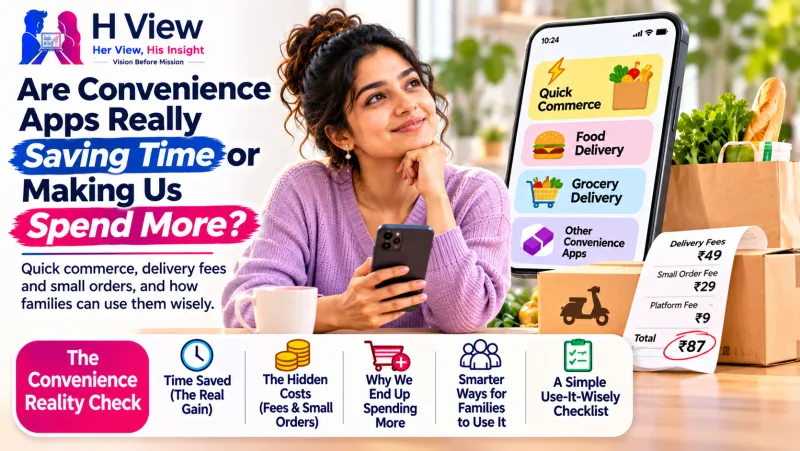
Convenience apps do save time, especially for working parents, elders and people without a nearby store. But they can also make us spend more through small frequent orders, delivery and platform fees, impulse add-ons and higher prices on some items. The answer is not to delete them, but to use them on purpose rather than by habit.
Think about how many times a week your phone buzzes with a delivery update. Coriander for the dal. A packet of biscuits for unexpected guests. Dinner after a long day. It feels effortless, and often it is a real relief. The question worth asking is not whether these apps are good or bad. It is whether each order is saving you something you value, or simply filling a small moment of boredom.
How do convenience apps save time?
- No trips for small things. One forgotten ingredient no longer means a 30-minute round trip in traffic.
- Help for those who can't easily go out. Elders, new mothers, people with disabilities and anyone unwell benefit enormously.
- Planning made easier. Repeat orders and saved lists cut the mental load of household shopping.
- Emergencies covered. Medicines, baby supplies or a phone charger at short notice.
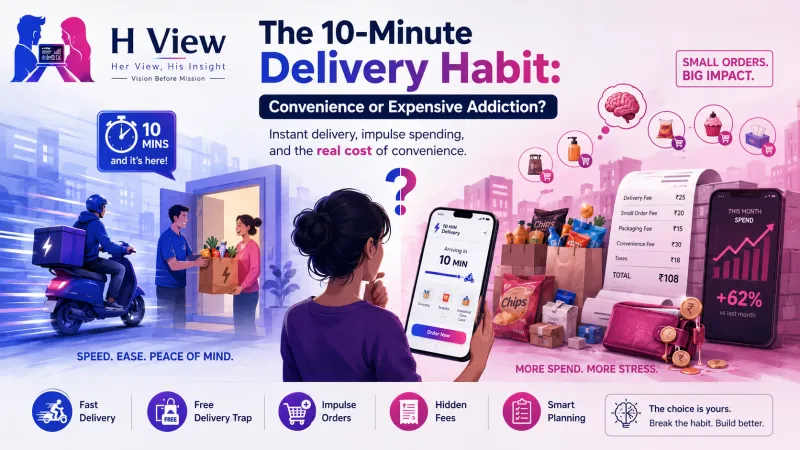
How do they make us spend more?
Where the extra money goes
Visible costs
- Delivery and handling fees
- Small-order fees
- Late-night or rain surcharges
- Tips
Hidden costs
- Impulse items added near checkout
- Buying small packs more often
- Free-delivery thresholds that push basket size up
- Less price comparison than in a store
None of these is large on its own. Together, across many orders a month, they can add up to a noticeable amount. India's consumer protection rules on dark patterns list practices such as basket sneaking and drip pricing, where extra items or charges appear late in the checkout, as unfair. It is worth checking the final bill on every order.
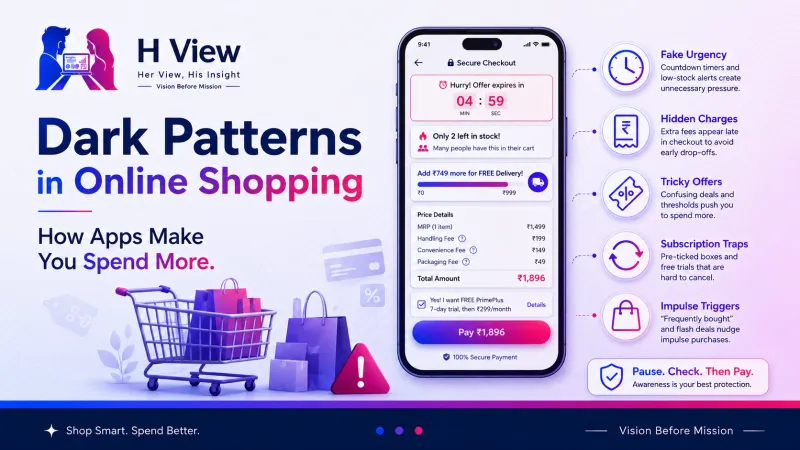 Also readDark Patterns in Online Shopping: How Apps Make You Spend More→
How can families use convenience apps wisely?
- Do one planned weekly or fortnightly order for staples
- Keep quick apps for genuine needs, not boredom
- Check the fee breakdown before paying
- Compare prices of regular items with a local store once a month
- Turn off promotional notifications
- Look at your monthly app spending in your UPI or card history
- Support neighbourhood shops for items they stock well
A simple experiment helps: for one month, note every delivery order and mark it "needed" or "habit". Most families find a handful of habit orders they can drop without missing them.
Her View
For many women juggling jobs, children and elders, these apps have given back real hours. That is valuable, and no one should feel guilty for using them. The aim is not to give up convenience but to make sure the time saved goes into rest or family, and that the money does not quietly leak away in small amounts.
His Insight
Think about cost per hour saved. If an order saves you a 40-minute trip during a busy workday, the fees are probably worth it. If it saves five minutes on a lazy Sunday, it may not be. Apps are designed to make every order feel equally urgent. A quick mental check of the real time saved helps you decide.
H View Verdict
Convenience apps genuinely save time and are a lifeline for many households. They also make it easy to spend more through fees, small orders and impulse buys. Plan regular shopping, use quick delivery for real needs, check every bill and review your monthly total. That way convenience works for you, not on you.
Frequently Asked Questions
Do quick commerce apps cost more than local stores?
Sometimes. Prices vary by item and area, and delivery, handling or small-order fees can add to the bill. Comparing regular items with a local store once a month gives you a clear picture.
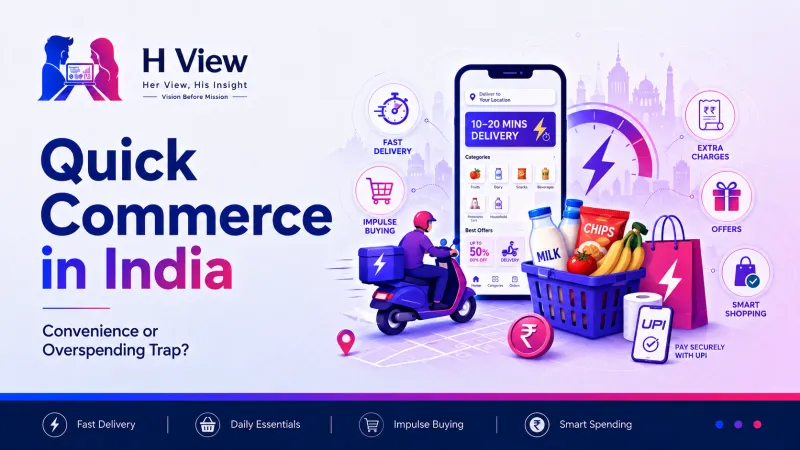
How big is quick commerce in India?
Redseer estimates quick commerce sales of about $9 billion in the first half of 2026, with around 60 million monthly transacting users.
How can I reduce spending on delivery apps?
Plan larger regular orders, turn off promotional notifications, check fees before paying and track your monthly app spending through your UPI or card history.
They are design tricks that push you to spend more or choose options you did not intend, such as false urgency, hidden charges added late or items sneaked into your basket.
Related on H View: The Festival Spending Hangover · AI Personalisation: Convenience or Manipulation?
कन्वीनियंस ऐप सच में समय बचाते हैं, ख़ासकर कामकाजी माता-पिता, बुज़ुर्गों और उन लोगों के लिए जिनके पास कोई दुकान नहीं है। लेकिन ये बार-बार के छोटे ऑर्डर, डिलीवरी और प्लेटफ़ॉर्म फ़ीस, अचानक जोड़े गए सामान और कुछ चीज़ों के ऊँचे दामों से हमारा ख़र्च भी बढ़ा सकते हैं। हल इन्हें डिलीट करना नहीं, बल्कि आदत से नहीं, सोच-समझकर इस्तेमाल करना है।
सोचिए, हफ़्ते में कितनी बार आपका फ़ोन डिलीवरी अपडेट से बजता है। दाल के लिए धनिया। अचानक आए मेहमानों के लिए बिस्कुट का पैकेट। लंबे दिन के बाद रात का खाना। सब कुछ बहुत आसान लगता है, और अक्सर सच में राहत भी होती है। पूछने लायक सवाल यह नहीं कि ये ऐप अच्छे हैं या बुरे। सवाल यह है कि हर ऑर्डर आपकी किसी क़ीमती चीज़ को बचा रहा है, या बस ख़ाली पल की ऊब भर रहा है।
कन्वीनियंस ऐप समय कैसे बचाते हैं?
- छोटी चीज़ों के लिए चक्कर नहीं। एक भूली हुई चीज़ के लिए अब ट्रैफ़िक में 30 मिनट का आना-जाना नहीं।
- जो आसानी से बाहर नहीं जा सकते, उनकी मदद। बुज़ुर्गों, नई माँओं, दिव्यांग लोगों और बीमार लोगों को बहुत फ़ायदा होता है।
- योजना आसान। दोबारा ऑर्डर और सेव की गई सूचियाँ घर की ख़रीदारी का मानसिक बोझ घटाती हैं।
- आपात स्थिति में साथ। दवाइयाँ, बच्चों का सामान या फ़ोन चार्जर, कम समय में।
ये हमसे ज़्यादा ख़र्च कैसे करवाते हैं?
अतिरिक्त पैसा कहाँ जाता है
दिखने वाले ख़र्च
- डिलीवरी और हैंडलिंग फ़ीस
- छोटे ऑर्डर की फ़ीस
- देर रात या बारिश का अतिरिक्त शुल्क
- टिप
छिपे ख़र्च
- चेकआउट के पास जोड़े गए अचानक के सामान
- छोटे पैक बार-बार ख़रीदना
- फ़्री डिलीवरी की सीमा, जो टोकरी बड़ी करवाती है
- दुकान के मुक़ाबले दामों की कम तुलना
इनमें से कोई भी अकेले बड़ा नहीं है। लेकिन महीने के कई ऑर्डरों में मिलकर ये अच्छी-ख़ासी रक़म बन सकते हैं। भारत के उपभोक्ता संरक्षण नियम डार्क पैटर्न के तहत ऐसे तरीक़ों को अनुचित मानते हैं, जैसे टोकरी में चुपके से सामान डालना या धीरे-धीरे शुल्क जोड़ना, जहाँ चेकआउट के आख़िर में अतिरिक्त सामान या शुल्क दिखते हैं। हर ऑर्डर का आख़िरी बिल ज़रूर देखिए।
परिवार कन्वीनियंस ऐप समझदारी से कैसे इस्तेमाल करें?
- राशन के लिए हफ़्ते या पंद्रह दिन में एक योजनाबद्ध ऑर्डर कीजिए
- क्विक ऐप असली ज़रूरत के लिए रखिए, ऊब के लिए नहीं
- पेमेंट से पहले फ़ीस का ब्योरा देखिए
- महीने में एक बार नियमित सामान के दाम लोकल दुकान से मिलाइए
- प्रमोशन वाली नोटिफ़िकेशन बंद कीजिए
- अपनी UPI या कार्ड हिस्ट्री में ऐप पर महीने का ख़र्च देखिए
- जो सामान मोहल्ले की दुकानें अच्छे से रखती हैं, वह उन्हीं से लीजिए
एक आसान प्रयोग मदद करता है: एक महीने तक हर डिलीवरी ऑर्डर लिखिए और उस पर "ज़रूरत" या "आदत" लिखिए। ज़्यादातर परिवारों को आदत वाले कुछ ऐसे ऑर्डर मिल जाते हैं जिन्हें छोड़ने पर कोई कमी महसूस नहीं होती।
Her View
नौकरी, बच्चों और बुज़ुर्गों को एक साथ संभालने वाली कई महिलाओं को इन ऐप्स ने सच में कुछ घंटे वापस दिए हैं। यह क़ीमती है, और इन्हें इस्तेमाल करने पर किसी को अपराध-बोध नहीं होना चाहिए। मक़सद सुविधा छोड़ना नहीं, बल्कि यह पक्का करना है कि बचा हुआ समय आराम या परिवार में लगे, और पैसा छोटी-छोटी रक़मों में चुपचाप न रिसता रहे।
His Insight
बचाए गए हर घंटे की लागत सोचिए। अगर किसी ऑर्डर से व्यस्त कामकाजी दिन में 40 मिनट का चक्कर बचता है, तो फ़ीस शायद वाजिब है। अगर आलसी रविवार को पाँच मिनट बचते हैं, तो शायद नहीं। ऐप ऐसे बनाए जाते हैं कि हर ऑर्डर उतना ही ज़रूरी लगे। असल में बचे समय का एक छोटा-सा हिसाब फ़ैसला लेने में मदद करता है।
H View Verdict
कन्वीनियंस ऐप सच में समय बचाते हैं और कई घरों के लिए सहारा हैं। ये फ़ीस, छोटे ऑर्डर और अचानक की ख़रीदारी से ज़्यादा ख़र्च करना भी आसान बना देते हैं। नियमित ख़रीदारी की योजना बनाइए, क्विक डिलीवरी असली ज़रूरतों के लिए रखिए, हर बिल देखिए और महीने का कुल ख़र्च जाँचिए। तब सुविधा आपके लिए काम करेगी, आप पर नहीं।
अक्सर पूछे जाने वाले सवाल
क्या क्विक कॉमर्स ऐप लोकल दुकानों से महँगे होते हैं?
कभी-कभी। दाम सामान और इलाक़े के हिसाब से बदलते हैं, और डिलीवरी, हैंडलिंग या छोटे ऑर्डर की फ़ीस बिल बढ़ा सकती है। महीने में एक बार नियमित सामान के दाम लोकल दुकान से मिलाने पर साफ़ तस्वीर मिलती है।
भारत में क्विक कॉमर्स कितना बड़ा है?
Redseer के अनुमान के मुताबिक़ 2026 की पहली छमाही में क्विक कॉमर्स की बिक्री लगभग 9 अरब डॉलर रही, और हर महीने लगभग 6 करोड़ लोग इनसे ख़रीदारी करते हैं।
डिलीवरी ऐप पर ख़र्च कैसे घटाऊँ?
बड़े नियमित ऑर्डर की योजना बनाइए, प्रमोशन वाली नोटिफ़िकेशन बंद कीजिए, पेमेंट से पहले फ़ीस देखिए और UPI या कार्ड हिस्ट्री से ऐप पर महीने का ख़र्च ट्रैक कीजिए।
ऑनलाइन शॉपिंग में डार्क पैटर्न क्या होते हैं?
ये डिज़ाइन की ऐसी तरकीबें हैं जो आपसे ज़्यादा ख़र्च करवाती हैं या ऐसे विकल्प चुनवाती हैं जो आप नहीं चाहते थे, जैसे झूठी जल्दबाज़ी, आख़िर में जोड़े गए छिपे शुल्क या टोकरी में चुपके से डाले गए सामान।
H View पर और पढ़ें: त्योहारी ख़र्च के बाद की थकान · AI पर्सनलाइज़ेशन: सुविधा या चालाकी?
కన్వీనియన్స్ యాప్లు నిజంగానే సమయం ఆదా చేస్తాయి, ముఖ్యంగా ఉద్యోగం చేసే తల్లిదండ్రులకు, పెద్దవాళ్లకు, దగ్గర్లో షాపు లేనివాళ్లకు. కానీ తరచుగా చేసే చిన్న ఆర్డర్లు, డెలివరీ, ప్లాట్ఫామ్ ఫీజులు, ఆలోచించకుండా జోడించే వస్తువులు, కొన్ని వస్తువులపై ఎక్కువ ధరల వల్ల ఖర్చు కూడా పెరగొచ్చు. పరిష్కారం వాటిని డిలీట్ చేయడం కాదు, అలవాటుగా కాకుండా అవసరానికి వాడటం.
వారానికి ఎన్నిసార్లు మీ ఫోన్ డెలివరీ అప్డేట్తో మోగుతుందో ఆలోచించండి. పప్పుకు కొత్తిమీర. అనుకోకుండా వచ్చిన అతిథుల కోసం బిస్కెట్ ప్యాకెట్. అలసిపోయిన రోజు తర్వాత రాత్రి భోజనం. అంతా చాలా సులభంగా అనిపిస్తుంది, తరచుగా నిజంగానే ఊరట కూడా. అడగాల్సిన ప్రశ్న ఈ యాప్లు మంచివా చెడ్డవా అని కాదు. ప్రతి ఆర్డర్ మీకు విలువైన దేన్నైనా ఆదా చేస్తోందా, లేక ఖాళీ క్షణంలో విసుగును నింపుతోందా అన్నదే.
 Also readWhy Are Working Daughters-in-Law Still Expected to Behave Like Full-Time Homemakers?→
కన్వీనియన్స్ యాప్లు సమయాన్ని ఎలా ఆదా చేస్తాయి?
- చిన్న వస్తువులకు తిరుగుళ్లు లేవు. మర్చిపోయిన ఒక్క వస్తువు కోసం ఇక ట్రాఫిక్లో 30 నిమిషాల రాకపోకలు అక్కర్లేదు.
- సులభంగా బయటికి వెళ్లలేనివారికి సాయం. పెద్దవాళ్లు, కొత్తగా తల్లులైనవారు, దివ్యాంగులు, అనారోగ్యంతో ఉన్నవారికి చాలా ఉపయోగం.
- ప్రణాళిక సులభం. రిపీట్ ఆర్డర్లు, సేవ్ చేసిన జాబితాలు ఇంటి షాపింగ్ మానసిక భారాన్ని తగ్గిస్తాయి.
- అత్యవసరాల్లో అండ. మందులు, పిల్లల సామాన్లు లేదా ఫోన్ ఛార్జర్, తక్కువ సమయంలో.
ఇవి మనతో ఎక్కువ ఖర్చు ఎలా చేయిస్తాయి?
అదనపు డబ్బు ఎక్కడికి పోతుంది
కనిపించే ఖర్చులు
- డెలివరీ, హ్యాండ్లింగ్ ఫీజులు
- చిన్న ఆర్డర్ ఫీజులు
- అర్ధరాత్రి లేదా వర్షం సర్ఛార్జీలు
- టిప్పులు
కనిపించని ఖర్చులు
- చెకౌట్ దగ్గర ఆలోచించకుండా జోడించే వస్తువులు
- చిన్న ప్యాకెట్లు తరచుగా కొనడం
- ఫ్రీ డెలివరీ పరిమితులు, ఇవి బుట్టను పెద్దది చేయిస్తాయి
- షాపుతో పోలిస్తే ధరల పోలిక తక్కువ
వీటిలో ఏదీ విడిగా పెద్దది కాదు. కానీ నెలలో చాలా ఆర్డర్లలో కలిపి చూస్తే, ఇవి గమనించదగిన మొత్తం అవుతాయి. భారత వినియోగదారుల రక్షణ నియమాలు డార్క్ ప్యాటర్న్స్ కింద బుట్టలో రహస్యంగా వస్తువులు చేర్చడం, ఛార్జీలను కొంచెం కొంచెంగా జోడించడం వంటి పద్ధతులను అన్యాయమైనవిగా పేర్కొంటాయి. వీటిలో చెకౌట్ చివర్లో అదనపు వస్తువులు లేదా ఛార్జీలు కనిపిస్తాయి. ప్రతి ఆర్డర్ చివరి బిల్లును తప్పకుండా చూడండి.
కుటుంబాలు కన్వీనియన్స్ యాప్లను తెలివిగా ఎలా వాడాలి?
- సరుకుల కోసం వారానికో, పదిహేను రోజులకో ఒక ప్లాన్ చేసిన ఆర్డర్ పెట్టండి
- క్విక్ యాప్లను నిజమైన అవసరాలకే వాడండి, విసుగుకు కాదు
- పేమెంట్ ముందు ఫీజుల వివరాలు చూడండి
- నెలకోసారి రెగ్యులర్ వస్తువుల ధరలను లోకల్ షాపుతో పోల్చండి
- ప్రమోషనల్ నోటిఫికేషన్లు ఆపేయండి
- మీ UPI లేదా కార్డ్ హిస్టరీలో యాప్లపై నెలవారీ ఖర్చు చూసుకోండి
- చుట్టుపక్కల షాపుల్లో బాగా దొరికే వస్తువులు అక్కడే కొనండి
ఒక సింపుల్ ప్రయోగం సాయపడుతుంది: ఒక నెల పాటు ప్రతి డెలివరీ ఆర్డర్ను రాసుకుని, దానిపై "అవసరం" లేదా "అలవాటు" అని గుర్తు పెట్టండి. చాలా కుటుంబాలకు, మానేసినా లోటు అనిపించని కొన్ని అలవాటు ఆర్డర్లు కనిపిస్తాయి.
Her View
ఉద్యోగం, పిల్లలు, పెద్దవాళ్లను ఒకేసారి చూసుకునే చాలామంది మహిళలకు ఈ యాప్లు నిజంగానే కొన్ని గంటలు తిరిగి ఇచ్చాయి. అది విలువైనది, వీటిని వాడినందుకు ఎవరూ అపరాధ భావనతో ఉండాల్సిన అవసరం లేదు. లక్ష్యం సౌకర్యాన్ని వదులుకోవడం కాదు. ఆదా అయిన సమయం విశ్రాంతికో కుటుంబానికో వెళ్లేలా, డబ్బు చిన్న చిన్న మొత్తాల్లో నిశ్శబ్దంగా జారిపోకుండా చూసుకోవడమే.
His Insight
ఆదా అయిన ప్రతి గంటకు ఖర్చు ఎంతో ఆలోచించండి. ఒక ఆర్డర్ బిజీ పనిదినంలో 40 నిమిషాల ప్రయాణాన్ని ఆదా చేస్తే, ఫీజులు బహుశా విలువైనవే. బద్ధకంగా గడిపే ఆదివారం ఐదు నిమిషాలు ఆదా చేస్తే, బహుశా కాదు. ప్రతి ఆర్డర్ సమానంగా అత్యవసరమనిపించేలా యాప్లు రూపొందుతాయి. నిజంగా ఎంత సమయం ఆదా అవుతోందో మనసులో చిన్న లెక్క వేసుకుంటే నిర్ణయం సులభమవుతుంది.
H View Verdict
కన్వీనియన్స్ యాప్లు నిజంగానే సమయం ఆదా చేస్తాయి, చాలా ఇళ్లకు ఆసరాగా ఉన్నాయి. ఫీజులు, చిన్న ఆర్డర్లు, ఆలోచించకుండా చేసే కొనుగోళ్ల ద్వారా ఎక్కువ ఖర్చు చేయడాన్ని కూడా అవి సులభం చేస్తాయి. రెగ్యులర్ షాపింగ్ ప్లాన్ చేసుకోండి, క్విక్ డెలివరీని నిజమైన అవసరాలకే వాడండి, ప్రతి బిల్లు చూడండి, నెలవారీ మొత్తాన్ని సమీక్షించండి. అప్పుడు సౌకర్యం మీ కోసం పనిచేస్తుంది, మీపై కాదు.
తరచుగా అడిగే ప్రశ్నలు
క్విక్ కామర్స్ యాప్లు లోకల్ షాపుల కంటే ఖరీదైనవా?
కొన్నిసార్లు. వస్తువు, ప్రాంతాన్ని బట్టి ధరలు మారతాయి. డెలివరీ, హ్యాండ్లింగ్ లేదా చిన్న ఆర్డర్ ఫీజులు బిల్లును పెంచొచ్చు. నెలకోసారి రెగ్యులర్ వస్తువులను లోకల్ షాపుతో పోల్చి చూస్తే స్పష్టమైన చిత్రం వస్తుంది.
భారతదేశంలో క్విక్ కామర్స్ ఎంత పెద్దది?
Redseer అంచనా ప్రకారం 2026 మొదటి అర్ధభాగంలో క్విక్ కామర్స్ అమ్మకాలు సుమారు 9 బిలియన్ డాలర్లు, నెలకు సుమారు 6 కోట్ల మంది వీటిలో కొనుగోళ్లు చేస్తున్నారు.
డెలివరీ యాప్లపై ఖర్చు ఎలా తగ్గించుకోవాలి?
పెద్ద రెగ్యులర్ ఆర్డర్లు ప్లాన్ చేసుకోండి, ప్రమోషనల్ నోటిఫికేషన్లు ఆపేయండి, పేమెంట్ ముందు ఫీజులు చూడండి, UPI లేదా కార్డ్ హిస్టరీ ద్వారా యాప్లపై నెలవారీ ఖర్చు ట్రాక్ చేయండి.
ఆన్లైన్ షాపింగ్లో డార్క్ ప్యాటర్న్స్ అంటే ఏమిటి?
మీతో ఎక్కువ ఖర్చు చేయించే, లేదా మీరు అనుకోని ఆప్షన్లను ఎంచుకునేలా చేసే డిజైన్ ట్రిక్కులు. ఉదాహరణకు తప్పుడు తొందర, చివర్లో జోడించే దాచిన ఛార్జీలు, బుట్టలో రహస్యంగా చేర్చిన వస్తువులు.
H Viewలో ఇంకా: పండుగ ఖర్చుల తర్వాతి భారం · AI పర్సనలైజేషన్: సౌకర్యమా, మాయాజాలమా?








Comments0
No comments yet. Start the conversation.