

Best Digital Marketing Tools in 2026: What Marketers Actually Need and What They Can Skip
Open LinkedIn for a few minutes and you will probably come across a colourful graphic…
 Harika October 6, 2026
  By HarikaUpdated September 20, 202612 min read58 views
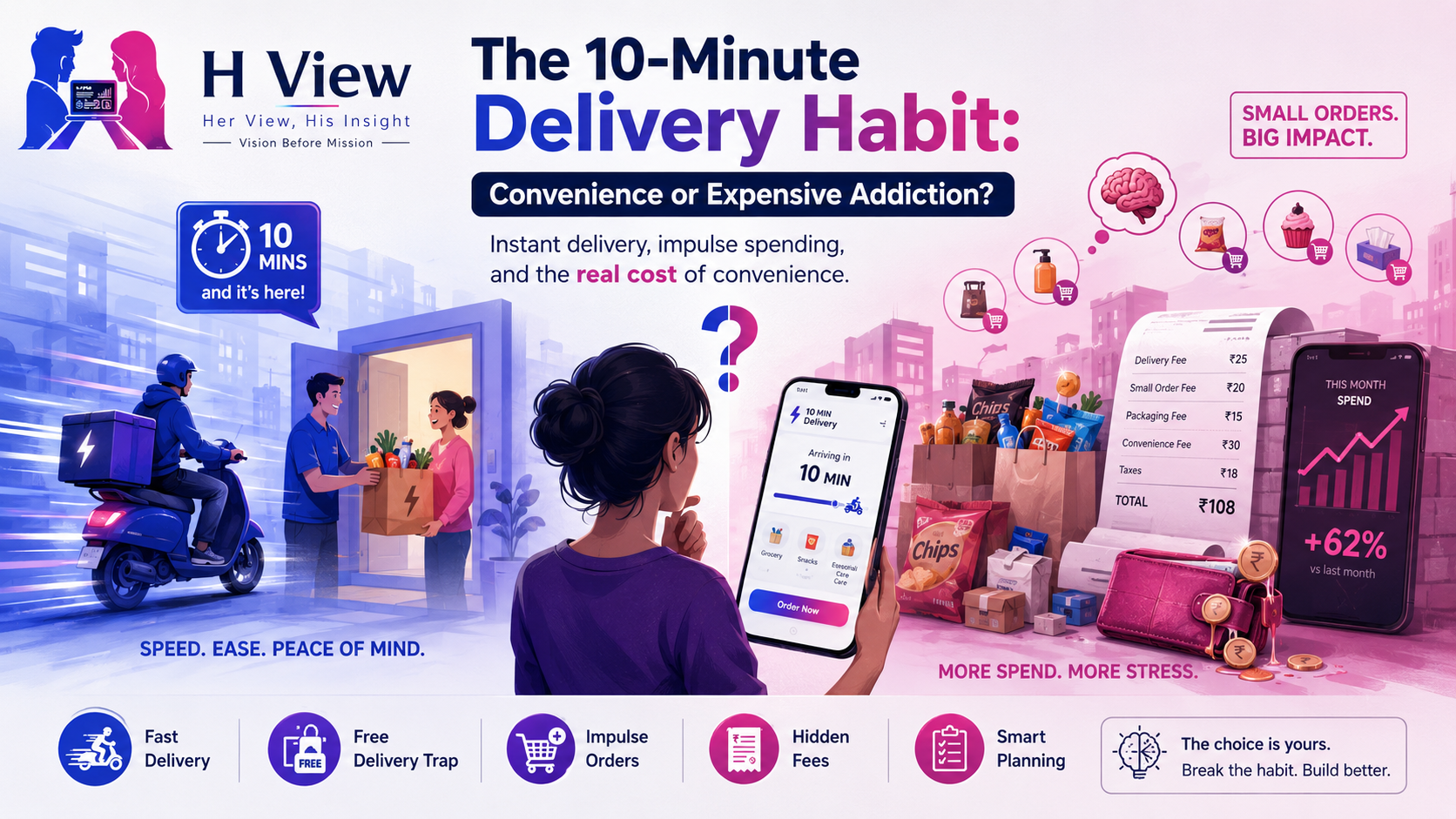
A few years ago, forgetting milk, bread, vegetables or an ingredient meant walking to the nearest shop, asking a neighbour, changing the recipe or waiting until the next shopping trip.
Today, many urban households open an app.
Within minutes, groceries, snacks, medicines, chargers, cosmetics, stationery and even small appliances can arrive at the doorstep.
Quick-commerce platforms have changed shopping from a planned activity into an almost instant response to every small need.
That convenience can be genuinely valuable. It helps busy professionals, elderly customers, parents with young children, people working from home and families dealing with unexpected situations.
But quick delivery has also created a new habit.
Instead of planning purchases, we order whenever a need enters our mind. Instead of comparing prices carefully, we pay for speed. Instead of buying only one missing item, we often add more products to avoid delivery charges or meet a free-delivery threshold.
The question is no longer whether quick commerce is useful.
It is whether we are using it for convenience—or slowly becoming dependent on instant delivery.
The attraction is easy to understand.
Traditional grocery shopping requires planning, travel, waiting, carrying bags and sometimes visiting multiple stores. Quick commerce removes much of that effort.
A customer can order:
The service feels almost magical because the gap between wanting and receiving has become extremely small.
India has become one of the world’s largest markets for ultra-fast delivery. Quick-commerce companies are continuing to expand their dark-store networks, product ranges and order volumes. Blinkit’s net order value reportedly rose strongly in the quarter ending June 2026, driven mainly by customers ordering more frequently rather than spending much more per order.
That detail matters.
The growth of quick commerce is not only about more customers. It is also about the same customers returning more often.
It would be unfair to describe every quick-commerce order as unnecessary.
For many users, these platforms save meaningful time and effort.
A working parent may not be able to leave a sleeping child to buy medicine. An elderly person may struggle to carry groceries. Someone working late may need dinner ingredients without losing another hour in traffic.
Quick commerce can be particularly helpful for:
It can also reduce food waste.
A person can buy only the quantity needed instead of stocking large amounts “just in case.” Smaller and more frequent orders may suit homes with limited refrigerator or storage space.
The service itself is not the problem.
The concern is whether convenience remains a choice or becomes the default response to every small requirement.
Quick commerce makes forgetting inexpensive in the moment.
If milk runs out, another packet can arrive quickly. If an ingredient is missing, the recipe does not need to change. If snacks are finished, the problem can be solved before the next television episode begins.
Over time, this can reduce the motivation to plan.
Households may stop preparing weekly lists, checking supplies or combining purchases. Instead, they place several small orders across the week.
Each order may seem harmless. Together, they can increase:
The true cost of convenience is rarely visible in one transaction.
It appears when a month of small orders is added together.
One of the most relatable quick-commerce habits begins at checkout.
A user wants an item worth ₹80 or ₹120. The app shows a delivery fee for smaller orders but offers free delivery after a minimum basket value.
The customer then adds snacks, drinks, chocolates or household products to avoid paying a ₹20 or ₹30 fee.
The final order may reach ₹200 or more.
In Bengaluru, platforms reportedly standardised a ₹199 free-delivery threshold with a ₹30 fee for smaller baskets. This led many customers to add products they had not originally planned to buy merely to avoid the charge.
Mathematically, spending an additional ₹100 to avoid a ₹30 charge is not saving money.
Yet it feels like saving because “delivery fee” appears as a visible loss while additional products feel like value received.
This is a powerful behavioural effect.
People dislike paying for delivery, even when paying the fee would cost less than filling the basket with unnecessary items.
Imagine a household placing four quick-commerce orders each week.
The orders may look like this:
That is ₹1,300 per week, or more than ₹5,000 per month.
The family may still make a separate supermarket or local-store purchase for staples.
Because the spending is divided into several digital transactions, it may not feel like a major expense. There is no single large bill to attract attention.
This is similar to subscription spending.
Small recurring payments are psychologically easier to ignore than one visible purchase.
The danger is not necessarily that every product was unnecessary. It is that the household may never examine the total.
Quick-commerce apps are not neutral digital shelves.
They are designed to encourage discovery, urgency and repeat purchasing.
Users may see:
Some of these features are useful. Recommendations can help users remember required products.
But interface design can also influence users to spend more than intended.
Research published in 2026 on Indian quick-commerce apps found that student users often recognised manipulative design practices but still responded to them because time pressure and convenience reduced careful decision-making.
The Central Consumer Protection Authority has identified practices such as false urgency, basket sneaking, confirm shaming and drip pricing as dark patterns that can unfairly influence digital consumers. Indian e-commerce platforms have been directed to audit and eliminate such practices.
Not every discount or recommendation is deceptive.
But users should recognise that the app’s commercial goal is to increase orders and basket value—not to protect the household budget.
There is no single answer.
Some products may be cheaper because of promotions, brand funding or platform discounts. Others may cost the same as the printed retail price.
But the final comparison should include:
The local shop may also provide informal benefits:
Quick commerce may win on speed and convenience.
The neighbourhood shop may win on flexibility, familiarity and disciplined shopping.
Many households will continue using both.
A noticeable change occurs when people open quick-commerce apps without a specific need.
They browse snacks, drinks, beauty products, gadgets and new launches in the same way they might browse social media.
At this point, the platform is no longer only solving forgotten-item emergencies.
It becomes a form of shopping entertainment.
Late-night ordering is a common example.
A person feels bored, tired or stressed and opens the app. A dessert, drink or packet of chips can arrive before the impulse fades.
The purchase is driven less by need and more by mood.
This is not always harmful. Occasional treats are part of normal life.
The concern arises when ordering becomes the automatic response to boredom, stress, cravings or minor inconvenience.
Quick commerce may also be changing expectations.
When groceries arrive in minutes, waiting a day begins to feel slow. Planning a shopping trip feels inconvenient. Walking to a nearby shop feels like unnecessary effort.
This expectation can spread beyond groceries.
Consumers begin expecting food, customer service, repairs, payments and online responses instantly.
The real value of time is important. People should not waste hours on tasks that technology can simplify.
But not every small delay is a problem.
Sometimes waiting creates space to reconsider a purchase. A snack craving may disappear. A non-essential item may no longer feel urgent. A shopping list may become more organised.
Instant fulfilment removes that pause.
Customers experience quick commerce through a clean app interface.
Behind it are dark-store workers, packers, inventory teams and delivery partners operating under strict time expectations.
In early 2026, major platforms in India removed prominent “10-minute delivery” branding after government concerns about road safety and pressure on delivery workers. The operational model remained fast, but companies moved away from publicly emphasising the ten-minute promise.
Customers are not individually responsible for the entire employment model.
However, users can still behave responsibly by:
Convenience should not require treating another person’s safety as less important than a packet of snacks arriving two minutes earlier.
Several small orders usually create more packaging than one combined purchase.
A quick-commerce order may involve:
The environmental impact of one order may appear small.
But millions of frequent orders create more delivery trips, packaging and local traffic.
This does not mean traditional shopping has no environmental cost. Customers may drive private vehicles to supermarkets, and large stores also use extensive supply chains.
The better habit is to reduce unnecessary frequency, regardless of the shopping method.
Quick commerce provides strong value when:
In such cases, the convenience charge may be entirely justified.
Paying ₹30 to avoid a long trip, protect a sick family member or save an important work hour can be sensible.
Not every fee is wasted money.
The pattern may need attention when:
The issue is not moral failure.
It is simply a spending system that has become invisible.
The goal does not need to be deleting every app.
A few rules can preserve convenience while reducing unnecessary spending.
When something non-urgent runs out, add it to a shared household list instead of ordering immediately.
Choose one or two planned quick-commerce windows each week.
Do not spend ₹100 on unwanted items to avoid a ₹30 delivery charge.
Look beyond the product discount and include every fee.
Keep order-status alerts but disable messages designed to trigger shopping.
Do not open the app only because you are bored, stressed or craving something briefly.
Search bank or UPI history for platform names and calculate the complete monthly amount.
Medicines, basic groceries, baby supplies and household necessities can be stocked responsibly.
For one week, record every order under four headings:
At the end of the week, separate purchases into:
This simple exercise can reveal whether the app is solving problems or creating new spending habits.
Her View: Quick commerce saves time, supports emergencies, improves accessibility and makes urban life easier for busy households. Paying for convenience can be a rational choice.
His Insight: Instant delivery can encourage poor planning, frequent small orders, impulse purchases and higher monthly spending. “Free delivery” and app design may push customers to buy more than they intended.
Both perspectives are valid.
The problem is not speed.
It is using speed without awareness.
Quick commerce is one of the most useful consumer innovations of modern urban India.
It can deliver essential items during illness, help parents, support elderly users and save meaningful time.
But a useful service can still create an expensive habit.
When every forgotten item becomes a separate order, every craving becomes urgent and every free-delivery threshold increases the basket, convenience begins controlling the customer.
The smartest approach is not to reject quick commerce.
It is to decide deliberately when speed is worth paying for.
Use it for genuine convenience, not automatic consumption. Combine purchases where possible. Compare the final bill. Track the monthly total. And remember that spending more to avoid a small fee is rarely a saving.
Ten-minute delivery can solve an immediate problem.
It should not quietly create a long-term one.
Quick commerce is an online retail model that delivers groceries and other everyday products within a very short period, usually using nearby micro-warehouses or dark stores.
It can be more expensive after delivery, handling and small-cart charges are included. However, discounts may make some products cheaper. Customers should compare the final checkout total.
People often prefer receiving products over paying a visible delivery fee. This can lead them to increase the basket by more than the fee they were trying to avoid.
Many discounts are genuine, but users should compare prices, quantities and the final bill. A discounted product does not create savings when it was not needed.
Yes. Speed, personalised recommendations, notifications, limited-time offers and easy payment can reduce the time customers spend reconsidering a purchase.
No. They can be extremely useful for emergencies and time-sensitive requirements. The goal is to use them consciously rather than automatically.
Combine orders, maintain a household list, disable promotional notifications, avoid browsing without a purpose and review the total amount spent each month.
No. Paying a reasonable fee may be better than spending more on unwanted products. It can also be worthwhile when the time and effort saved are genuinely valuable.
Harika is the co-founder of H View and covers AI, technology, gadgets, digital tools, online platforms, and modern internet trends. Her articles focus on simplifying complex topics with practical explanations, balanced opinions, and reader-first insights.
Share your real experience and help other readers decide better.
No community views yet. Be the first to share yours.

Open LinkedIn for a few minutes and you will probably come across a colourful graphic…
Harika October 6, 2026 
When an employee resigns, many organisations move quickly into replacement mode. The manager informs HR,…
Harika October 6, 2026 
For many corporate employees, the workday begins long before they actually start working. They wake…
Harika October 5, 2026 
Many projects begin with an assumption that sounds reasonable on paper: the client will explain…
Harika October 1, 2026