
Landing Page or Full Website: Which Does Your Business Need First?
Should a small business start with a single landing page or a full website? A practical comparison, with the middle path many businesses take.
Short answer: Choosing a landing page or full website depends on your offer. Start with a landing page for one main offer, ad campaigns or testing demand. Start with a full website when customers must compare several services, check your credibility or find you through many different searches.
Define the offer
Choose the smallest useful scope
Measure qualified enquiries
Last reviewed: 30 October 2026.
What is the difference?
A landing page is one page built around one goal, such as booking a consultation, requesting a quote or registering for an event. It reduces unrelated distractions so the visitor’s next step is clear, while keeping necessary business and policy information accessible. A website is a set of connected pages, usually a home page, service pages, an about page and a contact page, that together explain the whole business.
Both can sit on the same domain. A landing page can even be one page within your website. The real question is where you should put your first time and money.
A quick comparison
| Question | Landing page first | Full website first |
|---|---|---|
| How many offers? | One main offer | Several services or product lines |
| Where do visitors come from? | Ads, WhatsApp, Instagram, a campaign link | Google searches, referrals, repeat visits |
| What must visitors do? | One action: call, enquire, book | Explore, compare, then decide |
| Time to launch | Depends on scope and supplied content | Usually more work; timing depends on scope |
| Content needed | One clear message, proof and a form | Text and images for every page |
| Ongoing work | Testing headlines and the form | Updating pages, SEO and news |
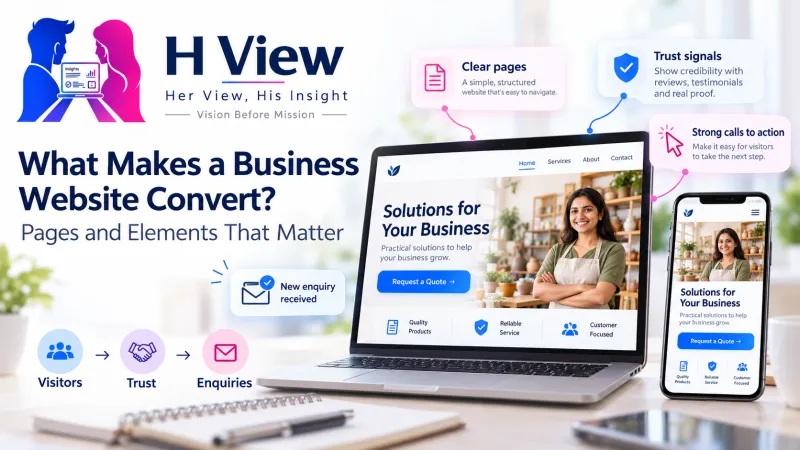 Also readWhat Makes a Business Website Convert? Pages and Elements That Matter→
When is a landing page the better start?
You are running paid ads
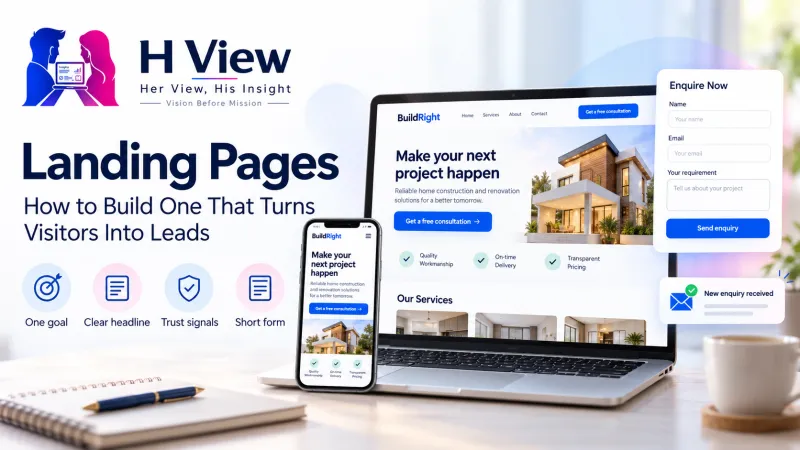
If you pay for each click, sending people to an unrelated home page can make their next step harder. A focused page that repeats the ad’s promise and shows one form usually gives you clearer results. Our guide to building a landing page that turns visitors into leads explains the elements involved.
You are testing an idea
A tutor starting weekend classes, a caterer offering festival packages or a consultant launching one service can test demand with a single page. If enquiries come in, you have evidence to invest in more. If they do not, you have learnt cheaply.
Your budget is tight
One well-written page is better than five thin ones. Visitors notice when service pages are empty or copied, and search engines do too.
When is a full website the better start?
You offer several distinct services
A clinic offering physiotherapy, diet consultation and yoga classes needs a page for each, because each answers different questions and attracts different searches.
Customers need reassurance before they contact you
For higher-value or trust-sensitive work, such as construction, education, legal or healthcare services, people want to see your background, process, location and policies. A single page rarely carries all of that comfortably.
You want to be found through search
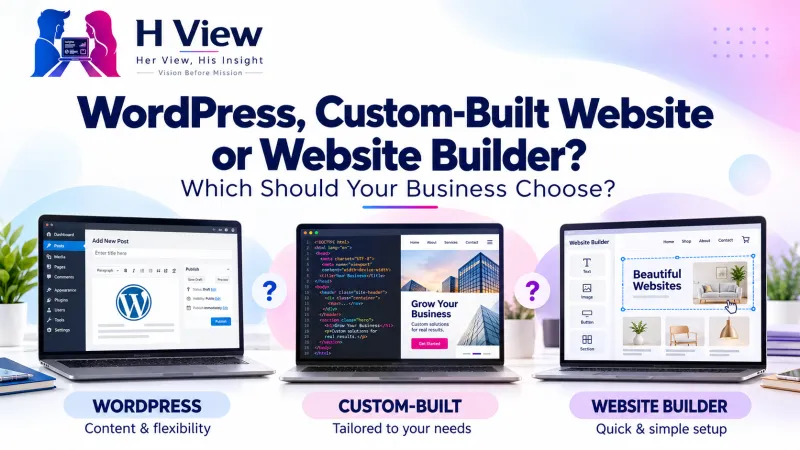
Search engines show individual pages for individual questions. A business that wants to appear for many service-plus-location searches needs pages that genuinely answer each one. Our article on what makes a business website convert lists the pages most small businesses need.
The middle path many businesses take
Build a small, solid home page with your contact details and a short description, and put most of your effort into one landing page for your main offer. As enquiries arrive, note the questions people ask. Those questions become your next pages. This way your website grows from real demand rather than guesswork.
What should you prepare before either?
- One sentence that says who you help and with what.
- Your main call to action: call, WhatsApp, form or booking.
- Proof you can honestly show: real photos, qualifications or examples you have permission to use.
- Practical details: area served, timings, price range where possible.
- A domain and hosting plan. See domain, hosting and DNS explained.
Common mistakes
Do not put several unrelated offers on one landing page, because it loses its focus. Do not launch a website with “coming soon” pages, since empty pages reduce trust. Avoid buying a large website package before you have the content to fill it. Finally, do not forget mobile: most visitors from social media and WhatsApp will open your page on a phone, so read why mobile-first design matters.
How can you tell if your choice is working?
For a landing page, track how many visitors complete the form or call, and test one change at a time. For a website, check which pages people visit before they contact you, and which searches bring them in through Google Search Console. In both cases, ask every new customer how they found you.
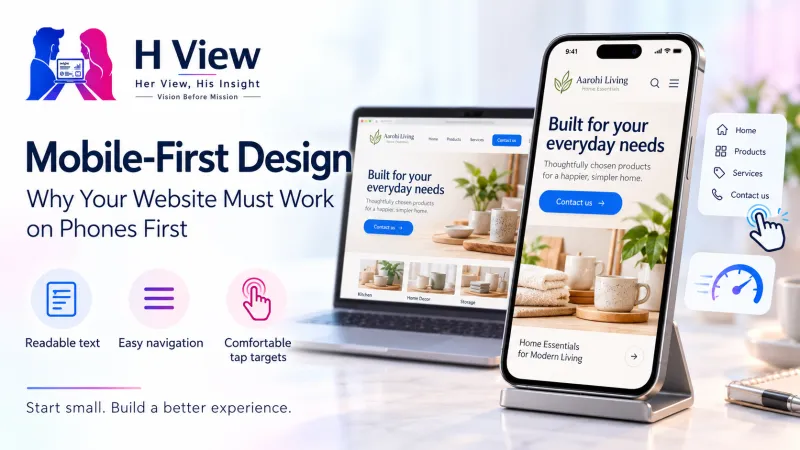 Also readMobile-First Design: Why Your Website Must Work on Phones First→
Her View
Owners often feel a “proper website” is what makes a business look real. In practice, a clear, honest single page with a working contact form looks more professional than a large site with gaps. Start with what you can do well.
His Insight
Think in terms of decisions per page. A landing page asks for one decision. A website supports many. Match the format to how many decisions your customer needs to make before contacting you.
HView Digital Solutions
Know which one you need?
Tell us what you sell and where your visitors come from. We’ll suggest a landing page or a small website and quote for it.
Landing pages from ₹4,999 and business websites from ₹12,999, using content you supply.
Describe your requirementFrequently asked questions
Can a landing page rank on Google?
It can, for a narrow topic, if it is useful and properly indexed. A single page will not cover many different searches, though.
Can I turn a landing page into a website later?
Yes. Keep it on your own domain from the start, so its address and any search visibility carry over when you add pages.
How many pages does a small business website need?
Often four or five to begin with: home, services, about, contact and a privacy policy. Add pages as real customer questions appear.
Should my landing page have a menu?
Usually a minimal one or none, so visitors focus on the main action. Keep links to your privacy policy and contact details.
Sources
H View stories follow our editorial policy. Spotted an error? Tell us and we will correct it.
Rate this article
One tap is enough. No comment needed.
Was this article helpful?
Your answer goes straight to our editors.



Comments0
No comments yet. Start the conversation.