

Dhanteras Gold Buying Checklist: Check HUID, Purity and the Final Bill
A Dhanteras checklist for checking a gold hallmark, six-character HUID, purity, itemised invoice, making charges and buyback terms before paying.
Before you buy gold on Dhanteras, check these details
On Dhanteras, a gold purchase can be a gift, a family tradition or a planned addition to a jewellery box. Whatever the reason, take a moment to verify the hallmark, purity, price calculation and invoice before paying. For hallmarked jewellery, look for the BIS mark, the purity mark and the six-character alphanumeric HUID. Then use the BIS Care app to check the HUID details. Ask for an itemised bill that records the weight, purity, making charges, taxes and any stone value separately. Those checks will not tell you whether gold is a good investment, but they make it easier to know what you are buying.
Gold is especially visible in the headlines this festive season because prices have been high and demand has shifted between jewellery and bars or coins. The World Gold Council’s India-focused Q3 2026 report said the local gold price was about 45 per cent higher year on year. It also recorded a rebound in jewellery demand from the previous quarter, alongside a year-on-year decline. That mix is a reminder that a crowded showroom and a festival offer do not remove the need to compare the actual product and bill.
What does a BIS hallmark tell you?
A hallmark is an official mark that communicates the purity category of the gold article under India’s hallmarking system. It does not mean every design, stone or seller claim has been independently assessed in the same way. The Bureau of Indian Standards describes the hallmark components as the BIS logo, a purity mark and a unique HUID. For a hallmarked item, inspect the mark on the piece or its tag and make sure the details correspond to the article being sold.
Purity is commonly expressed in karats or fineness. For example, 22K jewellery contains a higher proportion of gold than 18K jewellery, while 24K gold is typically used for bars and coins rather than everyday jewellery because it is softer. The number alone is not enough: match the purity mark to the description on the invoice. If you are choosing a lower-purity alloy for strength, understand that it contains less gold by weight than a higher-purity item. The right choice depends on use, design and budget; a higher karat is not automatically the better purchase for every purpose.
 Also readGold Is So Expensive—Why Are Indians Still Buying It Before the Wedding Season?→
How do you check the HUID before paying?
The Hallmark Unique Identification number is a six-character alphanumeric code used to trace a hallmarked article. The BIS says consumers can verify hallmark details through its BIS Care app. Enter the HUID in the app and compare the information returned with the article and seller’s description. If the code is unreadable, the app does not return a matching record, or the details do not appear to match the piece, pause and ask the jeweller to explain before completing the sale.
Do not treat a photo of a hallmark on a different item as proof for the item in your hand. A seller should let you inspect the actual article and invoice. If you are buying several pieces, verify each item’s mark, particularly when the pieces have different purity or weight. The HUID is a traceability check; it does not replace careful inspection of the bill or the terms of a buyback.
At the counter, verify three things
- Mark: the BIS logo and purity mark should be present, with the HUID for hallmarked jewellery.
- Match: the HUID record, purity and item description should correspond to the piece being sold.
- Bill: the invoice should identify the article and show its weight, purity and price components clearly.
What should an itemised gold bill include?
Ask the jeweller for a proper tax invoice, not just a handwritten total or a payment receipt. The invoice should describe what you purchased and make the calculation understandable. Look for the gold rate applied, net gold weight, purity, making or wastage charges, any stone or non-gold component value, applicable tax and final amount. If a product is sold as a coin or bar, check its stated weight, purity, packaging and any premium charged over the metal value. Keep the invoice and packaging in a safe place; they can help if you later need service, exchange or resale.
Weight deserves special attention in a piece with gemstones, enamel or other materials. The total weight of the ornament may not equal the gold weight. Ask the jeweller to state the gold weight and stone value separately. If a piece is sold with a “free” stone or an unusually large discount, ask how the price is being calculated and whether the stone has a separate valuation. Do not compare two pieces on total price alone if they differ in purity, gold weight, design work or stone content.
Making charges can be a fixed amount, a percentage or structured another way. Ask which method applies and whether the charge is refundable or deducted if the item is exchanged. The answer may vary by retailer and product. A low advertised making charge can be offset by other fees or by a higher gold rate, so compare the final bill for similar items rather than relying on a single promotional number.
How should you compare two jewellers?
Compare like with like: the same purity, similar net gold weight, similar design complexity and equivalent stone details. Ask for a written estimate that separates the metal price from making charges and taxes. Check whether the gold rate displayed in the showroom is the rate used on the invoice, and when that rate is fixed. Festival promotions can have conditions, such as selected designs, limited dates or exclusions for coins and lightweight items. Read those conditions before deciding.
Also ask about service charges and the retailer’s policy for resizing, cleaning, repairs, exchange and buyback. These policies are commercial terms and can differ even among branches of the same chain. Find out whether a future exchange is based on the original invoice value, the gold value on the exchange date, or another method. Ask how stones and making charges are treated, and whether deductions apply. Request the policy in writing or keep the retailer’s published terms.
Do not assume that buying from a familiar brand eliminates the need to read the invoice. Equally, do not reject a local jeweller solely because it is smaller. Look for a clear hallmark, a verifiable HUID, transparent billing, a real business address and a willingness to answer reasonable questions. A seller who discourages verification or pressures you to pay before showing the final calculation is giving you a reason to slow down.
Should you buy jewellery, coins or bars?
Start with the purpose. Jewellery is worn and can carry design and making costs; coins and bars are usually chosen for their metal content and easier storage. Neither automatically guarantees a better financial outcome. Gold prices can rise or fall, and the amount you receive on resale may be affected by the prevailing rate, purity testing, retailer policies and deductions. If you are buying for a ceremony or daily use, comfort, design and durability may matter as much as metal content. If you are buying for savings, compare the total cost and resale terms with other options and avoid treating a festival purchase as a guaranteed return.
For a coin or bar, verify the weight and fineness, the refinery or mint information, tamper-evident packaging if supplied and the invoice. Ask whether the retailer will buy back that product later and on what terms. If it is a gift, consider whether the recipient can retain the invoice and certificate. Keep any protective packaging intact if the buyback policy makes that a condition.
How can you set a sensible Dhanteras budget?
Decide the maximum amount before visiting the showroom and include taxes and making charges in that limit. If the desired item exceeds it, choose a lighter or simpler design rather than accepting a rushed loan or instalment plan without understanding the full cost. Ask whether a reservation or booking requires a deposit and what happens if the rate changes or you cancel. A festival date may make a purchase feel urgent, but the hallmark and bill are more important than the calendar.
If you are buying with family, agree on who will receive the invoice and where it will be stored. Photograph the receipt for your records, but keep the original. For a higher-value purchase, consider paying through a traceable method and check that the invoice reflects the same amount. Do not share card OTPs or banking credentials with a seller; enter them yourself on a trusted payment terminal or app.
What if the hallmark or invoice raises a concern?
Ask the jeweller to explain the discrepancy and request a corrected bill before leaving. If a hallmark appears false or a seller refuses to provide a proper invoice, do not continue the purchase simply because you have already spent time choosing the design. The BIS consumer-protection pages explain the hallmarking framework and consumer routes. Keep the article, packaging, invoice and communications if you need to make a complaint. A hallmark is a useful verification signal, but consumer protection also depends on records and an accurate description of the transaction.
Be careful with online purchases too. Use the retailer’s official site, inspect its return and exchange conditions, and confirm who fulfils the order. A marketplace listing should clearly identify the seller and product specifications. When an online listing uses a generic hallmark image, contact the seller for item-specific details and verify them when the article arrives, within the return window.
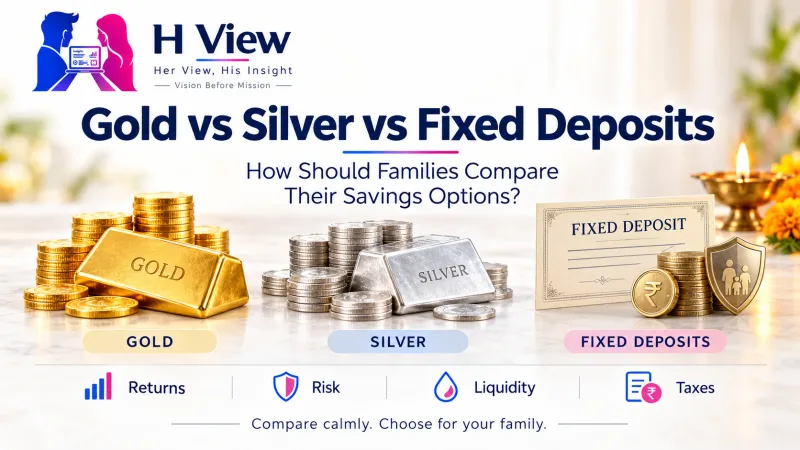 Also readGold vs Silver vs Fixed Deposits: How Should Families Compare Their Savings Options?→
Her View
For many families, Dhanteras gold is tied to a memory, a gift or a milestone. A checklist does not make the tradition less meaningful; it helps the buyer feel comfortable about the choice. Take the invoice home, explain the details to the person who will wear or keep the item, and do not let a sales counter turn a personal decision into a race.
His Insight
Think of the final bill as the product’s identity card. It should tell you what the metal is, how much is present, what else was charged and which terms apply later. A trustworthy jeweller should welcome questions about purity, HUID and buyback conditions. If the numbers are hard to follow, request a clearer breakdown before paying.
H View Verdict
This Dhanteras, verify the HUID in BIS Care, match purity to the invoice and compare the total cost for similar items. Ask how stones, making charges, exchange and buyback are handled. The World Gold Council’s latest India report shows why price headlines are drawing attention, but no headline can replace product-level checks. Buy for a reason you understand, at a price you can afford, with paperwork you can keep.
Frequently asked questions
What is the HUID on gold jewellery?
It is a six-character alphanumeric identification code used to trace a hallmarked article. The BIS says consumers can check the HUID through the BIS Care app.
What should I check on a Dhanteras gold invoice?
Check the item description, purity, net gold weight, rate, making charges, stone value where relevant, tax and total. Keep the invoice for future service or exchange.
Does a BIS hallmark guarantee a good resale price?
No. It indicates a hallmarking and purity detail, but resale depends on the market rate, retailer’s policy, product condition and any deductions.
Sources: BIS hallmarking FAQs; BIS consumer protection; World Gold Council, India Focus Q3 2026.
H View stories follow our editorial policy. Spotted an error? Tell us and we will correct it.
Rate this article
One tap is enough. No comment needed.
Was this article helpful?
Your answer goes straight to our editors.








Comments0
No comments yet. Start the conversation.