
GST Invoice Format in India: Essential Fields and a Practical Checklist
Use this practical GST invoice checklist to review supplier and buyer details, invoice numbering, taxable value, tax breakup and common document types in India.
A GST tax invoice records who supplied a taxable service or goods, what was supplied, the value, and the tax charged. A clear invoice helps the buyer reconcile input tax credit where eligible and gives both parties a traceable business record. The exact particulars depend on the transaction and the applicable GST rules, so use this checklist as a starting point and verify the requirements for your case.
What details should a GST tax invoice include?
| Invoice area | Check for |
|---|---|
| Supplier | Legal name, address and GSTIN |
| Invoice identity | A unique consecutive number for the financial year and the issue date |
| Recipient | Buyer name, address and GSTIN/UIN when registered; other prescribed details where applicable |
| Supply | Description, quantity for goods, unit, taxable value and relevant HSN/SAC details |
| Tax | Applicable rate and amount, shown as CGST plus SGST/UTGST or IGST as appropriate |
| Other particulars | Place of supply for inter-State transactions, delivery address, reverse-charge indication and signature/digital signature where required |
CBIC’s GST invoice rules list prescribed particulars and special cases. Review the current rules for exports, reverse charge, e-invoicing, composition taxpayers and other transactions that may need additional treatment.
Should you charge CGST and SGST or IGST?
For a typical intra-State supply, CGST and SGST (or UTGST) are generally shown separately. For a typical inter-State supply, IGST is generally charged. The place of supply rules determine the treatment; the customer’s billing address alone may not settle every case. CBIC explains the broad structure in its overview of GST.
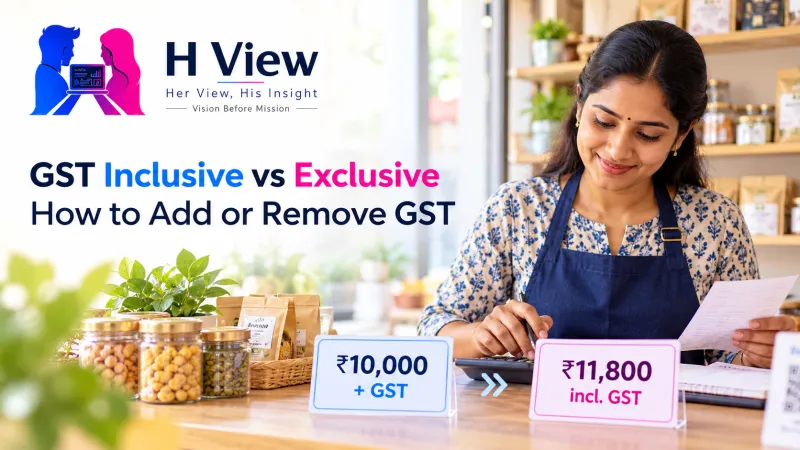 Also readGST Inclusive vs Exclusive: How to Add or Remove GST from a Price→
Tax invoice, bill of supply or proforma: what is the difference?
- Tax invoice: issued for taxable supplies by a registered supplier when required.
- Bill of supply: generally used in prescribed cases where tax is not charged, such as exempt supplies or eligible composition supplies.
- Proforma invoice or quotation: a preliminary commercial document; it does not replace the final tax invoice when a tax invoice is required.
Before sending the invoice
Confirm customer GST details, match the invoice date and number to your records, check the tax rate and place of supply, and ensure totals reconcile. H View’s GST invoice generator can help prepare a draft, but you remain responsible for checking the fields and legal treatment before issuing it.
 Also readFake Online Trading Apps in India: How “Guaranteed Returns” Are Costing People Lakhs→
Frequently asked questions
Can I use one invoice number for two customers?
Invoice numbers should follow the applicable unique, consecutive numbering requirements. Do not reuse a number for separate invoices in the same series.
Does every GST invoice need the buyer’s GSTIN?
Recipient particulars vary by registration status and transaction type. Apply the current rule to the specific supply.
Does a generated invoice guarantee GST compliance?
No. A template helps with formatting; it cannot determine every tax rate, place-of-supply question, exemption or reporting obligation.
This article is general educational information, not tax or legal advice. Check current CBIC rules or consult a qualified tax professional for your transaction.
H View stories follow our editorial policy. Spotted an error? Tell us and we will correct it.
Rate this article
One tap is enough. No comment needed.
Was this article helpful?
Your answer goes straight to our editors.











Comments0
No comments yet. Start the conversation.