
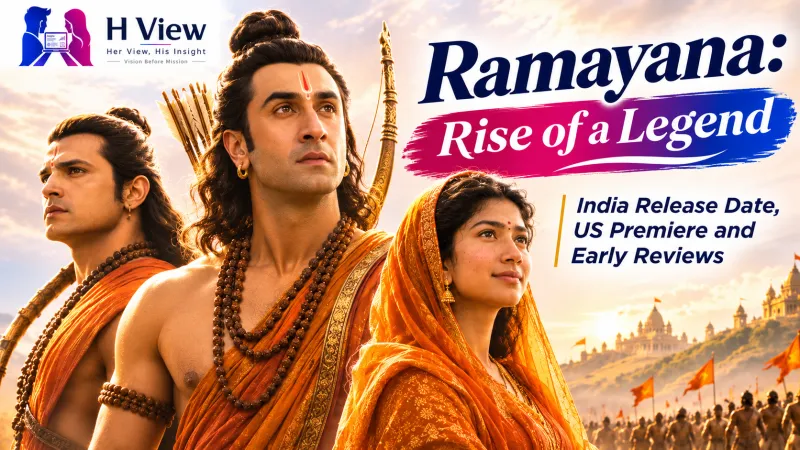
Ramayana: Rise of a Legend — India Release Review, Full Cast and Roles
Ramayana opens in India on 5 November. Meet the full cast and roles, director and producer, reported budget, genuine critic ratings, early audience reactions and what to expect.
Updated 5 November 2026: Ramayana: Rise of a Legend opens in Indian cinemas today. Here is a release-day guide to the director, producer, reported budget, the principal and supporting cast, the characters they play, and what critics and early Indian viewers are saying. This is a sourced review roundup; H View has not attended a screening.
The film arrives with a familiar story, a large ensemble and unusually high expectations. For many people, the Ramayana is part of family memory, faith and culture; for others, this is a new cinematic introduction. That makes the casting and the choices behind each role as important to discuss as the visual scale.
Ramayana: Rise of a Legend — at a glance
| Detail | Information |
|---|---|
| India release | 5 November 2026 |
| Director | Nitesh Tiwari |
| Producer | Namit Malhotra; Yash is also credited as a producer in Indian listings |
| Screenplay | Shridhar Raghavan and Nitesh Tiwari |
| Principal cast | Ranbir Kapoor, Sai Pallavi, Yash, Ravi Dubey and Sunny Deol |
| Music | A. R. Rahman and Hans Zimmer |
| Runtime | About 3 hours 15 minutes, according to Rotten Tomatoes |
| Budget | Reported at about ₹4,000 crore for the two-part project; the figure is not an audited production disclosure |
The official film page names Ranbir Kapoor, Yash and Sai Pallavi as stars and credits Nitesh Tiwari as director and Namit Malhotra as producer. Sony Pictures’ listing adds Ravi Dubey and Sunny Deol to the cast. Indian cast guides identify a much broader ensemble, whose members and roles are set out below.
What story does the first film tell?
Part One follows Rama, Sita and Lakshmana from Ayodhya into exile, while introducing the people and choices that set the larger conflict in motion. The story links Rama’s duty to his family, Kaikeyi’s demand, Bharata’s place in the succession and the growing tension around Ravana in Lanka. It is planned as the first half of a two-part adaptation, with the next chapter expected to continue the epic rather than resolve the entire Ramayana here.
The challenge is to make the relationships clear without flattening a story that audiences already know in different versions. A viewer unfamiliar with the epic needs enough context to understand why exile matters; a longtime reader may be watching for how the film treats loyalty, restraint, power and Sita’s agency. The three-hour scale raises a practical question too: does the film use its time to deepen these people, or does the first part feel like an extended setup?
Also readRamayana: Rise of a Legend Review — Cast, Budget, Ratings and Verdict→Who plays whom? The cast gallery
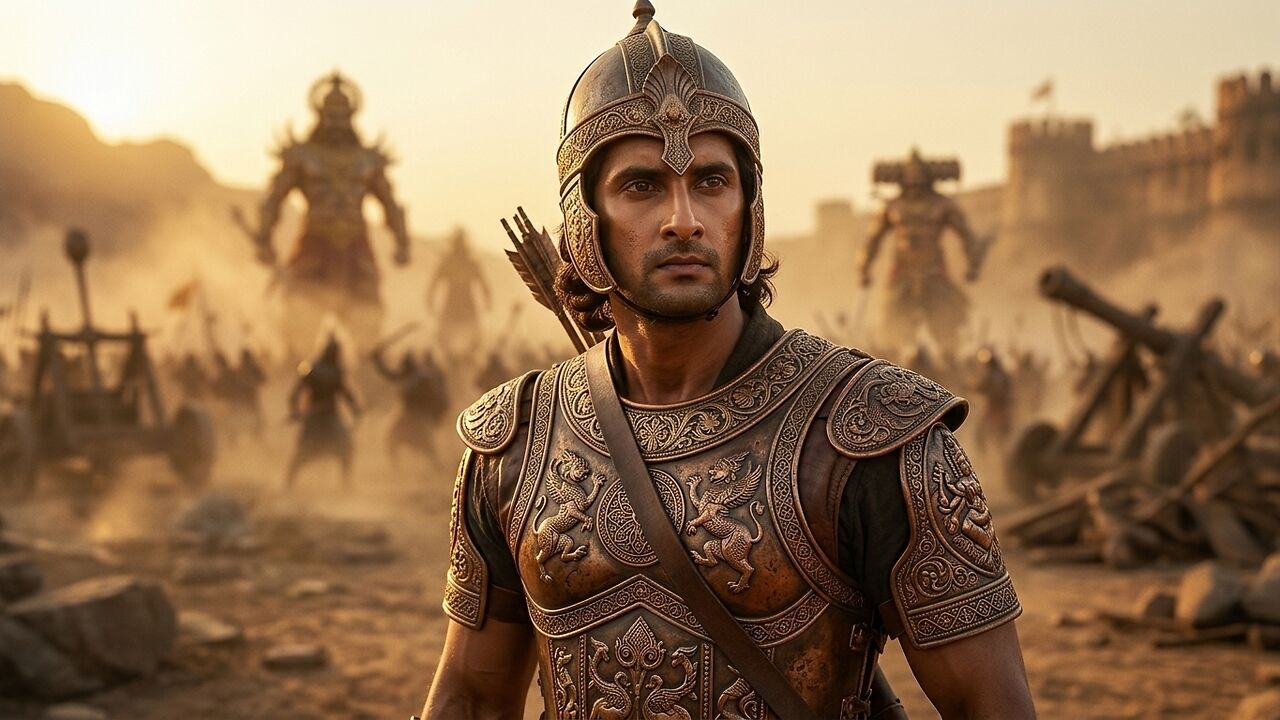
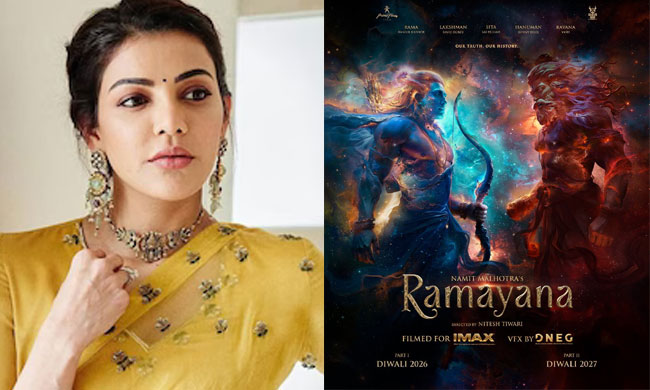
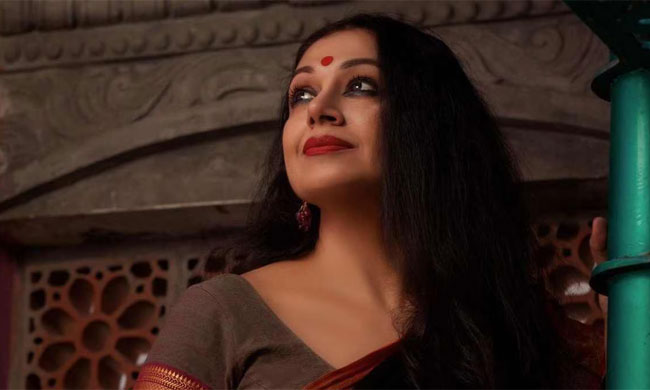
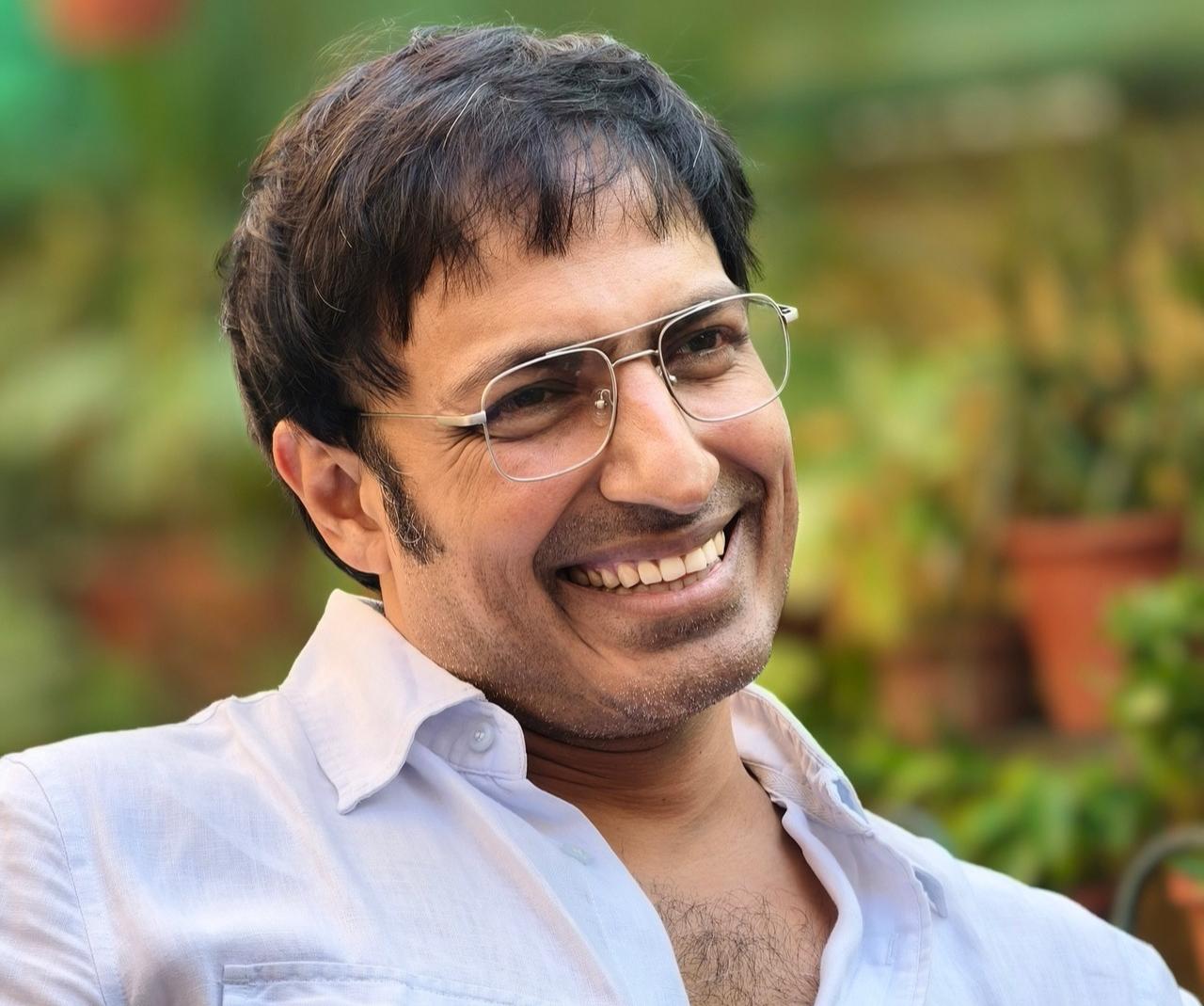
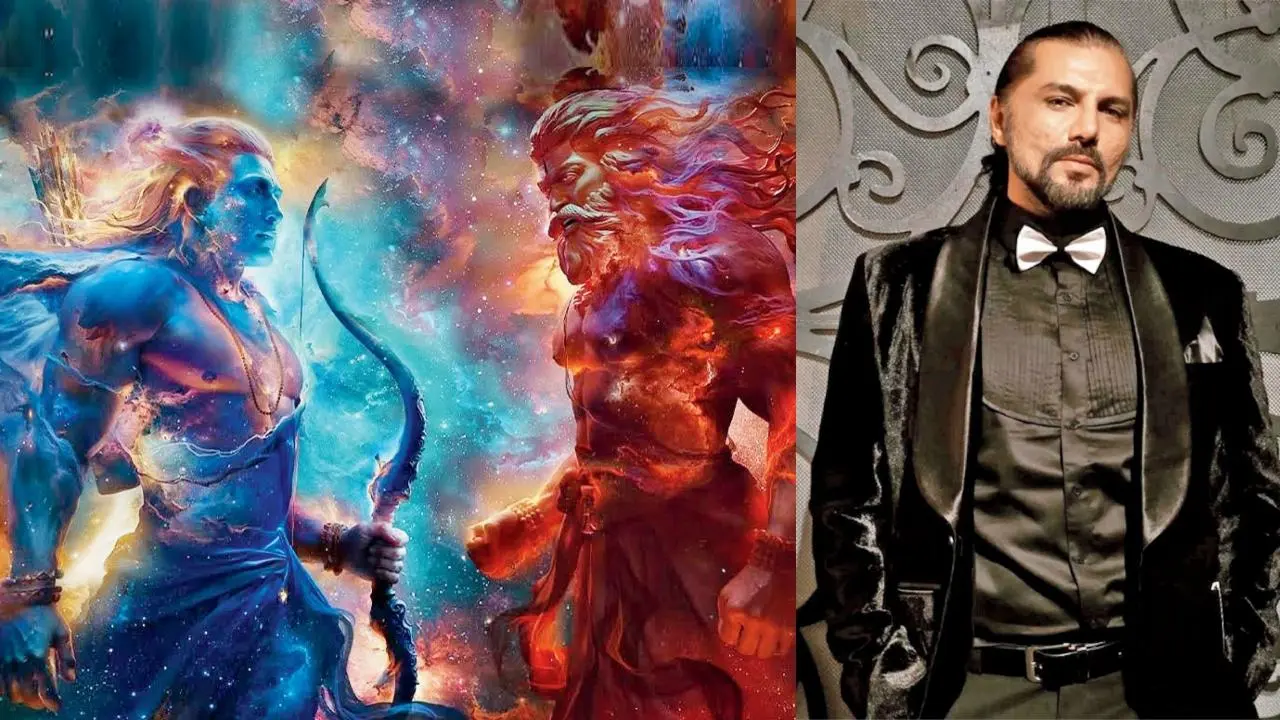
The gallery below brings the publicly identified principal and supporting cast into one place, with character notes. It is arranged in a responsive four-column grid on wider screens and stacks down on mobile. Individual image credits link to the publication carrying each photograph. Smaller and child roles listed in public cast databases appear after the gallery; film credits can differ between databases and may continue to expand.











Additional credited roles
Public cast listings also name Sonia Balani as Urmila, Surabhi Das as Shrutakirti, Riya Kapoor as Mandavi, Dishita Sehgal as young Shurpanakha, Kiara Sadh as young Sita, Kanchan Chetal as Tadaka, Parminder Chadha as Subahu, Pravin Manjarekar as Mithila Mahaguru, Satyen Chaturvedi as Sumantra, Nitish Sharma as Shatrughna and Shishir Sharma as Vasishtha. These smaller and younger-character parts complete the family, court and forest ensemble; credit listings can vary as final screen credits are published.
Who made the film, and how large is the production?
Nitesh Tiwari directs and shares screenplay credit with Shridhar Raghavan. Namit Malhotra produces through Prime Focus Studios, with Yash and Monster Mind Creations also associated with the project. DNEG is central to the visual-effects work, and A. R. Rahman and Hans Zimmer share the music credit. Sony Pictures handles global distribution outside India, while Indian reports identify Dharma Productions for domestic distribution.
The often quoted ₹4,000-crore figure refers to the two-part project, not a confirmed audited cost for this single instalment. Reports commonly place Part One around ₹2,000 crore, but the makers have not published a detailed audited budget. Treat both figures as reported estimates, not settled accounting. Rotten Tomatoes lists a runtime of 3 hours 15 minutes; language versions and local showtimes should be checked with the cinema.
What are critics saying, and what is the rating?
At the time of this update on 5 November, Rotten Tomatoes showed seven critic reviews and zero verified audience ratings in its listing. Its current page did not expose a stable India audience score, so a single definitive rating would be misleading. The available critic scores show a split: Screen Rant gave it 7/10, Next Best Picture 5/10, IGN 4/10, and Absolute Geeks 2.5/5. The Guardian’s Peter Bradshaw praised its scale, landscapes and adventurous storytelling, while several other critics found the first part overlong, crowded or emotionally distant.
India’s first-day social reactions are arriving as people leave early shows. The Times of India’s release-day roundup describes mixed posts: viewers have praised the effects and performances, with Yash’s Ravana drawing particular attention, while some question whether the familiar story feels fresh. Those social posts are early reactions, not a representative audience poll. A rating can move as more critics and ticket-buyers respond, so check the linked review pages for their latest numbers.
The international reviews published before India’s opening were based on limited screenings, and some focused on the English-language version. Their comments on dubbing and lip-sync should not be treated as a direct verdict on every Indian-language cut. The more durable points of agreement are clearer: the scale and design are major strengths for many reviewers, while pacing and narrative density are the main reservations. Viewers should weigh the specific review and language version rather than relying on a headline score alone.
What are expectations from the picture?
Audiences are expecting a film that can make the epic feel cinematic without treating spectacle as a substitute for character. The ensemble gives the story room to show both Ayodhya and Lanka as families and political worlds, not simply backdrops for a battle. Arun Govil’s casting as Dasharatha also brings a generational echo: many viewers remember him as Rama in the television adaptation, and may bring that memory into the cinema.
The second expectation is that this first instalment feels complete enough to satisfy viewers while leaving room for the next film. A two-part structure can give relationships more space, but it also risks making the first chapter feel like an elaborate bridge. Finally, audiences will look for respect and a clear point of view. No one screen version can represent every retelling of the Ramayana; the film can still be judged on whether its choices feel thoughtful, coherent and emotionally earned.
 Also readRamayana Piracy Case: What the Bombay High Court Order Actually Means→
H View perspective
For this story, casting is not just a roll call of famous names. The actors have to make the relationships legible: why Rama accepts exile, what Sita chooses within it, how Lakshman supports his brother, and what drives Ravana beyond his power. The scale will draw viewers in, but the film’s staying power will depend on whether these people feel more than symbolic.
Her View
Sita’s role deserves room for judgment, courage and emotional intelligence, not only beauty or devotion. Sai Pallavi’s performance will be central to whether audiences experience Sita as an active presence in the story. That is the standard to bring to the film, rather than assuming the costume or the casting alone proves the character has been fully realised.
His Insight
Rama is difficult to play because restraint can look passive unless the actor gives it inner movement. Ranbir Kapoor’s challenge is to make duty and compassion visible without turning Rama into a distant icon. Yash has a different task: Ravana needs the danger of a formidable ruler and the human motives that make the conflict worth following.
H View verdict: an ambitious release-day watch, with a divided early response
Ramayana: Rise of a Legend reaches Indian theatres today as a major production with a broad cast and a story that carries enormous cultural memory. The first critics are divided, though many acknowledge the visual ambition; the earliest Indian audience posts are positive about spectacle and performances but not uniformly sold on the storytelling. There is no settled audience score yet.
Our recommendation is to approach it as one filmmaker’s two-part interpretation, not as the final word on the epic. For viewers drawn to large-scale mythological cinema, the cast, design and music make it a notable theatrical event. For viewers who care most about pace, emotional depth and how much story resolves in Part One, the early reviews point to real questions. The honest verdict will continue to develop as more Indian-language audiences see it.
Frequently asked questions
Who plays Rama, Sita and Ravana?
Ranbir Kapoor plays Rama, Sai Pallavi plays Sita and Yash plays Ravana. Ravi Dubey is Lakshman and Sunny Deol is Hanuman.
Who directed and produced Ramayana: Rise of a Legend?
Nitesh Tiwari directed the film. Namit Malhotra is the producer; Yash is also credited as a producer in some Indian listings.
What is the film’s reported budget?
Reports put the two-part project near ₹4,000 crore, with about ₹2,000 crore often attributed to Part One. These are estimates; no audited single-film budget has been disclosed.
What are the genuine review ratings?
As of 5 November, Rotten Tomatoes listed seven critic reviews and no verified audience ratings. Individual scores included Screen Rant at 7/10, Next Best Picture at 5/10, IGN at 4/10 and Absolute Geeks at 2.5/5. Scores may change as coverage expands.
Is this H View’s first-person review?
No. This is a release-day cast guide and review roundup based on named critics and reported audience reactions. H View has not attended a screening, so it does not claim a personal viewing experience.
Sources and further reading
Official film synopsis and credits · Sony Pictures cast and credits · BookMyShow cast guide · The Guardian review · Rotten Tomatoes critic listing · India Today release-day coverage · The Times of India early audience reactions · Absolute Geeks review.
H View stories follow our editorial policy. Spotted an error? Tell us and we will correct it.
Rate this article
One tap is enough. No comment needed.
Was this article helpful?
Your answer goes straight to our editors.







Comments0
No comments yet. Start the conversation.