
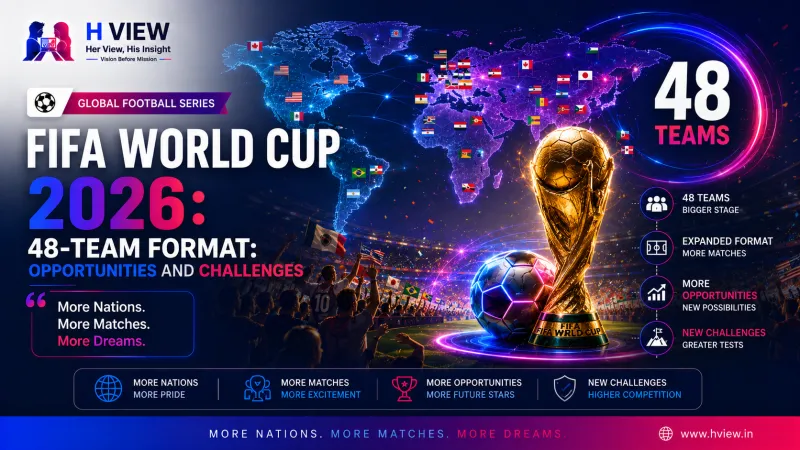
FIFA World Cup 2026 48-Team Format: Opportunities and Challenges
The 2026 World Cup was the first with 48 teams: 12 groups, a new round of 32 and 104 matches, with four nations debuting. How the format worked, why FIFA expanded it, and what it meant for quality and players.
FIFA World Cup 2026 was the first with 48 teams instead of 32. The teams were split into 12 groups of four, with the top two in each group and the eight best third-placed teams moving into a new round of 32. That raised the total to 104 matches and gave first-ever World Cup places to Cape Verde, Curaçao, Jordan and Uzbekistan.
It was one of the biggest format changes in the tournament's history. More teams meant more matches, more stories and more countries tasting the World Cup for the first time. It also raised fair questions about quality, player workload and cost. Now that the tournament has been played, we can look at both sides.
How did the 48-team World Cup format work?
FIFA's Council approved a format of 12 groups of four, with the top two and eight best third-placed teams progressing to a round of 32. Every team was guaranteed at least three matches.
| 32-team World Cup (1998–2022) | 48-team World Cup (2026) | |
|---|---|---|
| Groups | 8 groups of 4 | 12 groups of 4 |
| Who advances | Top two per group | Top two per group plus 8 best third-placed teams |
| First knockout round | Round of 16 | Round of 32 |
| Total matches | 64 | 104 |
| Matches for the champions | 7 | 8 |
The 104-game tournament was played across 16 host cities in the United States, Canada and Mexico.
Why did FIFA expand the World Cup to 48 teams?
The main argument was opportunity. With only 32 places, qualification was extremely hard for many football nations, especially in Africa, Asia, CONCACAF and Oceania. More places mean more countries can plan realistically for a World Cup, which can encourage investment in academies, coaching, facilities and domestic leagues. Expansion also means more matches for broadcasters and sponsors, which is part of the commercial story too.
 Also readFIFA World Cup 2026: A New Era of Global Football→
Which teams played their first World Cup in 2026?
Four nations made their debut: Cape Verde, Curaçao, Jordan and Uzbekistan. Al Jazeera describes Curaçao, with a population of about 160,000, as the smallest country by population ever to qualify for the World Cup. Stories like these are exactly what the bigger format was meant to create.
Did the bigger format lower the quality of matches?
This was the main worry before the tournament: that more teams would mean more one-sided games. It is a fair concern, because the gap between football nations has not disappeared. The counter-argument is that the gap has narrowed over the years, and that the best-third-placed route gives more teams something to play for in the final round of group matches. In our view, the bigger long-term question is the length of the tournament and the load on players, rather than whether newcomers belong.
What did the 48-team format mean for players?
- One extra match: The finalists played eight matches instead of seven.
- Longer tournament: It ran from 11 June to 19 July 2026, coming straight after long club seasons.
- Travel and heat: Distances and summer temperatures across three countries made recovery harder.
- Squad depth: Coaches had to plan rotation and fitness across more matches.
Her View
The joy on the faces of fans from countries playing their first World Cup is the best argument for expansion. For a small nation, one qualification can change how children see their future in sport. Opening the door wider made the World Cup feel more like it belongs to the whole world.
 Also readFIFA World Cup 2026 Predictions: What to Expect on the Road to Glory→
His Insight
The format delivered more teams and more matches, but the real test is what happens next. Expansion only pays off if new qualifiers invest the attention and money into youth systems and leagues. Meanwhile, player workload remains a genuine issue that FIFA and clubs will need to manage as calendars get busier.
H View Verdict
The 48-team format made the World Cup bigger, more inclusive and more unpredictable, with four first-time nations and a new round of 32. It also made the tournament longer and tougher on players and travelling fans. On balance, it widened football's world stage, and the 2026 edition showed that emerging nations deserve a place on it.
Frequently Asked Questions
How many teams played in FIFA World Cup 2026?
48 teams, up from 32 at every World Cup from 1998 to 2022.
How many matches were played?
104 matches, compared with 64 in the 32-team format.
How did teams qualify for the round of 32?
The top two teams from each of the 12 groups advanced, along with the eight best third-placed teams, making 32 teams in the first knockout round.
Which countries made their World Cup debut in 2026?
Cape Verde, Curaçao, Jordan and Uzbekistan all played at their first World Cup. Curaçao became the smallest nation by population ever to qualify.
Who won the first 48-team World Cup?
Spain won, beating Argentina 1–0 after extra time in the final at MetLife Stadium on 19 July 2026.
H View stories follow our editorial policy. Spotted an error? Tell us and we will correct it.
Rate this article
One tap is enough. No comment needed.
Was this article helpful?
Your answer goes straight to our editors.










Comments0
No comments yet. Start the conversation.