

The FIFA World Cup and India: Why the World’s Biggest Sporting Event hasn’t yet Created a Football Nation
“Every four years, billions unite behind one ball. India watches with passion but can we…
 Praveen July 27, 2026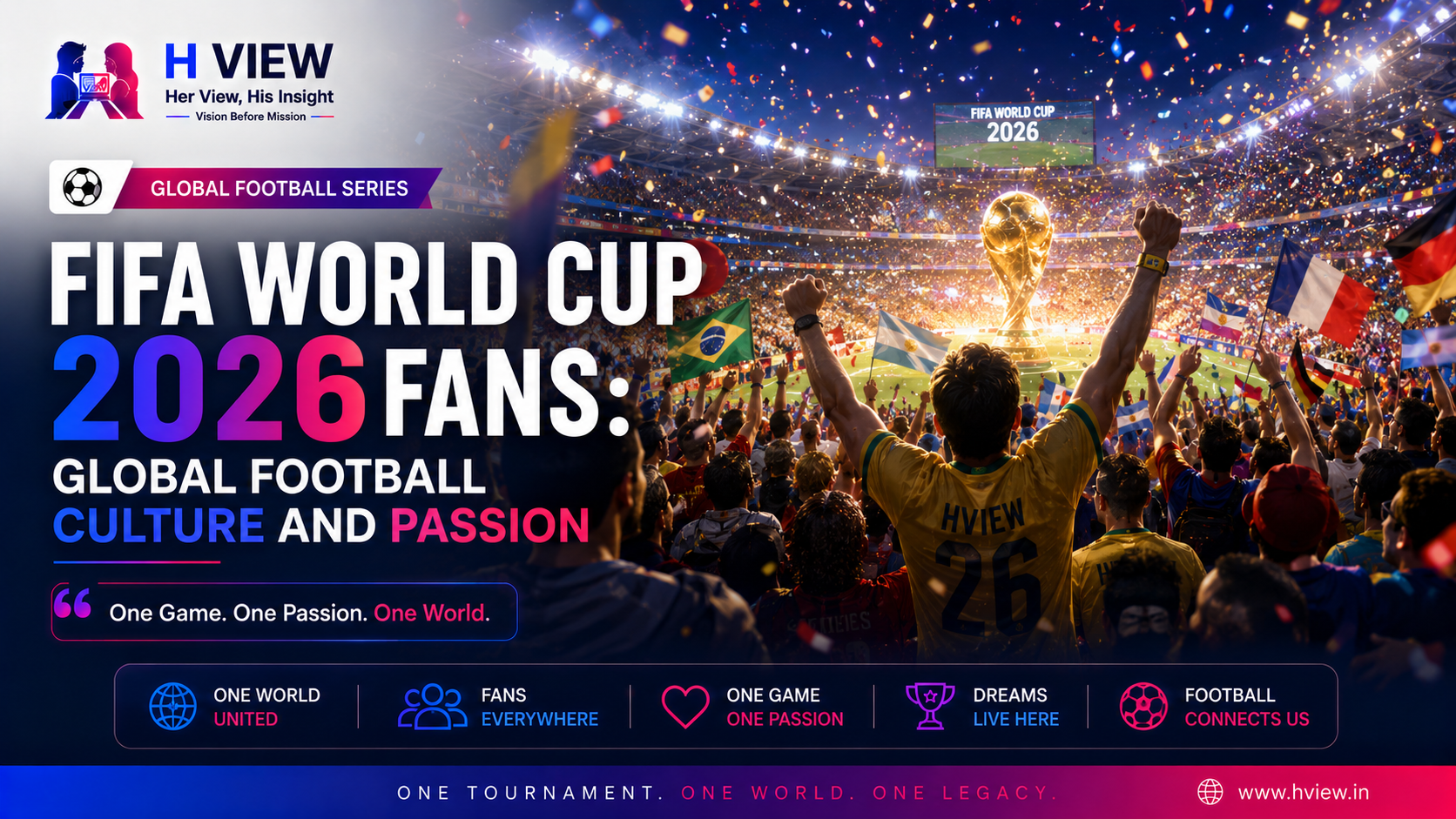
 By Satya HemanthUpdated August 12, 202612 min read49 views
A World Cup can produce extraordinary football and still feel incomplete without the people watching it. Goals become historic because thousands inside the stadium react at the same instant. A national anthem feels different when an entire stand is singing it. A late equaliser becomes more than a change on the scoreboard when supporters who have travelled thousands of kilometres suddenly find themselves celebrating with strangers.
The FIFA World Cup 2026 demonstrated that on an enormous scale.
The first 48-team men’s World Cup brought together supporters from more countries than any previous edition, while matches were spread across Canada, Mexico and the United States. The geography was vast, the tournament lasted for weeks and the travel demands were significant, yet supporters continued filling stadiums, fan festivals and public spaces across the three host nations.
FIFA reported 4.6 million spectators across the first 72 group-stage matches alone, alongside more than 5.5 million visits to FIFA Fan Festivals during the same phase of the tournament. Those figures give a sense of scale, but numbers only explain part of what made the fan culture memorable.
The more interesting story was what happened when supporters from dozens of football cultures occupied the same cities at the same time.
A football stadium is technically a building containing a pitch and thousands of seats. During a World Cup, it becomes something much more emotional because supporters temporarily transform it into a representation of home.
Flags appear across entire sections. Families arrive wearing national colours. Supporters bring songs that have been sung for generations, while others invent new chants during the tournament itself. Drums, scarves, face paint and banners create an identity that can make two matches in the same stadium feel completely different.
That atmosphere affects more than the television pictures.
Players constantly speak about hearing supporters during difficult moments, particularly when a match begins moving against them. A team defending a narrow lead can feel the tension of its fans. A side chasing an equaliser can suddenly receive another burst of energy when thousands of supporters realise an opportunity is developing.
There is no statistical category for that influence, and it should not be exaggerated. A louder crowd cannot turn a poor team into a world champion. But football is an emotional game played by people rather than machines, and atmosphere can change the psychological feeling of a match.
The World Cup magnifies that because the supporters are not representing only clubs or neighbourhoods. They are carrying national identity with them.
Hosting the tournament across Canada, Mexico and the United States meant there was no single version of the 2026 fan experience.
Mexican football culture brought a history and intensity that needed little introduction. Mexico has hosted World Cups before, and football occupies a deeply established place in the country’s sporting identity. Supporters gathering in Mexico City, Guadalajara and Monterrey therefore experienced the tournament inside cities where World Cup history already existed.
Canada offered a different environment. Football has been growing alongside other major sports, and the tournament created an opportunity for supporters to experience a men’s World Cup on home soil at a scale they had never previously seen.
The United States added another dimension because the tournament moved through large metropolitan areas with very different identities, communities and sporting traditions. Atlanta did not feel identical to Miami, Los Angeles or Philadelphia simply because the matches were taking place in the same country.
FIFA deliberately extended the fan experience outside stadiums through official Fan Festivals featuring live broadcasts, music, food and entertainment. The festivals were designed as gathering spaces where local communities and travelling supporters could watch matches together even without tickets.
That helped make the World Cup feel less like 104 isolated matches and more like a travelling continental celebration.
One of the most striking elements of 2026 was the scale of FIFA’s Fan Festival programme.
Official fan events were spread across the host region, giving supporters public spaces where matches could be watched on large screens alongside music, entertainment and local food. FIFA described the 2026 programme as the most geographically expansive Fan Festival edition in World Cup history.
By June 18, the festivals had already passed two million visitors. By the end of the group stage, FIFA reported more than 5.5 million visits.
Those numbers are important because World Cup tickets are limited and often expensive. Only a fraction of the people living in or visiting a host city can be inside a stadium for a particular match.
Public fan spaces allow the tournament to reach much further.
A supporter may never enter the stadium but can still spend an evening watching their country with thousands of other people. A family living locally can experience the tournament without buying four match tickets. Travelling supporters can meet fans from other countries in a less intense environment than the stadium itself.
That makes the World Cup more accessible as a cultural event, even when actual match attendance remains limited.
The move to 48 teams changed fan culture as much as it changed the competition format.
For established football nations, World Cup qualification is usually expected. The emotional pressure comes from how far the team progresses. For a country appearing for the first time, simply seeing the national flag at a World Cup can be historic.
FIFA confirmed 48 national squads for the 2026 tournament, producing the broadest representation yet at a men’s World Cup.
That wider field meant more communities had a direct reason to care about the tournament rather than simply choosing another country to support.
The experience is difficult to understand purely through competitive expectations. A debutant may know it is unlikely to lift the trophy, yet its supporters can still treat every match as a national event. A first goal can become part of sporting history. A first point can feel like a victory. Even elimination may be accompanied by pride if the team competed well against countries with far greater World Cup experience.
This is one of the strongest arguments for expansion that cannot be captured through concerns about whether every match is perfectly balanced.
More teams create more supporters who feel that the World Cup genuinely includes them.
Club football dominates most of the football calendar, but the emotional structure of a World Cup is different.
A club may represent a city, neighbourhood, community or family tradition. A national side can temporarily unite people who have almost nothing else in common.
During the World Cup, people who do not watch domestic football regularly begin discussing line-ups and results. Offices organise screenings. Families rearrange plans around kick-off times. Streets become quiet during matches and suddenly noisy after goals.
The relationship can be unusually intense because the opportunity comes only once every four years.
A club can lose on Saturday and play again the following week. A national team eliminated from the World Cup has to wait four years for another chance, assuming it qualifies again.
That scarcity gives every mistake and every success additional weight.
It also explains why supporters can move between enormous emotional extremes during one evening. The person celebrating in the 85th minute may be in tears 20 minutes later after extra time or penalties.
The World Cup compresses national sporting emotion into a few matches.
Modern World Cups now exist simultaneously in two places: the physical tournament and the enormous digital conversation around it.
A supporter no longer has to be in North America to participate intensely.
A goal is clipped, discussed, analysed and turned into memes almost immediately. Tactical arguments begin before the match has finished. Supporters film their celebrations in living rooms, restaurants and public screenings thousands of kilometres away from the stadium.
During the 2026 group stage alone, FIFA reported hundreds of millions of digital streams across its platforms and described global digital engagement as operating on an unprecedented scale.
That creates a different kind of global atmosphere.
Twenty years ago, someone watching from India might discuss the match with friends the following morning. In 2026, they could react instantly with supporters in Madrid, Buenos Aires, Lagos, Tokyo or Toronto while the game was still taking place.
The conversation is no longer limited by geography.
That is exciting, but it also changes fan behaviour in less positive ways.
Every controversial refereeing decision can produce abuse within seconds. Players may receive thousands of hostile messages after one mistake. National rivalries can move quickly from sporting banter into personal attacks.
Digital fan culture therefore carries the same responsibility as stadium culture: passion is part of football, but passion does not require removing respect.
World Cups naturally create rivalry, but they also create encounters that ordinary club football rarely produces.
A supporter from one country may share a train with fans from three others. People exchange scarves, ask for photographs, compare songs and occasionally end up celebrating together at matches involving neither of their own teams.
This is one of the reasons fan festivals and public spaces matter.
Inside a stadium during a knockout match, the emotional division between two sets of supporters can be intense. Outside that environment, the same fans may be eating together, discussing players and learning about each other’s countries.
That cultural exchange can sound sentimental until you actually see it happening around major tournaments.
Football provides an immediate common language.
Two people may not speak each other’s language fluently, but they both understand a penalty miss, a brilliant goal or the nervous final minutes of a match.
The sport creates an introduction that would otherwise never happen.
The emotional intensity of national-team football can also expose its worst side.
Supporters can become abusive. Rivalry can move into discrimination. Alcohol, frustration and crowd pressure can make situations more volatile. Digital platforms can amplify hostility because people say things online they would rarely say directly to another supporter.
That is why the idea of respectful fan culture matters.
FIFA maintained fan codes of conduct and safety guidance throughout the tournament, covering behaviour and prohibited items inside stadium environments.
Rules alone cannot create sportsmanship, though.
The healthier version of football culture is when supporters can desperately want the other team to lose without treating the people supporting that team as enemies.
A World Cup is especially suited to that attitude because the tournament’s appeal depends on diversity. The spectacle becomes more interesting precisely because different colours, songs, languages and football traditions arrive in the same place.
Removing that diversity would remove much of what makes a World Cup visually and emotionally distinctive.
Football crowds are sometimes portrayed mainly through groups of loud adult supporters, but the World Cup audience is much broader.
Children attending their first international match may remember the event long after they have forgotten the score. Families travelling together create traditions that may continue into future tournaments, while younger supporters often form their earliest connection with national-team football through these events.
This matters for the sport’s long-term health.
A tournament cannot depend forever on the same generation of supporters. Every World Cup has to create memories powerful enough that today’s child becomes tomorrow’s regular football fan.
The larger fan zones and city events of 2026 gave families more ways to participate even when they did not have stadium tickets.
That is an important difference between treating supporters as customers and treating them as part of the culture.
The first approach asks how many tickets can be sold. The second asks whether people leave with a reason to remain connected with the game.
Some of the most memorable World Cup support often comes from countries that are not expected to win the tournament.
When a major football nation reaches the knockout rounds, its supporters may see that as the minimum requirement. When a smaller country qualifies for the first time or records a historic result, the emotional reaction can feel completely different.
Every moment carries novelty.
Supporters are not comparing the current team with five previous generations of World Cup stars. They are witnessing the first version of the story.
The 48-team structure allowed more of those moments to happen in 2026.
It also challenged the idea that the value of a team can be measured only by how close it comes to winning the trophy. A country eliminated in the group stage can still leave behind one of the tournament’s most memorable supporter cultures.
Football history is full of teams remembered fondly despite never reaching a final.
Fans are often the reason.
The most beautiful part of World Cup fan culture is that the tournament allows people to care together. Football may look like a competition between countries, but much of the experience happens through relationships: parents watching with children, friends gathering at strange hours because of time zones, strangers hugging after a goal or supporters carrying a flag through a city thousands of kilometres from home.
Those moments cannot be manufactured completely by organisers. Stadium lighting, music and fan zones can create the setting, but the emotion has to come from the people.
The expanded tournament gave more communities the chance to experience that feeling directly. For some supporters, 2026 was not simply another World Cup. It was the first time their own country was part of the story.
That kind of memory can outlive the match itself.
From a wider football perspective, fan culture is also one of the World Cup’s most valuable assets.
Professional football has become an enormous commercial industry, and major tournaments generate extraordinary revenue from broadcasting, sponsorship, tickets and hospitality. None of that retains the same value if supporters stop caring emotionally.
The 2026 attendance and Fan Festival numbers suggest that interest remained exceptionally strong despite the tournament’s expanded size and difficult geography. FIFA reported record attendance during the group stage and millions of additional supporters participating through public fan events.
The challenge for FIFA and future hosts is making sure growth does not slowly remove the people who create the atmosphere. Ticket affordability, access, travel costs and the balance between ordinary supporters and premium hospitality will remain important issues.
A full stadium is commercially successful.
A full stadium that still feels like football is more valuable.
Fans were central to the tournament’s atmosphere and scale. FIFA reported 4.6 million spectators across the first 72 group-stage matches, while official Fan Festivals attracted more than 5.5 million visitors during the group phase.
They were official public gathering spaces where supporters could watch matches on large screens and experience music, food, entertainment and local culture. FIFA described them as central meeting points for fans and host communities outside the stadiums.
The expanded format gave more national teams and therefore more supporter communities direct participation in the World Cup. FIFA confirmed a record 48 national squads for the tournament.
Yes. FIFA reported record digital engagement during the tournament, including hundreds of millions of streams during the group stage alone. Social platforms, live commentary, clips and fan reactions allowed supporters around the world to participate without being physically present.
The combination of national identity, limited tournament opportunities and supporters from dozens of countries sharing the same host cities creates an atmosphere that club football rarely reproduces at the same global scale.
Satya Hemanth is the founder of H View and writes on careers, sports, leadership, digital trends, and practical decision-making. His articles focus on clear explanations, real-world examples, and useful insights for students, young professionals, and everyday readers.
Share your real experience and help other readers decide better.
No community views yet. Be the first to share yours.
“Every four years, billions unite behind one ball. India watches with passion but can we…
Praveen July 27, 2026 
Before every FIFA World Cup, football fans try to imagine the story before it happens.…
Satya Hemanth July 11, 2026 
The original draft is written as a pre-tournament article, so I’ve updated the angle now…
Satya Hemanth July 11, 2026 
The FIFA World Cup is not only a sporting event. It is also a major…
Satya Hemanth July 11, 2026