

The FIFA World Cup and India: Why the World’s Biggest Sporting Event hasn’t yet Created a Football Nation
“Every four years, billions unite behind one ball. India watches with passion but can we…
 Praveen July 27, 2026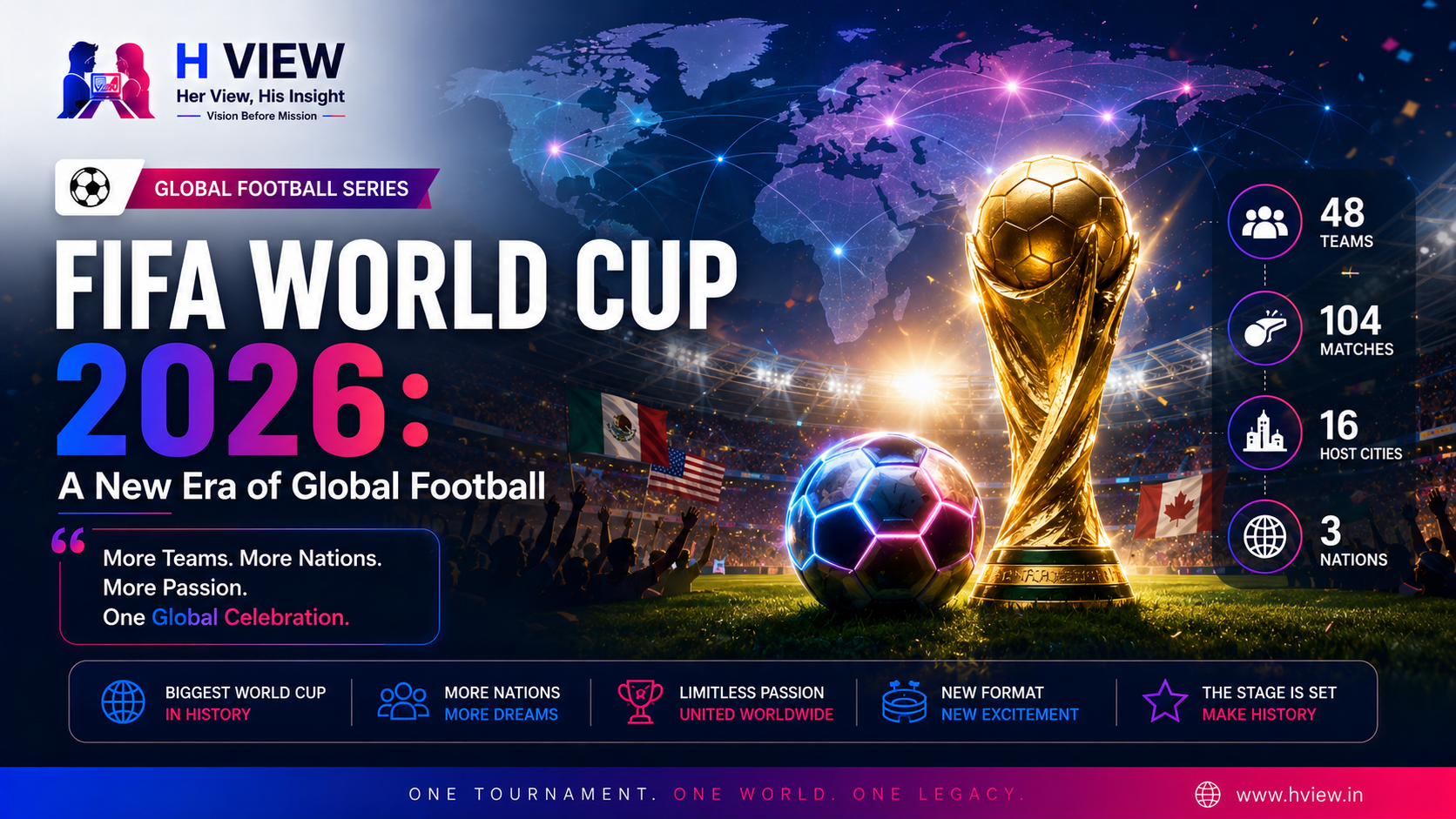
 By Satya HemanthUpdated July 10, 20264 min read44 views
The FIFA World Cup 2026 is not just another football tournament. It represents a major turning point in the history of global football.
For the first time, the World Cup is being hosted by three countries: the United States, Canada, and Mexico. It will also be the first edition with 48 teams, making it the biggest FIFA World Cup ever.
This expansion means more nations, more matches, more stories, and more opportunities for football fans across the world to witness history.
Every World Cup creates memories, but the 2026 edition feels different.
The tournament will bring together countries from every continent, giving more teams the chance to compete on football’s biggest stage. For emerging football nations, qualification itself can become a historic achievement.
The expanded format will also increase global excitement. More matches mean more chances for upsets, new rivalries, and unforgettable moments.
The United States, Canada, and Mexico will jointly host the tournament. This makes FIFA World Cup 2026 a true North American celebration.
Each host nation brings something unique.
The United States offers large stadiums, strong infrastructure, and experience in hosting major sporting events. Canada brings passionate supporters and a growing football culture. Mexico adds deep football tradition and emotional fan energy.
Together, they create a tournament that blends modern infrastructure with cultural diversity.
The move from 32 teams to 48 teams is one of the biggest changes in World Cup history.
This gives more countries the opportunity to qualify and compete. It also supports football development in regions where the sport is growing rapidly.
For fans, this means more matches, more storylines, and more nations to follow.
But the larger format also brings challenges. Travel, scheduling, player workload, and team preparation will be important factors throughout the tournament.
Football has changed a lot in recent years.
VAR, semi-automated offside technology, goal-line systems, player tracking, and match analytics are now part of the modern game. These technologies help referees make better decisions and allow teams to prepare more intelligently.
FIFA World Cup 2026 will likely show how technology and tradition can work together without removing the emotion of football.
The World Cup is more than a competition. It is a global festival.
Fans travel across countries, wear their national colors, sing songs, share traditions, and support their teams with passion. The stadium atmosphere becomes one of the most powerful parts of the tournament.
For many people, the World Cup is not just about winning. It is about belonging.
FIFA World Cup 2026 matters because it reflects the future of football.
The sport is becoming more inclusive, more digital, more global, and more competitive. More nations now have the chance to dream bigger.
This tournament may not only decide a champion. It may also reshape how the world experiences football.
FIFA World Cup 2026 is being hosted by the United States, Canada, and Mexico.
The tournament will feature 48 national teams.
It is the first World Cup hosted by three countries and the first edition with 48 teams
The tournament will have 104 matches.
FIFA World Cup 2026 will be bigger, broader, and more global than any edition before it.
It is not only a football tournament. It is a celebration of ambition, unity, technology, culture, and sporting excellence.The FIFA World Cup 2026 is not just another football tournament. It represents a major turning point in the history of global football.
For the first time, the World Cup is being hosted by three countries: the United States, Canada, and Mexico. It will also be the first edition with 48 teams, making it the biggest FIFA World Cup ever.
This expansion means more nations, more matches, more stories, and more opportunities for football fans across the world to witness history.
Satya Hemanth is the founder of H View and writes on careers, sports, leadership, digital trends, and practical decision-making. His articles focus on clear explanations, real-world examples, and useful insights for students, young professionals, and everyday readers.
Share your real experience and help other readers decide better.
No community views yet. Be the first to share yours.

“Every four years, billions unite behind one ball. India watches with passion but can we…
Praveen July 27, 2026 
Before every FIFA World Cup, football fans try to imagine the story before it happens.…
Satya Hemanth July 11, 2026 
The original draft is written as a pre-tournament article, so I’ve updated the angle now…
Satya Hemanth July 11, 2026 
A World Cup can produce extraordinary football and still feel incomplete without the people watching…
Satya Hemanth July 11, 2026