
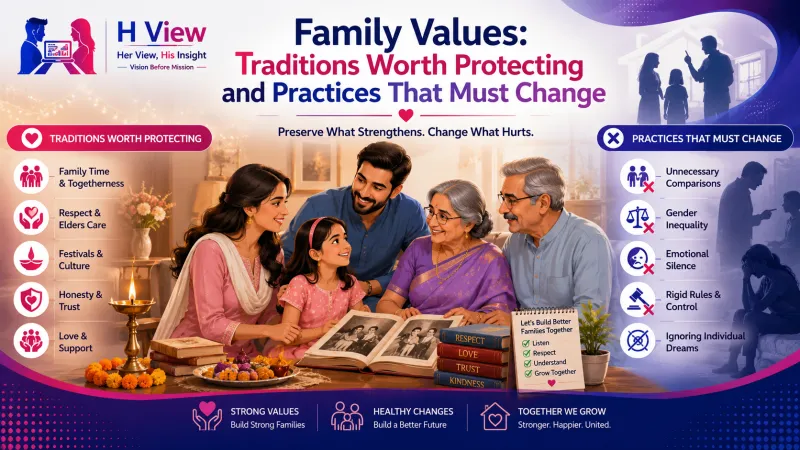
Family Values: Traditions Worth Protecting and Practices That Must Change
Family traditions can create connection, but they should leave room for fairness, choice and change. Learn how families can keep meaningful customs and revisit practices that cause harm.
Every family passes something to the next generation: a recipe, a festival ritual, a way of helping relatives or a phrase people repeat at the dinner table. Some customs make people feel connected. Others may create strain when no one is allowed to ask whether the practice still feels fair. Family values are not proven by preserving every habit unchanged; they show in how people treat one another while deciding what to keep.
Traditions differ across households, regions, religions and generations. A custom that feels comforting to one person may feel like an obligation to another. The goal is not to label every old practice good or bad. It is to understand what it means, who carries its work and whether family members can participate without fear or humiliation.
What makes a family tradition meaningful?
A tradition gives people a shared moment or memory. It might be cooking a familiar dish during a festival, visiting grandparents on a particular day, marking a birthday with a phone call or keeping one evening free for dinner together. A custom does not need to be elaborate or expensive to matter. Often its value comes from being repeated with care.
People also connect to family through different routines. One household may pray together; another may volunteer, share stories or help a neighbour. A family can preserve its sense of belonging without asking every member to express it in exactly the same way. When a tradition makes room for different ages, beliefs, abilities and schedules, more people can make it their own.
Ask what the custom is doing for the family
Before keeping or changing a practice, ask what people value about it. Does it help relatives spend time together? Does it teach a skill, remember someone or make a child feel included? What part feels meaningful, and what part feels difficult? These questions can separate the purpose of a tradition from the particular rule that has grown around it.
For example, a family may value preparing a festival meal together, but the same few people may be doing all the shopping, cooking and cleaning. The shared meal can stay while the work is divided differently. A family that values visiting elders could agree on a schedule that respects travel, health and work demands instead of assuming one person is always available.
 Also readWhat Is a Family? Understanding Its Real Meaning and Importance→
When “we have always done it” ends the conversation
History matters, but it does not automatically make every practice fair today. A custom deserves a thoughtful conversation when it repeatedly limits one person’s education, work, friendships, privacy or ability to make decisions. The concern is not that a tradition is old; it is that someone may be expected to bear a cost that others do not have to carry.
Look at the effect, not only the explanation. If a rule is described as protecting family honour, ask who is protected and who has to give something up. If a custom is said to bring everyone together, check whether the planning and unpaid work are shared. Respect for elders and the freedom to disagree respectfully can exist at the same time.
Not every difference needs a confrontation. Some families can adjust a routine through a calm discussion; others may need time, support or a smaller change first. If a person’s safety, freedom or dignity is at risk, calling the harm a “tradition” does not make it acceptable. Seek trusted support rather than forcing someone to handle a serious situation alone.
Share the work behind family customs
Festivals and family gatherings can bring warmth, but they also require time and effort. A tradition may feel joyful to the people who arrive after the preparation and tiring to the person who organised everything. Make the hidden work visible: shopping, cooking, cleaning, travel arrangements, caring for children and checking on older relatives.
Instead of asking one person to “help more,” name the tasks and assign ownership. One person can arrange transport, another can cook a dish, and someone else can clean up. If a relative has limited time or mobility, adapt the plan. Shared responsibility does not have to mean every person does identical tasks; it means the arrangement is discussed rather than silently imposed.
Talk across generations without turning it into a verdict
Parents may worry that a change will erase a memory. Younger relatives may feel that following the custom means giving up choice. Both concerns can be real. Try starting with curiosity: “What part of this practice matters most to you?” or “I want to keep the family gathering, but I can’t manage the travel every month. Could we meet less often and call in between?”
Describe the effect of a rule without dismissing the person who taught it. “This tradition is backward” is likely to end the conversation. “I value the time we spend together, but the current arrangement leaves me doing all the preparation. Can we divide it?” gives people something specific to solve. A respectful discussion does not guarantee agreement, but it makes the actual issue clearer.
Children learn values by watching how adults act
Children notice whether adults listen, apologise and make room for people who are different. A family can say that kindness matters, then demonstrate it by speaking respectfully to service workers, sharing household tasks and allowing a child to ask a sincere question. When adults admit a mistake without losing their authority, children learn that accountability is part of care.
Children also need routines and limits. Respectful parenting does not mean saying yes to every request. It means explaining rules at an age-appropriate level, applying them consistently and correcting behaviour without humiliation. A child who can ask why a rule exists is not necessarily rejecting the family; they may be trying to understand it.
Make a tradition fit the family you have now
Families change. People move, marry, separate, become caregivers, change faith practices or face different work schedules. A routine that worked when everyone lived nearby may not work when relatives are spread across cities. Instead of treating adaptation as betrayal, decide which meaning you want to preserve and find a form that fits today.
A monthly video call can keep a connection when travel is difficult. A shared digital recipe book can pass on a family dish. A smaller celebration can include relatives who cannot afford an expensive event. These are examples, not a formula: ask the people involved what would help them feel included.
 Also readAfter the Diwali Rush: How Couples Can Reset When Festival Visits, Spending and Family Expectations Leave You Drained→
Her View
Traditions can carry a lot of unpaid work that is easy to overlook. Keeping a custom should include asking who plans it, who pays for it and who gets to rest. A family shows care when its values are reflected in everyday fairness as well as special occasions.
His Insight
Changing a practice does not require rejecting the people who passed it on. Families can honour a memory while changing the schedule, sharing responsibilities or making participation optional. The conversation is easier when people focus on what they want the tradition to give the next generation.
H View Verdict
Keep the traditions that create connection, learning and belonging. Revisit practices that rely on fear, unequal expectations or silence. A strong family is not one where nobody questions anything; it is one where people can talk about change while protecting each other’s dignity.
Frequently asked questions
How can a family decide which traditions to keep?
Ask what the custom means, who enjoys it, who carries the work and whether everyone can participate freely. Keep the part that matters and adjust the parts that no longer work.
Can younger people disagree with family traditions?
Yes. Disagreement can be respectful. Explain what the custom means to you, ask what it means to others and discuss a change that takes everyone’s needs seriously.
What if one person does all the work for a family celebration?
List the tasks before the event and agree who owns each one, including planning and cleanup. If the group is too small, simplify the celebration rather than assuming one person will carry it all.
Should harmful practices be preserved because they are traditional?
No. A practice that causes fear, coercion, discrimination or harm should be questioned and changed. If someone may be unsafe, involve trusted local support.
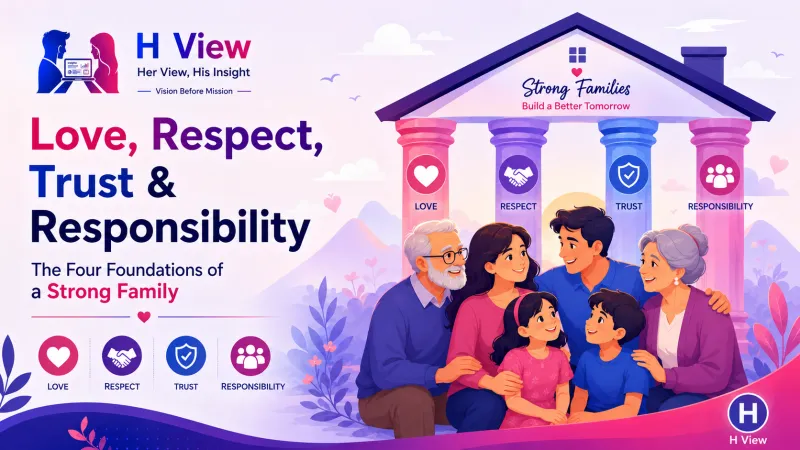
Related on H View: Four foundations of a strong family · Communication in relationships · Hearing versus listening
H View stories follow our editorial policy. Spotted an error? Tell us and we will correct it.
Rate this article
One tap is enough. No comment needed.
Was this article helpful?
Your answer goes straight to our editors.











Comments0
No comments yet. Start the conversation.