

Love Doesn’t Keep a Marriage Alive—Daily Habits Do
Lasting relationships aren’t built by grand gestures. They’re built by the small things couples choose…
 Annapurna August 11, 2026
  By AnnapurnaUpdated September 20, 20266 min read43 views
Most people grow up hearing that blood relationships are permanent.
Parents, siblings, grandparents, uncles, aunts, cousins, and other relatives are often described as people who will always remain connected to us. In many families, this belief is expressed through statements such as:
“Family is family.”
“Blood is thicker than everything else.”
“You must forgive because they are your relatives.”
Blood relationships are important. They give us identity, history, cultural connection, and a sense of belonging.
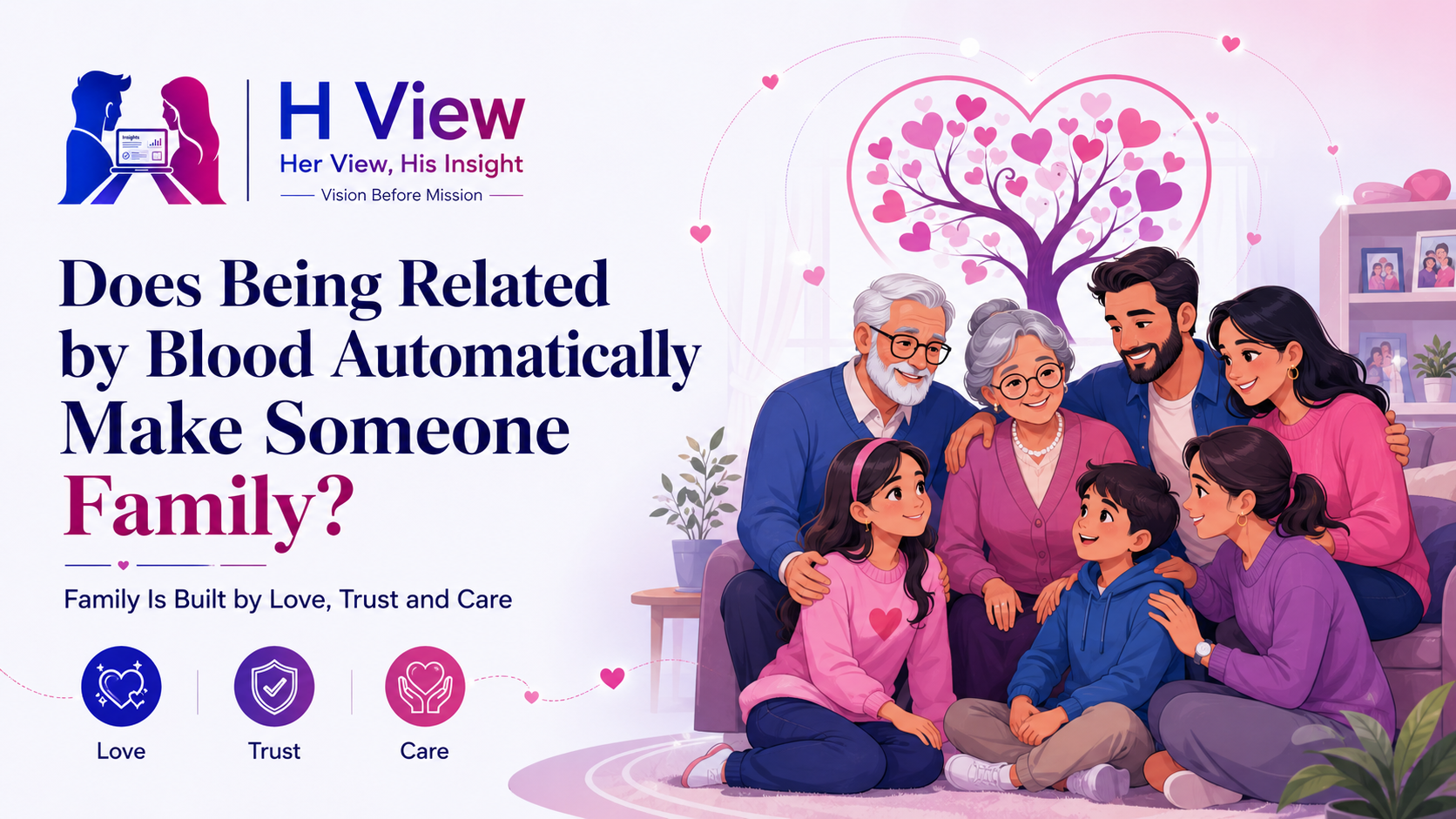
But being related by blood does not automatically create love, trust, respect, or emotional safety.
A person may be closely related to us and still make us feel ignored, controlled, judged, or unsafe. Another person who is not related by blood may support us during our most difficult moments and treat us with genuine care.
This raises an important question:
Is family decided only by birth, or is it also created through behaviour?
A blood relationship is a biological connection between people.
It may connect:
These relationships often begin before we are old enough to choose them.
We are born into a family system with its own traditions, values, expectations, habits, strengths, and problems.
Blood relationships can become some of the strongest relationships in life when they are supported by love, respect, trust, and responsibility.
However, biology creates a connection. It does not guarantee a healthy relationship.
A meaningful family relationship is built through daily actions.
Someone becomes emotionally close to us when they:
A relative who repeatedly insults, manipulates, threatens, neglects, or controls someone cannot expect the biological relationship alone to erase the damage.
Similarly, a person outside the biological family may show deep loyalty and care.
This may include:
Family can be inherited through birth, but it can also be built through commitment.
Adoptive families clearly show that parenthood is not defined only by biology.
A parent is not simply someone who gives birth. A parent is someone who protects, guides, nurtures, supports, and takes responsibility for a child.
An adopted child is not less of a family member because there is no biological connection.
The emotional bond grows through care, patience, consistency, and belonging.
In the same way, stepfamilies and blended families can become deeply connected when members treat one another with fairness and acceptance.
This teaches us that family is not only about where a person came from.
It is also about where they feel safe enough to belong.
Marriage connects two people who were not previously related by blood.
It also creates relationships between spouses, in-laws, and extended families.
Yet many families treat these new relationships as less important than biological ones.
A daughter-in-law may be told that she is now part of the family, but still be treated as an outsider during decisions.
A son-in-law may be welcomed socially but never trusted emotionally.
A husband may be expected to prioritise his birth family in every situation, even when his wife is being treated unfairly.
A wife may also expect her husband to disconnect completely from his parents after marriage.
Both approaches create division.
Marriage does not erase biological relationships. But it creates a new family bond that also deserves loyalty, protection, privacy, and respect.
The idea of family is sometimes used to force people to tolerate mistreatment.
They may hear:
“Do not complain. They are your parents.”
“Adjust because she is your mother-in-law.”
“He is your brother, so forgive him.”
“Do not set boundaries with relatives.”
Forgiveness can be valuable, but it should not become permission for repeated harm.
Being family does not provide the right to:
Healthy families recognise mistakes and try to repair them.
Unhealthy families demand silence in the name of unity.
For many women, marriage brings a difficult emotional change.
She may leave the home where she grew up and enter a family connected to her only through marriage.
She may be expected to treat her in-laws like parents immediately, while they take years to accept her as a daughter.
True belonging cannot be demanded only from one side.
A daughter-in-law becomes family when she is trusted, included, protected, and respected—not merely when she performs responsibilities.
Men may feel pressure to prove loyalty to their birth family after marriage.
Some fear that supporting their wife will be seen as forgetting their parents.
But fairness is not betrayal.
A man can love his parents while protecting the dignity of his marriage. He can maintain close relationships with relatives while setting boundaries when necessary.
Being a responsible son and a responsible husband should not be treated as opposite roles.
Families can build stronger bonds by focusing less on labels and more on behaviour.
Do not assume that relatives will remain close without effort.
Do not treat married-in, adopted, or step-family members as permanent outsiders.
Allow trust to grow naturally.
Respect boundaries even within close relationships.
Do not use blood ties to avoid apologising.
Value people who consistently show care and responsibility.
At the same time, relationships should not be ended over every disagreement. Families need patience, communication, and forgiveness.
The goal is not to replace biological family with chosen relationships.
It is to understand that every meaningful family bond requires effort.
Blood can create a relationship, but behaviour determines its quality.
A relative may be part of our family history, but love, respect, trust, and responsibility decide whether that relationship feels like home.
Someone does not become family only by sharing our name, bloodline, or ancestry.
They become family when they make us feel accepted, protected, heard, and valued.
Blood may connect people, but care is what keeps them connected.
No. Blood relationships can be strong, but emotional closeness depends on trust, care, respect, and shared effort.
Yes. Close friends may become like family when they provide lasting care, loyalty, support, and emotional safety.
Yes. Adoption creates a real family bond based on legal responsibility, care, commitment, and belonging.
Forgiveness may help healing, but it does not require tolerating repeated harmful behaviour. Boundaries and accountability may still be necessary.
Annapurna is an H View contributor covering relationships, family, lifestyle, entrepreneurship, and everyday decision-making. Her articles focus on emotional clarity, practical understanding, and human-centered perspectives that help readers think better about personal and professional situations.
Share your real experience and help other readers decide better.
No community views yet. Be the first to share yours.

Lasting relationships aren’t built by grand gestures. They’re built by the small things couples choose…
Annapurna August 11, 2026 
The happiest marriages aren’t built by finding the perfect person. They’re built by choosing to…
Annapurna August 10, 2026 
People don’t always feel loved in the same way. Understanding that can transform a relationship.…
Annapurna August 6, 2026 
How Healthy Couples Disagree Without Hurting Each Other Many people believe that a happy couple…
Annapurna August 4, 2026