
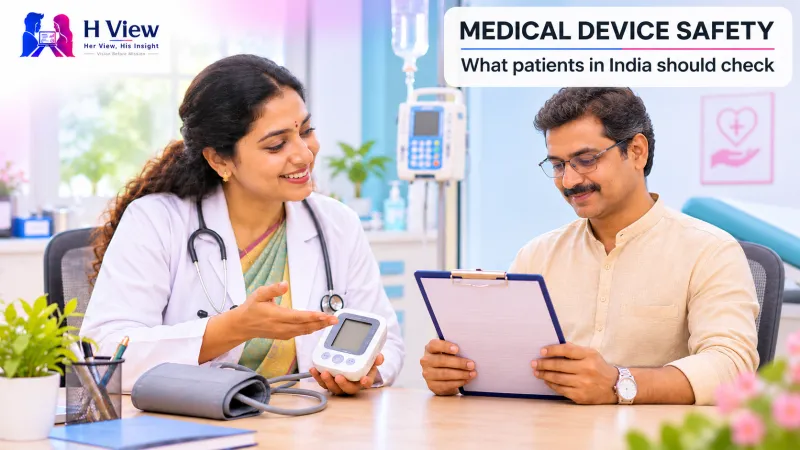
Medical Device Safety in India: What Adverse-Event Reports Mean for Patients
India’s medical-device adverse-event reports rose in recent years. What the reported numbers do—and do not—show, how patients can report a concern and why care decisions belong with clinicians.
What do India’s medical-device safety reports tell us?
India’s Materiovigilance Programme has received and reviewed thousands of serious adverse-event reports associated with medical devices. A recent report based on information from the Indian Pharmacopoeia Commission says 9,373 serious events were received and reviewed over six years, with annual reports rising from 808 in 2020 to 2,176 in 2025. Those are report counts, not proof that a device caused every event or that the risk to an individual patient tripled. They do show why reporting, clinical follow-up and transparent analysis matter.
For a patient, the practical point is straightforward: if a device may have contributed to a serious problem, tell the treating healthcare professional and ask how the concern should be recorded. Do not stop, remove, adjust or replace a prescribed device on your own. The Materiovigilance Programme of India (MvPI) collects and analyses reports so that possible safety signals can be assessed. A report is a starting point for investigation, not a verdict about a manufacturer or a particular product.
What is a medical-device adverse event?
A medical device can be something used in a hospital, at home or during a procedure: an implant, catheter, infusion pump, monitor, diagnostic kit, wheelchair, hearing aid or other instrument. An adverse event is an undesirable experience associated in time with a device or its use. “Associated” does not by itself establish causation. The patient’s underlying illness, a procedure, another treatment, user training or a device malfunction may all be relevant when professionals assess what happened.
A problem can involve a device that does not work as intended, a breakage or failure, an unexpected reading, an infection or injury connected to use, or a near miss that could have caused harm. Not every inconvenience is a serious event, but patients should raise concerns that affect health or treatment with their care team. The clinician can assess urgency, arrange care and help preserve useful information about the device and circumstances.
Examples need context. An alarm from a monitor may reflect a genuine change in a patient’s condition, a sensor issue or an incorrect setup. A pump alarm may indicate a blockage, a low battery or a malfunction. A painful implant site may have several possible explanations. A report should describe what was observed and when, rather than assuming why it happened. A specialist or regulator can assess the evidence using the device’s history, clinical information and any investigation of the product.
 Also readMobile Phones and Pregnancy: What the Evidence Says→
Why have reported serious events increased?
The available figures show that the number of serious-event reports received and reviewed increased from 808 in 2020 to 2,176 in 2025. That is a meaningful change in reporting volume, but it cannot be translated directly into a change in the chance of harm for a patient. To calculate a rate, analysts would need a suitable denominator, such as how many devices were used, how many patients were exposed and for what duration. A rise in reports can reflect more device use, stronger awareness, improved reporting channels, changes in participating centres, better follow-up or genuine safety concerns. The published count alone cannot separate those explanations.
The reported total of 9,373 over six years is also not a count of confirmed device-caused injuries. The article reporting the figures describes them as serious adverse events received and reviewed by the IPC, based on information obtained through an RTI process. The terms matter. A report can be incomplete, duplicated, pending assessment or later found to have another explanation. Reviews help identify patterns that need further examination; they should not be read as proof of fault before an investigation concludes.
For readers, this is a reason to ask better questions rather than to panic. Which devices and event types were involved? How many devices were in use? Were the reports confirmed after investigation? What were the outcomes for patients? How quickly were reports submitted? Those details help distinguish a reporting system becoming more active from an actual increase in the underlying rate of harm. Until such context is available, the responsible summary is that reporting volume rose and the figures deserve scrutiny.
How does the Materiovigilance Programme work?
The Indian Pharmacopoeia Commission describes MvPI as a system for monitoring adverse events associated with medical devices. It receives reports through a network that includes medical-device adverse-event monitoring centres and analyses the information for possible safety signals. The programme’s purpose is to support evidence-based action and improve the safety of devices available to patients. Reporting is one component of a wider process that can include clinical review, follow-up, technical assessment and communication with relevant authorities or manufacturers.
A safety signal is a pattern or observation that deserves closer assessment; it is not an automatic finding that a product is unsafe. When enough information points to a possible problem, experts may examine device type, batch or lot details, how the product was used, patient factors and whether similar events have been reported elsewhere. Findings may support additional monitoring, a safety notice, instructions for users or another regulatory step. The action depends on the evidence and the severity of the issue.
Patients and caregivers do not need to conduct a technical investigation themselves. Their role is to report what they know accurately and seek care. Clinicians can help describe the medical event, and the device packaging, label or instructions may help identify the product. If the device is still in use, follow the treating team’s advice about keeping the patient safe while the concern is assessed. A reporting form should complement medical care, never delay it.
What information should a patient or caregiver keep?
If it is safe and practical, write down the date and time of the event, what the device was doing, what the patient experienced and what action followed. Record the device’s name, manufacturer, model and serial, batch or lot number if visible. Keep the packaging, labels, implant card, instructions and purchase or hospital documents. A photo of a display or error message may help, provided taking it does not delay urgent treatment or expose someone’s private health information unnecessarily.
Also note the care setting, the name of the clinic or hospital, and the contact details of the healthcare professional who assessed the patient. List any immediate treatment or changes made by the care team. If more than one device or medicine was involved, do not guess which one caused the event; explain the sequence of events as clearly as possible. A factual timeline is more useful than a conclusion.
For implanted or long-term devices, patients may have a card or record that identifies the product. Keep it in a place where a caregiver can find it. If a device is returned to a hospital or supplier for inspection, ask how the event will be documented and whether you can receive a copy of the relevant record. Do not discard or ship a potentially relevant device without guidance from the clinical team or the responsible institution.
How can a report be submitted in India?
The IPC’s MvPI pages provide information about the programme and its reporting tools. The IPC also publishes a medical-device adverse-event reporting form for consumers or users. A patient or caregiver can use the official form and instructions, or ask the treating hospital or a monitoring centre for help with the reporting route. Keep a copy of what you submit and note any reference number or acknowledgement.
Where the patient is receiving care, tell the doctor, nurse or device specialist as soon as possible. They can decide whether the situation is urgent, document the clinical findings and advise on safe use while the matter is assessed. In an emergency, seek emergency care first. Do not wait for a form to be submitted before getting help.
When submitting information, stick to what you personally observed and what the clinician told you. Avoid posting patient names, phone numbers, hospital records or identifying photographs on social media. A public post is not the same as a formal safety report and can expose private health information. Use the official reporting channel and share only what is needed for the investigation.
Should a patient stop using a device after a problem?
Not without advice from the treating healthcare professional. A device may be essential to a patient’s care, and stopping or changing it could create a separate risk. Contact the clinician or service team that manages the device and explain the symptom, alarm or malfunction. Follow emergency instructions if the patient has severe symptoms or an immediate threat to health. If a clinician advises that the device should not be used, ask what safe alternative or next step is available.
This applies to home equipment too. Do not change alarm limits, settings, connections or prescribed use based on a social-media post. If a monitor reading seems wrong, check the user instructions and call the care team rather than repeatedly adjusting the device. For powered equipment, ask the provider what to do during a power interruption and who to contact after hours. A reporting system cannot provide individual treatment instructions.
What should people ask manufacturers and hospitals?
Patients can ask for the device name, model and serial or lot details, the correct instructions for use, service contact details and the process for reporting a malfunction. If a device is implanted, ask how to access the implant record and what symptoms should prompt medical review. If a product is recalled or a safety notice is issued, ask the care team how it applies to the patient’s particular device and whether follow-up is needed.
Hospitals and manufacturers have their own responsibilities for device quality, maintenance, user training and complaint handling. A patient does not need to resolve a dispute with a supplier before reporting a health concern. Keep notes of whom you contacted and when, and request written instructions if the device is being inspected, replaced or returned. If you do not understand an explanation, ask the clinician to clarify it in plain language.
What do the latest numbers mean—and what do they not mean?
The 9,373 figure describes serious adverse-event reports received and reviewed over six years, according to the IPC data cited in reporting. The increase from 808 reports in 2020 to 2,176 in 2025 is a rise in annual reporting volume. It is not a denominator-based incidence rate, and it does not establish that each event was caused by a device. It also does not tell us, by itself, how many patients recovered, needed additional care or experienced lasting harm.
The numbers matter because passive under-reporting can hide problems, while transparent reporting can help regulators identify patterns earlier. They should be accompanied by context: device exposure, event classifications, outcomes, follow-up and the criteria used to label an event serious. Better public information can help patients understand whether a pattern is specific to a device type, a usage setting or a limited set of circumstances. That is a more useful conversation than a simple headline about a rising total.
Also readVitamin D, Vitamin K and Magnesium: What the Evidence Says→Her View
When a device is part of daily life, an unexplained alarm or new symptom can be frightening for the whole family. People should feel comfortable telling a care team that something seemed wrong, even if they are not sure the device was responsible. A respectful response means listening, checking the patient first and helping record the facts without blaming the person who used the equipment.
His Insight
Good safety reporting depends on precise details and timely communication. Record what happened, preserve the product information and get clinical guidance. Do not turn a report count into a personal prediction of danger, and do not let concern about paperwork delay treatment. The system is most useful when patients, clinicians and reviewers each contribute the information they are best placed to provide.
H View Verdict
India’s rising medical-device adverse-event reports deserve attention, but the figures must be read accurately. They represent reports received and reviewed—not confirmed device-caused harm or a patient-level risk rate. If a device may be linked to a serious problem, seek clinical advice, document the details and use the IPC’s MvPI reporting route. Keep care decisions with the treating professional while safety reviewers investigate the evidence.
Frequently asked questions
Does an adverse-event report prove the device caused harm?
No. It records a suspected or associated event for review. Causation requires assessment of the clinical facts and device information.
Can I stop using a medical device after a malfunction?
Ask the treating clinician or device service team what to do. Do not stop or adjust a prescribed device unless a healthcare professional tells you to, except when emergency services direct you otherwise.
Where can consumers find India’s reporting form?
The Indian Pharmacopoeia Commission publishes MvPI information and a consumer or user medical-device adverse-event form on its official website.
Sources: The Indian Express report on IPC figures; IPC Materiovigilance Programme of India; IPC consumer/user reporting form.
H View stories follow our editorial policy. Spotted an error? Tell us and we will correct it.
Rate this article
One tap is enough. No comment needed.
Was this article helpful?
Your answer goes straight to our editors.








Comments0
No comments yet. Start the conversation.