
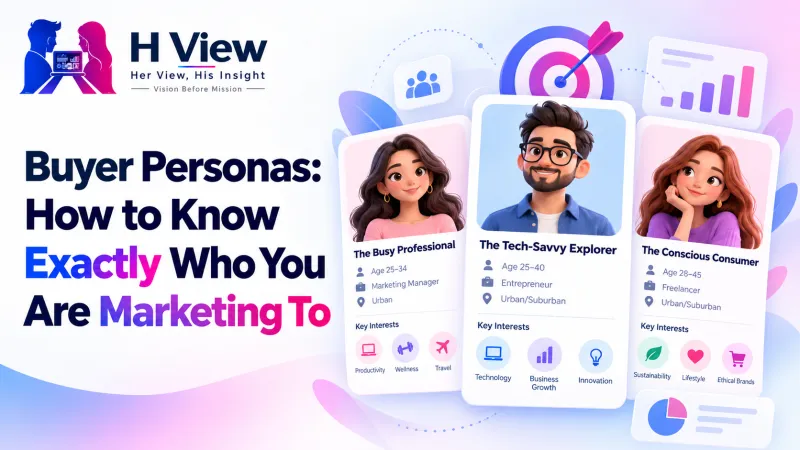
Buyer Personas: How to Know Exactly Who You Are Marketing To
"Everyone" is not a customer. A buyer persona turns your real buyers into a clear profile you can write, design and advertise for. Here is how to build one in a week.
A buyer persona is a short, research-based profile of one type of ideal customer: who they are, what problem they want solved, where they look for answers and what makes them buy. It helps a small business stop marketing to "everyone" and start speaking clearly to the people most likely to become customers.
Ask a boutique owner in Vijayawada who her customers are and the first answer is often "everyone, madam, all ages come." Then ask who actually spends the most, comes back every season and recommends her to friends, and a much sharper picture appears: working women aged 28 to 40 who want office-wear kurtas that don't look like everyone else's, and who discover new designs on Instagram on Sunday evenings. That second answer is a buyer persona. Every post, offer and ad gets easier once you have it.
This is the third article in our Digital Marketing series. If you missed the start, read the digital marketing funnel and how to build a digital marketing plan first, because a persona is what makes both of them work.
What is a buyer persona?
Small Business Trends describes a buyer persona as "a comprehensive, research-based archetype of your ideal customer" (Small Business Trends). The key words are research-based. A persona is not a fantasy customer you wish you had. It is a summary of patterns you have seen in real buyers, given a name and a face so your whole team can picture the same person.
What goes into a buyer persona
Fill each box from real conversations and data, not guesses
Why does a small business need a buyer persona?
- Clearer messages. A coaching centre that knows its main buyer is a worried parent, not the student, writes about results and safety instead of "fun learning".
- Better use of a small budget. Ads aimed at one well-understood group waste far less money than ads shown to everyone in the city. Our guide to the digital marketing budget explains why this matters when money is tight.
- Right channels. If your persona lives on WhatsApp and Google Maps, a polished LinkedIn page will not help much.
- Better products. Listening closely to one group often reveals what to add, change or stop selling.
 Also readHow to Build a Digital Marketing Plan for a Small Business in India→
How do you create a buyer persona step by step?
Build a persona in five steps
- Collect what you already have. Your best customers' orders, WhatsApp chats, Google reviews and the questions people ask most. Small Business Trends recommends combining sources such as analytics, your customer records and surveys.
- Talk to real customers. Five to ten short phone calls teach you more than any report. Ask why they chose you, what nearly stopped them and where they first heard of you.
- Look at your website data. If you use Google Analytics 4, its demographic details report shows age, gender and interests (when Google signals is turned on), plus city, country and language, as explained in Google's Analytics Help. Search Console shows the exact searches that bring people to you.
- Group the patterns. You may find two or three distinct groups. Start with the one that brings the most value.
- Write it on one page and share it with everyone who writes, sells or serves customers.
What does a buyer persona look like? A simple template
| Field | Example: "Working Priya" for a Vijayawada boutique |
|---|---|
| Who | Woman, 28 to 40, works in a bank, school or IT office |
| Goal | Smart, slightly different office wear that is comfortable all day |
| Problem | Mall brands look the same; tailoring takes too long |
| Budget | Comfortable spending on two or three good pieces a season |
| Where she looks | Instagram in the evenings, WhatsApp updates, Google Maps when nearby |
| Questions before buying | Fabric, fit, washing care, exchange policy |
| What stops her | Unclear sizing and no trial option for online orders |
| What makes her buy | New-arrival reels, a friend's recommendation, easy exchange |
Notice there are no exact incomes, invented hobbies or a made-up life story. Keep only what changes how you market.
What mistakes should you avoid?
Useful persona vs useless persona
Useful
- Built from real customers
- Focused on goals, problems and triggers
- One page, easy to remember
- Updated as you learn
Useless
- Imagined in a meeting
- Full of trivia like favourite colour
- Ten personas nobody reads
- Written once and forgotten
- Start with one persona, not five
- Use your customers' own words for their problems
- Include the reasons people almost did not buy
- Check the persona with whoever talks to customers daily
- Review it every three to six months
- Never copy a persona from another business
Her View
The best personas come from listening, and small business owners already do a lot of that at the counter, on the phone and in WhatsApp chats. Writing it down simply turns that everyday wisdom into something your whole team, or your future self, can use. Many owners are surprised by how much they already know once they put it on one page.
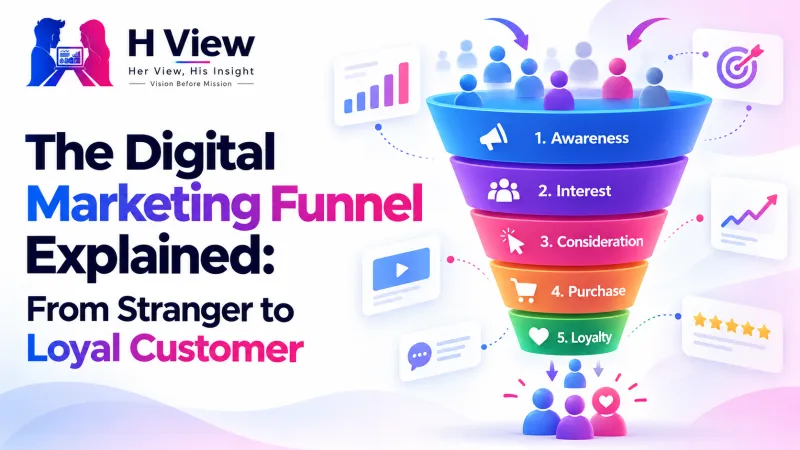 Also readThe Digital Marketing Funnel Explained: From Stranger to Loyal Customer→
His Insight
Treat a persona like a hypothesis. Write it, run your next posts and ads for that group, and compare results with what you did before. If messages built for the persona get more enquiries per rupee spent, keep refining it. If not, your data is telling you the real buyer is someone else. Either way, you learn faster than by marketing to everyone.
H View Verdict
A buyer persona is the quickest way to make every other marketing decision easier. Build it from real customers, keep it to one page, focus on goals, problems and buying triggers, and review it every few months. Start with one persona this week, and use it to rewrite your next three posts.
Want this done for your business?
If you would like help turning your customer data and conversations into clear personas and a marketing plan built around them, the H View team can do it with you. H View studies how your business works today and builds the right digital platform for it, from search visibility to turning manual work into automated systems.
- Website SEO
- GEO and AI search visibility
- Websites and apps
- CRM and ERP
- Management portals
- Automation and digitisation
Frequently Asked Questions
What is a buyer persona in simple words?
A buyer persona is a short profile of one type of ideal customer, built from real data. It describes who they are, what they want, what stops them and where they look for answers.
How many buyer personas should a small business have?
Start with one, based on the customers who bring you the most value. Add a second or third only when you clearly see a different group with different goals and buying reasons.
Where can I find data to build a buyer persona?
Use your sales records, customer chats, reviews and short customer interviews. Google Analytics 4 and Search Console add website data such as age ranges, locations and the searches that bring visitors.
Is a buyer persona the same as a target audience?
Not exactly. A target audience is a broad group, such as working women in Vijayawada. A buyer persona goes deeper into one typical buyer's goals, problems, questions and triggers, so it is easier to write for.
How often should I update a buyer persona?
Review it every three to six months, or sooner if your products, prices or customers change. Keep what still matches real buyers and remove anything that no longer fits.
H View stories follow our editorial policy. Spotted an error? Tell us and we will correct it.
Rate this article
One tap is enough. No comment needed.
Was this article helpful?
Your answer goes straight to our editors.







Comments0
No comments yet. Start the conversation.