

Vijayadashami 2026: Why the 10th Day of Navratri Is About Victory, New Beginnings and the Courage to Move Forward
Vijayadashami 2026 falls today, October 20. The Rama–Ravana and Durga–Mahishasura stories, Dashami timings, Shami and Aparajita Puja, Ayudha Puja, and why the tenth day of Navratri is really a day to begin again.
Vijayadashami 2026 falls today, Tuesday, October 20. It is the tenth day that closes Navratri, celebrated as Dussehra or Dasara across most of India, and it marks the victory of dharma over adharma: Lord Rama over Ravana, and Goddess Durga over Mahishasura. Dashami Tithi begins at 12:50 PM today and runs until 2:11 PM tomorrow.
For nine nights, Navratri has moved through different expressions of Shakti. It began with the grounded strength of Maa Shailputri, then travelled through discipline, calm courage, creativity, nurturing, decisive strength, fearlessness, purification and fulfilment. Today that journey reaches its end. What makes Vijayadashami unusual is that its ending immediately turns into a beginning.
The same day carries different names and stories across India. In much of North India, Dussehra recalls Rama’s victory after the long struggle of the Ramayana. In Shakti traditions, it is Durga’s triumph over Mahishasura. Mysuru celebrates Chamundeshwari, Vijayawada honours Kanaka Durga, and Bengal moves towards Bijoya Dashami and Durga Visarjan. The stories differ, but they keep returning to one idea: power matters when it restores order, dignity and dharma, not when it simply defeats an opponent.
That is why Vijayadashami is more than “the last day of Navratri.” It is the day the lessons of the previous nine nights are meant to leave the puja room and enter real life. A victory only means something if something actually changes afterwards.
Why Is the Tenth Day Called Vijayadashami?
The name explains the festival. Vijaya means victory and Dashami is the tenth lunar day, so Vijayadashami is simply “the tenth day of victory,” the point where the Navratri cycle is complete.
According to Drik Panchang, Dashami Tithi begins at 12:50 PM on October 20 and ends at 2:11 PM on October 21. For New Delhi, the Vijay Muhurat today is 1:59 PM to 2:45 PM. Muhurat timings shift by a few minutes from city to city, so if you are in Andhra Pradesh, Telangana or anywhere else, check your local panchang for your exact town before planning a puja.
The muhurat gives worship a traditional structure, but the meaning of the day is much larger than one auspicious hour. Vijayadashami asks a simple question: what deserves to end in my life, and what deserves to begin?
Vijayadashami 2026 at a Glance
| Detail | Vijayadashami 2026 |
|---|---|
| Date | Tuesday, October 20, 2026 |
| Also known as | Dussehra, Dasara |
| Tithi | Dashami |
| Dashami begins | 12:50 PM, October 20 |
| Dashami ends | 2:11 PM, October 21 |
| Vijay Muhurat (New Delhi) | 1:59 PM to 2:45 PM |
| Bengal (Bijoya Dashami) | Wednesday, October 21, 2026 |
| Core meaning | Victory of dharma over adharma |
| Main stories | Rama over Ravana; Durga over Mahishasura |
| Traditional rituals | Shami Puja, Aparajita Puja, Seema Avalanghan |
| Regional celebrations | Ravana Dahan, Durga Visarjan, Mysuru Dasara, Kanaka Durga festivities |
| Learning and work | Vidyarambham, Ayudha Puja, beginning new study or work |
Drik Panchang lists Shami Puja, Aparajita Puja and Seema Avalanghan among the key Vijayadashami rituals and places them in the Aparahna period, the afternoon window of the day.
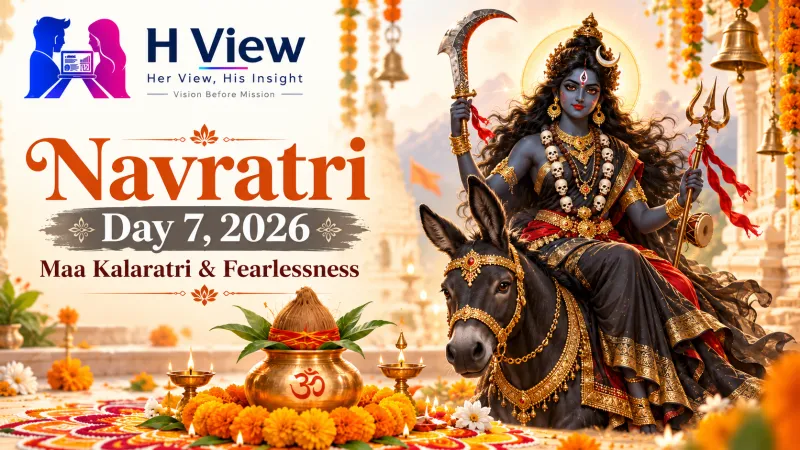 Also readNavratri Day 7, 2026: Maa Kalaratri and the Courage to Face What We Usually Avoid→
Is Dussehra Just About Burning Ravana’s Effigy?
The best-known Dussehra story comes from the Ramayana. Ravana abducts Sita and takes her to Lanka, and Rama, Lakshmana, Hanuman and their allies fight a long battle that ends with Ravana’s defeat. Ramlila performances retell the story over several days in many towns, and the celebrations end with Ravana’s effigy being burned on Dussehra.
But Ravana becomes far more interesting when we look past the label of “evil king.” Many retellings describe him as learned, gifted, powerful and deeply knowledgeable about scripture. He does not fall because he lacks intelligence. He falls because of arrogance, obsession and the misuse of power.
That makes the story uncomfortable in a useful way. Intelligence does not guarantee wisdom. Talent does not guarantee character. Power does not make anyone right. A very capable person can still destroy everything they have built once ego becomes louder than judgement.
Seen like this, Ravana Dahan is more than a public spectacle. It is an invitation to ask which qualities in ourselves deserve to be burned. Pride, uncontrolled anger, jealousy, dishonesty, resentment and the need to dominate are much harder to set alight than an effigy, mostly because they rarely announce themselves.
What Does Durga’s Victory Over Mahishasura Teach Us?
The second great Vijayadashami story is Goddess Durga’s triumph over Mahishasura. It sits at the heart of Navratri and is especially important in Shakti traditions across Andhra Pradesh, Karnataka, Bengal and beyond.
Mahishasura becomes a force that seems impossible to defeat, and Durga emerges as the combined divine energy needed to restore balance. After the nine nights remembered through Navratri, her victory is what Vijayadashami celebrates.
What makes this story so powerful is that Durga is never one-dimensional strength. The nine nights have already shown us patience, discipline, courage, creativity, care, fierce protection and spiritual fulfilment. Vijayadashami is the moment all of those qualities come together as victory. You can read how that final phase unfolded in our Navratri Day 9 guide to Durga Ashtami, Maha Navami and Siddhidatri.
There is a quiet lesson here for modern life. We often expect success to come from one quality alone: hard work, intelligence, confidence or ambition. Real progress usually needs several of them working together.
How Is Vijayadashami Celebrated in Andhra Pradesh?
For many readers in Andhra Pradesh, Vijayadashami means one place first: the Kanaka Durga temple on Indrakeeladri hill in Vijayawada, officially Sri Durga Malleswara Swamy Varla Devasthanam. The government’s Incredible India listing for the festival gives the 2026 Dussehra dates as October 11 to October 20 and describes Vijayadashami as the day that celebrates Durga’s ultimate victory over Mahishasura.
Through the festival, the Goddess is adorned in a different alankaram each day, each representing a distinct form of Durga, with special pujas, homams and Vedic rituals held daily. On Vijayadashami the celebrations peak with grand processions, and they often include the Teppotsavam, the ceremonial boat festival of the deities on the Krishna River.
Proddatur has its own distinctive Dasara, centred on the Sri Vasavi Kanyaka Parameswari Temple. According to Incredible India, the celebrations culminate on Vijayadashami with a grand village fair and the Thotti Meravani, a huge procession in which the Goddess is carried through the town and deities from more than 20 other temples join in.
These local traditions are a good reminder that Indian festivals can’t be understood through one national story. The same Vijayadashami is lived through Rama, Durga, local temples, processions, learning, tools and community, and every region adds its own memory to the larger festival.
Why Is Mysuru Dasara So Famous?
Mysuru gives Vijayadashami one of its grandest public faces. The city’s Dasara is closely tied to the story of Goddess Chamundeshwari defeating Mahishasura, and the city’s very name is linked to that legend.
The celebrations go far beyond temple worship. Mysuru Palace is lit up, cultural performances fill the city, exhibitions and food fairs draw visitors, and the Jamboo Savari procession on Vijayadashami has become one of the festival’s most recognisable images.
Mysuru Dasara shows how a religious festival can also become a living cultural institution, where devotion, heritage, performance, tourism and public celebration sit comfortably side by side.
Why Is the Shami Tree Worshipped on Vijayadashami?
Shami Puja is one of the traditional Vijayadashami rituals, performed in the Aparahna period along with Aparajita Puja and Seema Avalanghan. In several regions, Shami leaves are exchanged as symbolic “gold,” and the tree itself is associated with victory, auspiciousness and important episodes from the epics.
There is a practical way to read this too. Victory is rarely a solo achievement built from nothing. We all lean on teachers, family, colleagues, tools, opportunities and environments that make progress possible. A ritual that pauses to honour what supports us encourages a healthier kind of gratitude.
What Does Aparajita Puja Mean?
Aparajita means “the one who cannot be defeated,” and Aparajita Puja invokes the victorious form of the Goddess on Vijayadashami. It can sound like a celebration of permanent success, but life rarely hands anyone an unbeaten record.
Everyone fails somewhere. Careers stall, businesses struggle, relationships change, and plans that once felt certain disappear quickly.
A more useful reading of Aparajita is not that a person never loses. It is that defeat does not become their final identity. You can fail and rebuild, lose and learn, or face a setback without letting it decide everything that follows. That fits Vijayadashami well, because Navratri itself is about transformation, not effortless triumph.
What Is Seema Avalanghan?
Seema Avalanghan literally means crossing a boundary. The ritual has specific historical and regional meanings, but the image of stepping past a limit speaks surprisingly well to modern life.
Many of us stay stuck not because we lack ability, but because we have grown comfortable inside boundaries that once protected us. A secure job slowly becomes career stagnation. Fear of failure stops an application from being sent. An old identity makes a different future hard to imagine.
Crossing a boundary is not the same as acting recklessly. It means noticing when a limit that once made sense has stopped serving you. That makes Vijayadashami a fitting day to start something you have postponed for too long.
Ayudha Puja: Respecting the Tools That Make Work Possible
In South India, the closing days of Navratri are closely linked with Ayudha Puja, when tools, vehicles, instruments, machinery and work equipment are cleaned, decorated and honoured. Depending on the regional calendar it is usually observed on Navami, but its spirit carries naturally into Vijayadashami and the return to work.
The idea feels fresh in a modern setting because our tools look so different now. A farmer honours farm implements, a mechanic decorates the workshop, a driver washes the vehicle, a musician worships an instrument, and an office worker might carefully clean a laptop and desk.
Underneath it all is gratitude for the means through which skill becomes useful. We complain loudly when technology fails, yet rarely notice how much of our livelihood depends on things that quietly work every day. Ayudha Puja creates a moment of respect for work itself.
Why Is Vijayadashami a Good Day to Begin Learning?
Vijayadashami is closely tied to Vidyarambham, especially in South Indian traditions. Young children are formally introduced to letters and learning, while students and artists return to their studies after Saraswati worship in the final days of Navratri.
This is one of the most beautiful parts of the festival. It does not stop at victory; it turns straight towards education. The message is subtle but important: defeating ignorance only matters if knowledge takes its place.
For adults, Vidyarambham can be just as relevant. Learning doesn’t end with college, and starting a new language, a professional skill, a musical instrument or a technology course can feel especially meaningful on a day associated with fresh starts. In a job market where a degree alone often isn’t enough, that habit of continuous learning matters more than ever.
Why Is Today Considered Auspicious for New Beginnings?
Vijayadashami has long been treated as an auspicious day to begin education, work, business and other constructive ventures, and the shape of the festival explains why.
The nine nights before it are about preparation, discipline, worship and transformation. The tenth day comes only after that process, so it becomes a natural moment to move forward with whatever has been learned. Unlike a festival that ends only with farewells, Vijayadashami closes one cycle and deliberately opens another.
That is why people begin a course, buy work equipment, start a business activity, take up music, open new books or make a personal commitment today. The ritual meaning is strongest when the beginning is backed by real action, not just good intentions.
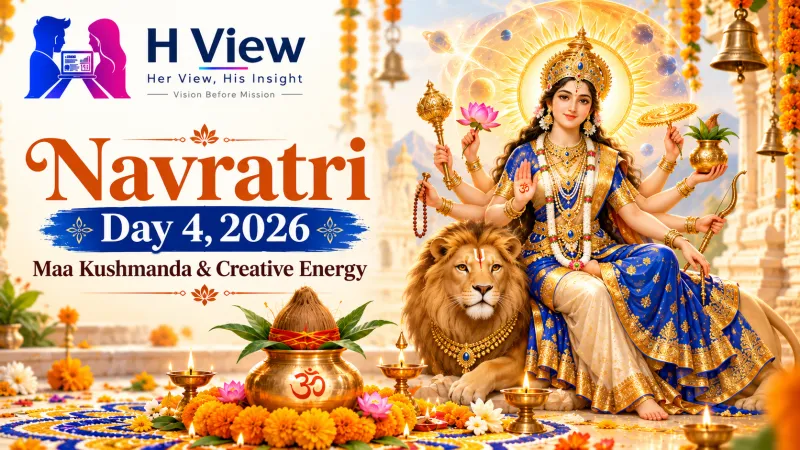 Also readNavratri Day 4, 2026: Maa Kushmanda and the Creative Energy to Begin Something New→
Burning the Effigy Is Easy; Changing the Habit Is Hard
Ravana Dahan remains Dussehra’s most visible tradition. Towering effigies are burned after Ramlila performances, a dramatic picture of Rama’s victory and the end of evil.
The symbolism goes deeper when we admit how much easier it is to spot someone else’s Ravana than our own. We notice arrogance in colleagues and ignore our own ego. We criticise dishonesty in public life while forwarding messages we have never checked. We complain about other people’s anger while justifying ours because our reasons feel better.
Vijayadashami becomes personally useful when the symbolic burning is followed by a real attempt to change one behaviour. It does not need to be dramatic. One small habit corrected consistently is worth more than a grand resolution forgotten by next week.
Her View
If we worship Shakti, respect for women cannot end with Navratri
For nine nights, the divine feminine sits at the centre of worship. Women and girls are honoured through Durga worship and Kanya Puja, and Vijayadashami celebrates the ultimate triumph of that Shakti.
The contradiction appears when everything goes back to unequal expectations the very next day. A girl may be worshipped during Kanya Puja and then discouraged from choosing her own career. A woman may be praised as Shakti while carrying an unfair share of unpaid housework, or being expected to tolerate disrespect in silence.
For me, this is one of the most important reflections Vijayadashami can leave behind. Devotion means more when the value we worship symbolically is also respected in practice: in education, safety, workplace opportunity, financial independence, family decisions and the freedom to live with dignity. Otherwise the worship stays beautiful, but incomplete.
His Insight
Victory is only useful if you know what comes next
Winning can create its own confusion. People pour so much energy into reaching one goal that they have no plan for the day after they reach it.
A promotion arrives, but the person hasn’t prepared to lead. A loan is cleared, but the spending habits stay the same. A difficult relationship ends, but the same emotional patterns walk into the next one.
Vijayadashami is a useful reminder that victory should bring responsibility, not just relief. Rama’s story continues after Ravana. Durga’s role is larger than a single battle. Even the Navratri cycle moves from worship back into everyday life. So the real question is not only what we defeated, but what we intend to build next.
Five Ways to Make Vijayadashami Personally Meaningful Today
The festival doesn’t need to become another productivity exercise. But one deliberate action can connect its symbolism with your everyday life:
- Leave one habit behind. Choose something specific and realistic instead of promising a complete personality makeover.
- Begin one form of learning. Start the book, course, language, technical skill or creative practice you keep postponing.
- Repair one relationship, where you can. Victory doesn’t always mean proving the other person wrong. Sometimes it means ending an unnecessary cycle of ego.
- Respect the tools of your livelihood. Clean and organise the devices, instruments or equipment you work with, and notice how much you depend on them.
- Cross one reasonable boundary. Apply for the role, start the project, have the conversation or take the first step that fear keeps delaying.
These are deliberately simple, because lasting change is built through repetition, not festival-day emotion. A meaningful Vijayadashami doesn’t need a dramatic announcement. It needs one direction worth continuing after the celebrations end.
H View Verdict
Vijayadashami is often summed up in one line as the victory of good over evil. That line becomes far more powerful when we ask what victory actually requires.
Rama’s story warns that intelligence without humility can bring down even the most powerful person. Durga’s story shows that strength takes many forms before it becomes triumph. Shami Puja asks us to recognise what supports us, Ayudha Puja honours the tools that make our work possible, and Vidyarambham turns victory straight towards learning.
That is why the tenth day shouldn’t feel like an ending. Navratri began with Maa Shailputri and the idea of a stable foundation, and moved through discipline, courage, creativity, nurturing, strength, fearlessness, purification and fulfilment. Vijayadashami asks whether those qualities can now leave the puja space and step into ordinary life.
The tallest Ravana effigy will turn to ash tonight. The lights will come down, the processions will end, and tomorrow will look like another working day. What remains is the real measure of the festival.
If one destructive habit becomes weaker, one useful skill begins, one relationship becomes more respectful, or one person finds the courage to move forward, then Vijayadashami has done more than mark a date on the calendar. It has become a beginning.
Frequently Asked Questions
Is Vijayadashami today, October 20, 2026?
Yes. Vijayadashami, also called Dussehra or Dasara, is observed today, Tuesday, October 20, 2026, across most of India. In Bengal, Bijoya Dashami and Durga Visarjan fall on Wednesday, October 21, because of the regional tithi convention.
When does Dashami Tithi begin and end in 2026?
Dashami Tithi begins at 12:50 PM on October 20 and ends at 2:11 PM on October 21, 2026, according to Drik Panchang.
What is the Vijay Muhurat for Dussehra 2026?
For New Delhi, the Vijay Muhurat is 1:59 PM to 2:45 PM on October 20. The exact window shifts by a few minutes in other cities, including in Andhra Pradesh and Telangana, so check a local panchang for your town.
Why is Vijayadashami celebrated?
It commemorates Lord Rama’s victory over Ravana and Goddess Durga’s victory over Mahishasura. Different regions celebrate these stories through their own customs, but all share the larger theme of dharma triumphing over destructive forces.
What pujas are performed on Vijayadashami?
The traditional observances are Shami Puja, Aparajita Puja and Seema Avalanghan, performed in the Aparahna period. Regional customs add Ravana Dahan, temple processions, Durga Visarjan, tool worship and learning rituals such as Vidyarambham.
Is Vijayadashami a good day to start education or a new skill?
Yes. It is traditionally associated with new beginnings, especially learning through Vidyarambham in South India. The broader idea is to begin constructive work once the Navratri cycle is complete.
H View stories follow our editorial policy. Spotted an error? Tell us and we will correct it.
Rate this article
One tap is enough. No comment needed.
Was this article helpful?
Your answer goes straight to our editors.








Comments0
No comments yet. Start the conversation.