
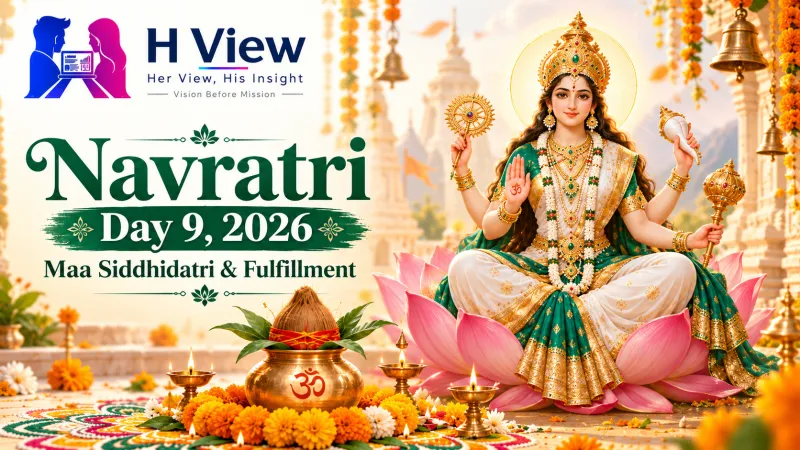
Navratri Day 9, 2026: Durga Ashtami, Maha Navami, Mahagauri and Siddhidatri in One Powerful Final Phase
October 19, 2026 packs Durga Ashtami, Mahagauri Puja, Sandhi Puja and Maha Navami into one day. What each means, where Maa Siddhidatri fits, and why Kanya Puja should change how we treat girls all year.
Navratri Day 9 2026 falls on Monday, October 19, and it is the most unusual and spiritually packed day of this year’s festival. Popular colour charts call it Day 9 and assign peacock green. Panchang calculations, meanwhile, place Durga Ashtami, Mahagauri Puja, Sandhi Puja and the move into Maha Navami all on the same date. Drik Panchang’s reference calculation puts Sandhi Puja at roughly 10:27 a.m. to 11:15 a.m., though you should always check your local timings.
So October 19 shouldn’t be treated as a simple “Siddhidatri Day” without explanation. Siddhidatri is the ninth form of Navdurga in the spiritual sequence, but the 2026 lunar calendar compresses the final stages because Ashtami turns into Navami during the day. (Yesterday’s post on Navratri Day 8 and the unusual 2026 tithi calendar explains how we got here.)
Rather than finding this confusing, it can make the final phase more meaningful. Purification, completion and the climactic Durga Puja rituals all come together in a short span, giving October 19 unusual importance.
Maa Mahagauri on Durga Ashtami
Many 2026 panchang listings place formal Mahagauri worship on Durga Ashtami. Her symbolism of purity and serenity carries extra weight on Ashtami, traditionally one of the most important points of Navratri worship.
Kanya Puja is also widely performed around Ashtami or Navami, depending on family and regional tradition. Young girls are respectfully worshipped as forms of the divine feminine and offered food, gifts and blessings. Halwa, puri, chana and kheer are the traditional offerings most often associated with Kanya Pujan.
What Is Sandhi Puja?
Sandhi Puja takes place at the junction between Ashtami and Navami and is especially important in Durga Puja traditions. The moment is traditionally associated with the Goddess in her fierce Chamunda form and the destruction of the demons Chanda and Munda.
Part of its significance lies in the idea of thresholds. Some of life’s most important moments sit not entirely in one phase or the next, but at the exact point where one ends and another begins.
That makes Sandhi Puja a fitting climax to Navratri, as the festival moves from intense worship toward completion and Vijayadashami.
 Also readNavratri Day 8, 2026: Mahagauri, Purple and Why This Year’s Calendar Needs a Little Explanation→
Where Does Maa Siddhidatri Fit?
Siddhidatri is the ninth and final form of Navdurga. Her name comes from siddhi, meaning spiritual accomplishment, perfection or fulfilment, and she represents the completion of the journey that began with Maa Shailputri on Day 1.
She is commonly shown seated on a lotus, carrying sacred objects such as the discus, conch, mace and lotus in different depictions. Unlike Durga’s more visibly martial forms, Siddhidatri carries an atmosphere of completion and blessing.
Her place at the end matters. Fulfilment appears only after every earlier stage has been crossed:
- Stability with Shailputri
- Discipline with Brahmacharini
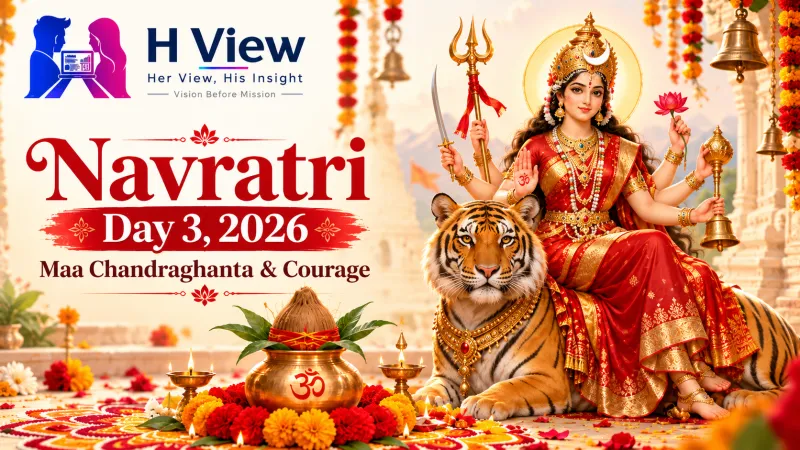
- Courage with Chandraghanta
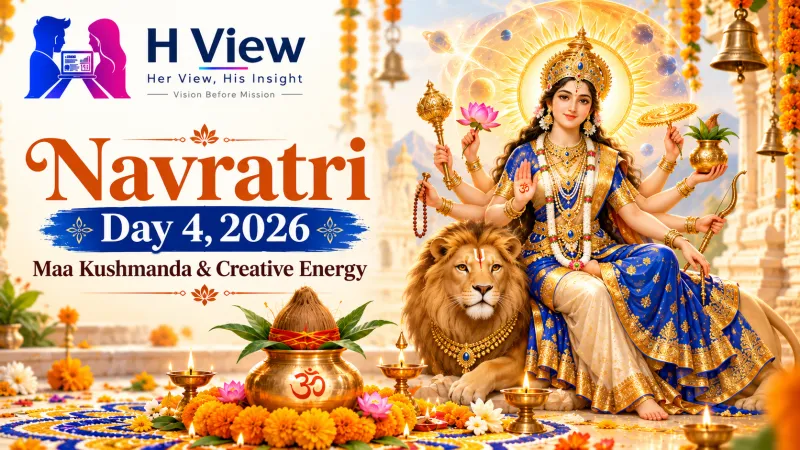
- Creativity with Kushmanda
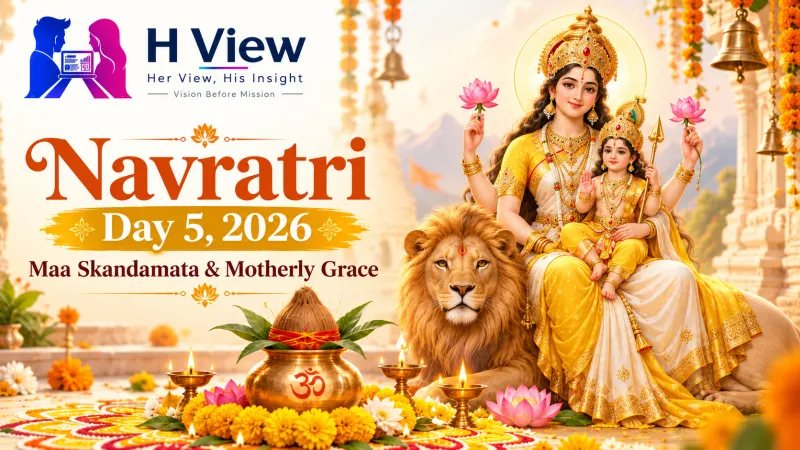
- Nurturing with Skandamata
- Directed strength with Katyayani
- Facing fear with Kalaratri
- Purification with Mahagauri
Navratri Day 9 at a Glance
| Detail | October 19, 2026 |
|---|---|
| Popular sequence | Navratri Day 9 |
| Popular colour | Peacock green |
| Tithi | Ashtami transitioning into Navami |
| Major observances | Durga Ashtami, Mahagauri Puja, Sandhi Puja, Maha Navami |
| Ninth Navdurga form | Maa Siddhidatri |
| Core theme | Completion, blessing and fulfilment |
| Kanya Puja | Commonly performed on Ashtami or Navami |
| Next day | Vijayadashami / Dussehra on October 20 |
For the full festival calendar, including Vijayadashami on October 20, see our Navratri 2026 guide.
Why Kanya Puja Matters
Kanya Puja recognises the divine feminine in young girls and is widely observed on Ashtami or Navami. Devotees traditionally wash the girls’ feet, offer food and give small gifts according to family practice.
The ritual raises an uncomfortable but important question. If we worship girls as embodiments of the Goddess during Navratri, that respect should continue in their education, safety, nutrition, freedom and opportunities long after the festival ends.
A ritual means far more when the value it represents survives outside the puja room.
Her View: Worshipping Shakti Should Change How We Treat Women
Navratri may be one of the world’s largest celebrations of feminine divinity, yet real women still face inequality, harassment, unpaid care burdens and limits on their autonomy.
That contradiction deserves reflection, especially on Ashtami and Navami, when the divine feminine is celebrated most intensely.
Respect for Shakti cannot stay limited to idols, kumkum and Kanya Puja. It should show in how girls are educated, how women are treated at work, how household responsibilities are shared, and how seriously their choices are respected. It should also show in whether women get real support to grow, a question we explore in why women entrepreneurs still struggle to grow even after joining SHGs.
 Also readNavratri Day 7, 2026: Maa Kalaratri and the Courage to Face What We Usually Avoid→
His Insight: Completion Does Not Mean Perfection
Siddhidatri’s link with fulfilment can easily be misread as the idea that a person eventually becomes flawless. Real growth rarely works that way.
Completion is often just reaching the point where the lessons of the journey are absorbed well enough to move into the next stage.
Navratri ends, but life carries on immediately. Vijayadashami itself is traditionally an auspicious day for new beginnings, learning and fresh action, a reminder that one completed cycle lays the foundation for the next.
H View Verdict
The final phase of Navratri 2026 is unusually concentrated. In many panchangs, October 19 brings Durga Ashtami, Mahagauri worship, Sandhi Puja and Maha Navami into a single day, while popular calendars also treat it as Day 9 with peacock green.
Instead of forcing the day into one simple label, it is worth appreciating what the calendar is actually doing. The spiritual sequence is moving quickly from purification toward fulfilment, and then on to Vijayadashami.
Siddhidatri is a fitting end to Navdurga because fulfilment arrives only after every earlier form has contributed something essential. The journey began with a mountain and ends with completion, and every stage in between was necessary.
That may be the most useful lesson of Navratri. We often want transformation through one dramatic breakthrough, but the nine forms of Durga suggest that real change is built through many different kinds of strength.
Frequently Asked Questions
What happens on October 19 during Navratri 2026?
Many panchang calendars place Durga Ashtami, Mahagauri Puja, Sandhi Puja and the beginning of Maha Navami on October 19.
What is the Navratri Day 9 colour in 2026?
Peacock green is the popular colour associated with October 19 in the 2026 colour sequence.
Which is the ninth form of Navdurga?
Maa Siddhidatri is the ninth form and is associated with spiritual fulfilment, accomplishment and blessings.
What is the Sandhi Puja time on October 19, 2026?
Drik Panchang’s reference calculation places it at roughly 10:27 a.m. to 11:15 a.m. Timings vary by city, so check your local panchang.
When is Vijayadashami in 2026?
Vijayadashami, or Dussehra, falls on Tuesday, October 20, 2026. Our Vijayadashami 2026 guide covers its stories, timings and rituals.
H View stories follow our editorial policy. Spotted an error? Tell us and we will correct it.
Rate this article
One tap is enough. No comment needed.
Was this article helpful?
Your answer goes straight to our editors.








Comments0
No comments yet. Start the conversation.