
Navratri Day 5, 2026: Maa Skandamata and the Strength Hidden Inside Nurturing
Navratri Day 5 honours Maa Skandamata, mother of Kartikeya. Her story, the yellow colour of the day, banana bhog and why nurturing someone until they can stand on their own is real strength.
By the fifth day of Navratri, the festival introduces a form of power that is easy to underestimate. After Maa Kushmanda’s creative energy on Day 4, the focus turns to what it takes to nurture and protect what has been created.
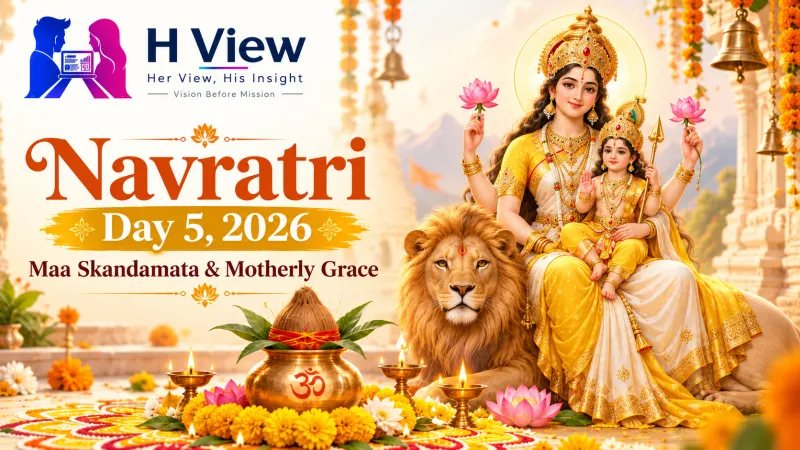
Navratri Day 5 2026 falls on Thursday, October 15, and is dedicated to Maa Skandamata, the mother of Skanda or Kartikeya. The popular colour of the day is yellow. Skandamata Puja is performed on Panchami, along with Upang Lalita Vrat in traditions that observe it.
Skandamata is commonly depicted holding the child Skanda while seated on a lotus or riding a lion. Her image brings maternal care directly into the Navdurga sequence, but the presence of Kartikeya, the warrior deity, makes the symbolism richer than a simple celebration of motherhood.
She represents the strength that protects, develops and prepares another person to stand on their own. Nurturing becomes an active form of Shakti, not a passive or secondary role.
The Story of Maa Skandamata
According to traditional mythology, Skanda or Kartikeya was born to defeat the demon Tarakasura, whom divine conditions had made very difficult to overcome. As the mother of the future commander of the divine forces, Parvati becomes Skandamata.
The story gives motherhood a powerful strategic dimension. She is not celebrated only for giving birth. She nurtures the one who will eventually confront a far larger threat.
This reaches well beyond literal parenting. Teachers, mentors, elder siblings, managers and friends often play a similar role when they help someone become stronger without keeping that person permanently dependent.
Navratri Day 5 at a Glance
| Detail | Day 5 Information |
|---|---|
| Date | Thursday, October 15, 2026 |
| Tithi | Panchami |
| Goddess | Maa Skandamata |
| Popular colour | Yellow |
| Associated child | Skanda / Kartikeya |
| Vehicle | Lion in common depictions |
| Core quality | Nurturing strength and protection |
| Common bhog | Bananas, fruits and simple sweets |
| Simple mantra | Om Devi Skandamatayai Namah |
 Also readNavratri Day 6, 2026: Maa Katyayani and Why Strength Is Not the Same as Anger→
Yellow and the Warmth of Nurturing
Yellow is associated with warmth, optimism and brightness, which makes it a natural colour for a day centred on care and growth. (Our Navratri 2026 guide lists all nine colours.)
Skandamata’s symbolism reminds us that nurturing is not weakness. Helping another person grow takes patience, sacrifice, judgement and the ability to set boundaries.
A parent who solves every problem for a child may feel loving but can quietly prevent independence. A manager who never lets a junior make decisions may keep work safe while stopping growth. Real nurturing eventually prepares someone to manage without constant protection.
That is why Skandamata’s motherhood can be understood as strength that creates strength in someone else.
How to Observe Navratri Day 5 at Home
- Offer bananas, fruits or a simple sweet as bhog
- Chant Om Devi Skandamatayai Namah during your puja
- Take a moment to thank someone who helped you grow – a parent, teacher or mentor
- Wear or use yellow if your family follows the colour tradition
Her View: Care Work Is Work, Even When Nobody Pays for It
One of the most important modern reflections around Skandamata is the huge amount of invisible care that happens inside families. Cooking, organising, remembering appointments, looking after children or elders, and carrying the emotional load of a household often go unnoticed because none of it appears on a salary slip.
Women carry a disproportionate share of this work. Festivals that worship motherhood become more meaningful when society also respects the everyday labour behind nurturing.
Devotion should go beyond praising mothers symbolically. Respect becomes real when responsibility is shared and care is recognised as valuable work.
 Also readNavratri Day 7, 2026: Maa Kalaratri and the Courage to Face What We Usually Avoid→
His Insight: Good Leadership Often Looks Like Good Parenting
Strong leaders do not just give instructions. They help people become capable of making sound decisions themselves. That means allowing controlled mistakes, giving honest feedback and gradually handing over responsibility.
Skandamata’s symbolism applies surprisingly well to leadership. The best mentor is not the one whose team cannot function without them, but the one whose team becomes stronger because of them.
Power that creates dependence is limited. Power that creates capability keeps multiplying long after the original leader steps away.
H View Verdict
Skandamata adds tenderness to the Navdurga sequence without reducing its strength. Her day reminds us that protection and nurturing are powerful precisely because they help another person develop.
On Day 5, the celebration of Shakti becomes less about what power can defeat and more about what power can raise. In families, classrooms, offices and communities, that may be one of the most lasting forms of strength.
Next, Navratri enters its warrior phase with Maa Katyayani on Navratri Day 6.
Frequently Asked Questions
Which goddess is worshipped on Navratri Day 5?
Maa Skandamata is worshipped on Thursday, October 15, 2026, which is Panchami in the 2026 Navratri calendar.
What is the Navratri Day 5 colour in 2026?
Yellow is the popular colour associated with October 15.
Who is Skanda?
Skanda, also known as Kartikeya or Murugan in different traditions, is the son of Shiva and Parvati and is associated with warfare and divine leadership.
What is offered as bhog to Maa Skandamata?
Bananas, fruits and simple sweets are commonly offered, though household customs vary.
H View stories follow our editorial policy. Spotted an error? Tell us and we will correct it.
Rate this article
One tap is enough. No comment needed.
Was this article helpful?
Your answer goes straight to our editors.









Comments0
No comments yet. Start the conversation.