
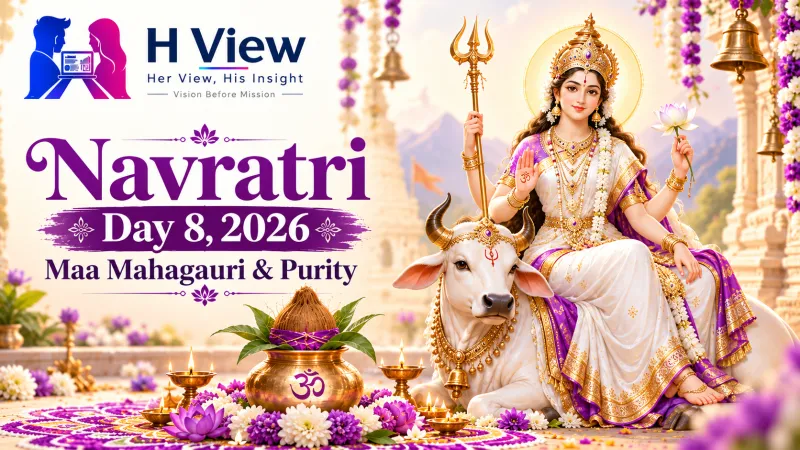
Navratri Day 8, 2026: Mahagauri, Purple and Why This Year’s Calendar Needs a Little Explanation
October 18 is Day 8 in the popular Navratri calendar, but Saptami runs long this year. What that means for Kalaratri and Mahagauri puja, the purple colour, and why Mahagauri stands for renewal after hardship.
After facing fear with Maa Kalaratri on Day 7, Navratri moves toward purification and peace. But this year, the calendar adds a twist worth understanding.
Navratri Day 8 2026 falls on Sunday, October 18 in the popular nine-day sequence, and the widely followed colour for the day is purple. However, Saptami continues across much of October 18 in several panchang calculations. That means formal Kalaratri Puja may still be observed today, while Mahagauri worship moves prominently to October 19 along with Durga Ashtami.
This matters because many social-media calendars simplify Navratri into one goddess per date. Hindu festivals follow lunar tithis, and tithis don’t always change at midnight, so a neat nine-box graphic can hide the actual ritual calendar.
The honest approach is to explain both. October 18 remains “Day 8” in the popular colour and nine-night sequence, while households following a local panchang should observe the Devi form their tithi prescribes.
Why Maa Mahagauri Represents Purification
In the Navdurga sequence, Mahagauri is the eighth form. She represents purity, serenity and transformation after the intensity of Kalaratri. Traditional narratives link her radiant appearance to Parvati after long tapasya, when the effects of severe austerity are washed away and her luminous form shines through.
The transition carries deep meaning. Hard periods of life often leave marks, but those marks do not have to become our permanent identity.
Mahagauri represents renewal after hardship. She doesn’t deny that the difficult phase happened; she shows what can emerge after it.
Navratri Day 8 at a Glance
| Detail | Day 8 in 2026 |
|---|---|
| Date | Sunday, October 18, 2026 |
| Popular sequence | Day 8 |
| Popular colour | Purple |
| Navdurga form | Maa Mahagauri in the traditional sequence |
| 2026 tithi | Saptami continues; Kalaratri Puja may continue |
| Formal Durga Ashtami | October 19 in many panchangs |
| Core meaning | Purification, grace and renewal |
| Simple mantra | Om Devi Mahagauryai Namah |
 Also readNavratri Day 7, 2026: Maa Kalaratri and the Courage to Face What We Usually Avoid→
Why This Calendar Difference Is Not a Mistake
Festival dates often cause confusion because people compare a nine-colour dress calendar with a ritual panchang and assume one of them must be wrong. In reality, they are answering different questions.
- The colour calendar keeps a simple nine-day sequence based on civil dates.
- The panchang tracks the lunar tithi at specific times, often according to sunrise.
When a tithi runs unusually long, one civil day can carry the popular identity of “Day 8” while the formal Ashtami puja takes place the next morning. Our Navratri 2026 guide sets out exactly how the final days fall this year.
For formal rituals, follow your temple, priest or local panchang. You can still enjoy the colour tradition culturally without letting it override tithi-based practice.
Her View: Purity Should Not Be Used to Control Women
Mahagauri’s symbolism is beautiful, but the word “purity” has often been applied to women in ways that become controlling or judgemental. Spiritual purity should never be reduced to policing clothing, relationships, marital status or personal choices.
A healthier reading is inner clarity: letting go of resentment, dishonesty, cruelty and the emotional residue of experiences that no longer deserve control over the present.
Mahagauri can then stand for freedom from burdens, not conformity to social judgement.
 Also readNavratri Day 6, 2026: Maa Katyayani and Why Strength Is Not the Same as Anger→
His Insight: Renewal Requires Letting Some Things End
People often say they want a fresh start while carrying every old grievance into the new phase. The surroundings change, but the conversation in their head stays exactly the same.
Purification is not forgetting what happened. It is deciding what still deserves influence over your future decisions.
Mahagauri’s place right after Kalaratri makes the sequence especially meaningful: first we confront the darkness, and only then can we honestly talk about renewal.
H View Verdict
October 18, 2026 is a useful reminder that Navratri is a living lunar tradition, not a rigid social-media template. The popular series calls it Day 8 and assigns purple, while formal panchangs may still observe Kalaratri because Saptami continues.
Mahagauri remains central to the spiritual sequence because she represents purification and peace after confrontation. Her meaning becomes clearer when you see her as the next stage after Kalaratri, not just another goddess assigned another colour.
The larger message is simple: after facing what is dark, transformation needs space for what is lighter. The journey concludes with Durga Ashtami, Maha Navami and Maa Siddhidatri on Day 9.
Frequently Asked Questions
Is October 18 Mahagauri Day in 2026?
In the popular nine-day sequence, October 18 is treated as Day 8 and commonly associated with Mahagauri. However, several panchangs show Saptami continuing and Kalaratri Puja on October 18, with formal Mahagauri Puja on October 19.
What is the Navratri Day 8 colour in 2026?
Purple is the popular Navratri colour for October 18, 2026.
What does Maa Mahagauri represent?
She represents purity, serenity, renewal and transformation after austerity.
Which calendar should I follow for puja on October 18?
For formal rituals, follow your local panchang, temple or family priest. The nine-colour calendar is a popular cultural tradition and can be enjoyed alongside tithi-based worship.
H View stories follow our editorial policy. Spotted an error? Tell us and we will correct it.
Rate this article
One tap is enough. No comment needed.
Was this article helpful?
Your answer goes straight to our editors.









Comments0
No comments yet. Start the conversation.