
Navratri Day 6, 2026: Maa Katyayani and Why Strength Is Not the Same as Anger
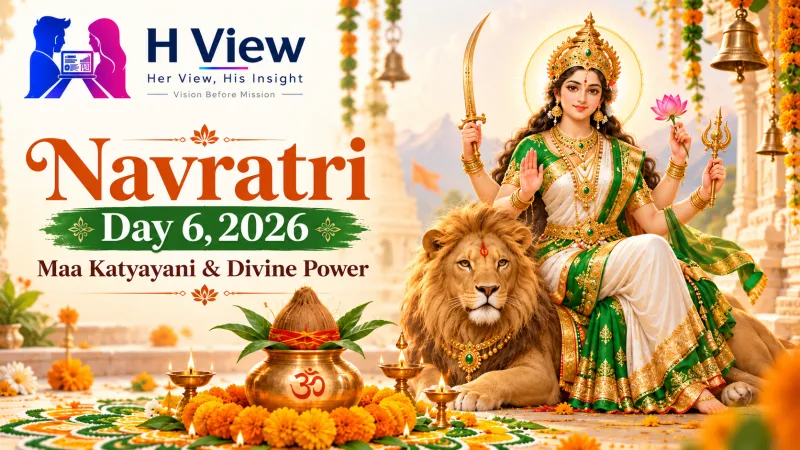
Navratri Day 6 brings Maa Katyayani, the warrior goddess who defeated Mahishasura. Her story, the green colour of the day, honey bhog and why real strength is directed, not reactive.
The sixth day of Navratri brings one of the festival’s most powerful warrior forms. After Maa Skandamata’s nurturing strength on Day 5, the Goddess now steps into battle.
Navratri Day 6 2026 falls on Friday, October 16, and is dedicated to Maa Katyayani. The popular colour for the day is green. Katyayani Puja is performed on Shashthi, and some traditions also mark Saraswati Avahan today, when the worship of knowledge begins in the later phase of Navratri.
Maa Katyayani is closely associated with the destruction of Mahishasura. She is remembered as a fierce form of the divine feminine that rises when ordinary responses are no longer enough. Yet reducing her to anger misses the deeper quality her form represents.
Her strength has direction. She does not fight because she enjoys conflict; she fights because balance has been disturbed and action has become necessary. That makes Katyayani especially meaningful in a culture where anger is so often mistaken for courage.
The Story of Maa Katyayani
Traditional narratives connect the Goddess with the sage Katyayana, whose devotion led to the divine feminine being born as his daughter. She therefore became known as Katyayani.
She later emerges as the warrior who confronts Mahishasura, a demon associated with arrogance, misuse of power and the ability to change form. The mythology is dramatic, but the underlying theme is easy to recognise today: some problems keep returning because they change shape whenever they are challenged only on the surface.
Katyayani represents decisive action after patience has reached its limit. She is the moment when strength becomes necessary to protect order.
Navratri Day 6 at a Glance
| Detail | Day 6 Information |
|---|---|
| Date | Friday, October 16, 2026 |
| Tithi | Shashthi |
| Goddess | Maa Katyayani |
| Popular colour | Green |
| Vehicle | Lion |
| Core quality | Courage, justice and decisive action |
| Common bhog | Honey and simple satvik offerings |
| Simple mantra | Om Devi Katyayanyai Namah |
| Other observance | Saraswati Avahan in some traditions |
Honey is the offering most commonly associated with Katyayani, though regional practice varies. Green is the widely followed colour for October 16 in the 2026 sequence – see our Navratri 2026 guide for all nine days.
 Also readNavratri Day 5, 2026: Maa Skandamata and the Strength Hidden Inside Nurturing→
Why Katyayani Is Often Connected With Marriage Prayers
Maa Katyayani is also widely worshipped by unmarried devotees hoping for a suitable partner. This association comes from devotional traditions around the Katyayani Vrata and the cultural practices that grew from it.
The modern reading should stay grounded. Worship does not replace compatibility, judgement or mutual respect, and no ritual is a guaranteed route to marriage.
A more meaningful interpretation is that devotees are seeking clarity, the right companionship and the removal of obstacles. Relationships built only on urgency rarely become stronger simply because society expects them to happen quickly.
How to Observe Navratri Day 6 at Home
- Offer honey or a simple satvik bhog
- Chant Om Devi Katyayanyai Namah during your puja
- If your family observes Saraswati Avahan, set books or instruments aside respectfully
- Wear or use green if your family follows the colour tradition
Her View: A Woman’s Anger Is Not Automatically a Character Flaw
Women are often expected to be endlessly patient, and legitimate anger is quickly labelled an overreaction. Katyayani offers a different image: anger can rise when something valuable has been violated again and again.
The lesson is not to glorify rage. It is to ask what the anger is pointing toward, and whether the response is constructive.
A boundary clearly stated after repeated disrespect can be far healthier than permanent silence. Strength means something when it protects dignity rather than simply creating fear.
 Also readNavratri Day 7, 2026: Maa Kalaratri and the Courage to Face What We Usually Avoid→
His Insight: Strength Without Control Becomes Another Problem
There is a difference between being powerful and being reactive. Someone who explodes at every inconvenience may feel strong in the moment, but is actually handing control over to emotion.
Katyayani’s symbolism is more disciplined. She represents power aimed at a specific purpose, not aggression looking for a target.
Day 6 asks us a useful question: are our strongest reactions solving the problem, or just adding another layer of conflict?
H View Verdict
Katyayani brings Navratri into its warrior phase, but her message is more thoughtful than “fight back.” She represents the point where courage, clarity and action come together.
The green of Day 6 adds an interesting contrast. Green suggests growth, while Katyayani represents confrontation. Sometimes growth does require confrontation, especially when harmful patterns have been tolerated for too long.
The key is that strength should restore balance, not become another source of chaos. Tomorrow, Navratri faces fear itself with Maa Kalaratri on Navratri Day 7.
Frequently Asked Questions
Which goddess is worshipped on October 16, 2026?
Maa Katyayani is worshipped on the sixth day of Navratri, which is Shashthi.
What is the Navratri Day 6 colour in 2026?
Green is the popular colour for October 16, 2026.
What bhog is offered to Maa Katyayani?
Honey is the offering most commonly associated with her worship, along with simple satvik foods.
Why do unmarried devotees pray to Maa Katyayani?
Devotional tradition links Katyayani with prayers for a suitable life partner, through the Katyayani Vrata. Many devotees see it as a prayer for clarity and the removal of obstacles rather than a guarantee.
H View stories follow our editorial policy. Spotted an error? Tell us and we will correct it.
Rate this article
One tap is enough. No comment needed.
Was this article helpful?
Your answer goes straight to our editors.









Comments0
No comments yet. Start the conversation.