

Salary Negotiation in India: What to Say, When to Say It and What Freshers Can Actually Ask For
"What is your expected CTC?" can quietly decide your salary for years. How salary negotiation works in India, what to say at each stage, and what freshers and experienced professionals can realistically ask for.
“What is your current CTC, and what are you expecting?” Many candidates answer this question in a few seconds, often nervously, and that single answer can shape their salary for years. Every future hike, bonus and even the next job offer may be calculated from that number.
Salary negotiation makes many people uncomfortable. Freshers worry the offer will be withdrawn. Experienced professionals worry about seeming greedy. Women are often told negotiation looks aggressive. As a result, many people accept the first number they are offered.
This guide explains how salary discussions usually work in India, what to say at each stage, and what you can realistically ask for.
First, Understand What CTC Really Means
Cost to Company (CTC) is the total amount the company spends on you in a year, not what reaches your bank account. It often includes:
- Fixed pay: basic salary, HRA and allowances.
- Employer contributions: such as the employer’s Provident Fund contribution.
- Gratuity: which is usually payable only after several years of continuous service.
- Variable pay or bonus: which depends on performance and is not guaranteed.
- Benefits: insurance, meal cards and similar items.
Two offers with the same CTC can mean very different monthly in-hand salaries. Always ask for the salary breakup and compare in-hand pay and fixed components, not just the headline number.
When to Talk About Salary
| Stage | What usually happens | Your approach |
|---|---|---|
| Initial HR call | Asked for current and expected CTC | Give a researched range, not a single low number |
| During interviews | Focus is on skills | Show value; avoid discussing pay in detail |
| After selection | Offer discussion begins | This is your strongest moment to negotiate |
| Offer letter received | Final terms shared | Clarify breakup, joining bonus, notice buyout |
Your negotiating power is highest after the company has decided it wants you and before you accept.
 Also readLinkedIn Profile for Job Search in India: What Recruiters Actually Notice and What to Fix First→
How to Answer “What Is Your Expected CTC?”
Do your research first. Check salary ranges for the role, city and experience level on job portals, company review sites and through people in your network. Then give a range anchored slightly above your target:
“Based on the responsibilities of this role and the market range for similar positions in Hyderabad, I’m looking for something between ₹X and ₹Y. I’m open to discussing the full package once we know there’s a good fit.”
Avoid saying “anything is fine” or “as per company norms”. That usually means the lowest number in their budget.
What Freshers Can Realistically Negotiate
Freshers joining large companies through campus or mass hiring often have fixed salary bands, and there may be little room on base pay. But that doesn’t mean there’s nothing to discuss. Freshers can often ask about:
- Joining date flexibility.
- Relocation support or initial accommodation.
- Location preference.
- Clarity on training period pay, bonds and probation terms.
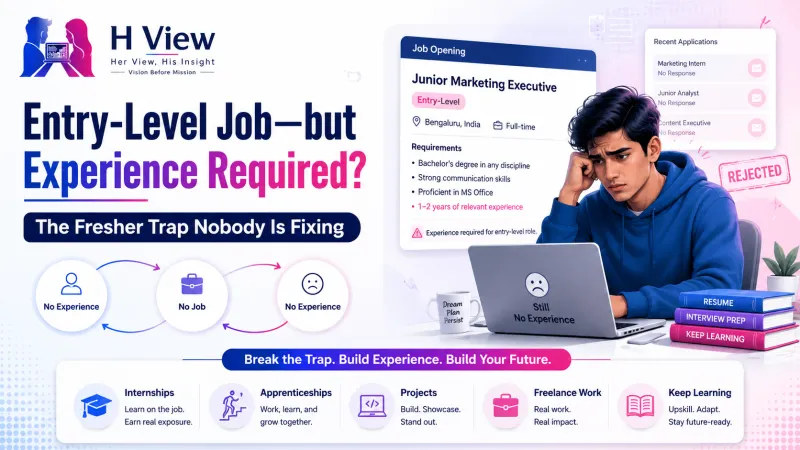
At startups and smaller companies, there is often more flexibility, especially if you bring a strong project portfolio. If you are still building that portfolio, our article on what employers actually want in 2026 can help.
What Experienced Professionals Should Negotiate
- Fixed pay: prioritise this over variable pay, which may not be paid in full.
- Joining bonus: useful to compensate for a bonus or benefit you lose by leaving.
- Notice period buyout: if your current employer requires a long notice, ask whether the new company will help.
- Role and title: sometimes worth more than a small salary difference over the long term.
- Review timeline: ask when your first appraisal will happen.
If you’re wondering whether a switch is worth it at all, read our analysis on whether you should still switch jobs every two years.
What to Say When the Offer Is Lower Than Expected
“Thank you, I’m genuinely excited about this role. Based on my experience with [specific skill or result] and the market range for this position, I was expecting closer to ₹X. Is there flexibility on the fixed component, or could we look at a joining bonus to bridge the gap?”
Stay polite, specific and focused on value. Give them a way to say yes.
Mistakes to Avoid
- Lying about your current salary. Many companies ask for payslips or verify through background checks.
- Negotiating only on CTC instead of in-hand and fixed pay.
- Accepting verbally before seeing the written offer.
- Using a competing offer you don’t actually have.
- Making it personal: “I need this money for my EMI” is less persuasive than “this is the market value of the role.”
 Also readHow to Answer “Tell Me About Yourself” in an Interview: A Simple Framework for Freshers and Experienced Candidates→
Her View: Asking for Fair Pay Is Not Greed
Many women hesitate to negotiate because they fear being seen as difficult. They accept the first offer, then spend years trying to catch up through appraisals that are calculated as a percentage of an already lower base.
Negotiating calmly and professionally is not aggressive. It is part of the hiring process. We explored the deeper pattern behind this in why women feel they must prove they deserve their salary.
His Insight: Your Starting Salary Compounds
Annual hikes are usually a percentage of your current salary. A slightly higher starting point grows into a significant difference over five or ten years, before you even count future job switches that use your current pay as a reference.
That is why a short, polite negotiation conversation is worth the discomfort. The worst realistic outcome is usually that the company says the offer is final.
H View Verdict
Salary negotiation in India works best when you understand the full CTC breakup, research market ranges, give a confident range instead of a single number, and negotiate after selection but before acceptance.
Freshers may have limited room on base pay but can still clarify terms and benefits. Experienced professionals should focus on fixed pay, joining bonus, notice support and role. In every case, stay honest, polite and specific about the value you bring.
Frequently Asked Questions
Is it okay for freshers to negotiate salary?
Yes, politely. In mass hiring there may be fixed bands, but freshers can still clarify terms, location, joining date and benefits. At smaller companies, there may be room on pay too.
What is the difference between CTC and in-hand salary?
CTC is the total cost to the company, including employer contributions, gratuity, variable pay and benefits. In-hand salary is what you receive monthly after deductions.
How much hike should I ask for when switching jobs?
It depends on your role, skills, market demand and current pay. Research market ranges for your role and city, and base your ask on that rather than a fixed percentage.
Can a company withdraw an offer if I negotiate?
It is uncommon when negotiation is polite and reasonable. Most companies expect some discussion. Avoid ultimatums and stay professional.
H View stories follow our editorial policy. Spotted an error? Tell us and we will correct it.
Rate this article
One tap is enough. No comment needed.
Was this article helpful?
Your answer goes straight to our editors.











Comments0
No comments yet. Start the conversation.