
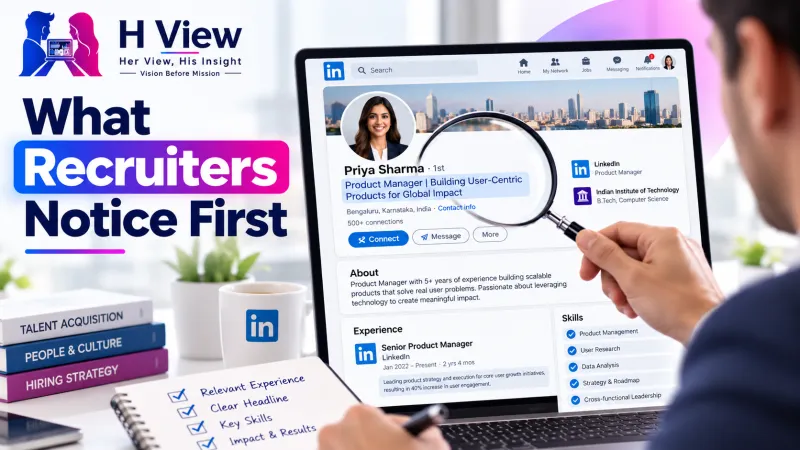
LinkedIn Profile for Job Search in India: What Recruiters Actually Notice and What to Fix First
Recruiters often look at your LinkedIn profile before they open your resume. What they actually notice in the first few seconds, and the fixes that matter more than motivational posts.
Many job seekers spend weeks polishing their resume and a few minutes on their LinkedIn profile. Yet recruiters often see the LinkedIn profile first, either because they searched for candidates directly or because they want to check the person behind an application.
A weak profile does not always lose you a job, but it can quietly remove you from shortlists you never knew existed. A clear, focused LinkedIn profile makes it easier for recruiters to find you and understand you quickly.
This article covers what recruiters actually notice, what to fix first, and common mistakes Indian job seekers make.
What Recruiters Notice in the First Few Seconds
- Photo: a clear, professional-looking face photo.
- Headline: the line under your name that says what you do.
- Current role or status: where you work, or what you are looking for.
- Location: important for city-based hiring.
If these four elements are unclear, many recruiters move on without reading further.
Fix Your Headline First
A headline like “Seeking opportunities” or “B.Tech Graduate” tells a recruiter almost nothing. Your headline should say what you do and what you are good at.
| Weak headline | Stronger headline |
|---|---|
| Looking for a job | Junior Data Analyst | SQL, Excel, Power BI | Open to roles in Hyderabad |
| Software Engineer at XYZ | Backend Engineer | Java, Spring Boot, Microservices | Payments Systems |
| MBA Graduate | MBA (Marketing) | Digital Campaigns, SEO, Analytics | Fresher |
Recruiters search using skills and job titles. Including them in your headline helps you appear in those searches.
 Also readHow to Answer “Tell Me About Yourself” in an Interview: A Simple Framework for Freshers and Experienced Candidates→
Write an “About” Section That Sounds Like a Person
Keep it short, three to five small paragraphs. Cover:
- What you do or want to do.
- Your strongest skills and tools.
- One or two concrete achievements or projects.
- What kind of role you are looking for.
Avoid long lists of adjectives like “hardworking, passionate, dedicated team player”. Show those qualities through examples instead.
Make Experience and Projects Specific
For each role or internship, describe what you did and what changed because of it. “Responsible for testing” is weak. “Automated 120 regression test cases using Selenium, reducing manual testing time for each release” is strong, as long as it is true.
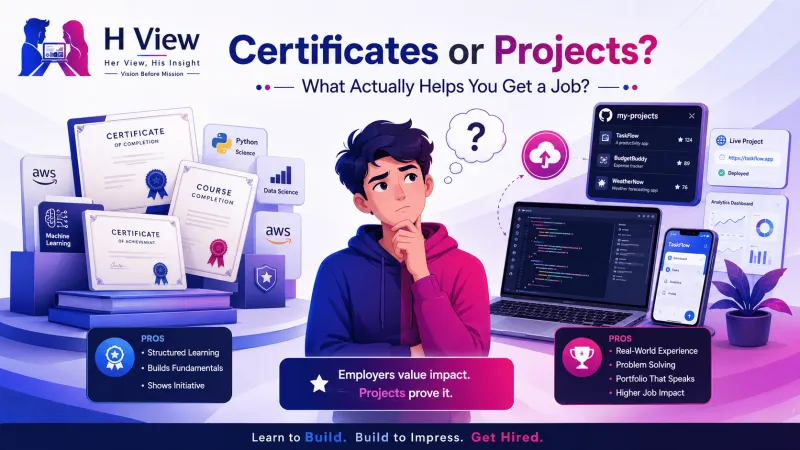
Freshers should add projects, internships and relevant academic work, with links to GitHub, portfolios or live demos where possible. As we explained in certificates vs projects, recruiters usually value real work over a long list of course badges.
Skills: Fewer, More Relevant
List skills that match the roles you want, not every tool you have ever touched. Put the most important ones at the top, and make sure the same skills appear in your headline, About section and experience where they genuinely apply.
Use “Open to Work” Wisely
LinkedIn lets you signal that you are open to work, either publicly with a photo frame or privately so that only recruiters can see it. If you are currently employed, the recruiter-only option is usually the more discreet choice. Specify job titles, locations and work types so the right opportunities reach you.
Activity: Quality Over Quantity
You don’t need to post every day. A few thoughtful posts or comments related to your field, such as what you learned from a project or a short explanation of a tool, show genuine interest. Avoid copied motivational quotes; they add nothing to how a recruiter sees your skills.
Common Mistakes Indian Job Seekers Make
- A profile that does not match the resume in dates or job titles.
- Adding fake experience or inflated titles. Background checks catch these, as we explained in the risks of fake experience.
- Paying for “guaranteed placement” messages from unknown recruiters. See our guide on fake job consultancies.
- Sending connection requests with no message to recruiters, followed by “Please refer me”.
- Leaving the profile untouched for years.
How to Message Recruiters
A short, specific message works better than a long request:
“Hi [Name], I noticed [Company] is hiring for a Junior Data Analyst role. I have built two projects using SQL and Power BI analysing retail sales data, which I’ve linked on my profile. I’d be grateful if you could let me know whether my background fits what the team is looking for.”
It respects their time, shows relevance and makes a reply easy.
 Also readApplied to 500 Jobs but Got No Interviews? Stop Applying the Same Way→
Her View: Visibility Is Not Bragging
Many talented people, especially women and those from smaller towns, hesitate to describe their achievements clearly online. They write modestly and hope the work speaks for itself.
On LinkedIn, the work can only speak through what you write. Stating your skills and results clearly is not showing off. It helps the right people find you.
His Insight: Your Profile Works While You Sleep
Applications are active effort: you find a job, apply, wait. A good LinkedIn profile is passive: recruiters searching for your skills can find you even when you are not applying anywhere.
That makes it one of the most efficient career investments you can make. An hour of focused improvement can bring opportunities for months. Once interviews come, our guide on answering “tell me about yourself” will help you make a strong start.
H View Verdict
A strong LinkedIn profile doesn’t need to be fancy. It needs a clear photo, a specific headline with your role and skills, a short human About section, concrete experience and projects, relevant skills, and occasional genuine activity.
Fix the headline first, keep it consistent with your resume, and never exaggerate. Recruiters are searching every day; make it easy for them to find and understand you.
Frequently Asked Questions
What should I write in my LinkedIn headline as a fresher?
Mention the role you want, your top skills and, optionally, your preferred location. For example: “Junior Web Developer | React, JavaScript, Node.js | Open to roles in Bengaluru”.
Do recruiters really check LinkedIn profiles in India?
Many recruiters use LinkedIn both to search for candidates and to check applicants. A clear profile makes you easier to find and evaluate.
Should I use the “Open to Work” photo frame?
It can help if you are not employed. If you are currently working, the option that shows your status only to recruiters is usually more discreet.
How often should I post on LinkedIn?
There is no fixed rule. A few thoughtful posts or comments related to your field are more useful than frequent generic posts.
H View stories follow our editorial policy. Spotted an error? Tell us and we will correct it.
Rate this article
One tap is enough. No comment needed.
Was this article helpful?
Your answer goes straight to our editors.



Comments0
No comments yet. Start the conversation.