
Best Phone Camera for Reels and Photos: Which Features Actually Matter?
Phone ads sell megapixels and zoom, but Reels viewers notice shaky video, dark rooms and bad audio. Here are the camera features that really matter, and a quick in-store test.
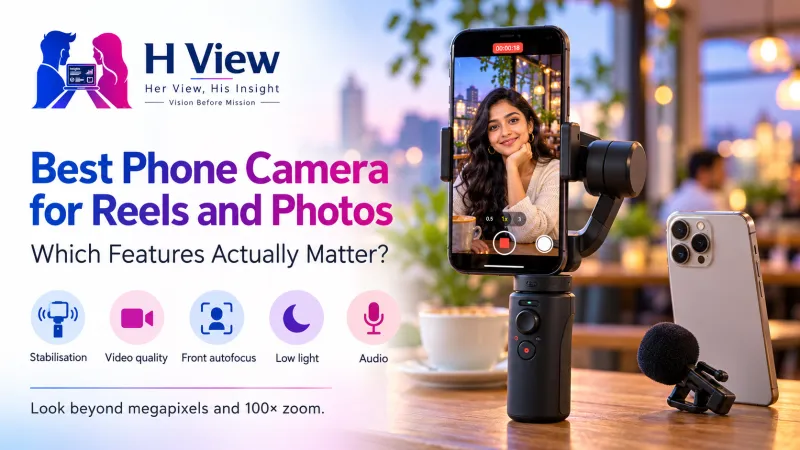
In a phone camera for Reels and photos, the features that actually matter are good stabilisation (ideally OIS), clean main-camera video at 1080p or 4K and 30 or 60fps, a sharp front camera with autofocus, decent microphones and steady low-light performance. Megapixel counts, 100x zoom and extra 2MP lenses matter far less than phone ads suggest.
If you make Reels, whether for fun, for a small business or as a creator, your phone is your studio. But phone marketing talks in megapixels and zoom numbers, while what your viewers notice is shaky footage, muddy night shots, bad audio and a selfie camera that keeps losing focus. Here is how to judge a camera phone the way a Reels creator should.
What video format do Reels use?
Instagram Reels are vertical videos. The commonly recommended upload is 1080 x 1920 pixels at a 9:16 aspect ratio, at 30fps or 60fps if your footage supports it, according to Hopper HQ's 2026 Reels size guide. The same guide notes that the top and bottom of the frame are covered by your username, caption and buttons, so keep faces and text in the centre.
Reels basics
This means almost any modern phone can record the right resolution. The real differences are in how stable, clean and well-lit that footage looks.
Which camera features matter most for Reels?
1. Stabilisation: OIS plus EIS
Stabilisation is the single biggest upgrade for walking shots, vlogs and hand-held clips. Optical image stabilisation (OIS) physically moves the lens or sensor to cancel shake, while electronic stabilisation (EIS) crops and corrects in software (how image stabilisation works). Phones with both usually give the smoothest results. Check whether OIS is on the main camera only, and test stabilisation at 4K too; some phones limit it at higher resolutions.
2. Main camera video quality, not photo megapixels
A 200MP photo mode does not make your videos better. Videos use far fewer pixels. What matters is the sensor size, dynamic range (skies not blown out, faces not dark) and how the phone handles skin tones. Watch real video samples from reviewers, not still photos.
3. A front camera with autofocus and 4K
If you talk to the camera, the selfie camera is your main camera. Autofocus keeps you sharp when you move closer or hold up a product. 4K front recording gives you room to crop. Many budget phones use fixed-focus selfie cameras, which blur when you get close.
4. Low-light video
Indian homes, cafes, weddings and festive evenings are often dimly lit. Night photo modes are common now, but low-light video is a tougher test. Look for samples shot indoors at night: noise, smearing and flickering lights show up quickly.
5. Microphones and audio
Viewers forgive average video, but not bad audio. Check whether the phone handles wind noise outdoors and whether voices sound clear in a room. If you are serious, a small wireless mic that works with your phone is a cheaper upgrade than a costlier phone.
6. Smooth switching between lenses
When you zoom while recording, some phones jump between cameras with a visible change in colour and exposure. Phones where the ultra-wide, main and telephoto look similar make editing far easier.
 Also readOPPO Find X10 vs Find X10 Pro Max: What Does the Extra Money Actually Buy?→
Which features can you ignore?
| Marketing feature | Why it matters less for Reels |
|---|---|
| Very high megapixels | Video uses a fraction of those pixels |
| 100x "space zoom" | Heavily processed and rarely usable in video |
| 2MP macro or depth lenses | Low quality; the main camera usually does better |
| Heavy beauty filters | Easy to add later; hard to undo if baked in |
| 8K recording | Huge files; Reels play at 1080p anyway |
A quick in-store test before you buy
- Record 20 seconds while walking: is it smooth?
- Record yourself with the front camera, moving closer and further: does focus keep up?
- Point the camera at a bright window and a face: are both visible?
- Zoom in while recording: does colour change between lenses?
- Play the clip back with sound: are voices clear?
Also check storage. Ten minutes of 4K video can take a few gigabytes, so 256GB is a sensible minimum for regular creators. If you are on a budget, our guide to phone compromises under ₹20,000 shows what to prioritise.
Her View
Many women run small businesses on Instagram: home bakers, boutique owners, tutors, makeup artists. For them, a phone with a reliable front camera, good indoor lighting performance and clean audio can matter more than any flagship badge. Spend on the features your customers will actually see, and put the savings into a ring light and a simple mic.
 Also readBuying a Phone Under ₹20,000? 7 Compromises to Check Before You Pay→
His Insight
Reels reward consistency more than gear. A phone with good stabilisation and audio, used three times a week, will grow an account faster than a ₹1.5 lakh phone used once a month. If your Reels are part of a business plan, the strategy behind them matters as much as the camera; you can see how Harika Behara approaches content and digital marketing at harikabehara.com.
H View Verdict
The best phone for Reels and photos is the one with steady stabilisation, a strong main camera for video, a front camera with autofocus, good low-light results and clear audio. Ignore megapixel and zoom wars. Test the phone the way you will use it, and spend what you save on light and sound.
Frequently Asked Questions
What resolution should I record Instagram Reels in?
Record vertical video at 1080 x 1920 (9:16) or higher at 30 or 60fps. Recording in 4K and exporting at 1080p gives you room to crop.
Is OIS necessary for making Reels?
Not strictly, but it helps a lot for hand-held and walking shots, especially in low light. Phones with both OIS and EIS usually give the smoothest footage.
Do more megapixels mean better Reels?
No. Video uses far fewer pixels than photos. Sensor quality, stabilisation and processing matter more than megapixel count.
Which matters more for creators: front or rear camera?
If you speak to the camera, the front camera matters most. Look for autofocus and 4K recording on the selfie camera.
H View stories follow our editorial policy. Spotted an error? Tell us and we will correct it.
Rate this article
One tap is enough. No comment needed.
Was this article helpful?
Your answer goes straight to our editors.







Comments0
No comments yet. Start the conversation.