
Is Your Phone Charger Safe? How to Spot Fake Chargers and Cables Before They Damage Your Phone
Most phones no longer come with a charger in the box, so people buy the cheapest one they find. How to spot fake chargers and cables, verify the BIS mark, and pick fast charging that is actually safe.
Many new phones arrive without a charger in the box. So people buy one from a roadside stall, a train station shop or the cheapest listing online. It looks identical to the original, costs a fraction of the price and seems to work. Until the phone heats up, charging becomes painfully slow, or the adapter itself starts to smell of burning plastic.
Fake chargers and low-quality cables are not just a waste of money. A charger sits between your wall socket and a lithium-ion battery for hours, often overnight, often next to your bed. Poor insulation, missing protection circuits or wrong voltage control can damage your phone or become a safety risk.
This guide explains how to identify a fake or unsafe charger, how to verify one officially in India, and how to choose fast charging that is genuinely safe.
Why Cheap Chargers Can Be Risky
A genuine charger is more than a plastic box with a USB port. Inside, it has circuits that control voltage and current, protect against short circuits and overheating, and keep the high-voltage side separated from the part you touch.
Counterfeit or very cheap chargers often cut corners on exactly these parts. The result can include:
- Unstable voltage that stresses the phone’s battery over time.
- Excess heat during charging.
- Poor insulation, which can be dangerous if the charger is damaged.
- Much slower charging than advertised.
How to Spot a Fake Charger
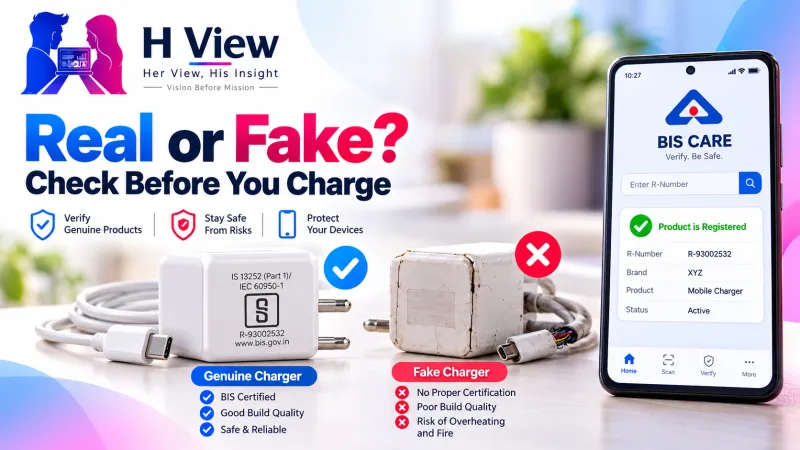
1. Check for the BIS registration mark and R-number
In India, power adapters for IT equipment fall under the Bureau of Indian Standards’ Compulsory Registration Scheme. A genuine charger should carry the BIS registration mark with an R-number printed on it.
2. Verify the R-number in the BIS Care app
Install the official BIS Care app and use the “Verify R-No under CRS” option. Enter the R-number from the charger. The result should match the brand and product type. If there is no result, or the brand is different, treat the charger as suspect. The app also lets you file a complaint about misuse of the mark.
3. Look at the build and printing
- Blurry or misspelt text, uneven seams and loose ports are warning signs.
- A charger that feels unusually light compared with the original may be missing internal components.
- Specifications on the body should be clear: input voltage, output voltage and current, wattage.
4. Be wary of prices that are too good to be true
An original-brand fast charger sold at a tiny fraction of the official price, by an unknown seller, is very likely not original.
5. Buy from trustworthy sources
Brand stores, authorised retailers and the brand’s official online store are the safest options. On marketplaces, check the seller details, not just the brand name in the listing.
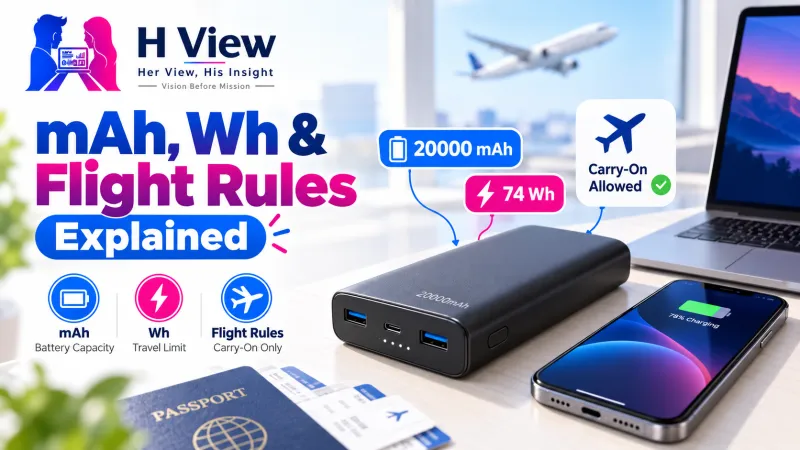 Also readHow to Choose a Power Bank in India: Real Capacity, Watt-Hours, Fast Charging and the New Flight Rules→
Cables Matter Too
A good charger with a poor cable can still give slow or unstable charging. For fast charging, especially at higher wattages, the cable must support the required current. Cheap cables may:
- Limit charging speed.
- Heat up at the connector.
- Fray quickly, exposing wires.
Replace cables that are frayed, bent sharply at the ends, or that only work at certain angles.
How to Choose Safe Fast Charging
- Check what your phone supports. Look up the charging standard and maximum wattage in your phone’s official specifications.
- Prefer USB Power Delivery (USB-PD) for wide compatibility, unless your phone uses a proprietary system you want to use at full speed.
- Match or exceed the wattage. A higher-watt charger is safe if it uses a standard your phone supports; the phone only draws what it can handle.
- Use a certified cable rated for the wattage you need.
If you also carry a power bank, the same rules apply. Our guide on how to choose a power bank in India explains output, watt-hours and BIS checks in detail.
Everyday Charging Habits That Help
- Avoid charging under pillows or blankets, where heat cannot escape.
- Unplug and stop using a charger that becomes very hot, buzzes or smells.
- Don’t use a charger with a cracked body or exposed metal.
- Keep chargers away from water and damp bathrooms.
For more on keeping your battery healthy, see our tips on improving phone battery life, which apply to most Android phones.
Her View: Safety Is Worth a Few Hundred Rupees
It’s tempting to save money on a charger, especially after spending a lot on the phone itself. But a charger is used every single day, often overnight, in homes with children. Spending a little more for a verified, certified charger is a small price for peace of mind.
The BIS Care app check takes less than a minute. It is one of the simplest safety habits anyone can learn.
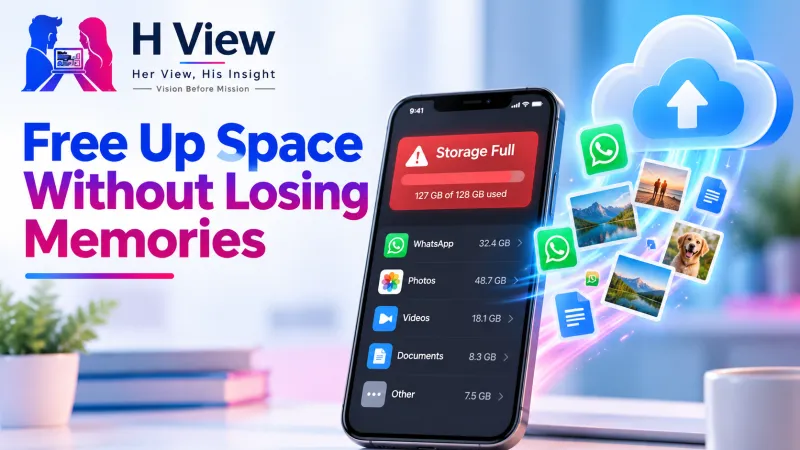 Also readPhone Storage Full Again? A Practical Clean-Up Guide for Android and iPhone That Doesn’t Lose Your Memories→
His Insight: Your Phone Is Only as Safe as Its Weakest Accessory
People spend hours comparing phones and then plug them into the cheapest accessory available. Battery health, charging speed and even safety depend heavily on the charger and cable.
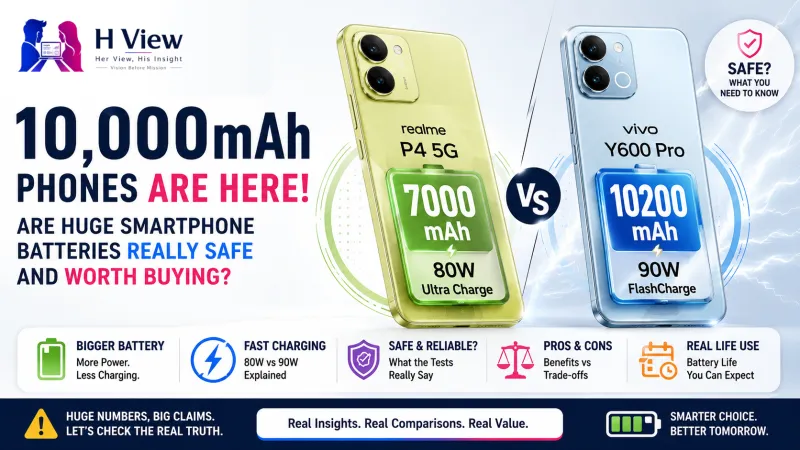
Treat the charger as part of the phone, not as an afterthought. Large-battery phones in particular, which we discussed in our article on 10,000mAh smartphones, deserve good-quality charging equipment.
H View Verdict
Fake chargers are easy to buy and hard to spot by looks alone. The most reliable check in India is the BIS R-number, verified in the BIS Care app, combined with buying from authorised sellers and avoiding suspiciously cheap “original” chargers.
Match your charger and cable to your phone’s supported standard and wattage, replace damaged accessories, and stop using anything that overheats or smells. Your phone, and your home, are worth that small effort.
Frequently Asked Questions
How can I check if my charger is original?
Check for the BIS registration mark and R-number on the charger, then verify the number in the BIS Care app using “Verify R-No under CRS”. Also buy only from authorised sellers.
Can a fake charger damage my phone?
It can. Poor voltage control and missing protection circuits can stress the battery, cause overheating and reduce battery life over time.
Is it safe to use a higher-watt charger with my phone?
Generally yes, if the charger uses a standard your phone supports. The phone only draws the power it can handle.
Why is my phone charging slowly with a new charger?
The charger or cable may not support your phone’s fast-charging standard, the cable may be low quality, or the charger may not deliver its advertised output.
H View stories follow our editorial policy. Spotted an error? Tell us and we will correct it.
Rate this article
One tap is enough. No comment needed.
Was this article helpful?
Your answer goes straight to our editors.




Comments0
No comments yet. Start the conversation.