
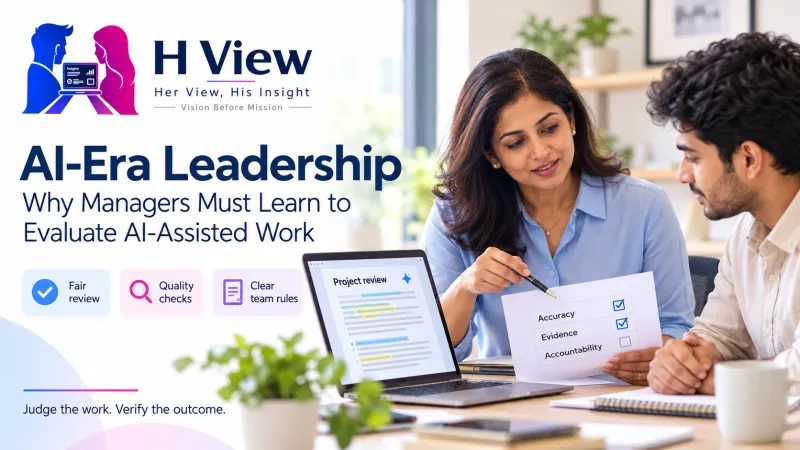
AI-Era Leadership: Why Managers Must Learn to Evaluate AI-Assisted Work
Your team is already using AI, whether or not there is a policy. The leadership question now is how to judge work that AI helped create, fairly and well.
AI-era leadership means knowing how to judge work that AI helped produce. Managers can no longer assess effort by how long something took or how polished it looks. They need to check accuracy, ask how the work was made and decide what good looks like when AI did part of the job, without punishing honest use.
Here is a situation many managers will recognise. A team member who used to take three days on a market report submits one in four hours. It is clean, well formatted and confident. Should you be impressed, suspicious, or both? The honest answer is that you cannot tell from the document alone. That is the new leadership problem.
Why does AI-assisted work need a different review?
AI tools are already in daily use at work. Microsoft's 2024 Work Trend Index, based on a survey of 31,000 people in 31 countries, found that 75% of knowledge workers were using generative AI at work, and that 78% of AI users were bringing their own AI tools rather than ones provided by their company (Microsoft WorkLab). In other words, a lot of AI use at work is happening without a clear process.
That matters because AI changes the usual signals a manager relies on. Good formatting, fluent language and speed used to suggest care and effort. Now they are cheap. Meanwhile the real risks, such as made-up facts, copied code or a confident but wrong conclusion, are harder to spot because they look polished.
What changes in how you judge work
Old signals
- Time spent
- Length and polish
- Confident language
- Few typos
Better signals now
- Accuracy of facts and numbers
- Clear reasoning the person can explain
- Fit with the real business context
- Honest notes on what AI did
How should managers evaluate AI-assisted work?
A simple review routine
- Normalise disclosure. Make "Which parts did AI help with?" a routine question, asked with curiosity, not suspicion. People hide what they think will be punished.
- Spot-check the facts. Pick a few claims, numbers or citations and check them. AI errors usually show up in specifics.
- Test understanding. Ask the person to explain why they chose one approach over another. If they can, the work is theirs, whatever tool helped.
- Judge outcomes. Did the report answer the client's question? Does the code pass tests and fit the system? That is what matters.
- Give feedback on judgement, not typing. Coach people on what they accepted from AI and what they should have questioned.
 Also readLeadership Is a Daily Practice: 7 Habits That Build Trust at Work→
What rules should teams agree on?
- Which tools are approved for company work
- What data must never be pasted into public AI tools, such as client or salary data
- When AI use must be mentioned, for example in client deliverables or code reviews
- Who is accountable for the final output: always the person, never the tool
- How AI-written code or content is tested before it goes out
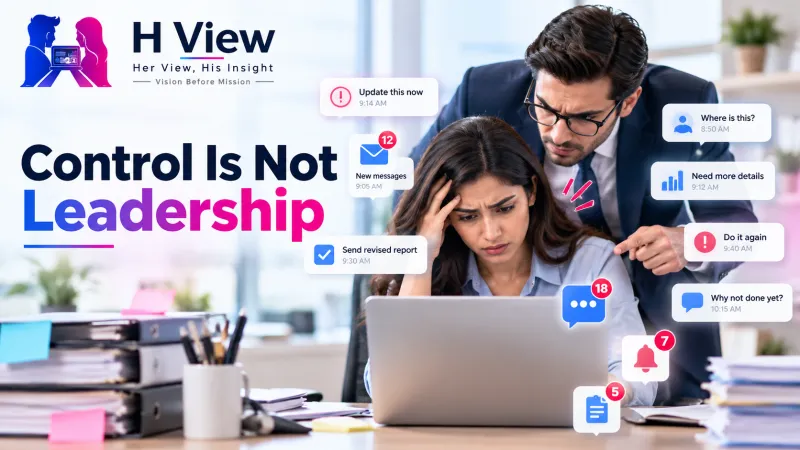
These rules work best when they come with trust. If you use the rules to catch people out, you get hidden AI use, which is the riskiest kind. Our earlier pieces on micromanagement and blameless postmortems explain why.
Managers also need enough hands-on experience to know what AI is good and bad at. You cannot judge AI-assisted code if you have never seen AI make a coding mistake. For technical leaders, studying real AI-enabled systems helps; the case studies in Harika Behara's engineering portfolio show where AI fits into production software and where human review stays essential.
Her View
Some of the most careful people on a team are the ones most afraid to admit they used AI, because they worry it makes their work look less valuable. A leader who says "I use it too, here is how I check it" removes that fear instantly. Honesty spreads from the top.
 Also readWhy New Managers Struggle to Delegate—and How to Start Letting Go Without Losing Quality→
His Insight
The cost structure of work has changed. Producing a first draft is now cheap; verifying it is not. Teams that budget time for checking will ship fewer mistakes than teams that simply celebrate speed. Leaders should plan review time explicitly, especially for client-facing work and code.
H View Verdict
AI-era leadership is not about banning tools or blindly trusting them. It is about building a team culture where AI use is open, outputs are checked and people are judged on the quality of their thinking. Start by asking one simple question in your next review: which parts did AI help with?
Frequently Asked Questions
How should managers evaluate work done with AI?
Ask which parts AI helped with, spot-check facts and numbers, ask the person to explain key decisions and judge the final outcome rather than the effort or the tool.
Should employees disclose AI use at work?
Yes, ideally under clear team rules. Open disclosure makes reviews easier and reduces the risk of unchecked errors or data leaks.
How many employees use AI at work?
Microsoft's 2024 Work Trend Index found that 75% of knowledge workers surveyed were using generative AI at work, and many were bringing their own tools.
Who is responsible for mistakes in AI-assisted work?
The person who submits the work remains responsible for it. AI is a tool, so the final check and accountability stay with people.
H View stories follow our editorial policy. Spotted an error? Tell us and we will correct it.
Rate this article
One tap is enough. No comment needed.
Was this article helpful?
Your answer goes straight to our editors.











Comments0
No comments yet. Start the conversation.