

Entry-Level Job—but Experience Required? The Fresher Trap Nobody Is Fixing
A fresher opens a job portal and finds an attractive vacancy. The title says Entry-Level,…
 Satya Hemanth August 9, 2026
  By Satya HemanthUpdated September 20, 20266 min read39 views
A student searching for a coding career often faces two very different options.
The first is a paid programme costing ₹30,000, ₹50,000 or even more, promising live classes, projects, mentorship and placement assistance.
The second is YouTube, where complete courses on Python, Java, web development, databases and interview preparation are available free of cost.
At first glance, the free option appears obvious. Why pay ₹50,000 when the same programming language can be learned online?
But the comparison is not simply paid content versus free content.
What learners are really comparing is structure, support, accountability, feedback and career guidance.
A good paid coding course may help someone learn more consistently. A poor course may provide little more than recorded videos and a certificate. YouTube can offer excellent knowledge, but learners must build their own roadmap and remain disciplined without external pressure.
The right question is not:
“Which option costs less?”
It is:
“Which option will help me develop skills I can actually demonstrate?”
YouTube has made technical education accessible to almost anyone with an internet connection.
Learners can find detailed lessons covering:
Online learning is not a secondary or unusual path for developers. In Stack Overflow’s 2025 Developer Survey, technical documentation remained the most commonly used learning resource, while online resources and developer communities were also widely used.
YouTube is especially useful when learners want to:
The content itself is often not the main reason to pay for a course.
Much of the same theory is already available freely.
A quality coding course offers something YouTube usually cannot provide automatically: a complete learning system.
A beginner using free videos may jump between five different playlists, learn React before understanding JavaScript or begin several languages without completing one.
A structured course can provide:
This can be valuable for learners who repeatedly lose consistency or feel overwhelmed by too many free resources.
Paying for guidance may also reduce wasted time. A mentor can identify whether the learner’s problem is weak logic, poor debugging, incomplete fundamentals or simply an incorrect learning order.
In that situation, the fee is not mainly for information.
It is for direction and feedback.
Many paid programmes use impressive marketing language:
These claims must be checked carefully.
India’s Central Consumer Protection Authority has issued guidelines specifically addressing misleading advertisements in the coaching sector. The rules cover false or exaggerated claims involving faculty credentials, course recognition, success rates, rankings, employment outcomes and guaranteed selection.
A ₹50,000 course may still provide:
When this happens, the learner has paid a premium for information that could have been accessed freely.
The amount charged is not proof of quality.
Free learning has no course fee, but it is not completely without cost.
The learner may spend additional time:
Some learners handle this very well.
Others spend months consuming videos without building anything.
The main danger of YouTube learning is passive watching.
A person may complete a ten-hour tutorial and feel productive, but still be unable to write a small application without following the instructor.
Free content becomes valuable only when it is converted into practice.
Before paying, separate the course into two parts.
This includes lectures, notes, recordings and basic demonstrations.
Content alone rarely justifies a high fee because high-quality free and low-cost resources already exist.
This includes:
Support is what may justify the investment.
When an institute cannot clearly explain its support system, the course may not be worth the price.
Before joining any programme, ask:
The trainer shown during counselling may not teach the full course.
A live class with hundreds of students may offer little personal interaction.
General lectures are not the same as individual feedback.
Avoid programmes where every learner copies the same ecommerce or task-management application.
It may mean only job alerts, resume forwarding or access to placement drives—not guaranteed employment.
Ask for genuine alumni contacts, roles, companies and joining dates.
Read all conditions before paying through instalments or loans.
For many beginners, the best approach is hybrid learning.
Start with four weeks of free resources.
During that period:
After that, decide whether you need a full course, a smaller mentorship programme or only occasional guidance.
This prevents students from investing ₹50,000 before knowing whether coding suits them.
Her View: A strong paid programme can provide structure, mentorship and accountability. For learners who feel lost or inconsistent, this support may make the investment worthwhile.
His Insight: Coding knowledge is widely available for free. Paying a large fee for videos, certificates and vague placement promises does not create job-ready ability.
Both perspectives are valid.
The value depends on what exists beyond the recorded lessons.
A ₹50,000 coding course is not automatically better than learning free on YouTube.
YouTube can teach programming fundamentals extremely well. A paid course becomes valuable only when it adds genuine mentorship, personal feedback, original projects, accountability and credible career support.
Do not pay because the advertisement makes you afraid of being left behind.
Pay only when you clearly understand what support you are receiving and why you cannot obtain it more affordably elsewhere.
The smartest path is often:
Learn free first. Pay for the specific support you actually need.
Yes. Many learners can build strong foundations through free videos, documentation and projects. Success depends on consistency and active practice.
It may be worth it when it includes quality mentorship, code reviews, original projects and verified placement support. Content alone rarely justifies the fee.
The main disadvantage is the lack of structure, accountability and personalised feedback.
No. Placement assistance does not automatically mean guaranteed employment. Skills, projects and interview performance still matter.
Yes. A short self-learning period helps learners confirm their interest and evaluate paid courses more intelligently.
Trainer quality, personal feedback, practical projects, doubt support and the ability to demonstrate real skills matter far more.
Satya Hemanth is the founder of H View and writes on careers, sports, leadership, digital trends, and practical decision-making. His articles focus on clear explanations, real-world examples, and useful insights for students, young professionals, and everyday readers.
Share your real experience and help other readers decide better.
No community views yet. Be the first to share yours.
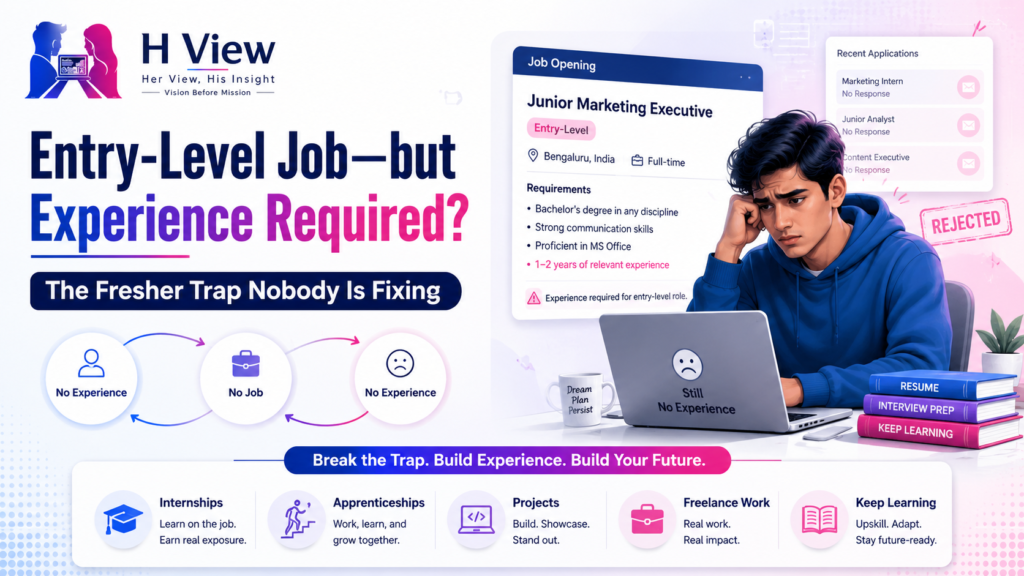
A fresher opens a job portal and finds an attractive vacancy. The title says Entry-Level,…
Satya Hemanth August 9, 2026 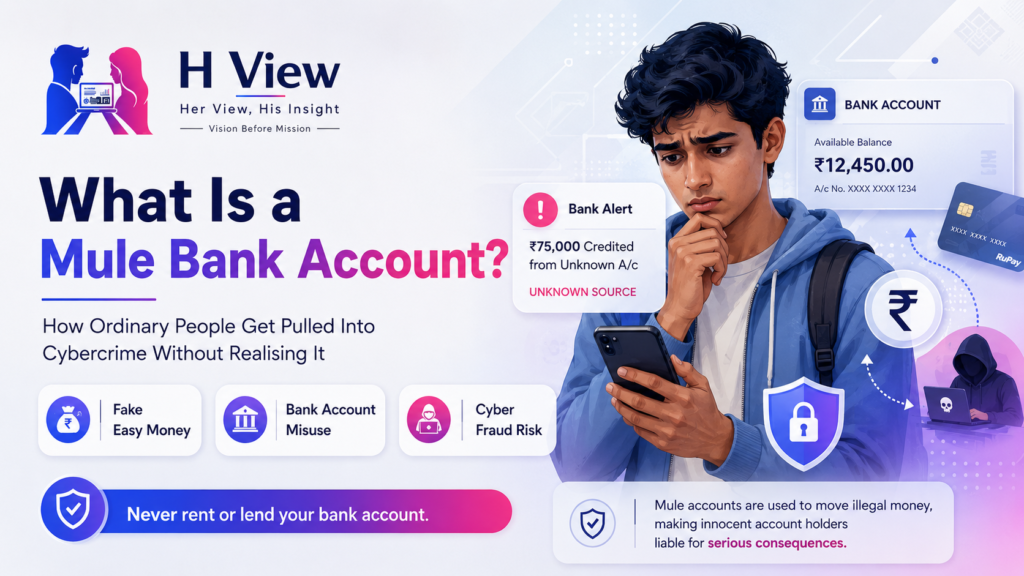
A stranger messages you with what sounds like an easy opportunity. “Use your bank account…
 Harika August 9, 2026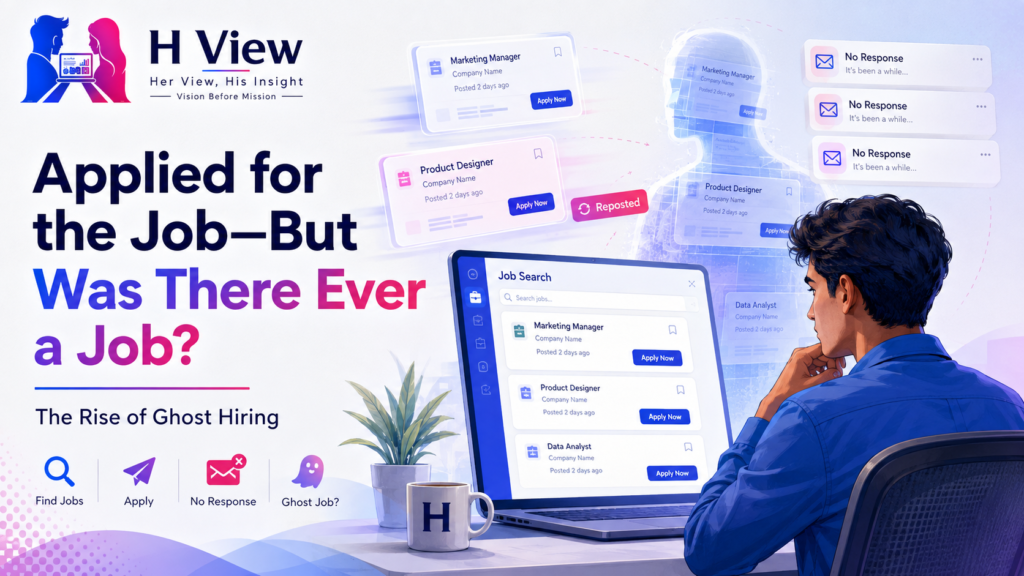
You find a job that perfectly matches your profile. The company looks genuine. The role…
Satya Hemanth August 8, 2026 
For generations, the path to a secure career appeared simple: Study hard, complete a degree…
Satya Hemanth August 7, 2026