

Best Digital Marketing Tools in 2026: What Marketers Actually Need and What They Can Skip
Open LinkedIn for a few minutes and you will probably come across a colourful graphic…
 Harika October 6, 2026
  By HarikaUpdated September 30, 202615 min read7 views
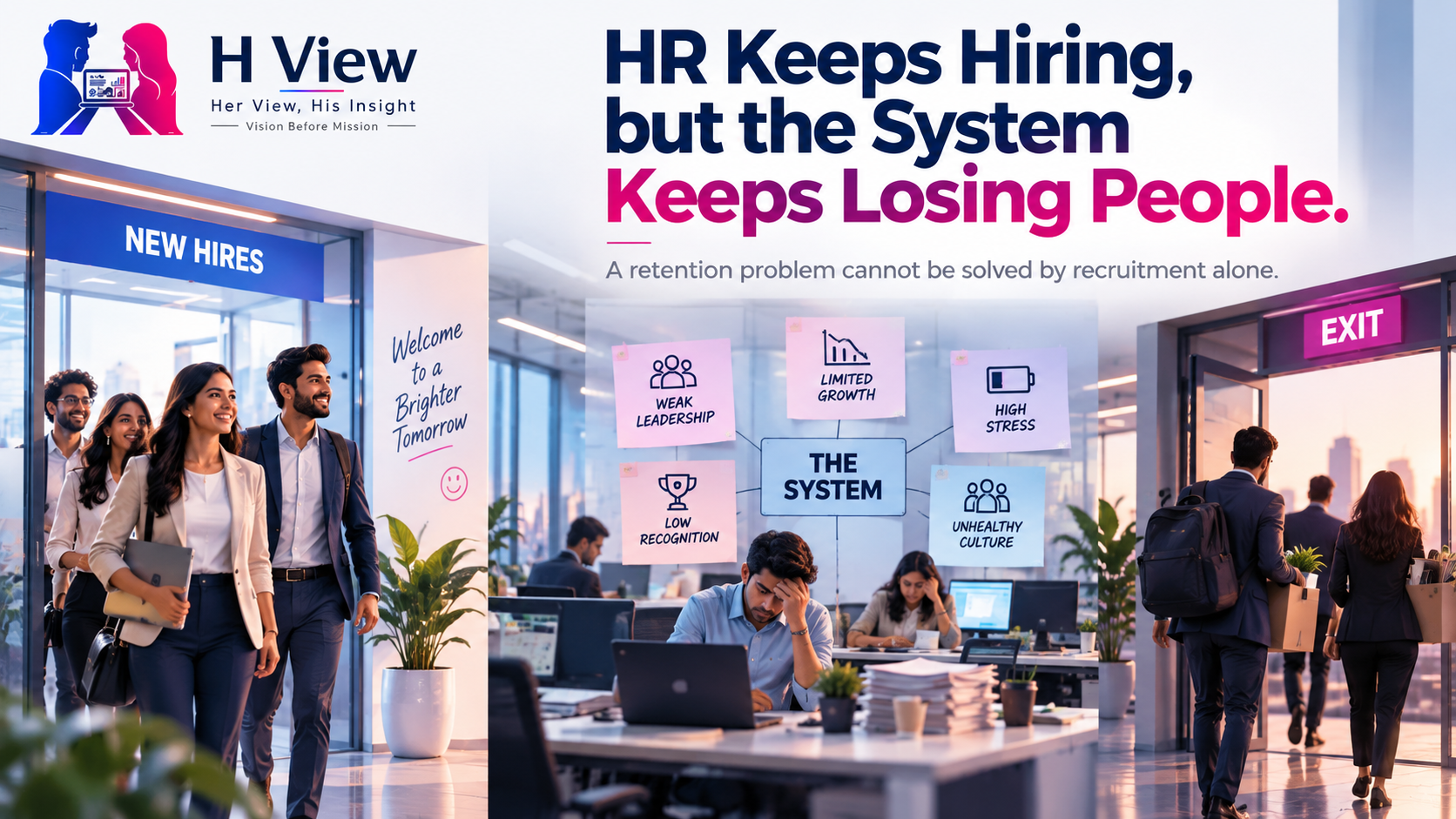
Many companies proudly talk about new hires, growing teams, expanding departments, and increasing headcount. On paper, this looks like progress because more employees usually suggest more capacity, broader skills, and stronger business growth. However, headcount alone does not tell the full story if experienced employees are leaving almost as quickly as new people are joining.
The real question is not simply how many people were hired during a quarter. It is whether the organisation is actually becoming stronger after accounting for resignations, knowledge loss, onboarding time, and the pressure placed on existing employees. A business can keep recruiting aggressively and still weaken internally if the people who understand the systems, clients, processes, and historical context continue walking out.
This is why employee turnover should not be viewed only as an HR issue. It is also a leadership issue, a workplace culture issue, and a long-term business risk. Hiring can fill a vacant position, but recruitment alone cannot repair a system that repeatedly creates the same reasons for people to leave.
Headcount growth is one of the easiest business metrics to celebrate because it is visible and simple to explain. A company can announce that it hired fifty people, opened a new team, expanded to a new location, or increased its workforce by twenty percent. These numbers sound positive and can easily become part of internal communication, employer branding, and growth presentations.
The problem is that hiring numbers rarely show what the organisation lost during the same period. A company may add ten new employees while five experienced employees resign, and the total headcount will still appear to be increasing. However, those five departing employees may carry years of product knowledge, client understanding, internal relationships, and practical experience that cannot be replaced immediately by new joiners.
A genuinely growing organisation adds capability faster than it loses it. A revolving-door organisation may keep increasing or maintaining headcount while repeatedly rebuilding the same capability from the beginning. The difference between the two is not visible in the hiring number alone, but it becomes very visible in productivity, team stability, and customer experience.
Recruitment feels highly actionable because the process is easy to define. A vacancy appears, a job description is created, candidates are screened, interviews are conducted, an offer is made, and the position is eventually filled. Leadership can see progress at every stage, which makes hiring feel like a practical solution to a business problem.
Retention is more complicated because the causes are rarely owned by one department. Employees may leave because of poor leadership, weak recognition, excessive workloads, limited career growth, constant urgency, workplace politics, unclear expectations, compensation concerns, or a culture where people feel heard only after they resign. Solving these issues often requires managers, department heads, HR, finance, and senior leadership to examine how the organisation actually operates.
This is why companies sometimes respond to turnover by increasing recruitment instead of investigating the reasons behind the turnover. Hiring creates visible activity, while retention requires uncomfortable questions about management behaviour, workload planning, career development, recognition, and culture. The easier response is often to replace the person; the harder but more valuable response is to understand why the person wanted to leave in the first place.
When someone resigns, the immediate reaction is often to calculate how quickly the role can be replaced. Managers ask HR to find someone with similar skills, experience, and salary expectations, and the problem is treated primarily as a recruitment requirement. In reality, the cost of losing a capable employee extends far beyond the open position.
An experienced employee may understand years of project history, previous failures, client expectations, technical decisions, operational shortcuts, and internal relationships. Some of this knowledge can be documented, but a significant part exists as judgement that was built through experience. When that employee leaves, the organisation loses not only labour capacity but also context that may have taken years to accumulate.
The replacement may eventually become equally capable, but that does not happen on the first day. Existing team members have to explain processes, answer questions, review early mistakes, introduce stakeholders, and help the new person understand why things are done a certain way. During this period, the organisation is paying the cost of recruitment, onboarding, reduced productivity, and additional pressure on the employees who stayed.
| Replacing an Employee | Retaining a Strong Employee |
|---|---|
| Requires recruitment time and hiring cost | Preserves existing knowledge and continuity |
| Requires onboarding and training | Maintains established productivity |
| Creates a temporary capability gap | Protects team stability |
| Adds support work to existing employees | Reduces disruption for the team |
| Takes time to rebuild relationships | Preserves existing client and team trust |
| Replaces skills gradually | Retains context immediately |
The comparison does not mean companies should avoid hiring. Recruitment will always be necessary because businesses grow, people relocate, career goals change, and some turnover is natural. The problem appears when preventable resignations become so frequent that replacement hiring becomes a normal operating model.
Consider a team that repeatedly complains about unclear priorities, excessive meetings, unrealistic deadlines, and too much pressure on a few experienced people. Management notices that the team is struggling and responds by hiring more employees, assuming that additional headcount will solve the workload problem. At first, this sounds logical because more people should theoretically reduce the burden.
In practice, the new employees need training, guidance, reviews, and support. The same experienced people who were already overloaded now have to continue delivering their own work while teaching new joiners, correcting mistakes, answering questions, and helping them understand the project. Instead of reducing pressure immediately, hiring can temporarily increase the workload on the very people who were already carrying the team.
The situation becomes worse when management later says that enough resources were provided and the team should no longer be struggling. If the new hires were added without adjusting deadlines, training time, ownership, or expectations, the organisation has increased headcount without fixing the underlying leadership problem. More people can solve a genuine capacity problem, but they cannot automatically repair weak planning, unclear responsibility, poor communication, or constant urgency.
The idea that employees leave managers rather than companies is popular because poor management can absolutely push strong employees toward resignation. However, many employees experience several managers, departments, processes, policies, and leadership decisions before they finally decide to leave. The immediate manager may be supportive while the wider system still feels unfair, exhausting, or stagnant.
An employee may have a good team leader but face repeated problems with unrealistic company-wide deadlines, unclear promotion criteria, low recognition, weak salary progression, or a culture where visibility matters more than contribution. In such cases, blaming one manager oversimplifies the problem. The real issue may be the organisational system that repeatedly creates the same frustrations across multiple teams.
This is why companies should look for patterns rather than isolated complaints. If several employees across different departments mention the same issues around workload, growth, recognition, communication, or fairness, those concerns should be treated as business signals. When similar resignation reasons appear repeatedly, the organisation is no longer dealing with individual dissatisfaction; it is dealing with a structural retention problem.
Reliable employees often become invisible precisely because they are reliable. Managers spend more time on people who need intervention, while high performers are trusted to continue delivering without much attention. Over time, the employees who require the least supervision may also receive the least recognition.
This can create a damaging pattern. A strong employee handles difficult work, supports junior colleagues, manages urgent situations, solves customer problems, and keeps projects moving, yet much of that effort slowly becomes expected rather than appreciated. Meanwhile, someone who is more visible in meetings or better at communicating upward may receive more recognition because leadership hears from them more often.
The problem is not that employees need constant praise. The deeper issue is whether contribution and recognition remain connected. When employees repeatedly see that additional effort results in more responsibility but not more acknowledgement, growth, or reward, they eventually start questioning why they should continue giving more than the role requires.
Most capable employees do not expect to remain in the same role forever. They want to improve their skills, take on more meaningful responsibilities, earn more, and understand how their career can progress. When that path becomes unclear, external opportunities naturally begin to look more attractive.
Companies often assume that strong performers are satisfied because they continue delivering and rarely complain. In reality, the employee may already be comparing their current role with positions elsewhere that offer better learning, recognition, compensation, or responsibility. By the time the employee formally resigns, the decision may have been developing quietly for months.
Retention therefore requires career conversations before there is a resignation threat. Managers should understand what employees want to learn, what responsibilities they want next, what is frustrating them, and whether they still see a meaningful future inside the organisation. These conversations are far more useful when they happen regularly than when they are suddenly introduced after the employee has accepted another offer.
One of the most common retention mistakes is repeatedly giving more work to the people who handle pressure best. The logic feels reasonable because managers naturally trust employees who deliver consistently, solve problems quickly, and require little supervision. The problem begins when additional responsibilities are added without removing anything from the original workload.
A dependable employee may gradually become responsible for delivery, reviews, client communication, documentation, new joiner training, emergency fixes, and internal coordination. Because the employee continues performing, management may assume the workload is manageable. The reality may be very different, especially if the employee is using longer hours, personal time, or constant context switching to keep everything moving.
This is where reliability becomes dangerous for retention. Employees do not necessarily leave because they worked hard for a difficult period; most professionals understand that intense phases are sometimes unavoidable. They leave when intense work becomes permanent, when support never catches up, and when being dependable consistently results in being given more without any meaningful relief.
Many organisations conduct exit interviews because they are part of the resignation process. Employees are asked why they are leaving, what could have been better, and whether they would recommend the company. The answers are documented, the employee exits, and the organisation moves on to replacing the vacancy.
This process has little value if the information does not influence future decisions. If employees from the same department repeatedly mention poor communication, leadership should investigate the team environment. If employees across the organisation mention limited growth, unclear promotion structures may need to be reviewed. If high performers repeatedly resign after periods of severe overload, workload distribution and management expectations deserve attention.
Exit interviews become valuable only when companies look for patterns across multiple resignations. A single complaint may reflect an individual experience, but recurring themes are evidence. The organisation should treat repeated exit feedback with the same seriousness it would give recurring customer complaints or recurring operational failures.
Recruitment and retention are closely connected, but they are not the same problem. A business can have excellent recruiters, strong employer branding, and a smooth interview process while still losing employees because the internal experience does not match what was promised during hiring.
| Hiring Problem | Retention Problem |
|---|---|
| Too few qualified candidates | Good employees continue resigning |
| Weak employer branding | Internal culture damages the employee experience |
| Slow recruitment process | Workplace issues remain unresolved |
| Uncompetitive entry salary | Growth or recognition weakens after joining |
| Vacancies remain open | The same vacancies repeatedly reopen |
| Candidates reject offers | Existing employees accept external offers |
The distinction matters because the wrong diagnosis produces the wrong solution. Improving recruitment will help a company attract more candidates, but it will not fix a workplace where employees repeatedly leave because of management, workload, growth, or culture. When the same roles keep reopening, leadership should ask why the organisation needs to recruit for them so frequently.
Companies with stronger retention do not simply try to convince employees to stay when they receive a resignation. They create conditions in which staying continues to make professional and personal sense. This requires consistent leadership practices rather than last-minute counteroffers.
These practices do not eliminate turnover because no organisation can or should retain every employee forever. They help reduce avoidable turnover by making leadership responsible for the conditions that influence whether strong employees want to continue contributing.
Resignation is often the final stage of a much longer process. Employees usually send signals before they leave, although those signals are not always dramatic enough to attract immediate attention. They may stop volunteering for additional responsibilities, become quieter in discussions, reduce informal support, or focus only on the work that is explicitly assigned to them.
Managers sometimes interpret this behaviour as a sudden drop in motivation. In many cases, it may be the result of repeated disappointment around workload, recognition, growth, or communication. The employee may still be performing professionally while no longer feeling emotionally invested in the organisation.
By the time a resignation email arrives, the employee may already have spent months deciding whether the organisation is worth continuing with. Retention therefore depends partly on whether leaders can recognise disengagement early enough to have a meaningful conversation before the decision becomes final.
Executives should be careful about treating hiring numbers as proof of organisational health. A company can increase headcount while still losing experienced people, customer relationships, technical knowledge, and internal capability. The number of employees may rise while the amount of usable organisational experience declines.
A more meaningful view of growth would consider hiring and retention together. If ten people are hired while eight experienced employees resign, the net headcount increase may look positive, but the business may still be spending significant time rebuilding knowledge and productivity. The cost becomes even greater when the remaining experienced employees are repeatedly pulled away from their own work to train every new wave of joiners.
Leadership should therefore ask whether the organisation is truly adding capability or simply replacing capability that keeps leaving. Strong growth happens when new hiring adds to a stable base of experienced people, not when recruitment becomes a permanent repair mechanism for preventable turnover.
Hiring is essential for growth, replacement, and expansion, but recruitment should strengthen an organisation rather than continuously repair it. When employees repeatedly leave because of poor leadership, weak recognition, excessive workload, limited growth, unfairness, or unhealthy culture, adding more people only keeps the same cycle moving.
The result is a company where HR remains busy, onboarding never stops, experienced employees repeatedly train replacements, and management continues wondering why productivity does not improve as quickly as headcount. The organisation may appear to be growing from the outside while internally spending enormous effort rebuilding what it has already lost.
A healthy company should therefore be able to answer two questions equally well: how do we attract good people, and why would good people want to stay? If the organisation has a strong answer to the first question but a weak answer to the second, the problem is no longer recruitment alone.
It is a leadership, culture, and retention problem.
Companies often respond more quickly to visible vacancies than to the underlying reasons behind those vacancies. Recruitment has a clear process and measurable outcome, while retention may require changes to leadership, workload, recognition, career growth, compensation, or culture. As a result, organisations can become efficient at replacing employees without becoming equally effective at keeping them.
Hiring can reduce burnout when the main problem is genuinely insufficient capacity and the new workload is distributed properly. However, new employees initially need training, support, reviews, and guidance, which can temporarily increase pressure on experienced employees. Hiring only helps when onboarding time and mentoring responsibilities are realistically included in workload planning.
Good employees may leave because additional headcount does not automatically fix the reasons they are dissatisfied. If the underlying problems involve poor management, weak recognition, limited career growth, workplace politics, or constant pressure, new hiring may change the team size without changing the employee experience. Retention improves only when those deeper issues are addressed.
Managers can improve retention by discussing workload regularly, recognising contribution accurately, creating realistic career development opportunities, listening to concerns early, and making expectations clear. Employees are more likely to stay when they can see both a sustainable present and a credible future inside the organisation.
Exit interviews can be extremely useful when organisations analyse recurring themes across multiple resignations and act on what they learn. They become ineffective when feedback is collected only as a procedural step and does not influence leadership decisions, workload planning, career structures, or workplace practices.
HR plays an important role in compensation, policy, engagement, recruitment, and employee support, but retention cannot be owned by HR alone. Managers, department leaders, executives, career structures, workload planning, recognition systems, and organisational culture all influence whether employees decide that staying continues to be worthwhile.
Harika is the co-founder of H View and covers AI, technology, gadgets, digital tools, online platforms, and modern internet trends. Her articles focus on simplifying complex topics with practical explanations, balanced opinions, and reader-first insights.
Share your real experience and help other readers decide better.
No community views yet. Be the first to share yours.

Open LinkedIn for a few minutes and you will probably come across a colourful graphic…
Harika October 6, 2026 
When an employee resigns, many organisations move quickly into replacement mode. The manager informs HR,…
Harika October 6, 2026 
For many corporate employees, the workday begins long before they actually start working. They wake…
Harika October 5, 2026 
Many projects begin with an assumption that sounds reasonable on paper: the client will explain…
Harika October 1, 2026