

Preparing for a Government Job for Years—When Should You Create a Plan B?
For many young Indians, a government job is not just employment. It represents stability, respect,…
 Satya Hemanth August 10, 2026
  By Satya HemanthUpdated August 13, 20266 min read65 views
For generations, the path to a secure career appeared simple:
Study hard, complete a degree and find a respectable job.
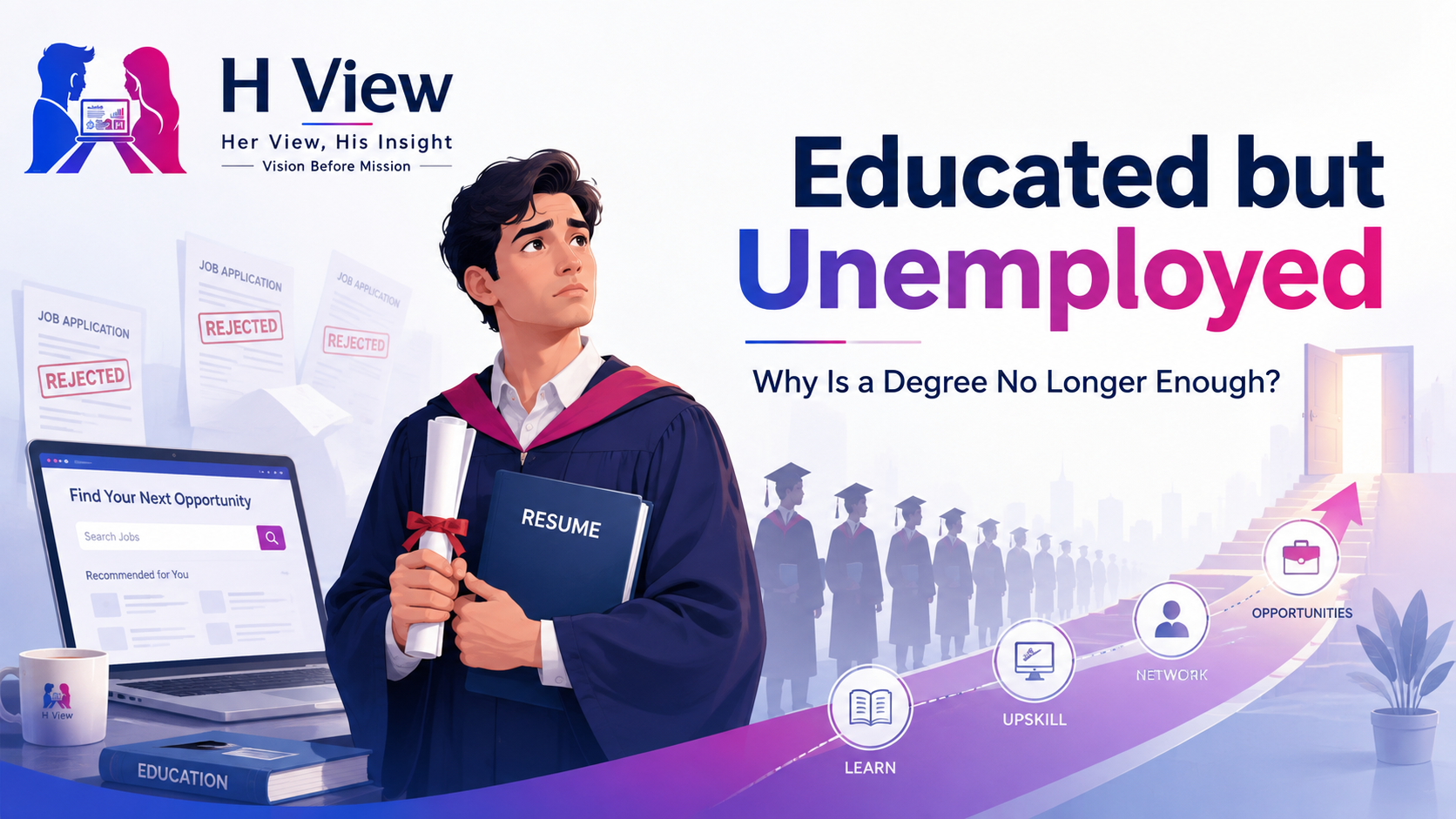
Families invested heavily in college education because graduation was seen as a bridge to financial independence. But today, many young people hold degrees, certificates and technical qualifications while remaining unemployed, underemployed or stuck in work unrelated to what they studied.
India now has more educated young people than ever, yet the transition from college to employment remains difficult. The State of Working India 2026 report says the rise in graduates has not been matched by equal growth in graduate-level employment. It also reports that unemployment remains especially high among younger graduates.
This creates a painful question:
If education is increasing, why are so many educated young people still unable to find proper jobs?
The answer is not simply that degrees have become useless.
A degree still provides knowledge, eligibility and long-term value. But a qualification alone may no longer prove that someone can perform effectively in a modern workplace.
College enrolment has expanded significantly, producing more graduates across engineering, management, commerce, science and other fields.
But the number of suitable entry-level jobs has not grown at the same speed.
This means hundreds or thousands of candidates may compete for one vacancy. Employers can raise expectations because they have a large applicant pool.
A degree that once helped a candidate stand out may now be only the basic eligibility requirement.
The problem is not always a complete absence of jobs. It is often a shortage of jobs that offer:
Some graduates eventually accept temporary, low-paid or unrelated work because waiting indefinitely is no longer financially possible.
Students may learn theories, definitions and examination answers without getting enough opportunities to apply them.
An employer may expect a fresher to:
A recent campus-hiring study found a significant difference between how students and companies judge job readiness. Recruiters increasingly value practical ability, adaptability and an entrepreneurial mindset alongside academic performance.
This does not mean colleges teach nothing useful.
It means academic learning must be connected to practical experience.
Students are frequently blamed for not being job-ready.
But many followed the path society recommended.
They attended college, passed examinations, collected certificates and trusted that education would lead naturally to employment.
Not every student had access to:
A student from a small town or low-income family may also have limited access to unpaid internships, relocation or expensive skill programmes.
Employers and colleges cannot place the entire responsibility on students while offering insufficient practical preparation and too few beginner opportunities.
At the same time, candidates cannot depend only on the name of their qualification.
Employers need evidence that a person can contribute.
That evidence may include:
The World Economic Forum reports that employers expect a large share of workplace skills to change by 2030. Technology literacy, analytical thinking, adaptability and continuous learning are becoming increasingly important across industries.
The modern candidate must show not only what they studied, but what they can do.
When employment does not arrive, many graduates join one course after another.
A candidate may complete programmes in Python, full-stack development, data science, cloud computing, digital marketing and artificial intelligence without becoming ready for one specific job.
Certificates create visible progress, but they may also delay practical action.
Before joining another course, ask:
One relevant programme followed by strong practice is better than several unrelated certificates.
India’s white-collar hiring grew year-on-year in July 2026, and IT hiring also showed a recovery. However, another current hiring tracker found that the share of IT recruitment going to freshers declined even as total technology hiring increased.
This explains an important contradiction:
Companies may be hiring, but they may prefer candidates who can contribute immediately.
Freshers are therefore competing not only with one another, but also with experienced candidates and automation.
Students should choose a clear career direction before collecting more qualifications.
A practical plan is:
Young people should also explore sectors beyond the most advertised office jobs.
Healthcare, manufacturing, logistics, energy, financial services, sales, operations, skilled trades and regional businesses may provide meaningful career paths depending on the candidate’s interests and location.
Colleges should provide more industry-based projects, updated curricula, career guidance and verified internships.
Employers should create more trainee positions and assess potential instead of demanding experience for every entry-level role.
Government and industry programmes should measure success through sustained employment—not only enrolments, certificates or short training completions.
The education-to-employment problem cannot be solved by telling every unemployed graduate to try harder.
It requires better coordination between education, industry and labour-market needs.
A degree is still valuable—but it is no longer a complete career guarantee.
Education provides a foundation. Practical skills, experience, communication and adaptability determine how effectively that foundation is used.
Students should not be blamed for every weakness in the employment system. At the same time, they should not wait for the degree alone to create an opportunity.
The strongest path is:
Degree + practical skills + proof of work + focused applications.
Being educated but unemployed is not evidence that education was meaningless.
It is evidence that the bridge between education and employment needs serious repair.
Yes. Many roles require degrees for eligibility, but employers may also expect practical skills, projects and communication ability.
Common reasons include limited suitable jobs, skills mismatch, weak practical exposure, high competition and employer preference for experienced candidates.
Only when they support a specific career goal and include practical learning. Random certificate collection rarely solves unemployment.
Students should complete practical projects, internships, case studies or portfolios connected to their target roles.
Yes, but fresher competition is high, and some employers increasingly prefer candidates with practical readiness.
The problem involves students, colleges, employers and the wider economy. No single group can solve it alone.
Satya Hemanth is the founder of H View and writes on careers, sports, leadership, digital trends, and practical decision-making. His articles focus on clear explanations, real-world examples, and useful insights for students, young professionals, and everyday readers.
Share your real experience and help other readers decide better.
No community views yet. Be the first to share yours.
For many young Indians, a government job is not just employment. It represents stability, respect,…
Satya Hemanth August 10, 2026 
A fresher opens a job portal and finds an attractive vacancy. The title says Entry-Level,…
Satya Hemanth August 9, 2026 
You find a job that perfectly matches your profile. The company looks genuine. The role…
Satya Hemanth August 8, 2026 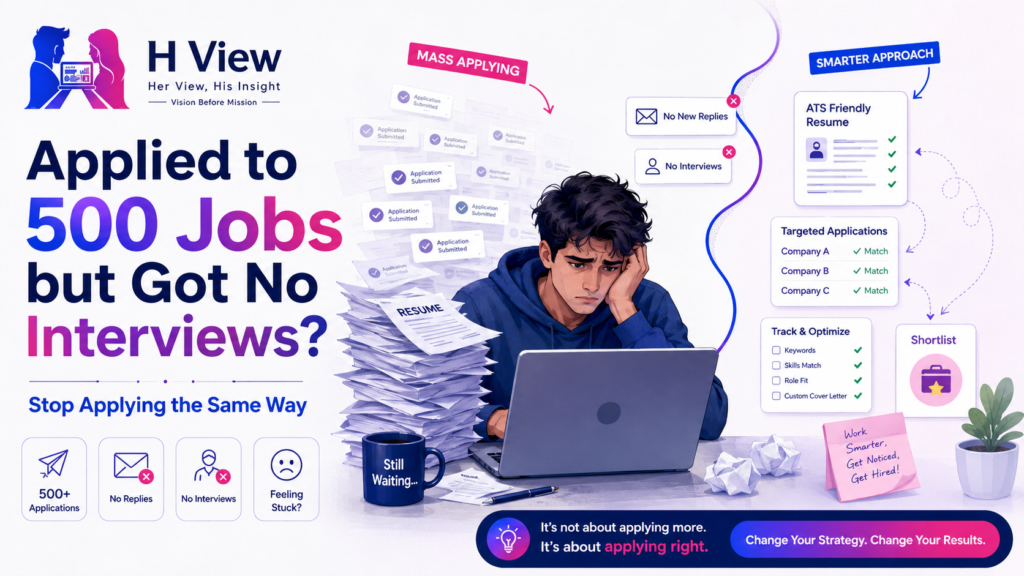
Sending hundreds of job applications without receiving a single interview can be deeply frustrating. A…
Satya Hemanth August 6, 2026