

Best Digital Marketing Tools in 2026: What Marketers Actually Need and What They Can Skip
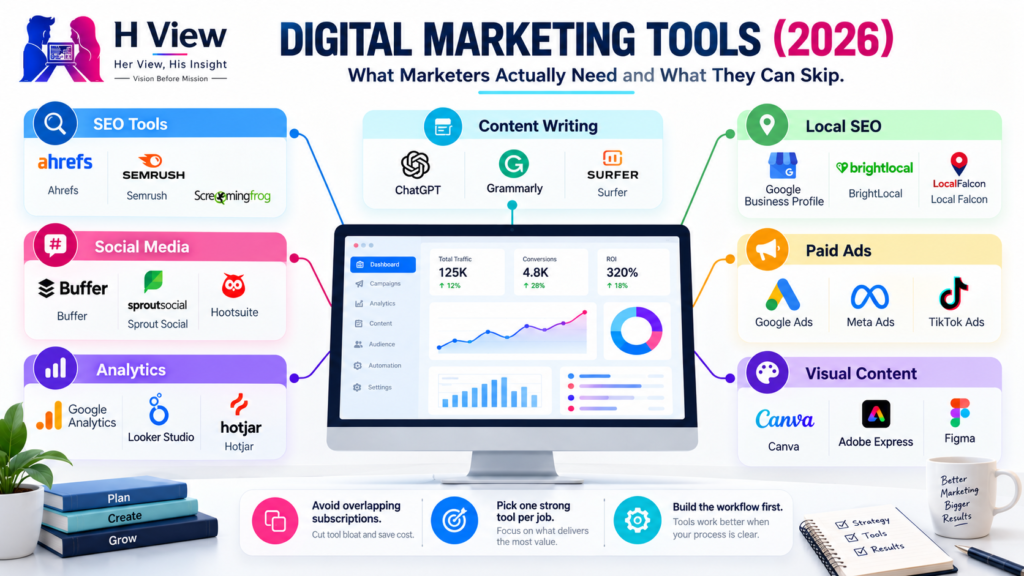
Open LinkedIn for a few minutes and you will probably come across a colourful graphic…
 Harika October 6, 2026
  By HarikaUpdated October 5, 202612 min read5 views
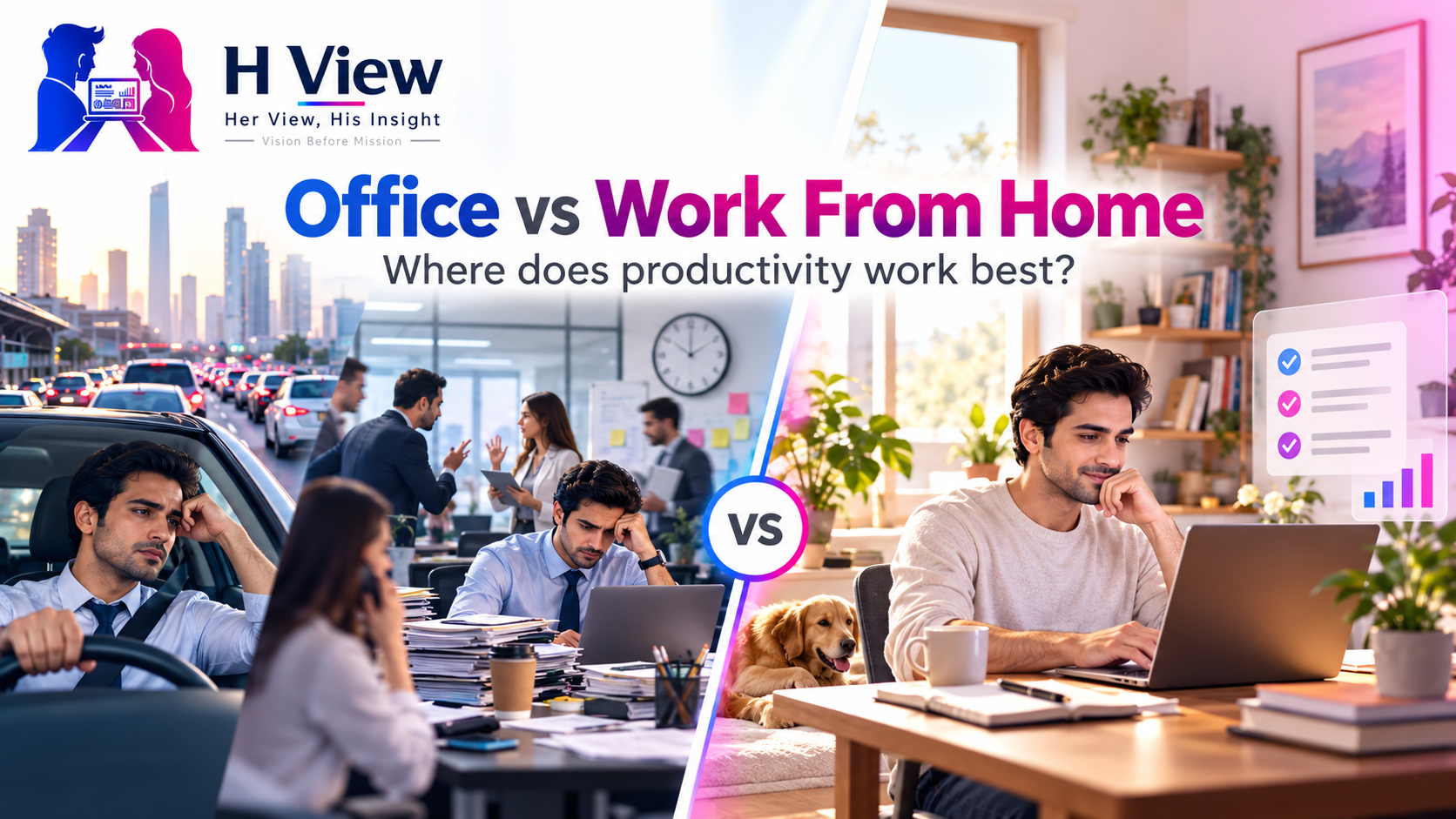
For many corporate employees, the workday begins long before they actually start working. They wake up early, get ready, travel through traffic, search for parking or commute through crowded public transport, reach the office already mentally tired, and then spend the first part of the day settling in, responding to messages, attending meetings, and handling the usual interruptions that come with a shared workplace.
By the time focused work begins, a meaningful part of the day may already be gone.
This does not mean offices are useless or that everyone should work from home permanently. Offices can be valuable for collaboration, onboarding, mentoring, workshops, team bonding, sensitive discussions, and work that genuinely depends on physical presence. The real question is why many organisations still treat daily office attendance as proof of commitment even when the actual work can be performed just as effectively, or sometimes more effectively, from somewhere else.
That is where the conversation about work from home needs to mature. The debate should not be reduced to “office versus remote.” The better question is whether companies are designing work around outcomes or around tradition.
A commute is the most obvious cost of office work, but it is not the only one. Employees lose time not just while travelling, but also through preparation, transitions, informal interruptions, waiting for meetings, moving between rooms, lunch routines, tea breaks, spontaneous conversations, and the general rhythm of being physically present in a shared environment.
None of these activities is automatically bad. Informal conversations can build relationships, breaks can improve wellbeing, and face-to-face discussions can solve problems quickly. The problem begins when companies assume that all of this time somehow exists outside the employee’s working day.
Consider an employee who spends ninety minutes travelling to the office and another ninety minutes returning home. Even before considering preparation time, that person may lose three hours every day to commuting. Over five working days, that becomes fifteen hours that are neither productive work nor meaningful personal time.
For employees with long commutes, the impact can be even larger. A randomized study published in Nature on 1,612 Trip.com employees found that hybrid working reduced quit rates by roughly one-third while not harming performance ratings, promotions, or lines of code written by engineers. The retention benefit was particularly meaningful for employees with longer commutes, which shows that location flexibility can affect much more than convenience.
One of the most persistent assumptions in corporate culture is that visible employees are productive employees. A person sitting at a desk from morning until evening appears available, committed, and engaged, while someone working remotely can seem less visible and therefore harder to evaluate.
That logic is increasingly difficult to defend in roles where outcomes are measurable.
A software developer can be evaluated through delivery quality, completed functionality, defect rates, code reviews, and commitments. A designer can be evaluated through completed work, quality, revisions, and deadlines. A recruiter can be evaluated through hiring outcomes, candidate quality, and turnaround time. A writer, analyst, marketer, finance professional, or project coordinator can similarly be evaluated through deliverables rather than chair time.
When managers rely mainly on physical presence to judge performance, the deeper problem may be that goals, ownership, or measurement are not clear enough.
A strong management system should know what needs to be delivered, what quality is expected, when it is due, and who owns the outcome. Once those expectations are clear, location becomes only one factor in how the work is organised.
Employees who work in offices are not automatically focused throughout the day. In fact, modern knowledge work is already heavily fragmented by digital communication. Microsoft’s work-pattern research found that employees can be interrupted by meetings, emails, or chats roughly every two minutes during core working hours. That level of fragmentation already makes deep work difficult before the physical interruptions of an office are added.
Now add the workplace environment itself. A colleague walks over with a quick question, a meeting runs longer than planned, someone asks for an immediate update, lunch stretches slightly because several people go together, and another discussion begins near the desk. None of these moments looks serious individually, yet collectively they can consume the blocks of uninterrupted time required for complex work.
This is why employees sometimes leave the office feeling extremely busy but surprisingly unsatisfied with what they actually completed.
The problem is not laziness. The problem is fragmentation.
Remote work has obvious advantages for roles that require concentration. Employees can avoid commuting, begin work with more energy, control interruptions more effectively, and structure their day around periods of deep focus.
However, it would be equally simplistic to argue that remote work automatically makes everyone more productive or happier.
Gallup’s recent research shows a more complicated picture. Fully remote employees can report higher engagement, but remote work can also come with higher loneliness, stress, or weaker overall wellbeing than hybrid arrangements in some cases. Gallup’s broader guidance also emphasises that successful hybrid and remote work depends heavily on management quality, clear expectations, intentional team design, and strong communication rather than location alone.
That distinction is important because flexibility without structure can create its own problems. Employees may struggle to disconnect, junior team members may miss informal learning, collaboration may become slower, and communication gaps may grow if managers assume remote employees will simply manage themselves.
The solution is therefore not unlimited remote work. The solution is thoughtful work design.
Corporate policies often begin with one rule for everyone. A company may decide that all employees must attend the office three, four, or five days a week regardless of role, seniority, commute, work type, or team needs.
A more intelligent approach begins with the work itself.
Some activities clearly benefit from physical presence, while others do not. A workshop involving several departments may move faster in person. A new employee may learn more quickly by spending some time with experienced colleagues. A difficult client meeting, design sprint, or sensitive team discussion may benefit from being face to face.
On the other hand, asking an employee to commute two hours simply to sit at a desk and join virtual meetings with colleagues in other cities makes much less sense.
The distinction becomes clearer when we compare two ways of thinking.
| Presence-Based Work Design | Outcome-Based Work Design |
|---|---|
| Everyone follows the same office rule | Work location depends partly on role and task |
| Attendance becomes proof of commitment | Delivery and quality become proof of performance |
| Office days are fixed regardless of purpose | Office days are used intentionally |
| Managers rely heavily on visibility | Managers rely on goals, ownership, and outcomes |
| Remote work is treated as a privilege | Flexibility is treated as a work-design decision |
| Employees absorb commute costs automatically | Commute and focus requirements are considered |
| Collaboration is assumed to require proximity | Physical presence is used where it genuinely improves collaboration |
The second model does not remove discipline. It simply places discipline where it belongs: on outcomes, communication, and accountability.
Return-to-office policies are not always driven by irrational thinking. Managers may worry about communication, collaboration, culture, data security, mentoring, performance visibility, or employees becoming disconnected from the organisation. These concerns are real, especially in teams that were never designed to work in a distributed way.
The mistake is treating physical presence as the automatic solution to all of them.
Poor communication does not become good communication simply because everyone sits in the same building. Weak managers do not become stronger managers because employees are visible. Unclear ownership remains unclear whether the employee works from home or from an office desk.
Similarly, culture is not created merely by occupancy. Employees can sit together every day and still feel disconnected, undervalued, or afraid to speak honestly.
Strong workplace culture comes from trust, clarity, fairness, communication, recognition, and shared purpose. An office can support those things, but it cannot replace them.
Hybrid work becomes valuable when the office has a clear purpose.
Instead of asking employees to attend simply because a policy says so, organisations can design office days around activities that benefit from people being together.
Useful office days may include:
When office attendance is connected to a real purpose, employees are more likely to understand its value. When employees commute only to sit on virtual calls all day, the policy feels much harder to justify.
Corporate discussions often treat commute time as entirely personal. Technically, that is understandable because the company is not paying employees to travel in most cases.
But from a productivity and retention perspective, commute time still matters.
An employee who spends two or three hours every day travelling has less time for sleep, exercise, family, learning, recovery, and focused personal activity. Over time, this can influence stress, energy, job satisfaction, and willingness to remain in the role.
The organisation may not directly own the commute, but it experiences the consequences of the commute.
This is especially important in large cities where travel times can be unpredictable. A policy designed without considering commute burden may create hidden costs that appear later as fatigue, disengagement, or turnover.
One of the biggest misconceptions about remote work is that flexibility automatically reduces control.
It does not have to.
A flexible workplace can still have clear working hours, response expectations, daily or weekly goals, deadlines, meetings, availability windows, security rules, performance standards, and measurable outcomes. Employees can be held accountable without being physically watched.
In fact, remote and hybrid work often expose weak management systems because managers can no longer rely on visibility as a substitute for clarity.
A well-managed distributed team needs strong ownership, clear communication, useful documentation, and realistic priorities. Those are valuable management practices regardless of where employees sit.
From the employee’s side, work-from-home flexibility is often discussed as though it is mainly about comfort. In reality, much of its value comes from recovering time.
Saving two hours of commuting does not necessarily mean an employee wants to work less. That time may allow them to begin earlier, finish focused tasks without interruption, manage family responsibilities, exercise, rest, or simply avoid beginning the day already exhausted.
When companies recognise that time has value, flexibility becomes easier to understand.
Employees are not always asking to avoid the office. Many are asking whether the office visit has a purpose worth the time required to get there.
From a leadership perspective, the bigger question is what managers are actually responsible for.
A manager’s job is not to make sure chairs are occupied. It is to make sure priorities are clear, employees have what they need, collaboration works, problems are surfaced early, and important outcomes are delivered.
If those things happen effectively in a hybrid model, forcing additional office attendance purely for visibility may add very little value.
At the same time, if remote work is damaging collaboration, mentoring, communication, or accountability, leaders should address those specific problems rather than pretending location has no effect.
The mature approach is neither fully pro-office nor fully pro-remote. It is evidence-based and role-based.
The future of work does not need another argument about whether offices are good or bad. Offices can be highly valuable, and remote work can be highly valuable. Both can also be badly managed.
The real leadership question is whether companies are willing to design work around what improves performance rather than what simply feels familiar.
Employees should come to the office when collaboration, mentoring, customer interaction, facilities, security, or team connection genuinely benefit from physical presence. They should also be trusted to work remotely when the role allows it and when focused work, commute reduction, or flexibility can improve the employee experience without harming outcomes.
A company does not become disciplined merely because everyone is physically present. Discipline comes from clear goals, ownership, communication, standards, and accountability.
The office should therefore be treated as one of the tools available to the organisation, not as a daily test of whether employees are committed enough.
When leaders stop asking where employees are sitting and start asking where the work can be done best, the return-to-office debate becomes much more useful.
No. Productivity depends on the role, employee, manager, home environment, team design, and type of work being performed. Some tasks benefit strongly from quiet individual focus, while others are easier when people collaborate in person. The strongest approach is often to match the work environment to the work itself rather than assuming one model is universally better.
Companies may be concerned about collaboration, culture, mentoring, security, communication, innovation, or performance visibility. These concerns can be legitimate, but office attendance works best when it is connected to a specific business purpose rather than applied as a blanket rule to every remote-capable role.
Research does not support the idea that hybrid work automatically damages performance. In a randomized trial involving Trip.com employees, hybrid work improved retention and job satisfaction without reducing performance ratings, promotion outcomes, or coding output.
One of the biggest advantages is recovering time that would otherwise be spent commuting and transitioning between home and office. That recovered time can support focused work, rest, family responsibilities, exercise, or better work-life balance, although remote work still needs clear boundaries to prevent overwork.
Strong remote management depends on clear expectations, measurable outcomes, regular communication, good documentation, defined availability, and trust. Managers should know what success looks like and evaluate the quality and timeliness of work rather than relying primarily on physical visibility.
There is no single model that is best for every organization or employee. Hybrid work can offer a useful balance between focused remote work and in-person collaboration, but its success depends on management quality, role requirements, team structure, and how intentionally office days are designed.
Harika is the co-founder of H View and covers AI, technology, gadgets, digital tools, online platforms, and modern internet trends. Her articles focus on simplifying complex topics with practical explanations, balanced opinions, and reader-first insights.
Share your real experience and help other readers decide better.
No community views yet. Be the first to share yours.
Open LinkedIn for a few minutes and you will probably come across a colourful graphic…
Harika October 6, 2026 
When an employee resigns, many organisations move quickly into replacement mode. The manager informs HR,…
Harika October 6, 2026 
Many projects begin with an assumption that sounds reasonable on paper: the client will explain…
Harika October 1, 2026 
Many companies proudly talk about new hires, growing teams, expanding departments, and increasing headcount. On…
Harika September 30, 2026