

The Person You Marry Will Change—And So Will You
The happiest marriages aren’t built by finding the perfect person. They’re built by choosing to…
 Annapurna August 10, 2026
  By AnnapurnaUpdated September 20, 20266 min read110 views
A family should be the place where people feel safest—not only physically, but emotionally too.
Emotional safety means being able to speak honestly, express pain, admit mistakes, and disagree without fear of humiliation, rejection, threats, or punishment.
Many families appear peaceful from the outside. They celebrate festivals, eat together, attend functions, and share family photos. But inside the home, some members may remain silent because they are afraid of how others will react.
A child may hide a mistake.
A wife may avoid speaking about disrespect.
A husband may suppress financial stress.
An elderly parent may remain quiet because they fear becoming a burden.
When family members cannot safely express themselves, emotional distance begins to grow—even if everyone continues living under the same roof.
Emotional safety is the confidence that our feelings and dignity will be respected.
It does not mean that everyone must agree with us. It means disagreements can happen without insults, fear, or humiliation.
In an emotionally safe family, a person can say:
They may still be corrected or advised, but they are not attacked simply for speaking honestly.
Emotional safety creates trust. It helps people feel that the family is a place where they can be themselves without constantly pretending.
People usually remain silent when past conversations have made them feel unsafe.
They may have been shouted at, mocked, blamed, compared, ignored, or labelled as disrespectful.
Over time, they learn that silence is easier than honesty.
A child may stop sharing school problems because every discussion becomes a lecture.
A woman may stop expressing discomfort because she is repeatedly told to adjust.
A man may stop discussing stress because he is expected to remain strong.
An elderly person may stop asking for help because family members appear irritated.
Silence may reduce immediate arguments, but it does not solve the problem. It only pushes pain deeper into the relationship.
Children learn emotional behaviour by observing adults.
When parents listen patiently, apologise after mistakes, and handle disagreement calmly, children learn that communication is safe.
But when children are constantly shouted at, compared, threatened, or punished for honesty, they may begin hiding the truth.
A child should not fear saying:
“I broke this.”
“I received fewer marks.”
“Someone bullied me.”
“I am scared.”
“I do not understand.”
Discipline is necessary, but discipline should guide behaviour—not destroy confidence.
Fear may create temporary obedience. Emotional safety builds long-term responsibility.
Marriage requires honesty, trust, and vulnerability.
A husband and wife should be able to discuss money, parents, intimacy, careers, mistakes, and emotional needs without every conversation becoming a battle.
A marriage becomes emotionally unsafe when one partner:
A spouse should not have to remain silent merely to maintain peace.
Healthy communication means listening before defending, correcting behaviour without attacking character, and protecting private matters from unnecessary family involvement.
After marriage, many women enter an unfamiliar family environment.
They may need time to understand new routines, relationships, and expectations. But instead of support, some are told that they must immediately adjust to everything.
When she expresses discomfort, she may be called sensitive.
When she asks for privacy, she may be considered arrogant.
When she wants contact with her parents, she may be questioned.
When she disagrees, she may be told that she is breaking the family.
A woman feels emotionally safe when she is treated as a person with dignity—not as someone who must earn acceptance through obedience.
Her husband’s support also matters. Remaining silent when she is repeatedly humiliated can deepen her feeling of isolation.
Men also need emotional safety.
Many are raised to believe that they should not cry, complain, or admit fear. They may carry pressure related to work, money, parents, marriage, children, and social expectations without discussing it.
A man may fear that expressing stress will make him appear weak.
But emotional suppression does not make pressure disappear.
A supportive family allows men to say:
“I am overwhelmed.”
“I need help.”
“I am worried about money.”
“I do not know how to handle this.”
Strength does not mean carrying everything alone. Emotional honesty can prevent anger, withdrawal, and breakdowns in communication.
Older family members need dignity, patience, and involvement.
They may fear losing importance, independence, or connection with the family.
At the same time, emotional safety must work both ways.
Elders should be respected, but they should also avoid using age or authority to control every decision made by adult children.
A healthy family gives elders care without allowing unnecessary domination.
It also gives younger couples privacy without neglecting ageing parents.
Emotional safety weakens when certain behaviours become normal:
These behaviours may appear small when repeated daily, but over time they create fear and emotional distance.
Women often become the emotional centre of the family while receiving little emotional support themselves.
They may manage children, household work, elders, careers, and relationships together.
A family should not expect a woman to keep everyone peaceful while ignoring her own pain.
She also needs to be heard, appreciated, protected, and respected.
Men may try to avoid family conflict by remaining silent.
But silence is not always neutrality.
When someone is being repeatedly mistreated, silence may unintentionally support the unfair behaviour.
A husband, father, or son strengthens the family when he communicates honestly, sets fair boundaries, and protects everyone’s dignity.
Emotional safety can be built through everyday actions.
Listen fully before replying.
Do not interrupt every explanation.
Avoid insults during arguments.
Correct behaviour privately.
Keep private conversations confidential.
Allow children to speak without immediate punishment.
Share responsibilities fairly.
Acknowledge hurt instead of dismissing it.
Apologise when necessary.
Seek counselling when the same conflict continues without resolution.
Every family member should ask:
“Do the people in my home feel safe enough to tell me the truth?”
The answer reveals the emotional health of the family.
A family should not be a place where people hide their pain to protect appearances.
It should be a place where honesty is possible without fear.
Emotional safety does not remove disagreement. It changes the way disagreement is handled.
A healthy family listens, corrects, forgives, sets boundaries, and protects dignity.
When people feel emotionally safe, they communicate better, trust more deeply, and remain connected even during difficult times.
That is how a family becomes not only united, but truly supportive.
It is the feeling that one can express emotions, concerns, mistakes, and disagreements without fear of humiliation, threats, or rejection.
No. Emotionally safe families still disagree, but they handle conflict respectfully.
Parents can listen patiently, avoid comparison, correct mistakes without humiliation, and encourage children to speak honestly.
Yes. It requires accountability, respectful communication, changed behaviour, consistency, and sometimes professional counselling.
Annapurna is an H View contributor covering relationships, family, lifestyle, entrepreneurship, and everyday decision-making. Her articles focus on emotional clarity, practical understanding, and human-centered perspectives that help readers think better about personal and professional situations.
Share your real experience and help other readers decide better.
No community views yet. Be the first to share yours.

The happiest marriages aren’t built by finding the perfect person. They’re built by choosing to…
Annapurna August 10, 2026 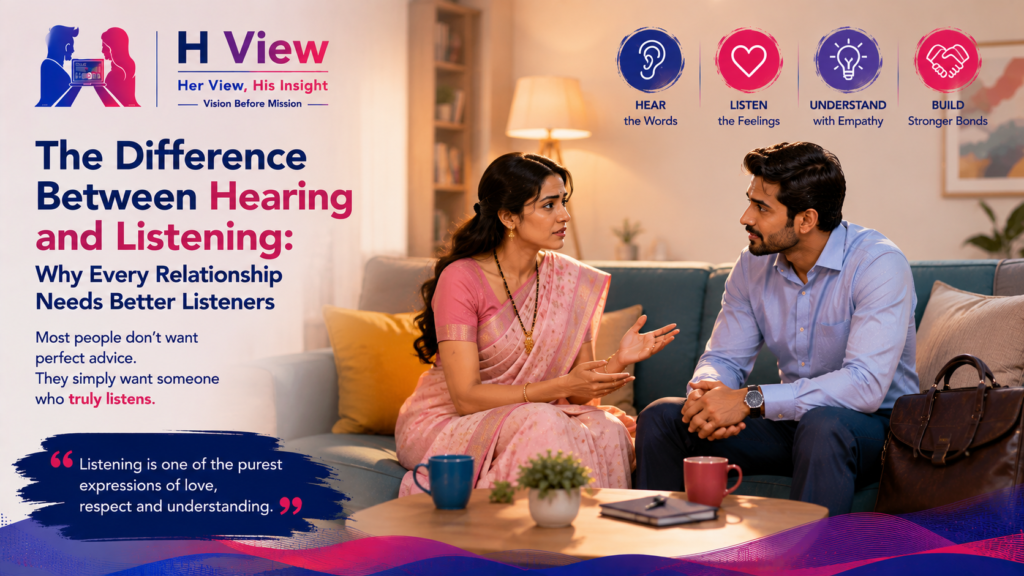
Most people don’t want perfect advice. They simply want someone who truly listens. The Difference…
Annapurna August 7, 2026 
People don’t always feel loved in the same way. Understanding that can transform a relationship.…
Annapurna August 6, 2026 
How Healthy Couples Disagree Without Hurting Each Other Many people believe that a happy couple…
Annapurna August 4, 2026