



H View
  • Home
  • About
  • Blogs
  • Categories
    • AI
    • Tech
    • Lifestyle
    • Business
      • Money
    • Sports
  • Reviews
  • Contact
Connect With Us
H View
  • Home
  • About
  • Blogs
  • Categories
    • AI
    • Tech
    • Lifestyle
    • Business
      • Money
    • Sports
  • Reviews
  • Contact
Connect
AI

Best AI for Coding in 2026: ChatGPT, Claude, Gemini or Something Else?

☆☆☆☆☆No reader ratings yet
By HarikaUpdated August 27, 202611 min read6 views

A few years ago, asking for the best AI for coding usually meant asking which chatbot could generate the cleanest Python function or explain a JavaScript error. In 2026, that comparison feels increasingly outdated.

Developers are no longer using AI only to generate snippets. Coding assistants can now inspect entire repositories, edit several files at once, run terminal commands, create tests, review pull requests and continue working on a task while the developer focuses elsewhere. The real competition is therefore no longer simply between ChatGPT, Claude and Gemini as chatbots. It is between complete coding environments built around those models.

That makes the question “Which AI is best for coding?” harder to answer, but also more useful.

A beginner who wants help understanding React does not need the same AI as an experienced engineer refactoring a large production codebase. A freelance developer building a small website may value speed and cost, while an engineering team may care more about repository understanding, testing, security and the ability to run agents for hours without constant supervision.

So there is no single winner for everyone. But there are clear differences in where the major tools are strongest.

ChatGPT Has Evolved From Coding Assistant to Engineering Agent

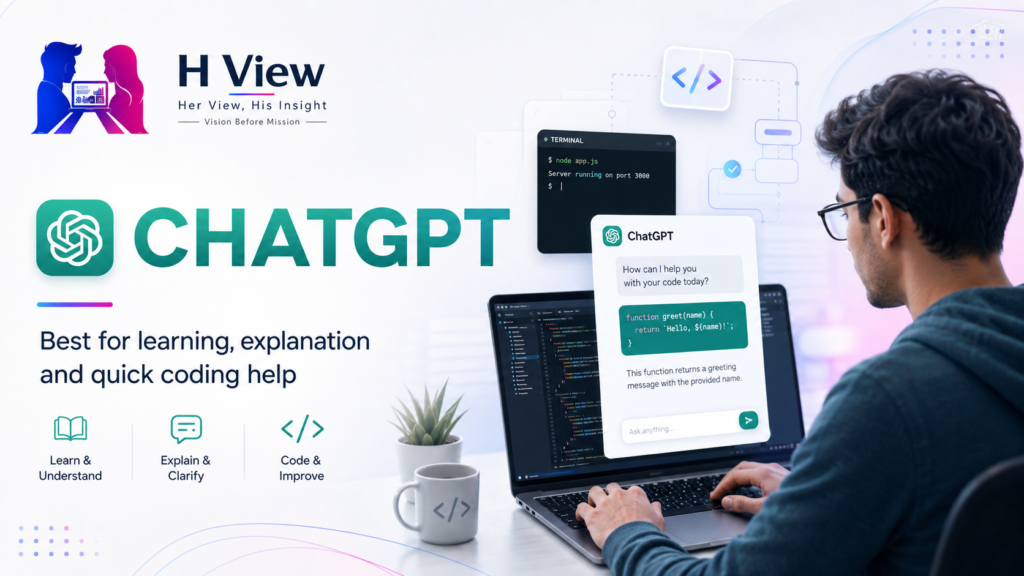
ChatGPT remains one of the easiest places to start because it can move naturally between explanation and implementation. You can paste an error, ask why it happened, discuss architecture and then work toward a solution without needing to think too much about which specialised tool to open.

For beginners, that matters. If someone is learning APIs, databases or React state management, the ability to ask follow-up questions in ordinary language can be more valuable than an autonomous agent that immediately starts changing files.

But OpenAI’s stronger coding story in 2026 is Codex.

Codex is now integrated across ChatGPT, IDEs and the terminal, and OpenAI positions it as an agent capable of completing real engineering work end to end. It can work on features, refactors, migrations, code review, CI/CD-related tasks and longer-running projects rather than simply returning code inside a chat window.

That changes how we should evaluate ChatGPT for coding. If you only compare the conversational ChatGPT interface with Claude or Gemini, you are missing a major part of OpenAI’s developer offering.

Imagine you have a React frontend and Python backend with a bug affecting authentication. A traditional chatbot might suggest possible causes and generate replacement code. An agentic coding system can inspect both sides of the repository, follow the request flow, identify where the token is being mishandled, make the change, run tests and explain what it modified.

That is much closer to working with another engineer.

For complicated multi-file work, OpenAI’s Codex ecosystem has become one of the strongest options in 2026.

Claude Remains Extremely Strong When the Codebase Gets Messy

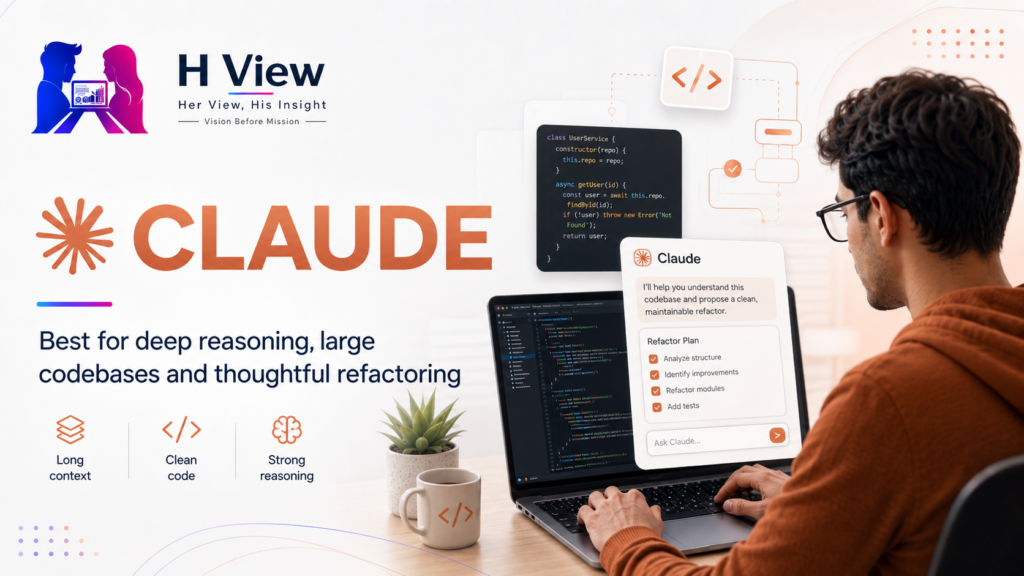
Claude built much of its reputation among developers before agentic coding became the industry’s favourite term. Developers often found Claude useful for understanding large codebases, following detailed instructions and producing thoughtful explanations around changes rather than simply generating code quickly.

Anthropic has continued pushing heavily in that direction.

Claude Sonnet 5, released in June 2026, was specifically designed around stronger reasoning, tool use and coding. Anthropic says it can plan, use browsers and terminals and carry out longer agentic workflows that previously required larger models. Sonnet 5 is also available throughout Claude Code, Anthropic’s coding environment.

Claude becomes particularly attractive when the task is not clean.

Real software rarely looks like the coding examples shown in demonstrations. A production repository may contain old dependencies, inconsistent patterns, half-documented services, fragile integrations and code written by people who left the company years ago. The challenge is not merely writing new code. It is understanding what can safely be changed without breaking everything around it.

This is where Claude’s deliberate style can be valuable.

Suppose a developer asks the AI to modernise an old authentication system. A weaker coding assistant may enthusiastically rewrite large sections. A stronger agent should first inspect where authentication is referenced, identify backward-compatibility requirements and understand which tests or external systems depend on the old behaviour.

Anthropic’s current positioning of Sonnet 5 is clearly aimed at that sustained, multi-step type of engineering work rather than only autocomplete.

For developers who frequently work with large existing repositories, Claude Code deserves serious consideration.

Gemini Is More Interesting Than Many Developers Realise

Gemini sometimes receives less attention in coding conversations than ChatGPT or Claude, but Google has been investing aggressively in developer agents.

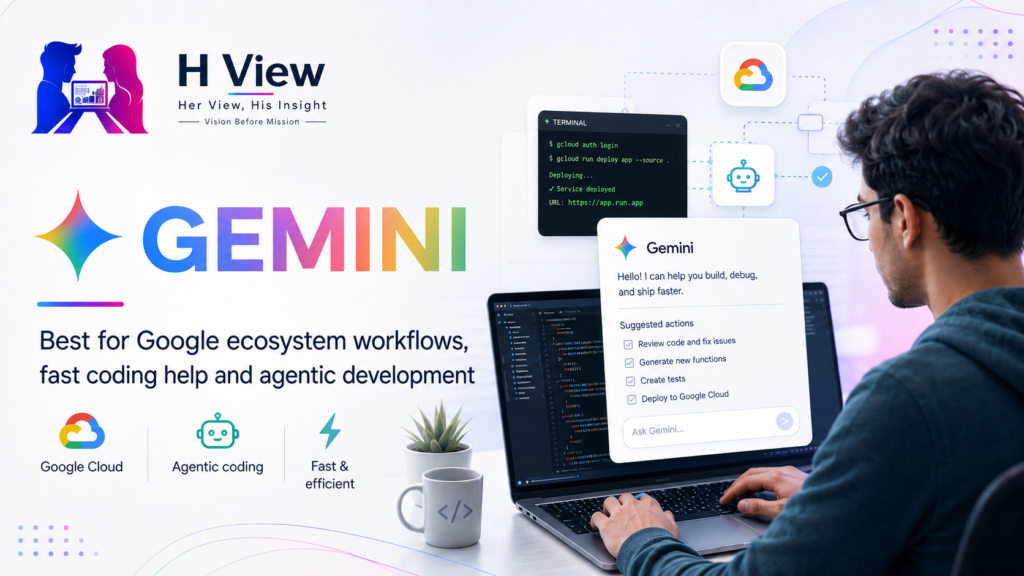
At Google I/O 2026, Google highlighted substantial coding improvements in Gemini 3.5 Flash, particularly around agentic coding and long-horizon workflows. More importantly, Google’s developer tooling itself has changed.

Gemini CLI, which brought Gemini into the terminal, has been transitioned toward Antigravity CLI and Antigravity 2.0. Google says developers increasingly need multiple agents that can communicate, divide work and operate across more complex workflows, which is why it is consolidating future development around the Antigravity platform.

That tells us where Google thinks coding is going.

The future is not simply one AI sitting beside the developer and suggesting the next line. It is several specialised agents coordinating tasks.

Imagine asking one agent to investigate a backend bug while another tests the frontend and a third checks documentation or migration impact. That type of workflow could fundamentally change software development if it becomes reliable enough.

Gemini’s biggest advantage may also come from Google’s broader ecosystem. Developers already working heavily with Google Cloud, Android, Firebase or Workspace may increasingly find the surrounding integration more useful than comparing benchmark scores alone.

Gemini is therefore no longer the alternative that should be included merely because Google is a major AI company. It is becoming a serious coding platform in its own right.

Then There Is Cursor — Which Changes the Comparison Entirely

The title of this article asks whether the winner might be “something else,” and this is where the answer becomes interesting.

For many developers, the best coding AI may not be ChatGPT, Claude or Gemini as a standalone product.

It may be Cursor.

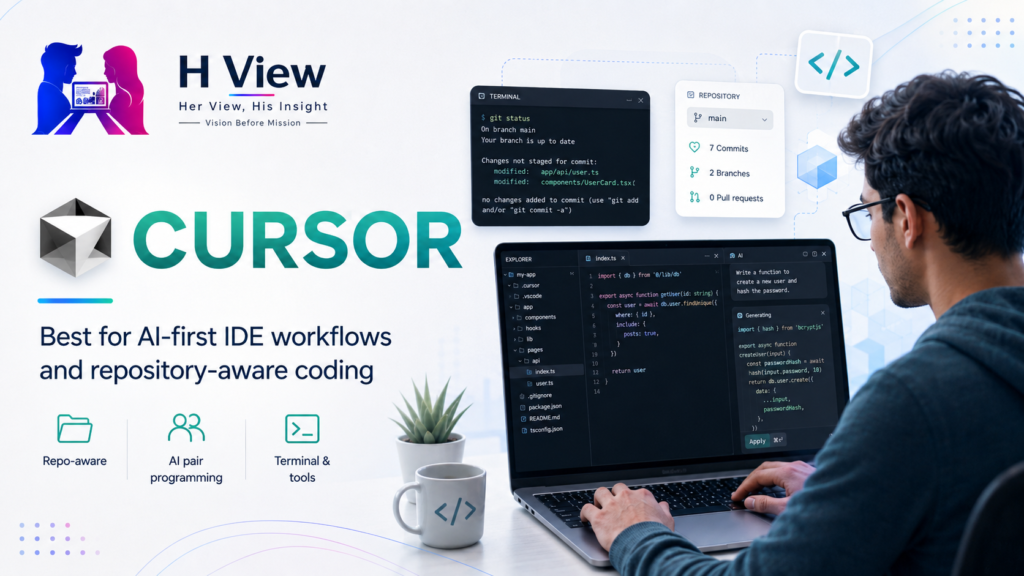
Cursor is an AI-first coding environment designed around the repository itself. Its agents can search a codebase, edit files, execute terminal commands and work across larger software tasks. The important difference is that Cursor can orchestrate different frontier models rather than forcing the developer to commit permanently to one AI provider.

That can be more practical than arguing endlessly about which model is number one.

One task may work beautifully with Claude. Another may benefit from a different model. Cursor can provide the working environment while the model becomes a selectable component underneath it.

Its recent direction is becoming even more agentic. Cursor’s August 2026 updates introduced cloud agents that can react to events, keep working toward persistent goals, address CI failures and use separate virtual machines for parallel subagents.

For Indian developers, there is also a practical pricing angle. Cursor introduced a ₹649-per-month Start plan in India in July 2026, including agent access, cloud agents and local UPI billing.

That matters because the “best AI” is not necessarily the one that wins a benchmark. It is the one a developer can afford to use every day inside the workflow where the actual coding happens.

Beginners Should Not Automatically Choose the Most Powerful Agent

There is a strange risk in recommending autonomous coding agents to people who are still learning programming.

If an agent fixes everything for you, you may finish projects faster while understanding less.

Imagine a beginner who asks an AI agent to build authentication, connect a database, create API routes and deploy the application. The result may work. But when the login stops working two weeks later, that developer may not know how the pieces fit together well enough to debug it.

For learners, ChatGPT or Claude used conversationally can sometimes be better than the most autonomous coding agent.

Ask why something works. Ask for smaller steps. Write the first attempt yourself and use AI to review it. When the AI suggests a solution, make sure you can explain it afterward.

The best AI for learning coding is often the one that helps you think, not the one that removes the need to think.

Professional Developers Need Something Different

Once you already understand software development, automation becomes much more valuable.

An experienced developer does not necessarily benefit from manually writing another CRUD API or repetitive test suite. If an agent can complete that work reliably, the developer can spend more time on architecture, product decisions, performance, security and the unusual problems that require judgement.

That is why coding agents are increasingly attractive inside professional teams.

OpenAI describes Codex as capable of handling complex refactors and migrations. Claude Sonnet 5 emphasises sustained agentic coding and debugging. Google is moving toward multi-agent developer environments, while Cursor is building persistent cloud agents that can continue working on goals and repository events.

The competitive advantage is shifting from “writes good code” toward “finishes useful engineering work.”

That is a much higher standard.

AI Coding Still Makes Mistakes That Matter

The rapid improvement of these tools should not create false confidence.

Samsung recently described major productivity gains from using Claude Code in chip-development work, but also reported situations where the system attempted changes outside its intended scope. Samsung therefore requires trusted engineers to manually review AI-generated output.

That example is important because semiconductor work is unforgiving, but the broader lesson applies to ordinary software too.

An AI can create code that compiles while introducing a security vulnerability. It can fix one test while breaking an undocumented workflow. It can select an outdated library or confidently misunderstand a business rule.

The more autonomous the agent becomes, the more important good review becomes.

AI can increasingly write the code. Responsibility for shipping it still belongs to the developer and the organisation.

Her View

From a usability perspective, I would not choose a coding AI purely because developers on social media say it has the highest benchmark score. The best tool is the one that fits how someone actually works.

A beginner may feel far more comfortable asking ChatGPT questions conversationally. Someone managing a complicated repository may appreciate Claude’s more methodical approach. A developer who spends the whole day inside an editor may prefer Cursor because the AI feels like part of the environment rather than a separate destination.

The strongest tool is the one that reduces friction without making the user lose confidence in what is happening underneath.

His Insight

From a technical perspective, 2026 has made the model comparison less important than the agent harness around the model.

Repository indexing, terminal access, testing, version control, isolated environments, subagents and the ability to steer an agent while it works can have as much impact on productivity as a few percentage points on a coding benchmark.

This is why tools such as Codex, Claude Code, Antigravity and Cursor deserve to be evaluated as complete engineering systems. A strong model inside a weak workflow can be less useful than a slightly weaker model integrated perfectly into the developer’s environment.

The H View Take

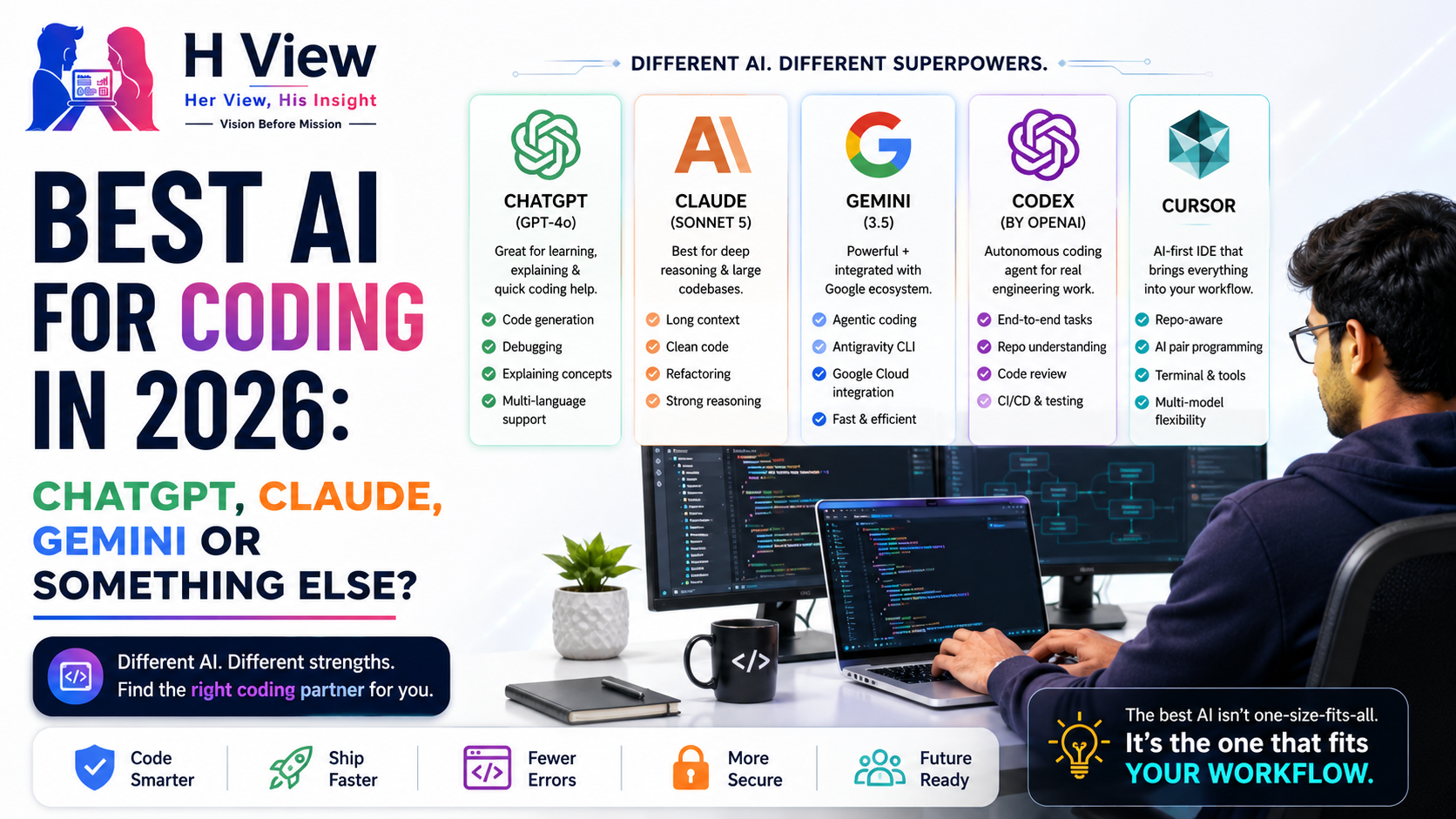
So which AI is best for coding in 2026?

For learning and conversational coding help, ChatGPT remains one of the easiest recommendations because it balances explanation, planning and implementation well.

For deep repository work and sustained technical reasoning, Claude and Claude Code are extremely strong, especially with Sonnet 5.

For developers invested in Google’s ecosystem and emerging multi-agent workflows, Gemini through Antigravity deserves much more attention than it received a year ago.

For developers who want the AI directly inside the coding environment and prefer flexibility across models, Cursor may actually be the most practical answer.

And for serious software engineering teams, OpenAI’s Codex has evolved into something much larger than the old idea of a chatbot that writes code.

The most important shift, however, is that there may no longer be one permanent winner.

Coding AI is becoming infrastructure. Developers may use one model to reason about architecture, another inside an agent for implementation and an editor such as Cursor to coordinate the workflow.

So rather than asking only, “Which AI writes the best code?”, developers should increasingly ask a more useful question:

Which AI helps me understand, build, test and safely ship the kind of software I actually work on?

That answer will depend less on the logo and more on the job.

Frequently Asked Questions\

Is ChatGPT good for coding in 2026?

Yes. ChatGPT remains particularly useful for explaining concepts, debugging, planning software and prototyping. OpenAI’s dedicated Codex environment extends those capabilities into agentic software engineering, including repository work, code review, refactoring and longer-running tasks.

Is Claude better than ChatGPT for coding?

Claude can be especially strong for large codebases, detailed reasoning and sustained agentic work through Claude Code. ChatGPT and Codex may be preferable for other workflows, so there is no universal winner. The better choice depends on whether you need conversational assistance, repository-scale automation or integration with existing tools.

Is Gemini good for programming?

Yes. Google has continued improving Gemini’s coding capabilities and is now shifting its developer tooling toward Antigravity, a multi-agent environment designed for more complex development workflows.

Is Cursor better than ChatGPT for developers?

They serve somewhat different purposes. ChatGPT is a general AI assistant with strong coding capabilities, while Cursor is an AI-first development environment built directly around repositories, editors and coding agents. Many professional developers may find Cursor more convenient for day-to-day coding because the AI works inside the development workflow.

Can AI coding tools replace developers?

They can automate a growing amount of implementation work, but professional development still involves architecture, product understanding, security, debugging, review and accountability. The more capable coding agents become, the more valuable it is for developers to understand the output well enough to verify it.

Which coding AI should a beginner use?

A beginner should choose a tool that explains rather than simply completes everything automatically. ChatGPT or Claude used conversationally can be excellent learning tools, provided the learner writes code themselves and understands the solutions instead of copying AI output blindly.

Written by

Harika

Harika is the co-founder of H View and covers AI, technology, gadgets, digital tools, online platforms, and modern internet trends. Her articles focus on simplifying complex topics with practical explanations, balanced opinions, and reader-first insights.

Topics coveredAIAutoBusinessCultureCyber SafetyDigital MarketingGuidesH ViewHistoryLifestyleMoneyReviewsTechAudioGadgetsWordpress
View all posts by author

Submit Your View

Share your real experience and help other readers decide better.

🔒 Your review may be published after moderation.

Reader Reviews

No community views yet. Be the first to share yours.

8.0Excellent

H View Score

A quick view of our final rating for this review.

✉

Stay Updated with H View

Get the latest reviews and insights straight to your inbox.

🔒 No spam. Unsubscribe anytime.

Trending Reviews

Raksha Bandhan 2026: Why Rakhi Is on August 28—and How the Meaning of Sibling Protection Is ChangingAugust 27, 2026One More Attempt—or Time to Move On? The Career Risk of Endless Government Exam PreparationAugust 27, 2026Samsung Galaxy S26 FE Explained: Is the Fan Edition Still Worth Buying in 2026?August 27, 2026Why Are Working Women So Exhausted Even When They’re Doing Everything “Right”?August 27, 2026Eid-e-Milad 2026: Why It Is Observed and What the Day Means Beyond a HolidayAugust 26, 2026Onam 2026: Why Kerala Still Welcomes King Mahabali—and What the Festival Really MeansAugust 26, 2026Why Are Core Engineering Students Moving Away From Their Own Fields?August 26, 2026Realme P4s 5G With 8,000mAh Battery: Are Big-Battery Phones Becoming the New Normal?August 26, 2026

Related Blogs

Culture

Raksha Bandhan 2026: Why Rakhi Is on August 28—and How the Meaning of Sibling Protection Is Changing

Every year, Raksha Bandhan arrives with a familiar picture: a sister tying a rakhi around…

Harika August 27, 2026
Careers

One More Attempt—or Time to Move On? The Career Risk of Endless Government Exam Preparation

There is a particular kind of career uncertainty that many government-job aspirants understand very well.…

Satya Hemanth August 27, 2026
Gadgets

Samsung Galaxy S26 FE Explained: Is the Fan Edition Still Worth Buying in 2026?

Samsung’s Fan Edition phones have always occupied an unusual place in the Galaxy lineup. They…

Harika August 27, 2026
Lifestyle

Why Are Working Women So Exhausted Even When They’re Doing Everything “Right”?

She studied, built a career, earns her own money, manages her responsibilities, takes care of…

Annapurna August 27, 2026
H View

Honest reviews. Smart ratings. Real insights.

Explore

HomeReviewsBlog

Company

AboutAdvertiseContact

Support

Privacy PolicyTerms & ConditionsDisclaimerEditorial Policy

Subscribe to H View

Get the latest updates and exclusive content straight to your inbox.

🔒 No spam. Unsubscribe anytime.
© 2026 H View. All rights reserved.
HomeReviewsBlogContact