
Best Digital Marketing Tools in 2026: What Marketers Actually Need and What They Can Skip
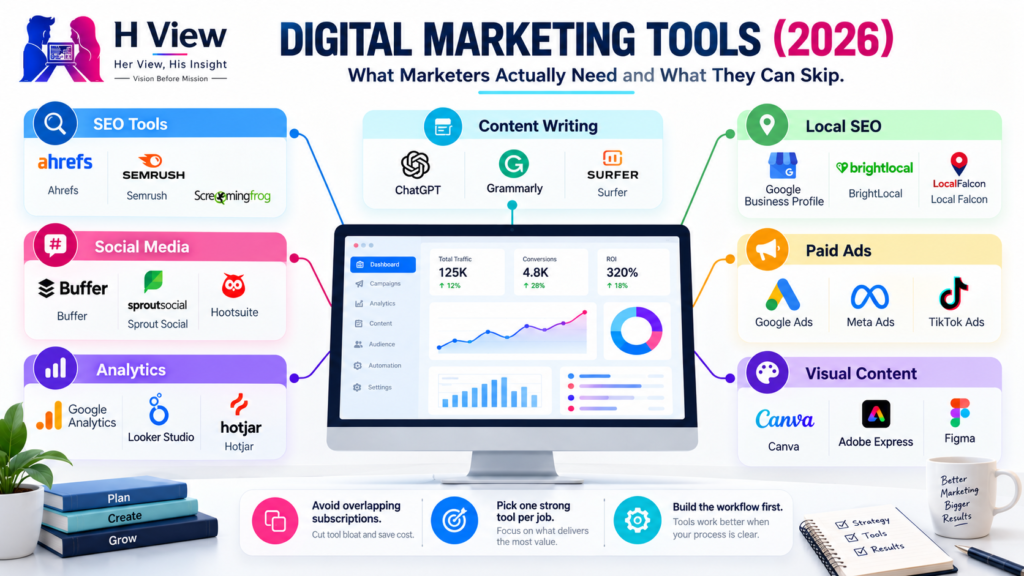
Open LinkedIn for a few minutes and you will probably come across a colourful graphic…
 Harika October 6, 2026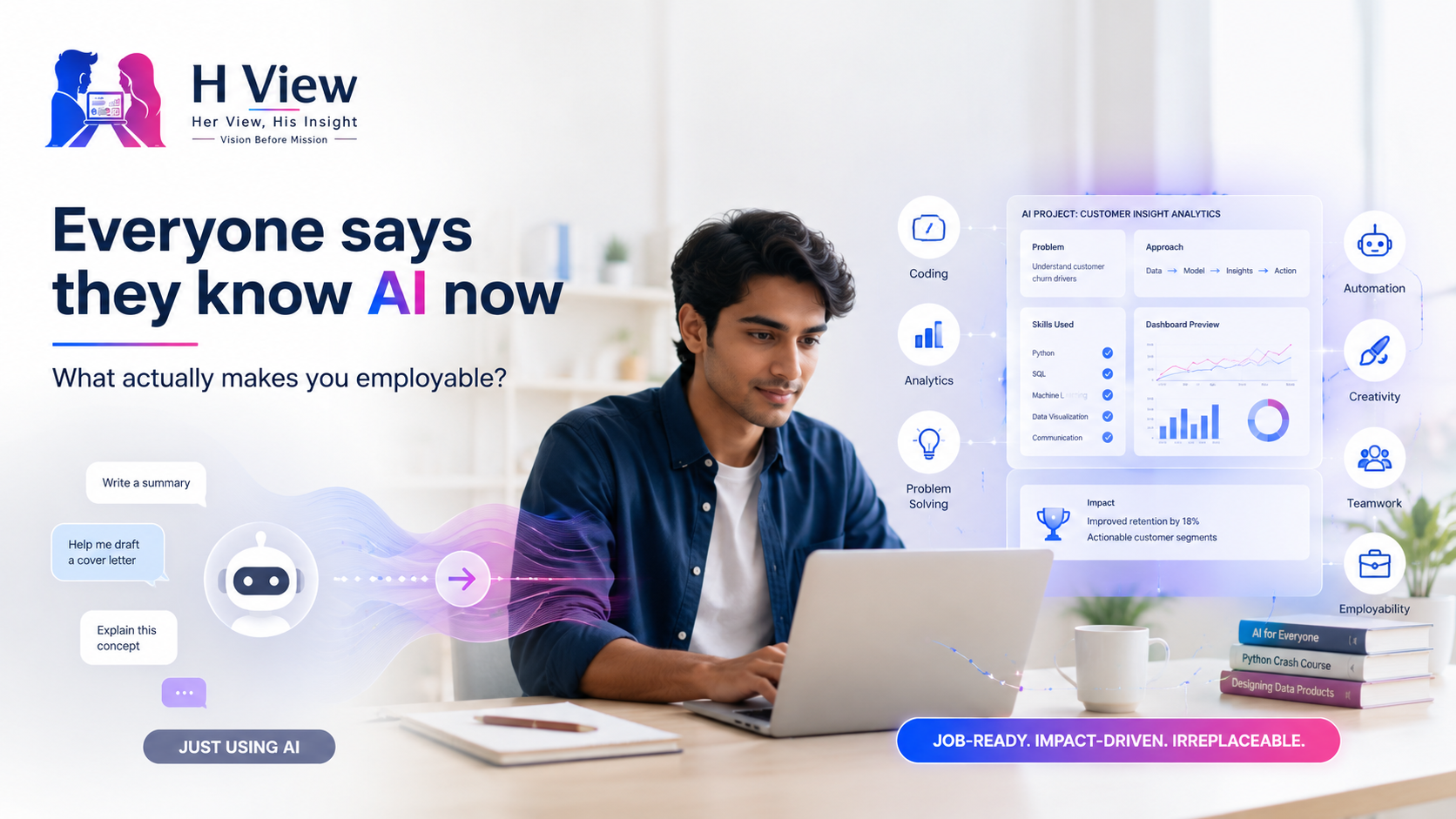
 By Satya HemanthUpdated September 20, 202610 min read49 views
A few years ago, mentioning artificial intelligence on a resume made a candidate stand out.
Today, almost everyone says they use AI.
Students use ChatGPT to explain code, write assignments, prepare for interviews and generate project ideas. Freshers add terms such as “AI tools,” “prompt engineering,” “Generative AI” and “automation” to their resumes. Working professionals use AI for email, research, presentations, spreadsheets and coding support.
That means one important thing has changed.
Knowing how to open an AI tool is no longer a differentiator.
The new question employers are beginning to ask is more practical: can you use AI to solve a real problem, improve a workflow, make a decision, verify an answer or build something useful?
That difference matters because India is entering a stage where AI familiarity is becoming common among early-career talent. NASSCOM’s 2026 research on AI-native talent says more than 90% of India’s early-career technology talent now falls into either the AI-native or AI-proficient category. In other words, basic familiarity is spreading quickly.
At the same time, employers are still reporting major skills gaps. The World Economic Forum says AI and big data are among the fastest-growing skills globally, but analytical thinking, creative thinking, resilience and technological literacy remain critical alongside them.
So the real employability question in 2026 is no longer:
“Do you know AI?”
It is:
“What can you actually do with it?”
Think about what happened with Microsoft Office.
There was a time when writing “MS Word” or “Internet knowledge” on a resume genuinely meant something. Eventually, those tools became so common that listing them stopped being impressive.
AI is moving in the same direction, only much faster.
If almost every candidate can ask a chatbot to write an email, summarise a document or generate a few lines of code, those actions do not prove much by themselves.
An employer hiring for a junior analyst, developer, marketer or operations role may instead care about whether the candidate can combine AI with actual job knowledge.
For example, a data analyst might use AI to help generate a SQL query. That is useful. But if the output is wrong, can the candidate recognise the mistake? Can they verify the data? Can they explain why one query is better than another?
A marketer might use AI to draft social-media copy. But can they understand audience intent, conversion goals and brand tone? Can they tell when the copy sounds generic or misleading?
A developer might generate code with an AI assistant. But can they debug it, test it, secure it and maintain it?
The tool is no longer the skill.
The judgement around the tool is becoming the skill.
NASSCOM’s recent research is useful because it does not treat all AI users as equal.
Its AI-Native Early-career Talent Index distinguishes between people who are simply familiar with AI and those who can use it more deeply as part of real work.
That difference can be understood in everyday terms.
An AI-proficient student may know how to:
An AI-native candidate goes further.
They may be able to connect AI to existing workflows, combine it with data, automate repetitive work, understand its limitations and decide where human review is necessary.
The second candidate is more valuable because they are not just consuming AI.
They are using it as part of a system.
Imagine two freshers applying for an operations analyst role.
Both write “Generative AI” under skills.
Candidate A explains that they regularly use ChatGPT for email drafting, research and Excel formulas.
Candidate B explains that they built a simple process where customer-support tickets were categorised using an AI model, manually reviewed the output, tracked error patterns and created rules for cases where human intervention was still required.
The second example immediately creates a better conversation.
The recruiter can ask:
How accurate was it?
Where did it fail?
How did you check the responses?
What happened with sensitive information?
Could it save time?
Candidate B has something specific to discuss.
That is what employability increasingly looks like in an AI-heavy market.
One of the most misunderstood AI career trends has been prompt engineering.
When generative AI became popular, many students were told that writing good prompts could itself become a major standalone career.
There are certainly roles where prompt design matters.
But prompt writing is increasingly becoming part of broader jobs rather than a completely separate profession.
NASSCOM has reported rapid growth in prompt-engineering talent in India, while also highlighting demand for AI engineering, data and enterprise AI capabilities.
The practical lesson is simple.
Do not build your entire career around learning “100 powerful prompts.”
Learn the business or technical area first.
Then use prompting as one of the tools inside that area.
A recruiter is more likely to value:
Marketing + AI
Finance + AI
Testing + AI
Development + AI
Operations + AI
than:
AI prompting without domain knowledge.
The broader job market is moving toward a combination of technical ability and human judgement.
The World Economic Forum expects AI and big data, networks and cybersecurity, and technological literacy to grow rapidly in importance. At the same time, analytical thinking, resilience, creativity, leadership and collaboration remain essential.
That combination matters because AI can produce answers very quickly.
What it cannot reliably do by itself is understand every business context, stakeholder concern, legal constraint or human consequence.
A candidate who blindly accepts AI output may actually create more risk for an employer than someone who uses less AI but thinks more carefully.
Companies therefore need people who can ask:
That is a very different skill from simply knowing which chatbot to open.
There is a human side to this shift that gets lost in technical discussions.
AI can remove frustrating, repetitive work.
A fresher preparing a report can use AI to organise notes. A support executive can summarise long customer conversations. A developer can get help understanding an unfamiliar error.
That can make work less exhausting.
But there is a danger when people begin outsourcing the part of work that helps them learn.
A student who asks AI to solve every coding exercise may submit more assignments while understanding less.
Someone who generates every interview answer may sound polished until the recruiter asks one unexpected follow-up question.
The most useful relationship with AI is not dependence.
It is leverage.
Use it to move faster where speed helps, but stay mentally present in the parts where understanding matters.
AI has made it easier to create impressive-looking output.
A weak writer can generate a polished email.
A beginner developer can produce a working-looking application.
A fresher can create a professional resume and portfolio description in minutes.
That makes first impressions less reliable.
Employers will naturally respond by testing deeper.
They may ask candidates to explain a project live, modify something during an interview or discuss why a particular decision was made.
This is likely to make practical understanding more valuable, not less.
India’s GCC ecosystem is already moving toward more specialised AI capability, with NASSCOM highlighting targeted demand in areas such as Generative AI, platform engineering and data security.
As AI makes basic output easier, employers can raise expectations.
The candidate who wins is not necessarily the one who uses the most AI.
It is the one who can combine AI with competence.
The answer depends on the target role.
A software developer should understand programming fundamentals, APIs, databases, testing and version control before trying to become an “AI developer.”
A data candidate should know spreadsheets, SQL, data cleaning and basic statistics before relying heavily on AI-generated analysis.
A marketer should understand audience behaviour, positioning, analytics and conversion before automating content.
An operations candidate should understand workflows and processes before attempting automation.
Then add AI.
Learn how to use it inside the work you already understand.
A strong beginner AI project could be simple.
For example, instead of building a random chatbot, create something connected to a real task:
The project should show what the AI helps with and where it still needs supervision.
That is far more credible than a generic “AI chatbot project” copied from a tutorial.
A good AI course can help when you need structured learning.
But the certificate itself should not be the final output.
If you spend three months learning AI, you should have something concrete at the end.
A small application.
A workflow.
A case study.
A documented experiment.
A portfolio page explaining what worked and what failed.
That proof matters because AI education is expanding so quickly that certificates alone will become harder for recruiters to interpret.
Thousands of candidates may soon hold similar badges.
Fewer will be able to explain what they actually built.
This may sound strange in an article about AI employability, but restraint is becoming valuable.
AI is not appropriate for every task.
Some work involves confidential customer information. Some decisions require legal accountability. Some responses need human empathy. Some calculations must be independently verified.
Responsible AI adoption is becoming an important enterprise concern in India as organisations move from experimentation toward broader deployment.
A candidate who understands those boundaries looks more mature than someone who tries to automate everything.
Employers do not only need people who can make AI work.
They need people who can recognise when it should not be trusted.
AI knowledge is becoming common.
AI usefulness is not.
That is the real difference freshers should focus on.
Do not worry about adding every new AI tool to your resume. Most tools will change quickly anyway.
Build strong fundamentals in one area. Learn how AI fits into that work. Create something real. Test it. Break it. Improve it. Be ready to explain where it helped and where it failed.
The future is unlikely to reward people simply because they “know ChatGPT.”
It will reward people who can combine AI with judgement, domain knowledge and practical execution.
That is what makes someone employable.
Not the tool.
Not the certificate.
Not the prompt.
The ability to use all of them intelligently.
No. Basic chatbot usage is becoming common. AI-related roles usually require stronger foundations such as programming, data, automation, machine learning concepts or domain-specific knowledge.
AI-native talent generally refers to people who use AI deeply within workflows, problem-solving and creation rather than only using basic AI features occasionally. NASSCOM’s 2026 talent research uses this distinction when examining early-career readiness in India.
Yes, prompting is useful, but it should normally be combined with another skill such as coding, analytics, marketing, testing or operations rather than treated as the entire career.
Not every role requires advanced AI skills, but technological literacy and AI familiarity are becoming increasingly valuable across many jobs.
Choose a small real problem. Examples include support-ticket classification, document summarisation with human verification, feedback analysis or workflow automation. Be able to explain accuracy, limitations and how you tested it.
They can provide structured learning, but employers are likely to value practical evidence more. Pair the certificate with a real project, case study or working demonstration.
Satya Hemanth is the founder of H View and writes on careers, sports, leadership, digital trends, and practical decision-making. His articles focus on clear explanations, real-world examples, and useful insights for students, young professionals, and everyday readers.
Share your real experience and help other readers decide better.
No community views yet. Be the first to share yours.
Open LinkedIn for a few minutes and you will probably come across a colourful graphic…
Harika October 6, 2026 
When an employee resigns, many organisations move quickly into replacement mode. The manager informs HR,…
Harika October 6, 2026 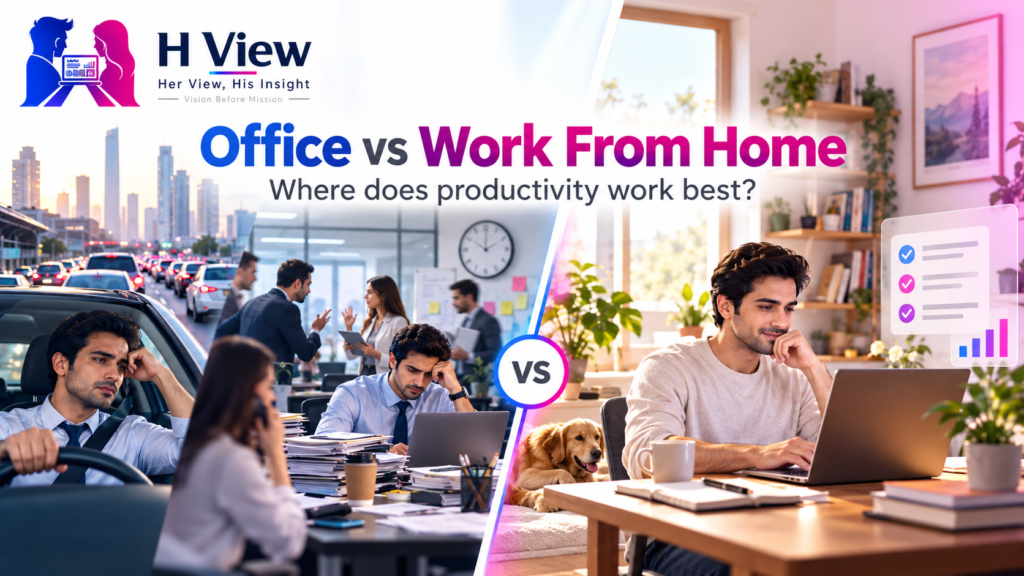
For many corporate employees, the workday begins long before they actually start working. They wake…
Harika October 5, 2026 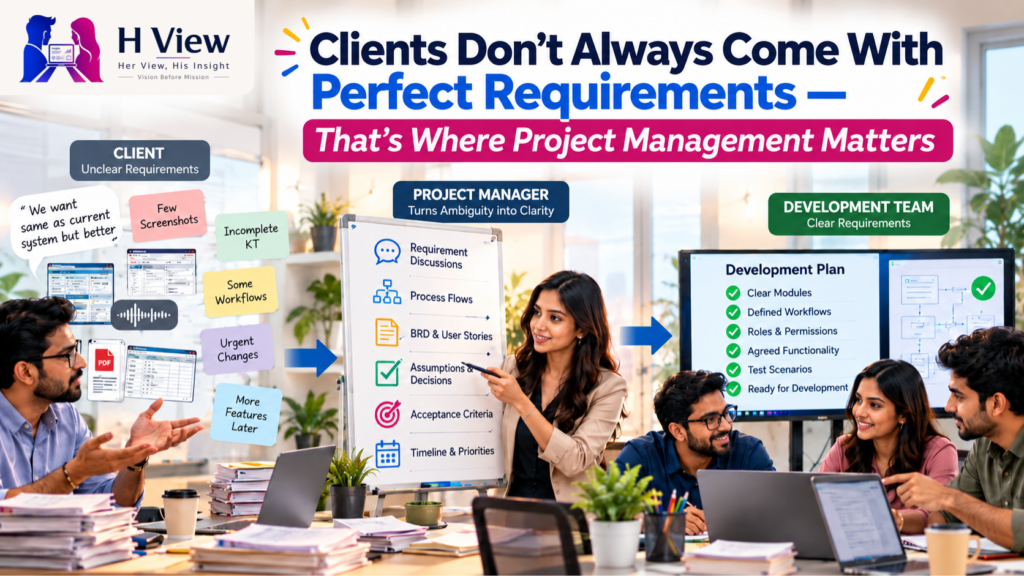
Many projects begin with an assumption that sounds reasonable on paper: the client will explain…
Harika October 1, 2026