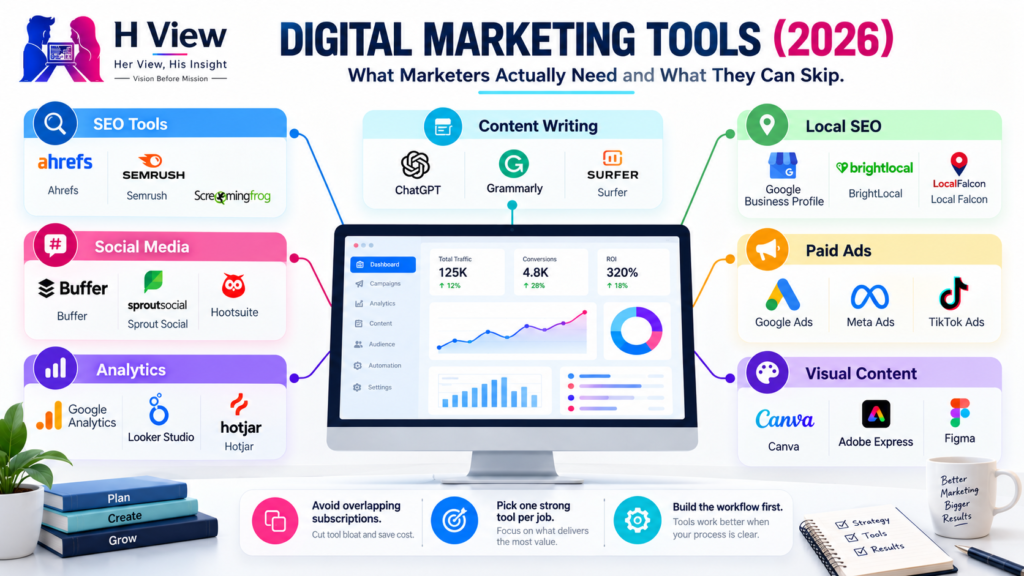
Best Digital Marketing Tools in 2026: What Marketers Actually Need and What They Can Skip
Open LinkedIn for a few minutes and you will probably come across a colourful graphic…
 Harika October 6, 2026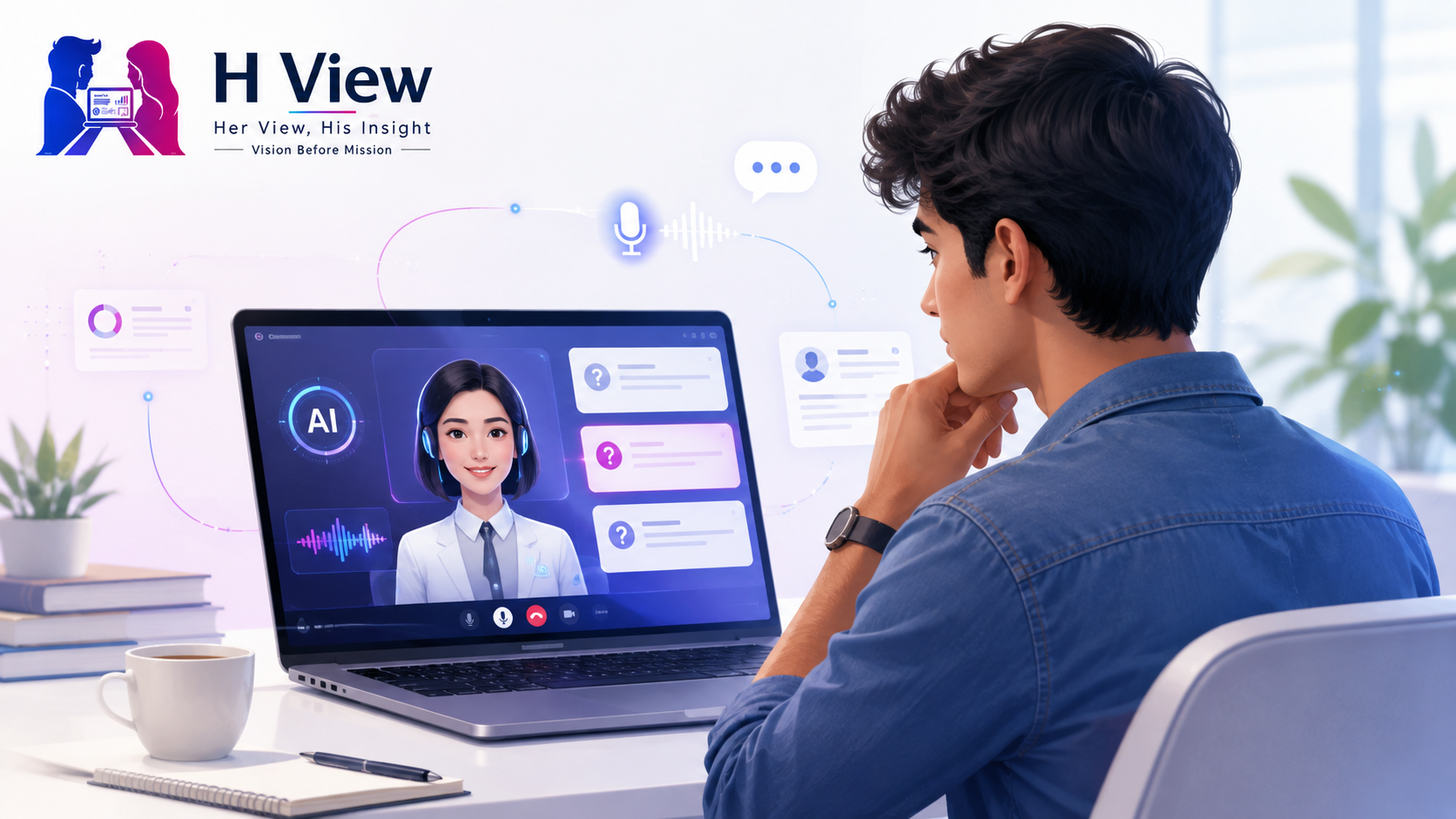
 By Satya HemanthUpdated September 20, 202610 min read37 views
For years, students preparing for their first job were told to practise eye contact, research the company, dress professionally and prepare for the familiar question: “Tell me about yourself.”
The assumption was simple. On the other side of the table would be another person.
That is no longer guaranteed.
A growing number of employers are experimenting with artificial intelligence at different stages of recruitment. AI may help scan resumes, match candidates with job descriptions, administer assessments, schedule interviews and, increasingly, conduct the first interview itself. In some cases, the candidate may answer questions on video without a human interviewer being present. In others, an AI voice agent can ask follow-up questions and record the conversation for recruiters to evaluate later.
This shift matters especially for freshers. An experienced professional may have already attended dozens of interviews and learned how to explain projects, negotiate pauses and handle unexpected questions. A graduate facing an automated interview for the first time may be wondering whether they should speak naturally, look directly into the webcam, worry about their accent, use technical keywords or somehow “impress the algorithm.”
The uncomfortable reality is that recruitment technology is moving faster than most students are being prepared for it.
Recent research involving around 70,000 job applicants found that candidates interviewed through an AI voice system were actually more likely to receive job offers than those interviewed initially by human recruiters. Importantly, human recruiters still made the final hiring decisions in that study. Researchers suggested that the AI interviews collected information in a more structured and consistent way.
That sounds promising. It also raises a much bigger question for young job seekers: what happens when the first person deciding whether you move forward is not a person at all?
Most freshers probably will not receive an email saying, “Congratulations, an algorithm will now evaluate your future.”
The change is usually less dramatic.
You submit a resume and receive a link asking you to complete an assessment. After that comes a recorded interview. A question appears on screen, perhaps with thirty seconds to prepare and two minutes to answer. The next question arrives immediately. There may be no recruiter smiling, nodding or asking you to clarify what you meant.
More advanced systems can make the experience conversational. An AI interviewer may listen to an answer, identify something worth exploring and ask a follow-up question. Hiring platforms are increasingly selling these tools to companies that need to screen large numbers of candidates quickly, particularly for entry-level and high-volume recruitment. Automated systems are also being used for resume screening, candidate matching, interview scheduling and skills assessment.
From an employer’s point of view, the attraction is obvious. Imagine receiving 8,000 applications for a graduate programme. Giving every applicant even a fifteen-minute human interview would require an enormous amount of recruiter time.
AI creates the possibility that more applicants can actually be interviewed instead of being rejected based only on a resume.
That could be good news for the fresher whose college name is not prestigious, whose marks are average or whose career gap makes the resume look weaker than the person behind it.
But the candidate experience can feel very different.
Consider a final-year student named Rahul applying for a junior analyst role.
He has spent weeks practising common HR questions with friends. When someone asks about his project, he watches their expression and adjusts his answer. If they look confused, he explains differently. If they appear interested, he goes deeper.
Then his actual first-round interview begins.
There is no one there.
A question appears:
“Tell us about a situation where you used data to solve a problem.”
A timer starts counting down.
Rahul suddenly becomes more conscious of everything. Should he look at himself on screen or the webcam? Was that pause too long? Did he use the right terminology? Is the software analysing his facial expressions? Should he smile more? Did his internet freeze for half a second?
Even when the technology is evaluating primarily the content of the answer, uncertainty itself changes the experience.
Research examining people’s experiences with AI-mediated hiring found recurring concerns around unclear evaluation criteria, uncertainty about who is responsible for automated outcomes and a feeling of detachment from the organisation. Candidates frequently found themselves trying to guess how the system might be judging them because they had not been given enough information.
That is an important lesson for employers as much as candidates.
Technology may make recruitment efficient while still making applicants feel as though they are speaking into a black box.
It is easy to portray automated hiring as another obstacle between unemployed youth and a real recruiter, but that would miss an important part of the story.
Traditional interviews are not perfectly fair.
A recruiter may become tired after interviewing fifteen people. One interviewer may prefer highly confident speakers while another values careful answers. A candidate interviewed first thing in the morning may experience a different conversation from someone interviewed at 6 p.m.
An AI-led structured interview can ask comparable questions more consistently.
The recent 70,000-applicant field experiment is particularly interesting because applicants interviewed by AI were 12% more likely to receive offers, and the researchers did not observe a decline in the productivity of the people eventually hired.
Another study involving applicants for junior developer positions found that an AI-assisted recruitment pipeline sent candidates to the same final human interview as the traditional route. Candidates coming through the AI-assisted pathway performed better at that final stage in the researchers’ experiment.
These studies do not prove that every AI hiring system is fair or better than every human recruiter.
They do challenge the assumption that automation automatically disadvantages candidates.
For a student from an unknown college, an automated first interview might even create an opportunity to demonstrate ability before being filtered out because of pedigree.
That possibility deserves attention.
Candidates can adapt to a structured interview when they understand the rules.
The anxiety grows when the evaluation is vague.
If a company tells applicants that the system records answers and recruiters evaluate the transcript, that is reasonably easy to understand.
If candidates believe software might be judging their face, voice, accent, confidence, vocabulary, background environment or personality—but nobody explains what actually matters—they begin performing for an imaginary algorithm.
That is not healthy preparation.
Freshers should also be cautious about the growing ecosystem of online advice promising tricks to “beat AI interviews.” Memorising unnatural keyword-heavy answers may make a candidate sound less convincing, not more.
The better preparation is surprisingly traditional: understand your own work.
If you mention a college project, know what you actually contributed. If you claim Excel, SQL, React or digital marketing skills, be ready to describe where you used them. If you are asked about failure, explain a real situation instead of delivering a perfect motivational speech downloaded from somewhere else.
Automation makes rehearsed answers easier to detect because every candidate can now generate polished interview scripts with AI.
What becomes more valuable is specificity.
There is something emotionally strange about trying to prove your potential to a screen that offers no reaction.
A nervous fresher often depends on small human signals without even realising it. A nod can tell them they are answering the right question. A smile can reduce anxiety. An interviewer saying, “Take your time,” can completely change how someone performs.
An automated interview removes much of that reassurance.
At the same time, there is another side to it. Some candidates may actually feel less intimidated when there is no senior manager sitting across from them. Someone who becomes extremely nervous in front of an interview panel may find it easier to organise their thoughts in a quiet room.
Flexibility can also matter. Current reporting on AI-led interviews shows that candidates are increasingly completing them outside normal office hours, sometimes late at night, because the interview can be taken when their schedule allows.
So the experience will not be universally better or worse.
For one person, AI may remove pressure. For another, it may remove the human connection that helps them perform naturally.
The business case for automated interviews is powerful.
A recruiter can process far more applicants, standardise early questions and spend human interview time on candidates who have already demonstrated something relevant.
There is nothing inherently wrong with that.
The danger appears when efficiency becomes an excuse to remove transparency.
If software influences whether someone progresses, candidates deserve a reasonable explanation of how the process works, what information is being collected and whether a human remains involved in important decisions.
Companies also need to resist the temptation to automate a poor recruitment process. A badly written job description, unrealistic fresher requirements and confusing interview questions do not become better simply because AI administers them faster.
H View’s concern is not that machines are entering recruitment.
It is whether businesses are using automation to give more candidates a fair opportunity or simply to reject people more cheaply.
Those are very different outcomes.
The best preparation is not learning how to behave like a robot.
Practise speaking to the camera occasionally so that the format does not feel unfamiliar. Record a few answers and listen to whether you are actually explaining the point clearly. You may discover that an answer that sounded excellent in your head takes four minutes and never reaches the main idea.
Keep your environment simple, your internet connection stable where possible and notifications turned off. Read the instructions carefully before beginning, particularly when answers have preparation or recording limits.
More importantly, prepare examples rather than speeches.
Have real situations ready around teamwork, solving a problem, making a mistake, learning something quickly and completing a project. Understand your resume thoroughly because an AI interviewer can still ask about the same inconsistencies a human recruiter would notice.
And if you do not understand how the interview will be evaluated, there is nothing unreasonable about checking the employer’s recruitment information or asking the recruiter.
Candidates should not need to reverse-engineer the hiring system before they are allowed to compete.
AI interviews are not some distant idea that students can worry about later.
Automated screening, assessments and interviewing are gradually becoming part of real recruitment, particularly where companies need to process large applicant pools.
For freshers, that change has an unusual upside. If AI allows employers to interview more people instead of rejecting thousands through resumes alone, candidates from ordinary colleges or unconventional backgrounds may gain opportunities they previously never reached.
But automated hiring must not become automated rejection without explanation.
Employers need transparency, sensible human oversight and recruitment processes designed around actual skills rather than mysterious scores.
Freshers, meanwhile, should prepare for the format without becoming obsessed with gaming it.
The future interview may begin with AI.
Your advantage will still come from something very human: knowing what you have done, understanding what you know and being able to explain it clearly.
Yes. Some platforms can conduct asynchronous video interviews or conversational voice interviews, although employers differ in how they use the results. In many recruitment processes, humans still review interview information or make later-stage hiring decisions.
That depends entirely on the system being used. Candidates should not assume every video interview analyses facial behaviour. Employers should explain what information is collected and how it contributes to assessment.
They can feel more unfamiliar because there may be no human feedback during the conversation. Practising timed video responses and becoming comfortable explaining projects aloud can reduce that difficulty.
AI can help generate questions or identify weaknesses in an answer, but memorising AI-written responses can make an interview sound generic. Use it as a practice partner and keep the actual examples genuinely yours.
Recruitment systems differ. Some tools provide scores or recommendations, while others collect structured information for human recruiters. Candidates should check the employer’s process when that information is available.
There is no strong reason to assume that all human interviews will disappear. Current evidence suggests AI is particularly useful for early-stage, high-volume screening, while human judgement remains important in many final hiring decisions.
Satya Hemanth is the founder of H View and writes on careers, sports, leadership, digital trends, and practical decision-making. His articles focus on clear explanations, real-world examples, and useful insights for students, young professionals, and everyday readers.
Share your real experience and help other readers decide better.
No community views yet. Be the first to share yours.
Open LinkedIn for a few minutes and you will probably come across a colourful graphic…
Harika October 6, 2026 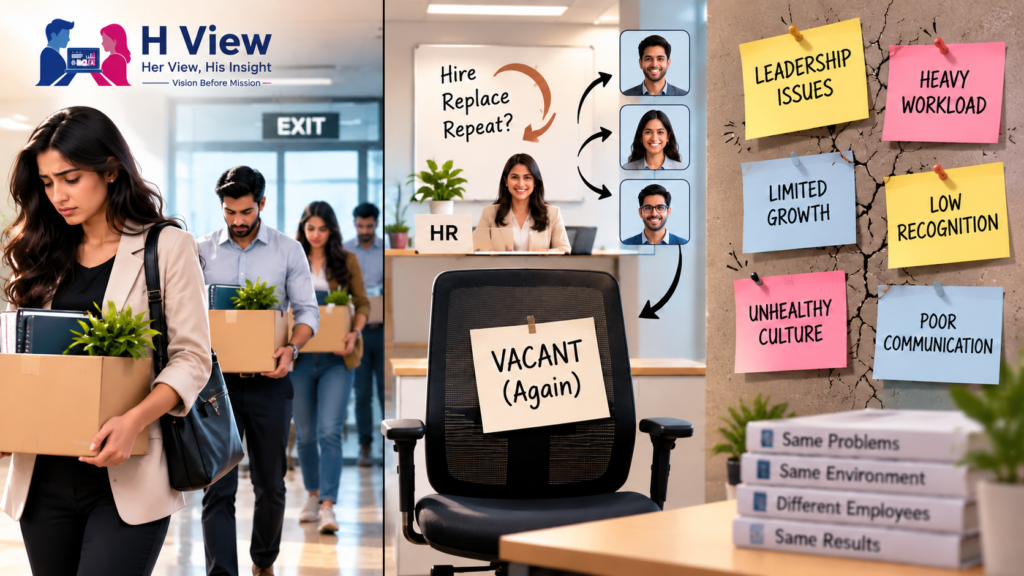
When an employee resigns, many organisations move quickly into replacement mode. The manager informs HR,…
Harika October 6, 2026 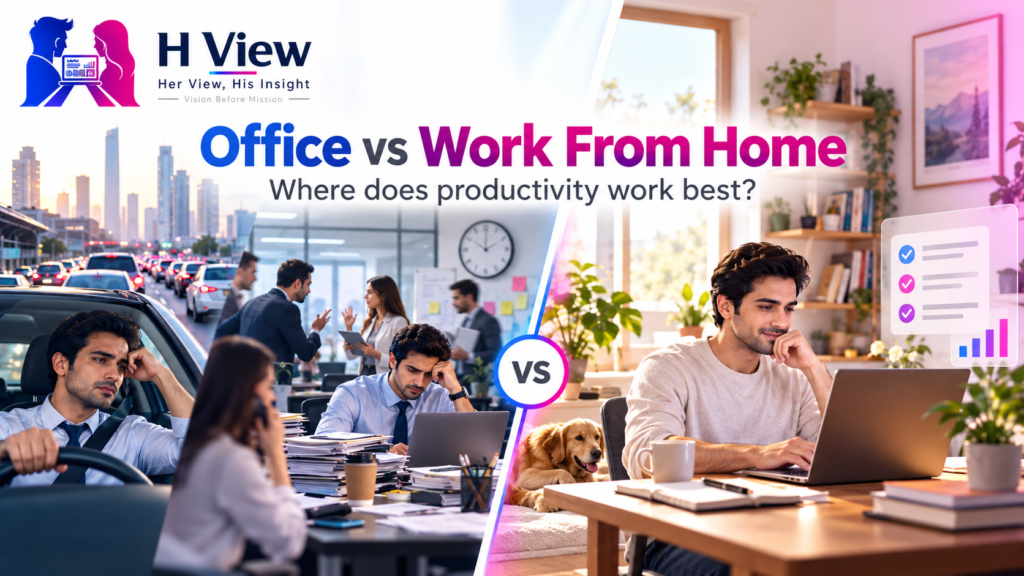
For many corporate employees, the workday begins long before they actually start working. They wake…
Harika October 5, 2026 
Many projects begin with an assumption that sounds reasonable on paper: the client will explain…
Harika October 1, 2026