

Preparing for a Government Job for Years—When Should You Create a Plan B?
For many young Indians, a government job is not just employment. It represents stability, respect,…
 Satya Hemanth August 10, 2026
  By Satya HemanthUpdated August 13, 20266 min read56 views
A long employment gap can make job seekers feel that honesty is working against them.
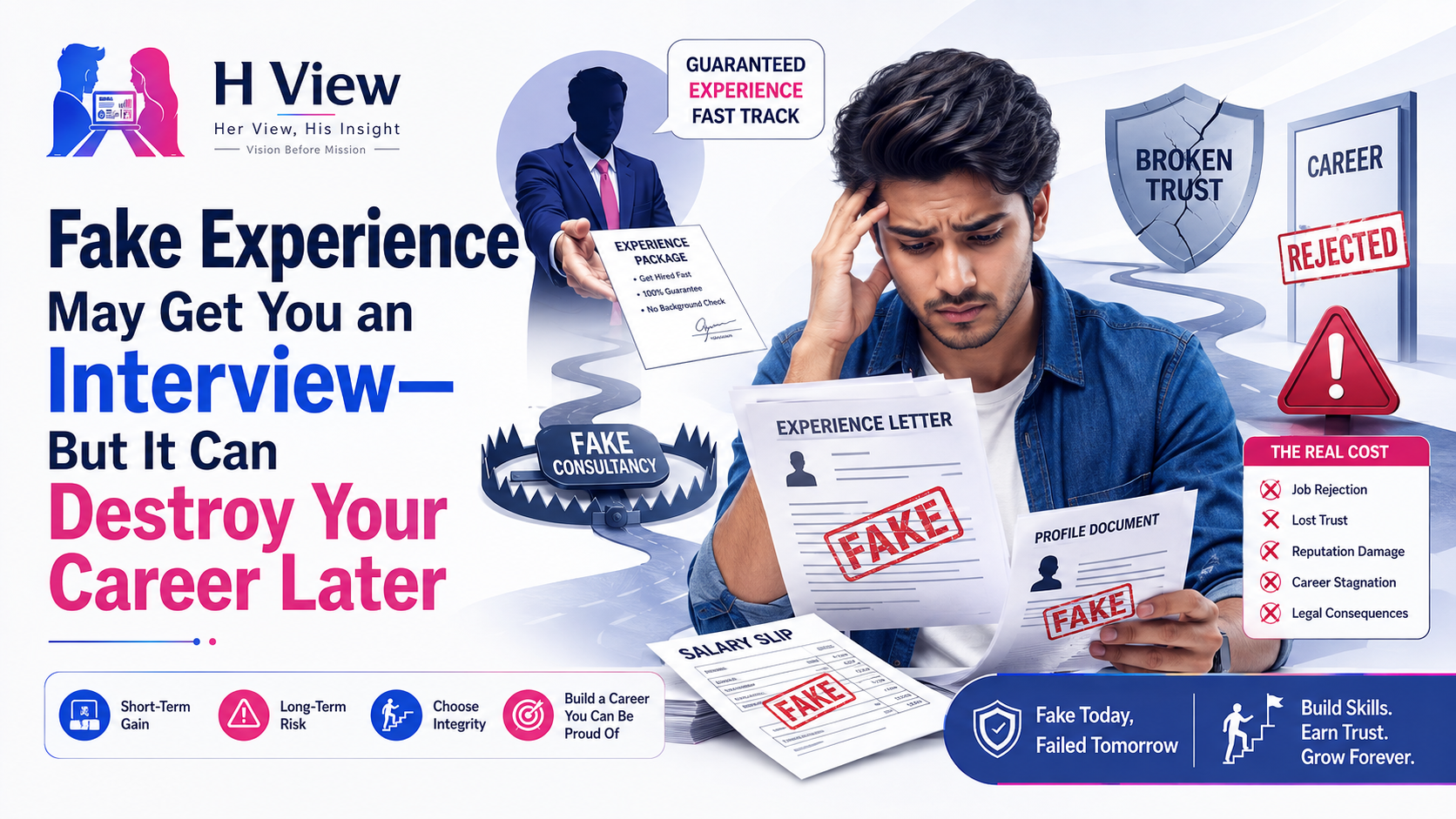
After repeated rejection, some candidates are approached by consultancies offering a shortcut:
“We will provide an experience letter, salary slips, relieving documents and background-verification support.”
The promise may sound like a solution. Instead of applying as a fresher, the candidate can claim one or two years of experience and become eligible for more vacancies.
But fake experience does not remove a career gap.
It replaces an explainable gap with a lie that may follow the candidate through interviews, background checks and future employment.
A fabricated experience certificate may help someone receive a call. It cannot provide the knowledge, workplace exposure or genuine records expected from an experienced professional.
In the worst cases, the candidate may lose the offer, be removed after joining or face legal consequences connected to forged documents.
Most candidates do not begin their careers planning to submit false records.
They may consider it after facing:
A consultancy may make the process sound safe and professional. It may offer:
The candidate is told that the documents will appear genuine and that verification will be “managed.”
No consultancy can guarantee what a future employer will check or how deeply it will investigate.
Employers may verify previous employment by contacting the organisation, checking references, reviewing employment documents and comparing the candidate’s answers with the claimed role.
In India, employment and provident-fund records may also create a trace through the Universal Account Number system. EPFO guidance explains that a UAN connects employment-related member records, and employer processes include confirming previous employment details.
Even without formal records, interview questions can expose weak claims.
A candidate claiming two years as a software developer may be asked:
Memorising a project story is not the same as having lived through the work.
Experienced interviewers often ask follow-up questions based on small details. One inconsistent answer can create doubt about the entire profile.
Candidates with delayed careers often feel ignored by employers before they can demonstrate their ability.
They may see recent graduates receiving opportunities while their own applications are filtered by graduation year or lack of experience.
That frustration deserves understanding.
Employers should create more apprenticeships, returnships, trainee roles and skill-based assessments for candidates whose careers started late.
A genuine second chance is better than forcing people to choose between permanent unemployment and dishonest experience.
Understanding why someone considered fake experience does not make the documents harmless.
The Bharatiya Nyaya Sanhita defines a document or electronic record created through forgery as a forged document. It also states that knowingly using a forged document as genuine can be punished in the same manner as forging it. The exact legal outcome depends on the facts and should be discussed with a qualified lawyer when necessary.
Apart from legal risk, employers may treat false employment history as serious misconduct.
An organisation may:
The candidate may then have to explain both the original career gap and the later misrepresentation.
A career gap can be difficult to explain, but it can still be presented honestly.
For example:
“My career start was delayed because I spent time preparing for competitive examinations and later lacked clear direction. During the last six months, I have focused on software testing, completed practical projects and built recent work samples. I am now applying for trainee and junior roles.”
This answer acknowledges the past and focuses on current readiness.
It does not guarantee selection. But it creates a career foundation that does not depend on maintaining a false story.
Candidates can create real proof through:
The work should be recent, practical and explainable.
A candidate can state clearly:
“This was a self-directed project, not company employment.”
Honest projects may carry less weight than formal experience, but they still demonstrate initiative and ability.
Do not continue only because money has already been spent.
Avoid using documents that you know are false. Preserve payment receipts, chats, advertisements and promises made by the consultancy.
Request cancellation and a refund in writing.
When fraud or forged documents are involved, consider obtaining advice from a qualified legal professional. Suspected online financial fraud can also be reported through the appropriate cybercrime channels.
Most importantly, rebuild the resume using truthful information before sending further applications.
Choose one realistic role and create a recent portfolio around it.
Then:
The first genuine job may offer a smaller salary than the fake experienced profile promised.
But real experience compounds. Fake experience creates continuing fear.
Fake experience may increase the number of jobs you can apply for.
It also increases the number of things that can go wrong.
A fabricated letter cannot teach workplace responsibility, project challenges, team communication or practical judgment. It only creates a story that must survive every interview and verification.
A long career gap is not ideal.
But it is still safer than forged employment records.
Tell the truth clearly. Build recent proof. Apply at the correct level and accept that the first genuine opportunity may be a restart rather than a promotion.
A slower honest career can still grow.
A career built on fake experience may collapse exactly when it appears to have begun.
Yes. Employers may contact previous organisations, check references and documents, review employment records and ask detailed questions about the claimed work.
No. A gap can be explained honestly. Fake experience creates background-verification, employment and possible legal risks.
An employer may withdraw an offer or take employment action based on its policies, contract terms and the circumstances.
Yes. Use a truthful resume and seek professional legal advice when forged documents have already been submitted or used.
Projects, apprenticeships, verified internships, freelance work, volunteering and open-source contributions can provide genuine evidence of ability.
Give a brief, honest explanation and focus on your recent skills, projects and readiness for a junior or trainee role.
Satya Hemanth is the founder of H View and writes on careers, sports, leadership, digital trends, and practical decision-making. His articles focus on clear explanations, real-world examples, and useful insights for students, young professionals, and everyday readers.
Share your real experience and help other readers decide better.
No community views yet. Be the first to share yours.

For many young Indians, a government job is not just employment. It represents stability, respect,…
Satya Hemanth August 10, 2026 
A fresher opens a job portal and finds an attractive vacancy. The title says Entry-Level,…
Satya Hemanth August 9, 2026 
You find a job that perfectly matches your profile. The company looks genuine. The role…
Satya Hemanth August 8, 2026 
For generations, the path to a secure career appeared simple: Study hard, complete a degree…
Satya Hemanth August 7, 2026