

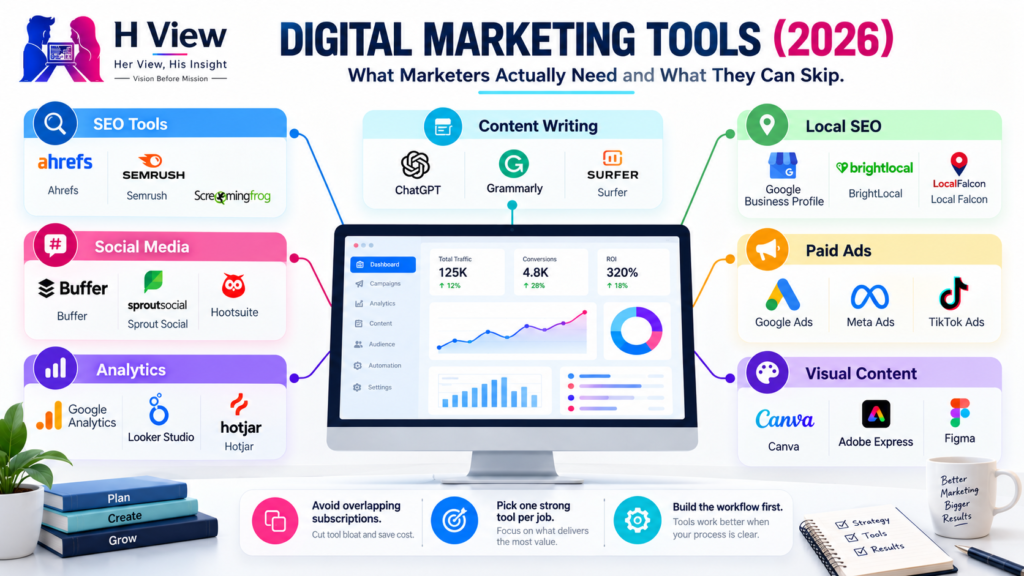
Best Digital Marketing Tools in 2026: What Marketers Actually Need and What They Can Skip
Open LinkedIn for a few minutes and you will probably come across a colourful graphic…
 Harika October 6, 2026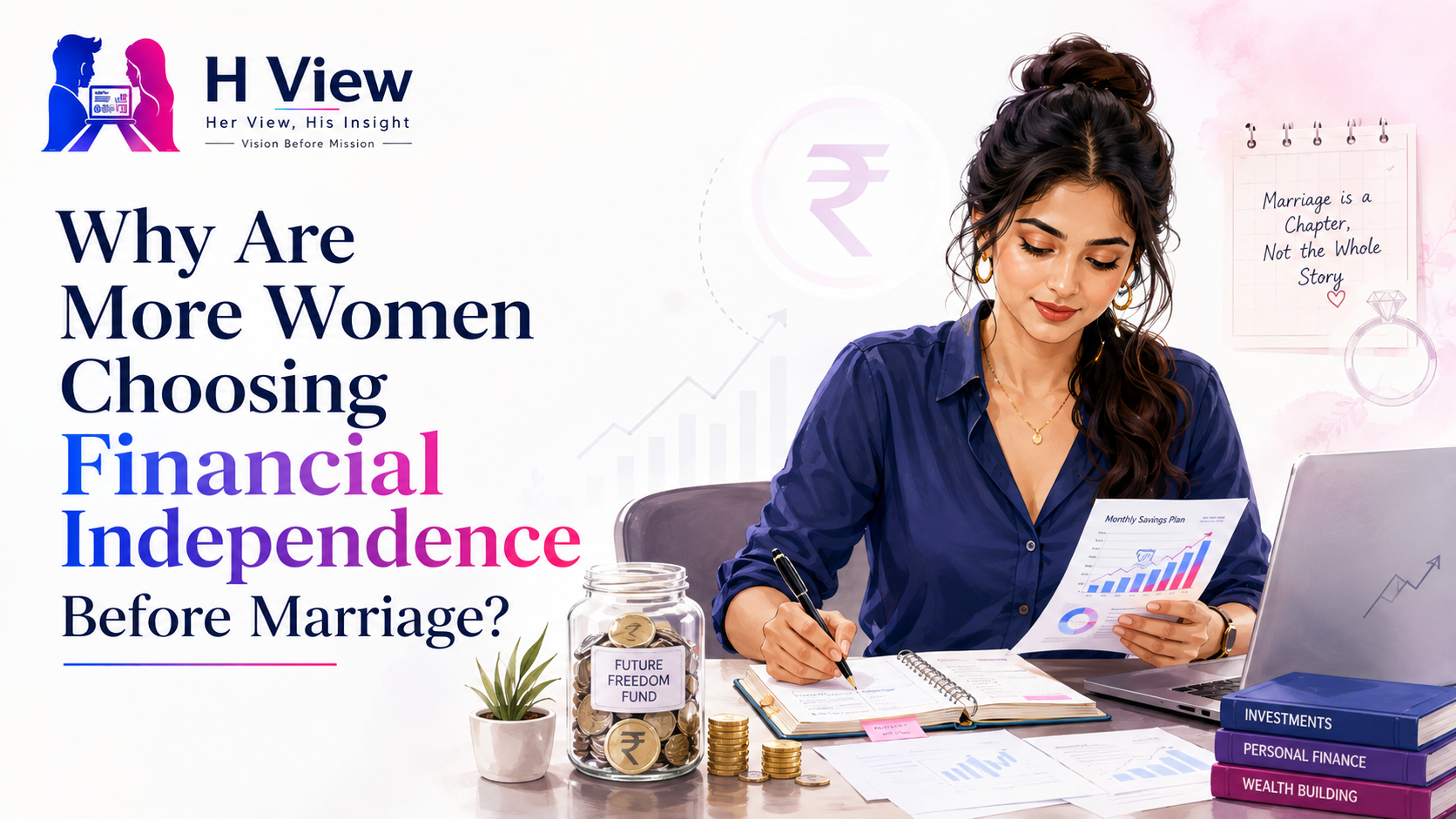
 By AnnapurnaUpdated September 20, 202611 min read49 views
For many women today, marriage is no longer the point where adult life begins. They want to enter it after building something of their own: an education, a career, savings, confidence, and the ability to make choices without depending entirely on someone else.
This does not mean women are becoming less interested in marriage. In many cases, the opposite is true. They still want love, companionship, family, and long-term partnership, but they want to enter marriage from a position of stability rather than dependence. Financial independence changes the way a woman experiences relationships because it gives her the freedom to choose a partner for compatibility, respect, and shared values instead of financial necessity.
That shift is especially visible among younger women who have watched previous generations struggle with unequal marriages, limited career choices, and financial dependence. For them, earning before marrying is not simply about money. It is about having a voice.
There is a big difference between choosing a relationship because you want it and staying in one because you cannot afford not to.
A woman with her own income has more room to make decisions based on what actually feels right. She can say no to a proposal that does not suit her. She can wait longer if she has not met the right person. She can leave a job, city, or relationship decision for better reasons than financial fear alone.
That kind of independence changes the emotional balance of marriage.
It does not mean both partners need to earn exactly the same amount, and it does not mean financial support between spouses is unhealthy. Marriage naturally involves periods where one person may earn more or carry a larger burden. The difference is that financial independence gives a woman some degree of personal security and bargaining power before those compromises begin.
One of the strongest reasons younger women prioritise independence is that they have seen what happens when money becomes control.
Some grew up watching mothers who had little freedom to spend without asking. Others saw women stay in unhappy marriages because they had no income, no savings, and nowhere else to go. Even when the relationship was not openly abusive, financial dependence could still limit choices.
These experiences leave an impression.
A woman may decide very early that she never wants to be in a position where every important decision depends on someone else’s permission. Having her own salary, bank account, savings, and professional identity becomes a form of security.
The goal is not necessarily to prepare for divorce. It is to make sure that marriage is a partnership rather than a situation where one person controls the practical terms of life.
For many women, work is not only about salary. It can also provide confidence, routine, social connection, achievement, and a sense of identity outside family roles.
A woman may spend years studying for a profession, building experience, learning new skills, and working toward a position she values. Giving that up immediately after marriage can therefore feel like losing part of herself.
This is why some women want to become established before marrying. They know that careers are often easier to continue once experience, credibility, and financial momentum already exist.
Starting from zero after a long break can be much harder.
Financial independence before marriage can therefore create a stronger foundation for future choices around children, career breaks, relocation, and household responsibilities.
Weddings get most of the attention, but married life carries larger and longer financial responsibilities.
Housing, rent, home loans, healthcare, insurance, childcare, education, transportation, savings, travel, and support for ageing parents can all become part of the picture.
Young women increasingly understand that depending entirely on one income can create pressure for both partners.
Earning before marriage gives them practical experience with money. They learn how to budget, save, invest, manage bills, and make financial decisions independently. Those skills can make married life easier because money conversations become more balanced.
Instead of one person handling everything and the other remaining financially unaware, both partners can participate in planning.
That is not only independence. It is financial maturity.
One uncomfortable truth is that people behave differently when they believe the other person has no choice.
Financial independence can reduce that power imbalance.
A woman who knows she can support herself may feel more confident setting boundaries, asking for respect, and speaking honestly about problems. She does not have to stay silent simply because leaving would mean immediate financial crisis.
This does not guarantee a healthy relationship. Money cannot create emotional maturity or good communication.
But having options matters.
Sometimes the strongest form of security is not knowing that nothing will ever go wrong. It is knowing that if something does go wrong, you will still have some ability to take care of yourself.
In many families, daughters were once encouraged to focus on marriage first and career later. Today, a growing number of parents want daughters to become educated, employed, and financially secure before they marry.
Part of this change is practical. Parents have seen how unstable jobs, rising living costs, and changing family structures can affect married life.
They may also understand that a working daughter has more confidence and security.
Of course, traditional pressure has not disappeared. Some women still hear that they are becoming “too independent” or that too much career focus will make marriage harder.
But the older idea that a woman should simply depend on her husband is becoming less persuasive to many younger families.
Money influences power in almost every household, even when people prefer not to admit it.
When one person controls all income, that person may unintentionally have more influence over where the couple lives, how money is spent, what purchases are considered acceptable, and which goals receive priority.
Two incomes do not automatically create equality, but they can make financial conversations more balanced.
A financially independent woman is more likely to understand her own earning capacity and long-term goals. She may be more comfortable discussing investments, retirement, property, insurance, and shared financial responsibilities.
Marriage then becomes less about one person providing and the other adjusting, and more about two adults deciding how to build a life together.
Financial independence is also about long-term security.
A young woman may not be thinking only about her current salary. She may be considering whether she can support parents, take a career break, have children, start a business, buy property, or retire comfortably later.
Marriage can affect all of those decisions.
Having savings before marriage can create breathing room. It may help during maternity leave, job loss, relocation, or periods where one partner needs to step back professionally.
Financial security gives couples options.
This is why more women are learning not only to earn but also to invest. Salary creates independence in the present, while savings and investments create independence over time.
There is sometimes a misunderstanding that a financially independent woman does not need a man and therefore will struggle in marriage.
That is not how healthy partnership works.
A relationship should not exist because one person cannot survive without the other. It should exist because two people choose to share life.
A financially independent woman may still value emotional support, companionship, teamwork, family, and shared goals. She may simply be less willing to confuse dependence with love.
In many cases, independence can make relationships healthier because both people come together as adults who already know how to manage themselves.
Marriage becomes a choice to combine lives, not an escape from not having one.
There is another side to this shift.
A woman who has built a stable life may naturally expect a partner who can contribute emotionally and practically, not only financially.
She may care more about communication, respect, household responsibility, ambition, emotional maturity, and shared values because she no longer sees income alone as the main measure of suitability.
That can make partner selection slower.
A man may have a good salary and still not feel like the right match if the relationship appears unequal in other ways.
This can sometimes be described as women becoming “too selective,” but the deeper issue is that marriage is being evaluated as a full-life decision rather than a financial arrangement.
Financial independence should not turn marriage into a competition about who earns more.
There will be phases where income changes. One partner may take a career break. One may start a business. Children may change priorities. Health issues can affect work.
Healthy financial independence is not about refusing support.
It is about being informed, capable, and involved.
A woman should understand the household finances even if she earns less. She should know what is saved, what is owed, what is invested, and what financial decisions are being made.
That kind of involvement protects both partners from unnecessary dependence and confusion.
For many women, financial independence is not about proving that they can do everything alone. It is about entering marriage without feeling that their security depends entirely on being chosen and supported by someone else. A woman with her own income, savings, and professional confidence can make relationship decisions from a place of greater clarity. She can still want partnership, family, and shared finances while knowing that she also has an identity and foundation of her own. That balance can make marriage feel less like dependence and more like genuine choice.
Men can benefit from this shift too. A financially independent partner can reduce the pressure of being expected to carry every financial responsibility alone and create a more collaborative approach to long-term goals. The healthiest partnerships are not built around proving who needs whom more; they are built around understanding how both people can contribute in different ways. Financial independence does not remove the need for partnership. It can make that partnership more honest because both people are choosing it rather than being forced into traditional roles by necessity.
For many young women, being ready for marriage now includes more than finding the right person.
It includes knowing how to earn, save, plan, and make independent decisions. It includes understanding that love is important but should not be the only form of security in life.
Some women will achieve financial independence early. Others may take longer, and some marriages will involve periods where one partner depends more heavily on the other. There is no single model that suits every couple.
What is changing is the expectation that dependence should be the default.
More women want to enter marriage knowing that they can stand on their own feet and still choose to walk beside someone else.
That may be the real reason financial independence matters so much before marriage. It does not make love less important.
It makes the decision to marry feel more like a choice.
More women want to enter marriage with their own income, savings, and decision-making ability. Financial independence gives them greater freedom to choose a partner based on compatibility, respect, and shared goals rather than financial necessity.
Not necessarily. Many financially independent women still want marriage, family, and long-term partnership. The difference is that marriage becomes a choice between two adults rather than something one person needs for financial security.
It can provide confidence, practical security, and greater control over major life decisions. A woman with her own financial foundation may find it easier to set boundaries, participate in household financial planning, and manage unexpected changes such as job loss, relocation, or career breaks.
Having personal savings can be useful because it creates an emergency cushion and reduces complete dependence on another person. The amount will vary depending on income and circumstances, but even a modest independent savings habit can improve financial confidence.
No. Couples naturally support each other, and there may be periods when one partner earns more or temporarily depends on the other. The concern is not interdependence itself but whether one person has no financial awareness, voice, or practical ability to make choices.
It can help. When both partners understand income, savings, debt, investments, and long-term goals, financial decisions are more likely to become shared discussions. Equality also depends on communication, household responsibilities, emotional support, and mutual respect.
Earning creates immediate independence, while investing can build long-term security. Women may use investments to prepare for goals such as buying property, supporting parents, taking a career break, starting a business, or building retirement savings.
No. Financial independence is not about earning exactly the same amount as a partner. It is more about having financial awareness, some personal earning or resources where possible, savings, and the ability to participate confidently in financial decisions.
Annapurna is an H View contributor covering relationships, family, lifestyle, entrepreneurship, and everyday decision-making. Her articles focus on emotional clarity, practical understanding, and human-centered perspectives that help readers think better about personal and professional situations.
Share your real experience and help other readers decide better.
No community views yet. Be the first to share yours.
Open LinkedIn for a few minutes and you will probably come across a colourful graphic…
Harika October 6, 2026 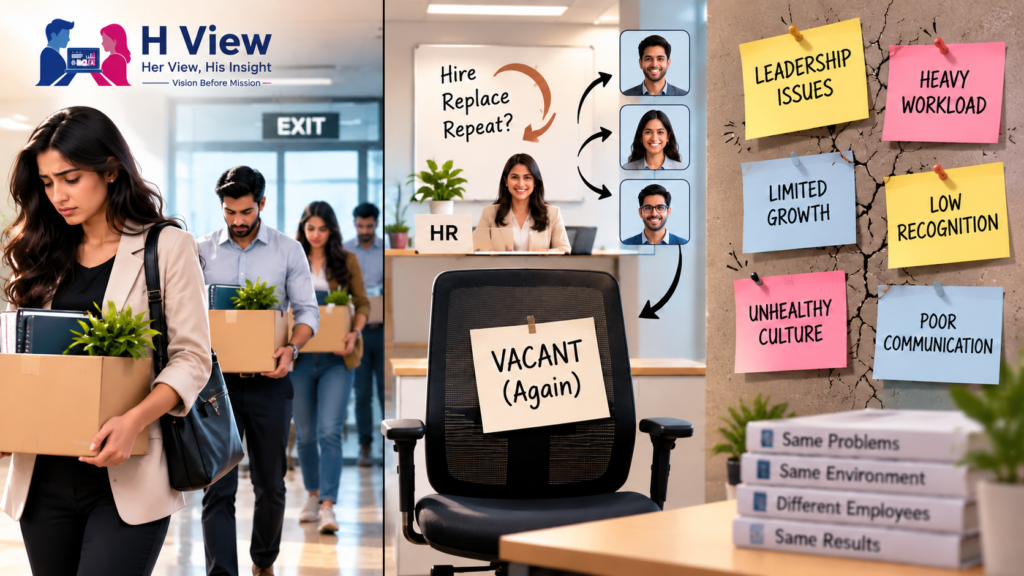
When an employee resigns, many organisations move quickly into replacement mode. The manager informs HR,…
Harika October 6, 2026 
For many corporate employees, the workday begins long before they actually start working. They wake…
Harika October 5, 2026 
Many projects begin with an assumption that sounds reasonable on paper: the client will explain…
Harika October 1, 2026