

Best Digital Marketing Tools in 2026: What Marketers Actually Need and What They Can Skip
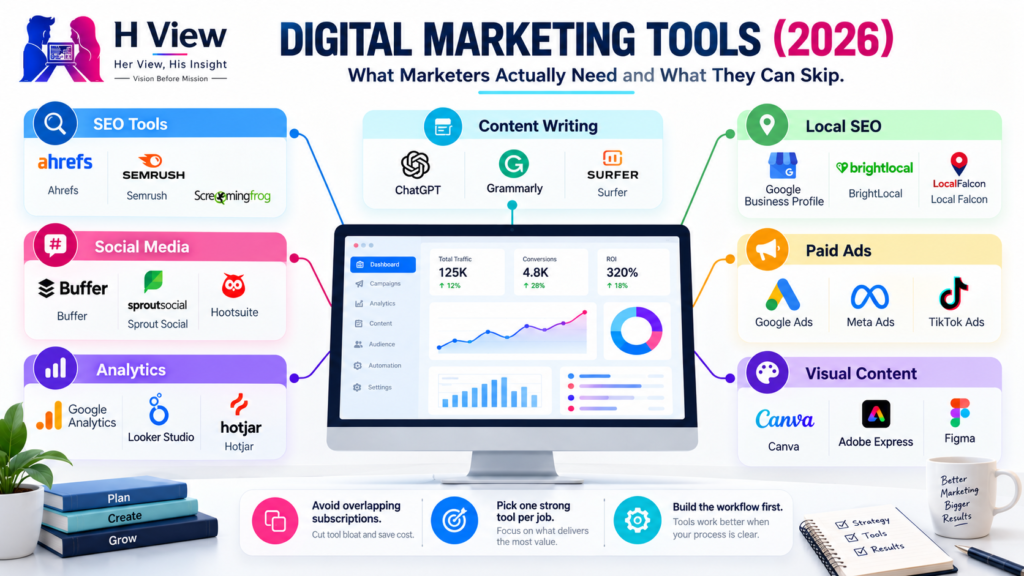
Open LinkedIn for a few minutes and you will probably come across a colourful graphic…
 Harika October 6, 2026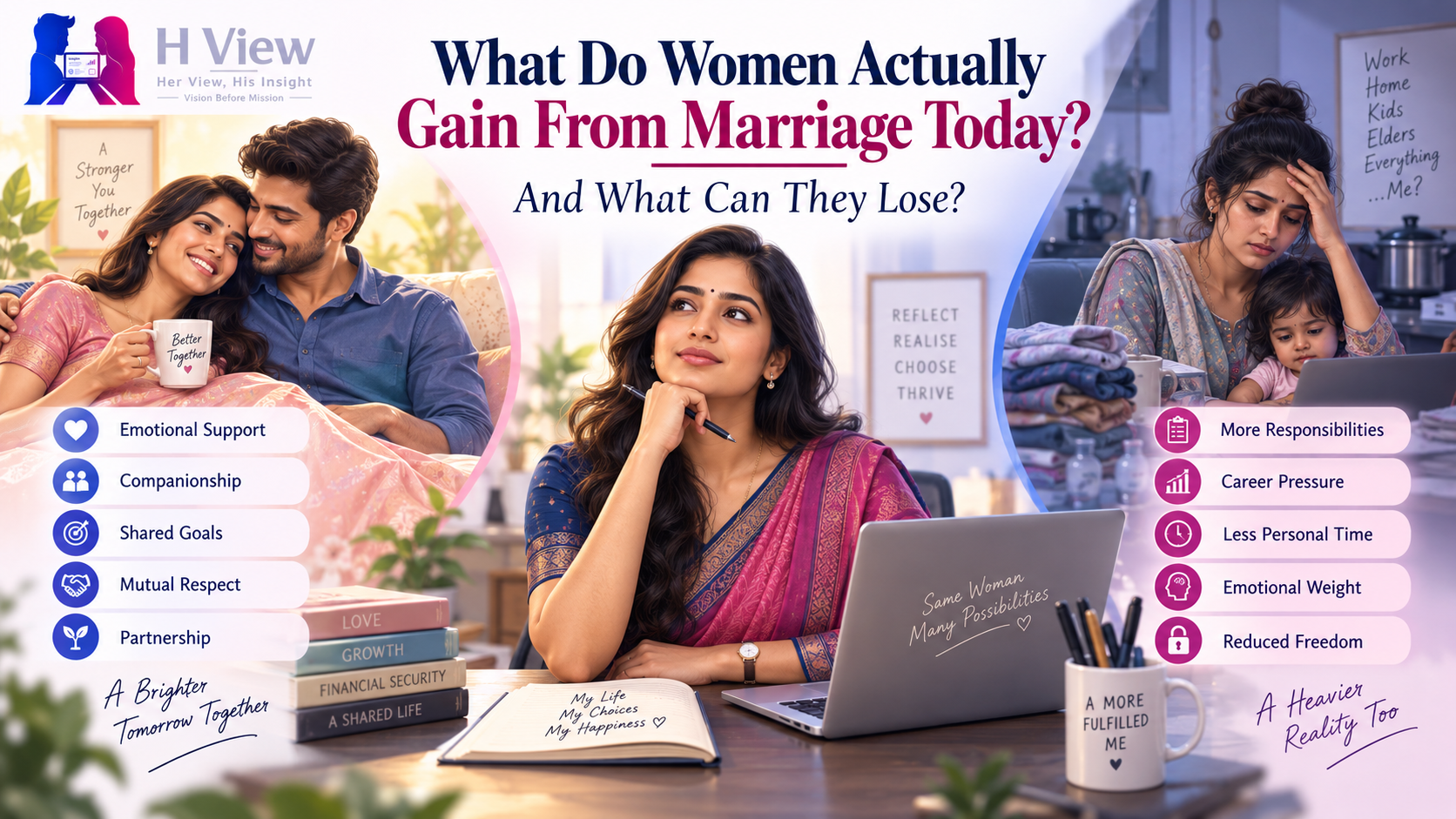
 By AnnapurnaUpdated September 21, 202613 min read25 views
For generations, women were rarely encouraged to ask what marriage would add to their lives. Marriage itself was presented as the achievement: finish education, find a suitable partner, build a family, and adjust to whatever followed. Whether the marriage increased a woman’s peace, independence, opportunities, emotional security, or quality of life was often treated as a secondary question.
That assumption is becoming harder to maintain. More women today are educated, financially independent, professionally ambitious, socially connected, and capable of building meaningful lives before marriage. A recent discussion around changing relationship expectations in India captured the shift through a simple question increasingly being asked by women: What does marriage actually add to the life I already have? Financial independence does not necessarily make women anti-marriage; it gives them greater freedom to examine the quality of the partnership rather than treating marriage as an economic necessity or social deadline.
That makes the modern conversation about marriage more interesting and more demanding. A good marriage can offer companionship, emotional safety, shared responsibility, family, intimacy, economic cooperation, and a dependable life partner. An unequal marriage, however, can cost a woman time, autonomy, career opportunities, financial independence, friendships, personal space, and sometimes the identity she spent years building.
The institution itself does not guarantee either outcome. The quality of the relationship determines whether marriage becomes an expansion of a woman’s life or a gradual narrowing of it.
Financial independence is important, but independence and companionship are not competing ideas. A woman can support herself and still want a partner with whom she can share uncertainty, celebrations, illness, parenting, family responsibilities, everyday decisions, and the ordinary moments that make up most of adult life.
In a healthy marriage, companionship goes beyond simply having another person in the house. It means having someone who knows the context behind a difficult workday, recognises when something is wrong without requiring an elaborate explanation, participates in major decisions, and remains emotionally present during periods when life is complicated rather than enjoyable.
Research on marriage and health illustrates why relationship quality matters. Studies have found associations between happy, supportive marriages and better psychological and physical health, although researchers caution against assuming that marriage automatically causes these benefits. People who enter and remain in healthier relationships can differ from those who do not, and the transition into marriage does not improve every health measure equally.
This distinction is essential. The benefit is not merely having the legal title of husband and wife. The benefit comes from the quality of the partnership inside that title.
When marriage works as an equal partnership, its advantages can be substantial. These gains are not exclusive to women, but they can be especially meaningful in societies where women have historically been asked to sacrifice more within marriage.
A healthy marriage can provide several forms of value:
These are meaningful gains, and they help explain why marriage continues to matter even when women no longer need it purely for financial survival.
The difficult part of this discussion begins when marriage adds responsibilities more quickly than it adds support. A woman may enter marriage with a career, salary, friendships, routines, financial habits, family relationships, and personal ambitions, yet gradually discover that she is expected to reorganise most of them around her new household.
The losses do not always happen dramatically. They can accumulate through apparently small adjustments: moving because his job requires it, skipping a promotion because travel is difficult, reducing friendships because weekends are occupied by family obligations, handing over financial decisions, doing more housework because she is considered better at it, or postponing personal goals because there is always something more urgent for the family.
One compromise may be entirely reasonable. The problem develops when the same person is repeatedly expected to compromise.
India’s Time Use Survey 2024 offers an important reality check. Among people aged 15–59, 83.1% of women participated in unpaid domestic services on normal days compared with 26.4% of men. Among participants, women spent an average of 305 minutes a day on unpaid domestic work, compared with 86 minutes for men. Women also spent about 140 minutes on unpaid caregiving among participants, compared with 74 minutes for men.
Those figures do not mean every marriage is unequal, and they do not isolate married women specifically. They do, however, demonstrate the wider gender pattern within which many marriages operate. When a woman enters marriage, she often enters a society where domestic work is still strongly coded as female responsibility.
That imbalance changes what marriage costs in practical terms. If both partners work professionally but one person routinely contributes several additional hours of cooking, cleaning, caregiving, planning, and household organisation, then their experiences of the same marriage are structurally different.
| Area of life | In a healthy, equal marriage | In an unequal marriage |
|---|---|---|
| Emotional life | Companionship, trust and emotional safety | Anxiety, loneliness or constant emotional management |
| Career | Partner supports growth and shares adjustment | Woman becomes the default career sacrificer |
| Money | Shared planning with individual financial agency | Financial control or dependence |
| Household | Responsibility is distributed between adults | Domestic work becomes primarily her responsibility |
| Family | Wider support network and meaningful relationships | Pressure to prioritise one family over her own |
| Parenthood | Shared caregiving and decision-making | Mother becomes the permanent default parent |
| Identity | Marriage adds another role to her life | “Wife” or “mother” begins replacing other identities |
| Time | Responsibilities and rest are negotiated fairly | Personal time progressively disappears |
| Freedom | Decisions are discussed between equals | Permission slowly replaces partnership |
The table exposes why two women can describe marriage in completely opposite ways without either necessarily being wrong. They may be experiencing fundamentally different versions of the institution.
Historically, marriage provided women with forms of economic security because opportunities for independent education, employment, property ownership, and investment were significantly more restricted. That economic dependence also made leaving harmful marriages extremely difficult.
The situation is changing. Indian women are increasingly participating in budgeting, investing, SIPs, mutual funds, retirement planning, entrepreneurship, and independent financial decision-making. Current financial coverage reflects a noticeable move away from viewing women’s money only through traditional assets such as gold toward broader wealth creation and personal financial goals.
For financially independent women, marriage therefore needs to offer something more sophisticated than simply “someone who earns.” A genuine economic partnership might mean two people building assets together while each retains knowledge of household finances, access to personal money, savings in her own name, appropriate insurance, retirement planning, and the ability to make financial decisions.
Marriage should strengthen financial security, not exchange independence for dependency.
A marriage may look financially stable while quietly becoming economically expensive for the woman. If she relocates for her husband’s career, takes repeated breaks for childcare, refuses promotions because household responsibilities cannot be redistributed, or leaves employment entirely, the cost is larger than the salary she loses during that period.
She can also lose increments, promotions, retirement contributions, professional networks, confidence, seniority, and future bargaining power. Years later, the household may have benefited from her unpaid labour while her individual financial position becomes weaker.
This is why couples should discuss career expectations before major decisions rather than assuming one career will naturally receive priority. The decision may still be for one partner to pause work, but it becomes materially different when that decision is explicit, jointly evaluated, financially protected, and open to either spouse rather than predetermined by gender.
Another loss is less measurable but equally important: identity. Some women find themselves gradually reduced to relational descriptions after marriage. They become somebody’s wife, somebody’s daughter-in-law, and later somebody’s mother, while the parts of their identity connected with friendship, creativity, profession, learning, travel, solitude, or personal ambition receive less space.
A strong marriage should not require this contraction. Adults naturally change after forming a family, but growth is different from erasure. A woman should be able to love her husband deeply, care for her children, respect her extended family, and still remain recognisably herself.
The same principle should apply to men. Healthy marriage asks both people to grow into partnership; it should not demand that one person disappear into it.
When marriage was closely tied to economic survival and social legitimacy, the question “What do I gain?” had an obvious answer. Marriage could offer financial support, social acceptance, a recognised route to motherhood, and long-term security in a society where independent alternatives were limited.
Women with education, careers, their own income, independent friendships, investments, and established lives approach the question differently. Recent Indian reporting documents women in their 30s and 40s increasingly considering singlehood a legitimate life choice rather than evidence that something has gone wrong. The important change is not necessarily rejection of marriage; it is the decline of marriage as an unquestioned deadline.
That raises the standard for partnership. When a woman can already provide herself with financial stability, housing, friendship, travel, and independence, marriage must increasingly justify itself through qualities that money cannot purchase: trust, intimacy, companionship, shared responsibility, emotional safety, and building something together.
Rather than discussing marriage only through weddings, salaries, family backgrounds, and compatibility in broad terms, couples can examine how the relationship will work in ordinary life. These conversations may feel uncomfortable before marriage, but discovering major differences afterward is usually more difficult.
Useful discussions should include the following:
These conversations cannot predict every problem, but they reveal whether both people imagine marriage as a partnership or whether one person expects the other to fit into a pre-existing system.
For a woman who has already built a life, the value of marriage should not be measured by whether she can successfully tolerate more responsibilities. A meaningful marriage should give her a trustworthy companion, emotional security, shared responsibility, and the confidence that building a family will not require abandoning the person she was before it. The important question is therefore not whether an independent woman still “needs” marriage, but whether the particular relationship offers enough mutual value that both lives become stronger together.
Men also benefit when marriage moves away from rigid gender roles because they gain the opportunity to become fuller partners rather than being confined to the traditional role of financial provider. Sharing caregiving, domestic life, emotional responsibility, and decision-making can deepen the relationship between spouses and between fathers and children. Equality does require men to surrender some inherited privileges, but it can replace those privileges with something more valuable: a marriage in which affection is not buried beneath resentment and responsibility is not confused with gender.
The most accurate answer is that she can gain a great deal from the right marriage and lose a great deal in the wrong one. Marriage can bring companionship, intimacy, shared family life, emotional support, economic cooperation, caregiving partnership, and the rare security of building a long future with somebody who genuinely knows you.
It can also cost independence, career opportunities, financial strength, time, personal relationships, emotional peace, and identity when the marriage is organised around unequal expectations. Research itself reinforces the importance of this distinction: being married and being well married are not interchangeable concepts, and the quality of the relationship is central to many of the benefits associated with marriage.
Perhaps this is why the modern question sounds more transactional than earlier generations are accustomed to hearing, even though it is not really about transactions. When a woman asks, “What will marriage add to my life?”, she may not be calculating love like a balance sheet. She may simply be asking whether partnership will mean companionship without erasure, family without automatic sacrifice, commitment without control, and responsibility without losing the freedom she worked hard to build.
A marriage capable of answering those questions positively still has enormous value. The difference today is that more women feel entitled to ask them before saying yes.
Marriage can be highly beneficial when the relationship provides emotional security, companionship, shared responsibility, financial transparency, respect, and room for individual growth. Research linking marriage with better well-being also shows why relationship quality matters; marital status alone should not be treated as proof that a person is healthier or happier.
Financial independence changes what women need from marriage rather than making marriage unnecessary. A financially secure woman may place greater emphasis on emotional partnership, compatibility, shared values, intimacy, family life, and whether the relationship improves the quality of the life she has already built.
Possible losses can include personal time, financial autonomy, career opportunities, friendships, privacy, mobility, and a sense of individual identity when expectations are unequal. These losses are not inevitable consequences of marriage; they depend heavily on household structure, partner behaviour, family expectations, and the woman’s ability to participate equally in decisions.
Greater education, employment, financial independence, and social autonomy have given women alternatives that previous generations often lacked. As a result, marriage can increasingly be evaluated as one possible life choice rather than an unavoidable requirement for financial security or social legitimacy.
There is no universal answer because the meaningful comparison is not simply “single versus married.” A satisfying independent life may be healthier than an unequal or harmful marriage, while a supportive marriage may provide forms of intimacy, companionship, and shared life that a particular individual deeply values.
Equality usually begins with visible practices rather than promises. Couples can share domestic ownership, protect both careers, maintain financial transparency, divide caregiving, respect both families, preserve individual time, and make significant decisions through discussion rather than allowing gender expectations to decide automatically.
Annapurna is an H View contributor covering relationships, family, lifestyle, entrepreneurship, and everyday decision-making. Her articles focus on emotional clarity, practical understanding, and human-centered perspectives that help readers think better about personal and professional situations.
Share your real experience and help other readers decide better.
No community views yet. Be the first to share yours.
Open LinkedIn for a few minutes and you will probably come across a colourful graphic…
Harika October 6, 2026 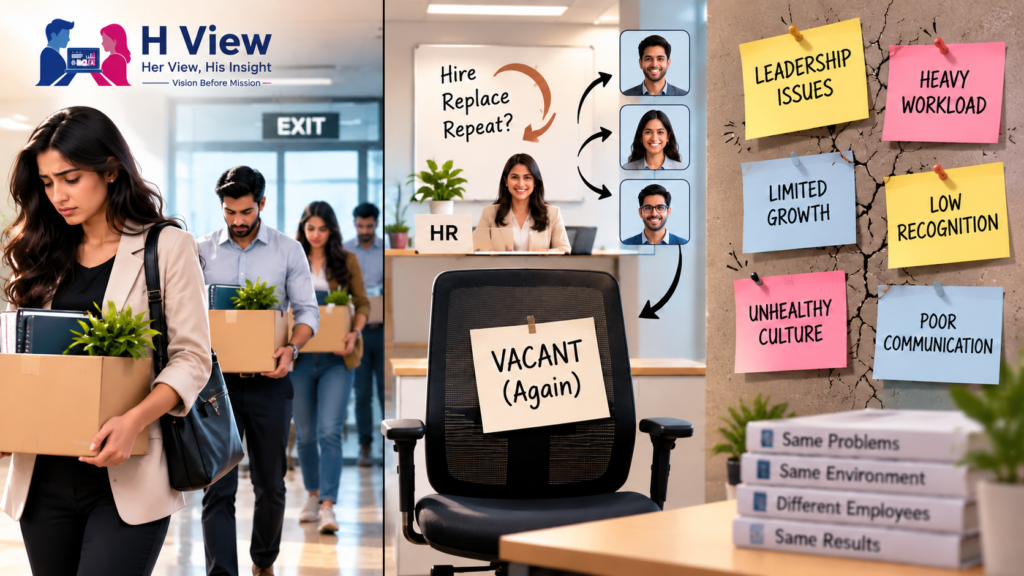
When an employee resigns, many organisations move quickly into replacement mode. The manager informs HR,…
Harika October 6, 2026 
For many corporate employees, the workday begins long before they actually start working. They wake…
Harika October 5, 2026 
Many projects begin with an assumption that sounds reasonable on paper: the client will explain…
Harika October 1, 2026