


H View
  • Home
  • About
  • Blogs
  • Categories
    • AI
    • Tech
    • Lifestyle
    • Business
      • Money
    • Sports
  • Reviews
  • Contact
Connect With Us
H View
  • Home
  • About
  • Blogs
  • Categories
    • AI
    • Tech
    • Lifestyle
    • Business
      • Money
    • Sports
  • Reviews
  • Contact
Connect
Relationships

Why Do Women Stay in Relationships Even When They Know They’re Unhappy?

☆☆☆☆☆No reader ratings yet
By AnnapurnaUpdated August 26, 202611 min read5 views

From the outside, the answer can look simple: if a relationship is making you unhappy, leave.

From the inside, it is rarely that simple.

A woman may know that something is wrong long before she is ready to end the relationship. She may cry after arguments, feel lonely beside her partner, complain to friends, and even admit to herself that she is not happy. Yet she still stays. Sometimes for months. Sometimes for years.

That does not mean she is weak, confused, or unaware of what is happening. Relationships are emotional, practical, financial, social, and psychological at the same time. Leaving one can mean losing far more than a partner. It can mean changing a home, daily routine, financial situation, friendships, family expectations, and the future she once imagined.

That is why many women do not stay because they cannot see the problem. They stay because leaving can feel like tearing apart an entire life.

The Relationship Is Not Bad Every Day

One reason unhappy relationships are difficult to leave is that they are rarely unhappy all the time.

There may still be good mornings, affectionate messages, enjoyable trips, inside jokes, physical closeness, and moments when the relationship feels exactly like it did in the beginning. After a painful argument, a partner may apologise, become loving again, and promise that things will improve.

Those good periods matter. They remind a woman why she fell in love and make the relationship feel repairable.

This creates a complicated emotional situation. She is not choosing between a completely bad relationship and a completely peaceful single life. She is choosing between a relationship that hurts her sometimes and one that still gives her love, history, familiarity, and hope at other times.

That mixture can make leaving much harder than outsiders expect.

She Keeps Hoping He Will Change

Hope is one of the strongest reasons people remain in unhappy relationships.

A partner may not have been like this in the beginning. Perhaps he was more affectionate, attentive, patient, or supportive. When the relationship changes, she may continue comparing the present version of him with the person she first knew.

She may believe that stress is responsible. Maybe work has been difficult. Maybe family problems are affecting him. Maybe he is struggling emotionally. Maybe once this phase passes, things will return to normal.

Sometimes people genuinely do improve. Relationships can recover after difficult periods when both people recognise the problem and work on it.

The danger is when hope becomes based only on promises.

If the same issue has been discussed repeatedly and nothing changes, waiting for the old version of the relationship to return can keep someone emotionally stuck for years.

Starting Over Can Feel Terrifying

Leaving does not only mean ending something painful. It also means entering something unknown.

A woman who has spent five, eight, or fifteen years with someone may struggle to imagine life without that person. Their routines are connected. Their friends may overlap. Families know each other. Holidays, weekends, finances, and future plans may all have been built around the relationship.

Starting again can feel exhausting.

She may wonder whether she will find someone else, whether dating will be worse, or whether she will regret leaving. If she is approaching 30 or has crossed it, social pressure can make these fears even stronger. She may hear comments about age, marriage, children, or how difficult it will be to “start from zero.”

Sometimes familiar unhappiness feels less frightening than unfamiliar possibility.

Time Invested Makes Walking Away Feel Like Failure

The longer a relationship lasts, the harder it can become to accept that it may not work.

A woman may think about all the years she has already given, the compromises she made, the arguments she survived, and the future she planned. Leaving can make those years feel wasted.

This is where people can become trapped by the belief that staying longer will somehow justify the time already spent.

But time does not become more valuable simply because more of it is added.

Five difficult years do not become a good investment because you stay for another five.

The healthier question is not, “How much have I already put into this relationship?” It is, “If nothing changes, do I want this relationship to look the same five years from now?”

That question can be uncomfortable, but it often reveals more than looking backward.

Financial Dependence Can Make Leaving Much Harder

Not every unhappy relationship is easy to exit practically.

A woman may depend on her partner financially, especially if she left work, moved for marriage, took a career break, or became the primary caregiver for children. Even women who work can be financially tied through rent, loans, property, school fees, or shared expenses.

Leaving may require finding a new home, paying deposits, managing childcare, changing schools, or rebuilding savings.

These are not small concerns.

It is easy to tell someone to leave when you are not the person calculating where she will live next month.

Financial independence can give women more choice, but many women still find themselves in relationships where emotional unhappiness is mixed with practical dependence. That can delay a decision even when the relationship is no longer fulfilling.

Children Can Change the Decision Completely

For mothers, the choice becomes even more complicated.

A woman may worry about how separation will affect her children. She may fear disrupting their home, school, routines, or relationship with their father. She may also face pressure from family members who believe staying together is always better for children.

These concerns can keep women in relationships long after emotional connection has disappeared.

However, children do not experience family life only through whether their parents remain married. They also notice tension, silence, disrespect, fear, and emotional distance.

The question is therefore not simply whether parents stay together. It is what kind of environment the relationship creates.

There is no easy answer for every family, but staying “for the children” does not automatically make the home healthier.

Family and Social Pressure Still Matter

In many families, especially in India, ending a serious relationship or marriage is not treated as an entirely private decision.

Parents may ask what people will say. Relatives may encourage more adjustment. A woman may be told that every marriage has problems or that she should think carefully before bringing shame or difficulty to the family.

She may also worry about being judged as someone who “could not make the marriage work.”

That pressure can become powerful when combined with fear of being single later in life.

Even when society has become more accepting of separation and divorce, judgement has not disappeared. For some women, staying in an unhappy relationship feels easier than facing questions from an entire social circle.

She May Have Slowly Lost Confidence in Herself

Unhappy relationships can change how a person sees herself.

If a woman is repeatedly criticised, dismissed, blamed, compared, or told that she is too emotional, too demanding, or impossible to please, she may eventually begin to believe some of it.

She might start wondering whether the relationship problem is actually her fault.

This is especially damaging because leaving a relationship requires confidence. You need to believe that your feelings matter, that another life is possible, and that you can manage whatever comes next.

If years of the relationship have reduced that confidence, even recognising unhappiness may not immediately create the strength to leave.

This is why emotional support from trusted people can matter so much.

Loneliness Can Feel Worse Than the Relationship

Some women stay because the idea of being alone feels more painful than being unhappy with someone.

This fear is often strongest when the relationship has become the centre of life. Friendships may have faded. Social routines may be connected to the partner. Most weekends, holidays, and important moments may involve the relationship.

Leaving suddenly creates empty space.

The fear of that emptiness can make a woman tolerate things she would otherwise reject.

Being alone and being lonely are not the same thing, but they can feel similar when a breakup first happens. Someone may stay simply because she cannot yet imagine that temporary loneliness might eventually become peace.

She Still Loves Him

This may be the hardest part for other people to understand.

You can be unhappy and still love someone.

You can recognise unhealthy behaviour and still miss them when they are gone. You can know that a relationship is not working and still care deeply about the person inside it.

Love does not always disappear at the exact moment a relationship becomes unhealthy.

That is why advice like “just stop caring” is rarely useful. Emotional attachment takes time to change. People often have to leave while still having feelings rather than waiting until every feeling has disappeared.

Sometimes the relationship ends before the love does.

She May Be Afraid She Is Giving Up Too Soon

Modern relationship advice sends mixed messages.

One side tells people to leave at the first red flag. Another says strong relationships require patience, forgiveness, compromise, and hard work.

A woman inside an unhappy relationship may struggle to know which message applies to her.

Is this a difficult phase that can improve? Or is this who the relationship has become?

The answer usually becomes clearer when looking at patterns rather than isolated problems. Does the partner listen when concerns are raised? Does behaviour change? Are both people trying? Are apologies followed by effort?

Relationships need work, but one person cannot repair a two-person relationship alone.

Her View

Women are often taught that being patient, understanding, forgiving, and willing to adjust are signs of maturity in a relationship. Those qualities can be valuable, but they become damaging when they require ignoring repeated unhappiness. There is a difference between working through a difficult period and spending years hoping that someone will eventually become the partner you need. Leaving does not always mean love was fake or the entire relationship was a mistake. Sometimes it simply means accepting that loving someone and being able to build a healthy life with them are not always the same thing.

His Insight

It is easy for men to assume that if a woman stays, the relationship cannot be that bad. In reality, someone can remain deeply unhappy while still hoping things will improve, fearing the consequences of leaving, or feeling responsible for holding the relationship together. If a partner repeatedly says that she feels unheard, lonely, disrespected, or emotionally exhausted, those concerns should not be treated as temporary complaints. A relationship becomes stronger when both people respond before one person emotionally reaches the point where leaving feels like the only remaining option.

Staying Does Not Always Mean You Want to Stay Forever

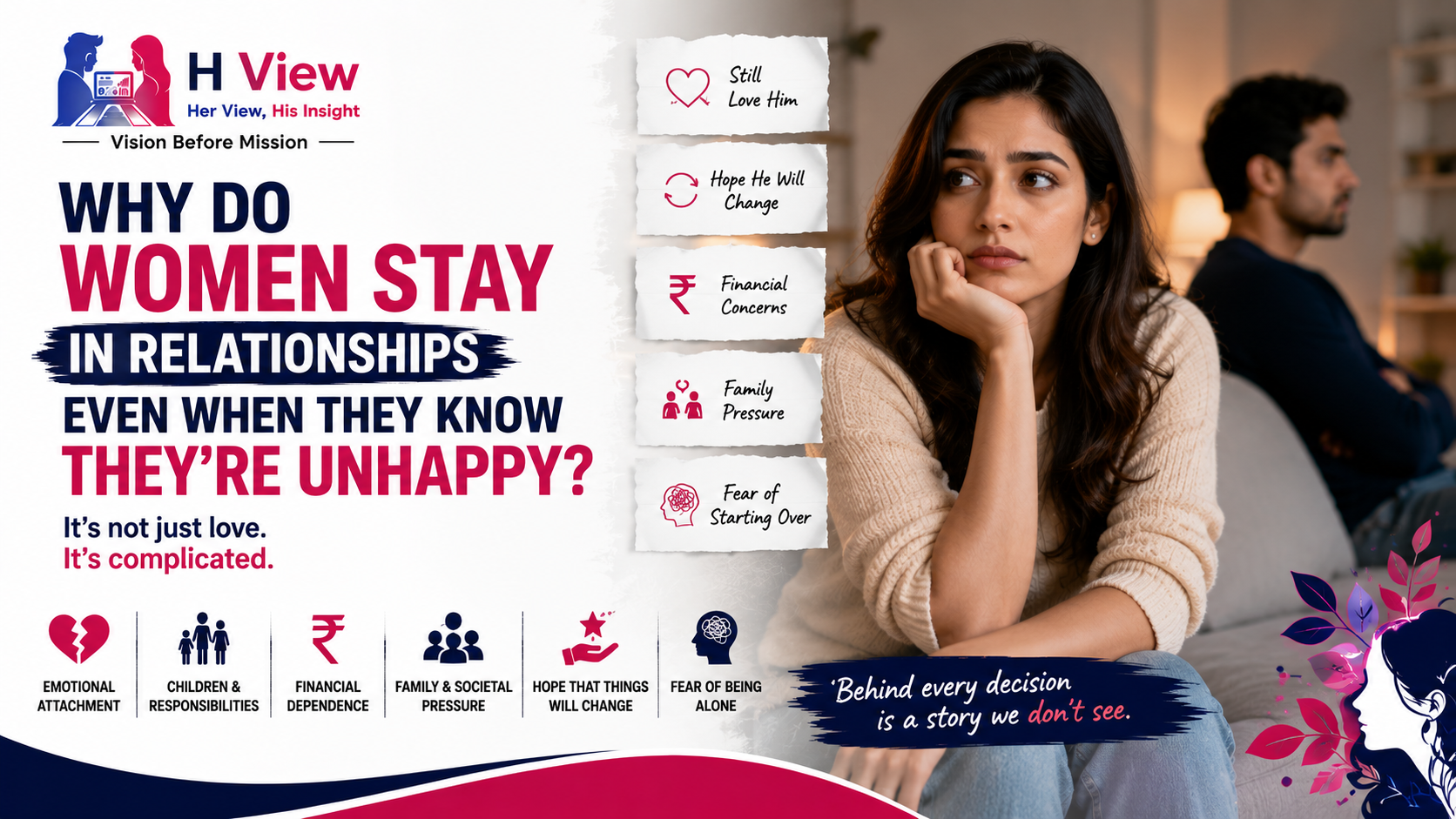
Women remain in unhappy relationships for many different reasons, and those reasons can exist at the same time. Love may still be present. Children may be involved. Money may be complicated. Hope may still exist. Fear may be stronger than confidence.

That is why there is rarely one simple explanation.

What matters is whether the relationship has a realistic path toward becoming healthier. Are both people willing to acknowledge what is wrong? Is there actual change, not just another apology? Does the relationship still make room for dignity, independence, trust, and emotional connection?

There is no shame in trying to repair something important.

But there is also no prize for staying the longest in a relationship that keeps making you unhappy.

Sometimes the hardest decision is not recognising that something is wrong. It is finally believing that your own happiness deserves to be part of the decision too.

Frequently Asked Questions

Why do women stay in unhappy relationships?

Women may stay because they still love their partner, hope the relationship will improve, fear starting over, worry about children, face financial dependence, or feel pressure from family and society. In many cases, several of these reasons exist at the same time.

Can you love someone and still be unhappy in the relationship?

Yes. Love and relationship health are not the same thing. A woman can care deeply about her partner while still feeling lonely, disrespected, emotionally exhausted, or uncertain about the future.

Why is it so hard to leave a relationship you know is unhealthy?

Leaving can mean losing a shared home, routines, mutual friends, financial stability, family connections, and the future you once imagined. Emotional attachment can also remain strong even after someone recognises that the relationship is no longer healthy.

Do women stay in relationships because they are afraid of being alone?

Sometimes. Fear of loneliness, starting over, or not finding another partner can make an unhappy relationship feel safer than an uncertain future. This can be especially strong after a long relationship where much of daily life has become connected to the partner.

Why do women keep hoping their partner will change?

People often remember how the relationship felt in the beginning or focus on periods when their partner is loving and attentive. Promises, apologies, and temporary improvement can strengthen the belief that the relationship may eventually return to its better version.

Can financial dependence keep a woman in an unhappy relationship?

Yes. Housing, childcare, shared loans, reduced career opportunities, or dependence on a partner’s income can make leaving practically difficult. Financial concerns can delay a decision even when the emotional problems are already clear.

Is staying together for the children always better?

Not necessarily. Children can benefit from stability, but they are also affected by constant tension, hostility, emotional distance, and unhealthy relationship patterns. The overall environment matters more than simply whether both parents remain under the same roof.

How do you know when an unhappy relationship is unlikely to improve?

Look at repeated patterns rather than promises. If the same problems continue despite honest conversations, apologies are not followed by change, boundaries are repeatedly ignored, and only one person is trying to repair the relationship, the situation may be more serious than a temporary difficult phase.

Written by

Annapurna

Annapurna is an H View contributor covering relationships, family, lifestyle, entrepreneurship, and everyday decision-making. Her articles focus on emotional clarity, practical understanding, and human-centered perspectives that help readers think better about personal and professional situations.

Topics coveredBusinessH ViewLifestyleRelationships
View all posts by author

Submit Your View

Share your real experience and help other readers decide better.

🔒 Your review may be published after moderation.

Reader Reviews

No community views yet. Be the first to share yours.

8.0Excellent

H View Score

A quick view of our final rating for this review.

✉

Stay Updated with H View

Get the latest reviews and insights straight to your inbox.

🔒 No spam. Unsubscribe anytime.

Trending Reviews

Best AI for Coding in 2026: ChatGPT, Claude, Gemini or Something Else?August 27, 2026Raksha Bandhan 2026: Why Rakhi Is on August 28—and How the Meaning of Sibling Protection Is ChangingAugust 27, 2026One More Attempt—or Time to Move On? The Career Risk of Endless Government Exam PreparationAugust 27, 2026Samsung Galaxy S26 FE Explained: Is the Fan Edition Still Worth Buying in 2026?August 27, 2026Why Are Working Women So Exhausted Even When They’re Doing Everything “Right”?August 27, 2026Eid-e-Milad 2026: Why It Is Observed and What the Day Means Beyond a HolidayAugust 26, 2026Onam 2026: Why Kerala Still Welcomes King Mahabali—and What the Festival Really MeansAugust 26, 2026Why Are Core Engineering Students Moving Away From Their Own Fields?August 26, 2026

Related Blogs

AI

Best AI for Coding in 2026: ChatGPT, Claude, Gemini or Something Else?

A few years ago, asking for the best AI for coding usually meant asking which…

Harika August 27, 2026
Culture

Raksha Bandhan 2026: Why Rakhi Is on August 28—and How the Meaning of Sibling Protection Is Changing

Every year, Raksha Bandhan arrives with a familiar picture: a sister tying a rakhi around…

Harika August 27, 2026
Careers

One More Attempt—or Time to Move On? The Career Risk of Endless Government Exam Preparation

There is a particular kind of career uncertainty that many government-job aspirants understand very well.…

Satya Hemanth August 27, 2026
Gadgets

Samsung Galaxy S26 FE Explained: Is the Fan Edition Still Worth Buying in 2026?

Samsung’s Fan Edition phones have always occupied an unusual place in the Galaxy lineup. They…

Harika August 27, 2026
H View

Honest reviews. Smart ratings. Real insights.

Explore

HomeReviewsBlog

Company

AboutAdvertiseContact

Support

Privacy PolicyTerms & ConditionsDisclaimerEditorial Policy

Subscribe to H View

Get the latest updates and exclusive content straight to your inbox.

🔒 No spam. Unsubscribe anytime.
© 2026 H View. All rights reserved.
HomeReviewsBlogContact