

Best Digital Marketing Tools in 2026: What Marketers Actually Need and What They Can Skip
Open LinkedIn for a few minutes and you will probably come across a colourful graphic…
 Harika October 6, 2026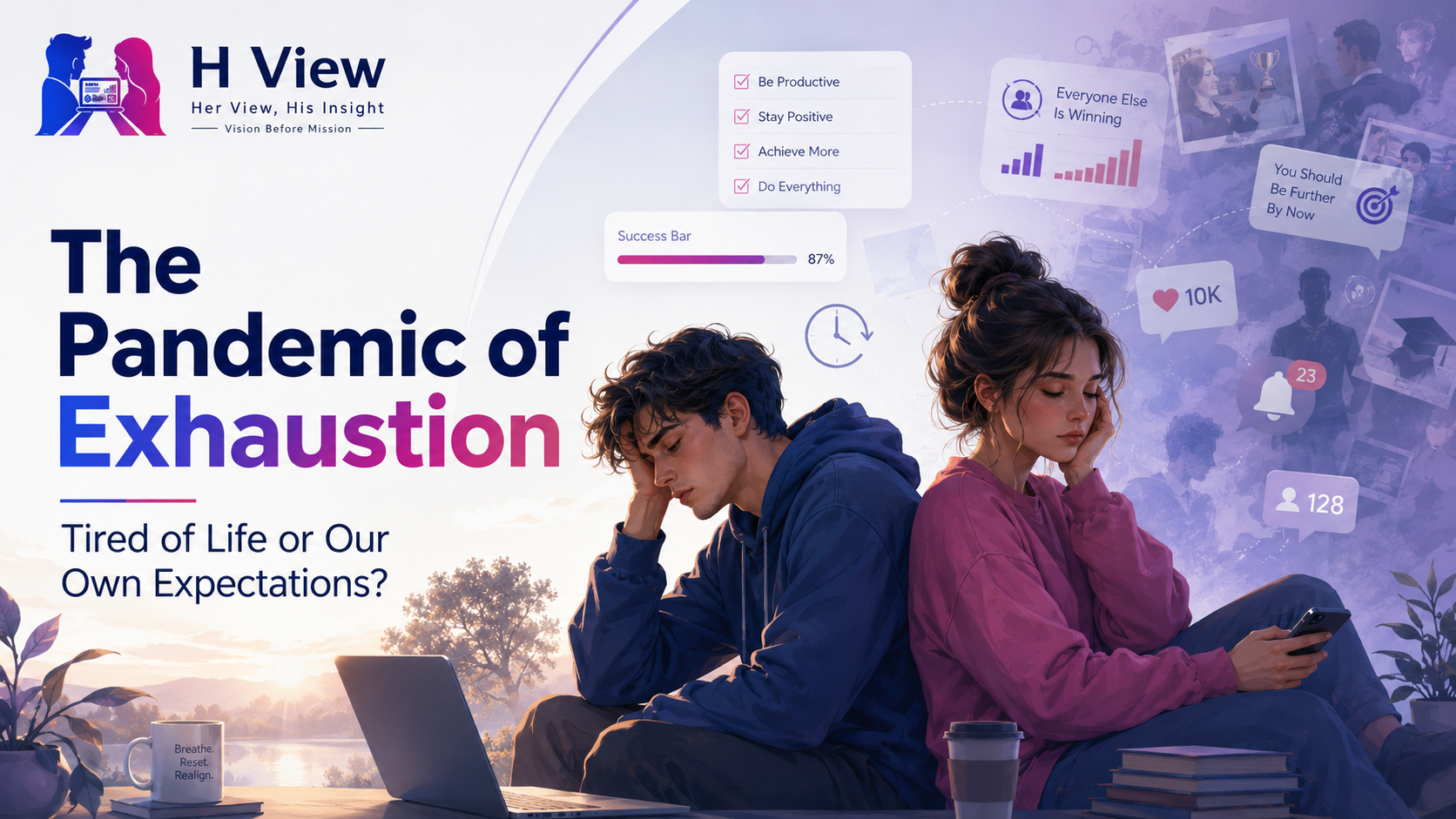
 By Sreedhari PutrevuUpdated September 20, 202615 min read40 views
There is a strange contradiction in modern life. We have more ways to entertain ourselves than almost any generation before us, yet many people still describe themselves as mentally drained, emotionally tired or simply unable to switch off. Food can arrive within minutes, entertainment is available around the clock, travel has become part of lifestyle culture, and a phone can provide an endless stream of videos, conversations, shopping and distraction without requiring us to leave the room.
At the same time, another kind of search has become increasingly visible. People are looking for meditation, therapy, retreats, spiritual spaces, rehabilitation, quieter routines and ways to reduce digital noise. Someone can spend one weekend looking for excitement and the next looking for silence without necessarily seeing any contradiction between the two.
Perhaps there is none. Human beings have always needed both pleasure and rest. The more interesting question is why so many people seem to feel that ordinary rest is no longer enough.
When someone says, “I am exhausted,” the obvious response is to ask what they have been doing. Sometimes the answer is work, caregiving, financial pressure, illness or a genuinely overwhelming schedule. But there are also forms of exhaustion that do not come only from physical activity. They come from continuously comparing reality with an internal picture of how life was supposed to look.
That difference deserves more attention.
Modern life provides remarkably efficient ways to change how we feel for a short period.
A difficult day can be followed immediately by food delivery and a favourite series. Loneliness can lead to hours of scrolling. Frustration can become shopping. Boredom can be removed within seconds by opening a video app. None of these activities is automatically unhealthy, and many are ordinary forms of relaxation.
The problem begins when distraction becomes the only response we know.
If sadness always needs to be silenced immediately, we may never understand what caused it. If every uncomfortable moment is filled with stimulation, patience becomes harder to practise. If validation is available through likes, messages or online attention, ordinary periods when nobody is noticing us may begin to feel strangely empty.
Research on problematic social-media use has found associations with stress, anxiety, depression and other difficulties, although those relationships are complex and do not mean social media alone causes them. Studies of online behaviour also suggest that reward-based features can reinforce repeated checking and make digital platforms especially difficult for some people to disengage from.
The issue therefore is not that pleasure is bad. A life without entertainment, enjoyment or celebration would hardly be healthier.
The more useful distinction is between enjoying something and needing something constantly so that we do not have to sit with ourselves.
There are evenings when watching a film genuinely restores us. There are other evenings when we finish three episodes, scroll for another hour and go to bed feeling more agitated than when we started.
Those experiences look similar from the outside but feel very different internally.
Rest reduces demand. Stimulation often adds more.
A constantly moving feed asks the mind to process another face, another opinion, another tragedy, another success story, another advertisement and another reason to compare. Even positive content can become tiring when there is no pause between one piece of information and the next.
This may explain why silence can initially feel uncomfortable to someone accustomed to constant input. The absence of stimulation creates space for thoughts that were being postponed.
That is one reason meditation, long walks, prayer, retreats and quieter routines can feel so different from entertainment. They are not simply alternative activities. They sometimes remove the layer of distraction that prevents us from noticing what is actually happening emotionally.
For some people, that discovery is peaceful. For others, it can reveal distress that deserves professional help rather than a lifestyle solution.
Many of us live simultaneously in two versions of reality.
There is the life that is actually happening, and there is the life we assumed would be happening by now.
The imagined version may contain a certain salary by 30, a particular kind of marriage, children at a certain age, a successful business, a house, a body that looks a certain way, parents who understand us perfectly or friendships that never change.
Dreams are not the problem. Human beings need goals, imagination and hope.
Difficulty begins when possibility becomes entitlement.
The thought quietly changes from “I hope my life develops this way” into “My life should have developed this way.” When reality moves differently, disappointment then becomes something larger. It can feel as though life itself has gone wrong.
Perfectionism can intensify this process. Psychological research has long distinguished between healthy striving and more harmful forms of perfectionism involving harsh self-evaluation, fear of mistakes and excessive concern about how others judge us. More recent research reported by the American Psychological Association in 2026 also found rising perfectionistic tendencies among young adults and linked maladaptive perfectionism with poorer mental-health outcomes.
The exhausting part is not always the goal.
Sometimes it is continuously measuring ourselves against the version of life we believe we should already have achieved.
Previous generations certainly compared themselves with neighbours, relatives and colleagues. Social media did not invent envy or insecurity.
What changed is the scale.
A person can now wake up and immediately see someone younger buying a house, another person travelling abroad, a former classmate being promoted, a couple announcing a pregnancy and an entrepreneur celebrating a funding round. Within ten minutes, completely unrelated lives can begin feeling like a scoreboard.
The mind rarely pauses to ask what has been edited out.
We see the holiday but not the debt. We see the promotion but not the years of uncertainty. We see the smiling family photograph without knowing what happened five minutes before or after it.
When comparison becomes habitual, our own life may begin to feel slow even when nothing is objectively wrong.
A person can be progressing and still feel behind because the reference point keeps changing.
This is one reason emotional exhaustion cannot always be solved simply by becoming more productive. If expectations rise every time achievement rises, success never produces arrival. It only creates the next standard.
Failure itself can be painful. Losing a business, being rejected from a job, ending a relationship or missing an important goal can have serious emotional and practical consequences.
But many people experience a second layer of suffering created by imagination.
“What will everyone think of me?” becomes attached to the actual loss. “I should have been further ahead” joins the original disappointment. Someone who has lost one opportunity begins mentally constructing an entire future in which everything continues going wrong.
The mind is trying to protect us by forecasting danger, but it can end up repeatedly experiencing disasters that have not happened.
This is where acceptance is often misunderstood.
Acceptance does not mean liking what happened. It does not mean refusing to improve a difficult situation or becoming passive about injustice, health, finances or relationships.
It means beginning from what is real.
You can work hard towards a goal while acknowledging that effort does not guarantee the exact outcome you want. You can love someone while accepting that you cannot control their choices. You can build a business seriously while understanding that markets contain uncertainty.
That mindset is not pessimistic.
It is what makes ambition survivable.
Children receive years of instruction in mathematics, language, science and examinations. They are repeatedly told that effort matters, competition matters and achievement matters.
Those lessons are useful.
What is often missing is equally practical education about losing.
How do you respond when someone says no? What do you do when a friend chooses somebody else? How do you manage anger without humiliating another person? How do you recognise when stress is becoming unmanageable? How do you apologise without turning the apology into a defence of yourself?
These are not soft additions to “real” education. Adults use them constantly.
A person may understand calculus and still be unable to cope with criticism from a manager. Someone may have an excellent degree and no idea how to leave a relationship respectfully. A successful professional may be unable to admit that they feel frightened because they were taught that vulnerability is weakness.
Academic intelligence helps us solve some kinds of problems.
Emotional education helps us remain human while solving them.
It is tempting to frame modern exhaustion as evidence that younger generations simply have less resilience.
That explanation is too convenient.
Young people are growing up inside an environment containing forms of constant connectivity, comparison and information exposure that did not exist at the same intensity for previous generations. At the same time, many face familiar pressures around education, careers, relationships and money.
The environment has changed, so the skills required to manage it also need to change.
Resilience should not mean teaching people to tolerate everything quietly. Sometimes resilience means asking for help early. Sometimes it means leaving an unhealthy situation, changing expectations or acknowledging that the current pace cannot continue indefinitely.
It also means tolerating ordinary discomfort without treating every unpleasant feeling as an emergency that must disappear immediately.
Those are different skills, and both matter.
One part of the original H View idea deserves to be preserved because emotional exhaustion is often discussed differently for men and women.
Men experience rejection, loneliness, fear, grief and insecurity like anyone else, but many grow up receiving messages that emotional expression is incompatible with strength.
That can create a strange situation in which anger becomes one of the few emotions a man feels socially permitted to show openly.
Fear becomes irritation. Hurt becomes silence. Loneliness becomes withdrawal.
Real emotional strength requires more range than that.
A man who can say that something hurt him has not become weak. A husband who can apologise has not surrendered authority. A father who allows his son to cry without mocking him may actually be teaching that child a much more durable form of courage.
Strength is not emotional absence.
It is the ability to experience emotion without making everyone around you responsible for absorbing it.
The opposite problem appears when sacrifice becomes so closely associated with womanhood that exhaustion begins to look normal.
A wife may be expected to adjust continuously because maintaining family harmony is treated as her responsibility. A mother may carry the emotional calendar of the entire household while her labour is described as simply what mothers do.
Sacrifice can be meaningful when it is chosen, recognised and reciprocated.
It becomes damaging when one person’s endless adjustment is considered the natural price of keeping everybody else comfortable.
Healthy families require responsibility to move in more than one direction. Listening cannot be one person’s job. Compromise cannot always come from the same side, and love should not be used to justify humiliation, control or permanent emotional silence.
This is not ultimately a competition between men and women.
It is a question of whether the family has created space for everyone to remain a person.
Children do not need adults to explain every family pattern before they begin absorbing it.
They notice how disagreements end. They notice who is allowed to speak, who apologises and who never does. They notice whether mistakes produce guidance or humiliation.
A child living around unresolved conflict may not understand the details, but they can understand the emotional atmosphere.
This is one reason “breaking the cycle” has become such a powerful phrase in conversations about families. The aim should not be to reverse control so that a different person now holds power. It should be to change the model completely.
Respect replacing humiliation is a change.
Communication replacing silent punishment is a change.
Adults learning to regulate their emotions instead of asking children to manage the atmosphere for them is a change.
Children do not need perfect parents. No such parents exist.
They need adults willing to repair after things go wrong.
There is a version of acceptance that can easily become avoidance.
Someone may say, “This is just how I am,” when what they really mean is that they do not want to change harmful behaviour. Another person may remain in a damaging environment and call it acceptance because leaving feels frightening.
That is not the acceptance being discussed here.
Useful acceptance begins with reality and then asks what responsibility belongs to us.
There are circumstances we cannot control, behaviours we can change, boundaries we can set and help we can seek. Wisdom lies partly in distinguishing between them.
The person who accepts that a business failed can still learn from it and start another. Someone who accepts that a relationship ended can grieve without pretending it never mattered. A person who recognises that they are struggling emotionally can seek professional care instead of treating self-awareness as defeat.
Acceptance should reduce unnecessary war with reality.
It should not reduce our willingness to act where action is possible.
The language of healing has become broad enough that almost anything can now be marketed as healing.
A holiday can be called healing. A skincare routine can be healing. Buying something can be described as healing.
Those activities may be enjoyable, but serious distress often requires something more specific.
Rehabilitation is important when substance use or another destructive pattern requires structured treatment. Therapy and other mental-health services can be appropriate when emotional distress is persistent or affecting daily functioning. Medical problems should be treated medically.
Meditation and spirituality can offer meaning and calm for many people, but they should not be presented as replacements for professional treatment where treatment is needed.
This distinction matters because exhaustion has many causes.
Someone sleeping four hours a night does not necessarily need a motivational philosophy. A person dealing with depression may need clinical support rather than another productivity routine.
Understanding should include knowing when the problem has moved beyond what self-help can reasonably address.
The idea of the home as a healing space is powerful precisely because ordinary family life is where so much emotional strain either grows or softens.
A healthy home is not one where nobody becomes angry, frightened or exhausted.
It is one where people are allowed to say those things without immediately being punished for having them.
A husband can admit that he feels overwhelmed without being mocked. A wife can say that she needs help without being told she is failing. A child can say that something frightened them and expect curiosity before judgement.
Arguments will still happen. People will still occasionally say the wrong thing.
The difference is what happens afterwards.
Repair becomes possible.
When a family can return to a difficult conversation, apologise sincerely and change behaviour, the home stops demanding perfection from the people living inside it.
That may be one of the most practical forms of healing available.
What feels exhausting about modern life is not always how much we physically do. Sometimes it is the constant performance of being fine, successful, grateful and emotionally under control while privately feeling something very different.
Women are often asked to carry several versions of that performance at once. Be ambitious, but remain available to everybody. Be independent, but do not become difficult. Care deeply for the family, but do not appear tired of caring.
Those contradictions can drain a person quietly.
I do not think the solution is to stop caring or stop sacrificing completely. Relationships sometimes require sacrifice from everyone involved. The healthier change is making sure sacrifice is visible, appreciated and never treated as proof that one person’s needs matter less.
A peaceful home should not require one person to disappear inside it.
Men face another version of the same trap.
Many are taught to equate emotional control with emotional silence. That works until the feelings being avoided begin appearing through anger, withdrawal, unhealthy coping or an inability to communicate during difficult moments.
A healthier definition of strength includes emotional literacy.
Being able to identify fear does not make someone less courageous. It gives them a better chance of responding to fear without turning it into aggression. Admitting loneliness makes it possible to seek connection rather than pretending isolation is independence.
The larger lesson is that families become stronger when nobody is required to become emotionally smaller in order to preserve somebody else’s comfort.
This is not a men’s issue or a women’s issue.
It is a human one.
Not necessarily. The World Health Organization defines burnout specifically as an occupational phenomenon associated with chronic workplace stress that has not been successfully managed. General exhaustion can have many other causes, including sleep problems, caregiving demands, physical illness, emotional distress or other forms of prolonged stress.
They can contribute. Perfectionistic thinking and harsh self-evaluation can increase psychological strain, especially when people interpret mistakes or unmet goals as evidence of personal failure. They are only one possible contributor, however, and persistent exhaustion should not automatically be explained through mindset alone.
No. Entertainment can be a normal and healthy way to relax. It becomes more concerning when distraction becomes compulsive, interferes with daily functioning or consistently replaces dealing with problems that need attention.
No. Acceptance means acknowledging current reality while still deciding what can reasonably be changed. A person can accept uncertainty and continue working seriously towards an ambition without assuming that effort guarantees one particular outcome.
They can be meaningful sources of calm, community or purpose, but they are not substitutes for appropriate professional mental-health or medical care when someone needs treatment.
A useful beginning is allowing people to express ordinary emotions without humiliation, sharing responsibility more fairly, apologizing after mistakes, setting respectful boundaries and seeking outside help when family problems have become difficult to manage alone.
Passionate writer, researcher and civil engineer by choice Structural Engineer by profession
Share your real experience and help other readers decide better.
No community views yet. Be the first to share yours.

Open LinkedIn for a few minutes and you will probably come across a colourful graphic…
Harika October 6, 2026 
When an employee resigns, many organisations move quickly into replacement mode. The manager informs HR,…
Harika October 6, 2026 
For many corporate employees, the workday begins long before they actually start working. They wake…
Harika October 5, 2026 
Many projects begin with an assumption that sounds reasonable on paper: the client will explain…
Harika October 1, 2026