

Best Digital Marketing Tools in 2026: What Marketers Actually Need and What They Can Skip
Open LinkedIn for a few minutes and you will probably come across a colourful graphic…
 Harika October 6, 2026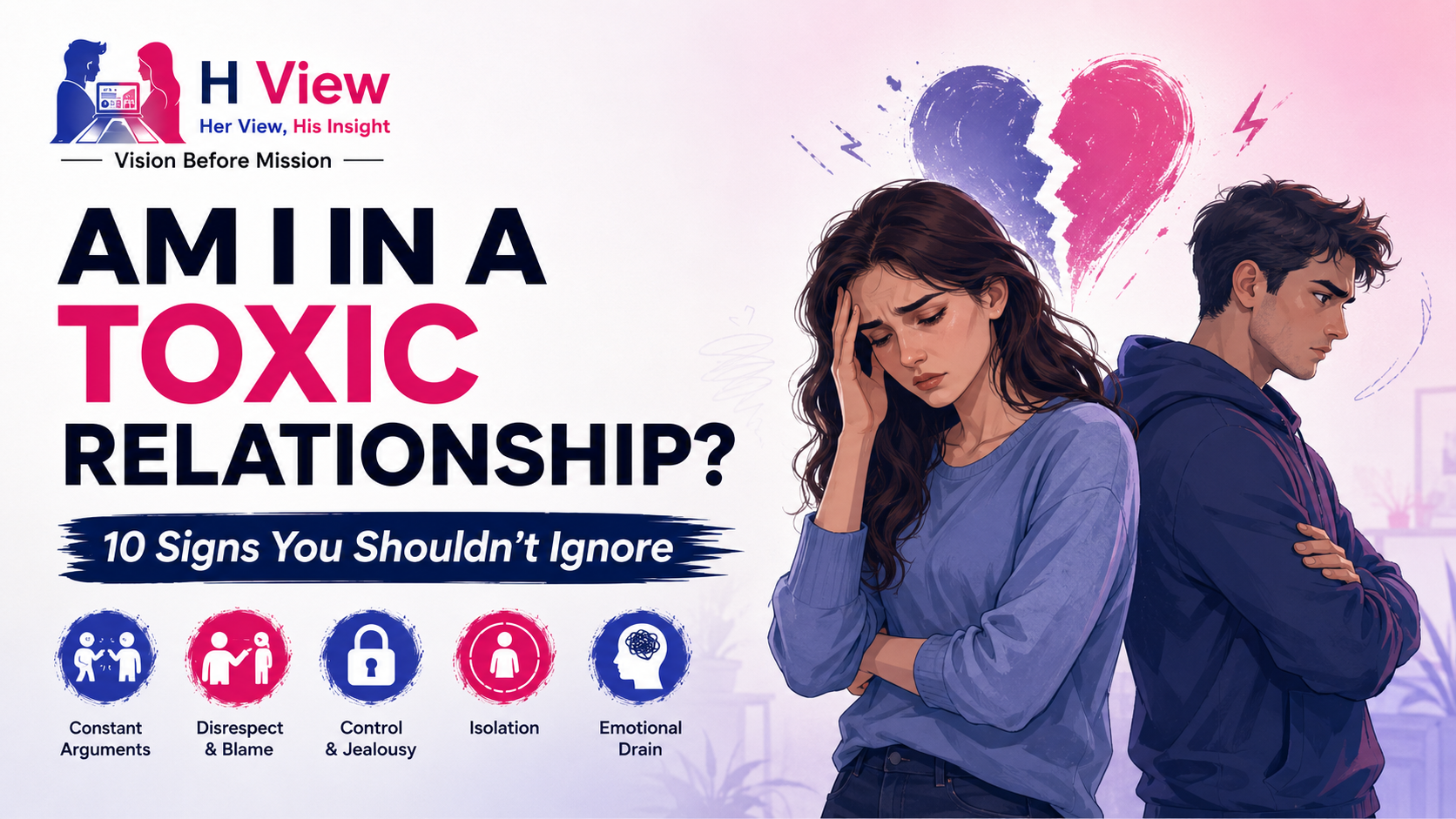
 By AnnapurnaUpdated September 20, 202611 min read37 views
Not every difficult relationship is toxic. Couples argue, misunderstand each other, become irritated, say the wrong thing, and sometimes go through periods where they feel less connected. A bad week does not automatically mean the relationship is unhealthy.
The confusion begins when certain behaviours stop being occasional problems and become the normal atmosphere of the relationship. You start watching what you say, questioning your own reactions, apologising simply to end arguments, or feeling relieved when your partner is not around. What once felt like love may gradually begin to feel like emotional work.
That is why asking, “Am I in a toxic relationship?” can be difficult to answer from inside the relationship itself. Toxic patterns rarely arrive with a clear announcement. They often develop slowly enough that people adjust to them before realising how much their behaviour, confidence, and peace of mind have changed.
Here are ten signs worth taking seriously.
One of the clearest warning signs is feeling that you have to carefully manage your partner’s reactions. You may think twice before bringing up a problem because you know the conversation could quickly become an argument. Even harmless subjects can feel risky if you are unsure what mood your partner is in.
Over time, you may start changing your own behaviour simply to keep things peaceful. You avoid certain friends, hide small mistakes, soften your opinions, or stay quiet about things that bother you. The relationship may appear calm from the outside, but the calm exists because one person has learned to make themselves smaller.
Healthy relationships do require consideration. They should not require constant fear of saying the wrong thing.
Imagine telling your partner that something they did hurt you. Instead of discussing what happened, the conversation suddenly becomes about your behaviour. Perhaps you are called too sensitive, reminded of an unrelated mistake from months ago, or told that they only acted badly because you caused it.
This kind of blame shifting makes problems almost impossible to resolve. You enter a conversation wanting to discuss one issue and leave wondering whether you were wrong for raising it at all.
Nobody behaves perfectly in a relationship, and responsibility is often shared. What matters is whether both people are capable of recognising their part. When one partner is always innocent and the other is always responsible, the relationship stops being a place where problems can honestly be solved.
Arguments reveal a great deal about a relationship. People can disagree strongly and still respect each other, but repeated insults, humiliation, mocking, threats, or deliberately cruel comments are different.
A partner may apologise afterward and claim they were simply angry. Anger can explain why someone lost control, but it does not automatically make everything said during an argument harmless. If the same behaviour happens repeatedly, the apology begins to matter less than the pattern.
Pay particular attention when your insecurities are deliberately used against you. Something you once shared privately should not become ammunition during the next disagreement. Emotional closeness depends on trusting that vulnerability will be treated with care.
Unhealthy relationships sometimes become increasingly closed worlds. It may begin subtly. Your partner dislikes one particular friend or becomes uncomfortable when you spend time with certain people. Eventually, seeing friends or family creates so much tension that avoiding them feels easier.
Not every concern about another person is controlling. Sometimes a partner may have legitimate reasons for disliking someone. The bigger question is whether you still feel free to maintain relationships outside your romantic one.
Isolation makes unhealthy dynamics harder to recognise because you lose outside perspectives. It also makes leaving more difficult if your partner gradually becomes your only significant source of companionship and emotional support.
A loving relationship should add to your life, not quietly remove everyone else from it.
A little jealousy can happen in almost any relationship. The problem begins when jealousy becomes an excuse to monitor, restrict, or interrogate.
Your partner may demand passwords, repeatedly check your phone, question where you were, become angry about harmless conversations, or expect you to stop interacting with certain people. These behaviours are sometimes presented as evidence of deep love, especially early in a relationship.
But trust cannot be built through surveillance.
Constantly proving your loyalty will rarely satisfy someone who believes they need complete access to feel secure. The standard may simply keep moving. Today they want to know who you were texting; tomorrow they may want to decide who you are allowed to speak to at all.
In a healthy relationship, affection naturally rises and falls. People have stressful days, disagreements, and moments when they need space. What becomes concerning is when affection is deliberately removed as punishment.
Perhaps your partner stops speaking to you for days after an argument, refuses affection until you apologise, or becomes warm again only after you give them what they wanted. You slowly learn that closeness depends on staying agreeable.
This can create a powerful cycle. The good periods feel extremely good because they come after days of tension, which makes them feel like proof that the relationship is improving. Then the same conflict returns and affection disappears again.
Love should not constantly feel like a reward you receive for behaving correctly.
Boundaries are not rules for controlling another person. They are ways of communicating what you are and are not comfortable accepting in your own life.
A healthy partner may not love every boundary you set, but they should be able to discuss it seriously. A toxic pattern appears when boundaries are repeatedly mocked, ignored, negotiated after you have clearly said no, or treated as evidence that you do not care enough.
This could involve privacy, physical affection, finances, family involvement, social media, personal space, or how you expect to be spoken to during conflict.
If you find yourself explaining the same boundary repeatedly while nothing changes, the issue may no longer be misunderstanding. It may be that your partner understands perfectly well and simply does not consider your discomfort important enough to respect.
Some couples separate once, reflect, make meaningful changes, and successfully rebuild the relationship. Reconciliation itself is not a sign of toxicity.
A repeated cycle is different.
You argue, break up, miss each other intensely, reunite, enjoy a passionate period, and then return to exactly the same unresolved problems. Nothing important changes between each reunion except the temporary relief of having each other back.
These cycles can become emotionally addictive because the reunion creates such a powerful feeling of closeness. That intensity can be mistaken for evidence that the relationship is uniquely special.
The more useful question is not how strongly you miss each other during a breakup. It is whether the relationship actually becomes healthier when you return.
One of the most revealing questions you can ask is whether you like the person you have become inside the relationship.
Maybe you used to be confident but now constantly question yourself. Perhaps you were social and independent but have gradually withdrawn from everyone. You may notice that you apologise more often, worry constantly, or spend much of your day trying to understand your partner’s mood.
Relationships naturally change us. Ideally, they encourage growth without erasing who we already are.
If maintaining the relationship requires giving up important friendships, ambitions, opinions, hobbies, or parts of your personality, it is worth asking what exactly you are preserving. Staying together should not require disappearing from your own life.
Every relationship deserves context. People behave badly when they are stressed, grieving, overwhelmed, or going through difficult periods. Compassion is part of loving someone.
The danger comes when context becomes a permanent excuse.
You may tell yourself that your partner behaves this way because of childhood experiences, an ex who hurt them, work pressure, insecurity, attachment issues, or because they simply love too deeply. Those explanations can be genuine and still not make the behaviour acceptable.
Understanding why someone hurts you does not require continuing to accept the hurt.
What matters is whether your partner recognises the problem and makes a sustained effort to change it. An apology followed by the same behaviour every few weeks is not the same as progress.
One unpleasant argument should not define an entire relationship. Neither should one jealous moment, one selfish decision, or one day when someone handled stress badly.
Patterns tell you much more.
Ask yourself what happens repeatedly and how those experiences affect you. Do disagreements eventually lead to understanding, or do they leave you feeling frightened and confused? Can both people apologise? Do boundaries improve after they are discussed? Can you be honest without expecting punishment?
Healthy relationships are not perfect. The difference is that problems can usually be addressed without one person losing their dignity in the process.
It can be surprisingly difficult to recognise a toxic relationship when you still love the person. Good memories do not disappear simply because unhealthy behaviour develops, and someone can have genuinely wonderful qualities while still creating a relationship that is damaging to live inside. Pay attention not only to how strongly you love your partner but also to how you consistently feel around them. If maintaining the relationship requires silence, constant reassurance, shrinking your boundaries, or repeatedly forgiving behaviour that never changes, love alone may not be enough to make the relationship healthy.
Men can also struggle to recognise unhealthy relationship dynamics because admitting that a relationship is affecting them emotionally may feel uncomfortable or embarrassing. Control, humiliation, manipulation, jealousy, and emotional punishment are unhealthy regardless of who is experiencing them. Strength is not measured by how much behaviour someone can tolerate before reacting. A mature relationship should allow both people to communicate concerns, maintain boundaries, and retain self-respect without turning every disagreement into a battle over who has more power.
Recognising unhealthy patterns does not mean you have to make an immediate decision based on one article. Start by looking honestly at what has been happening and, where appropriate and safe, discuss specific behaviours rather than simply using the word “toxic.”
See what happens next.
A partner who genuinely wants a healthier relationship may feel defensive initially, but they should eventually be capable of listening, taking responsibility, and changing behaviour. If every conversation produces more blame, intimidation, manipulation, or punishment, that response is information too.
Most importantly, do not judge a relationship only by its best days. Almost every unhealthy relationship has good moments; otherwise, people would rarely struggle to leave them.
Look at the whole pattern. Ask whether you feel respected, free to speak, able to maintain your identity, and emotionally secure enough to be yourself.
A relationship does not need to be perfect to deserve another chance. But it should be healthy enough that loving someone does not require slowly losing yourself.
A toxic relationship is one where unhealthy patterns such as control, manipulation, disrespect, repeated blame, emotional punishment, or ignored boundaries become common rather than occasional. Every couple has difficult moments, but a toxic pattern tends to leave one or both people feeling consistently anxious, diminished, confused, or emotionally drained.
Common signs include constantly walking on eggshells, being blamed for every problem, repeated disrespect during arguments, controlling jealousy, isolation from friends or family, ignored boundaries, affection being used as punishment, and feeling that you are slowly losing your sense of self.
Yes. Many unhealthy relationships also contain affection, attraction, enjoyable memories, apologies, and genuinely happy periods. Those good moments can make it harder to recognise the larger pattern. The important question is not whether the relationship is ever good, but whether the unhealthy behaviour keeps returning without meaningful change.
Yes. A person can genuinely care about you and still behave in ways that make the relationship unhealthy. Love does not automatically create good communication, emotional maturity, respect for boundaries, or accountability. What matters is whether both people are willing to recognise harmful patterns and change them.
No. Occasional jealousy can happen in healthy relationships. It becomes more concerning when jealousy leads to monitoring, controlling friendships, checking phones, demanding passwords, repeated accusations, or restricting what the other person is allowed to do.
Look at repetition and improvement. A difficult phase usually has a clear cause and improves through communication, effort, and compromise. A toxic pattern keeps returning, often with the same disrespect, manipulation, blame, or boundary violations despite repeated conversations.
Some unhealthy relationships can improve when both people honestly acknowledge the problems and make consistent changes over time. Apologies alone are not enough. Real improvement usually shows up through different behaviour, better communication, greater accountability, and respect for previously ignored boundaries.
Start by looking at the pattern rather than one incident and identify the behaviours that are affecting you. If it feels appropriate and safe, communicate specific concerns and observe whether your partner takes them seriously. Support from trusted people or a qualified relationship or mental-health professional can also help you evaluate the situation more clearly.
Annapurna is an H View contributor covering relationships, family, lifestyle, entrepreneurship, and everyday decision-making. Her articles focus on emotional clarity, practical understanding, and human-centered perspectives that help readers think better about personal and professional situations.
Share your real experience and help other readers decide better.
No community views yet. Be the first to share yours.

Open LinkedIn for a few minutes and you will probably come across a colourful graphic…
Harika October 6, 2026 
When an employee resigns, many organisations move quickly into replacement mode. The manager informs HR,…
Harika October 6, 2026 
For many corporate employees, the workday begins long before they actually start working. They wake…
Harika October 5, 2026 
Many projects begin with an assumption that sounds reasonable on paper: the client will explain…
Harika October 1, 2026