

Best Digital Marketing Tools in 2026: What Marketers Actually Need and What They Can Skip
Open LinkedIn for a few minutes and you will probably come across a colourful graphic…
 Harika October 6, 2026
  By HarikaUpdated September 20, 202611 min read57 views
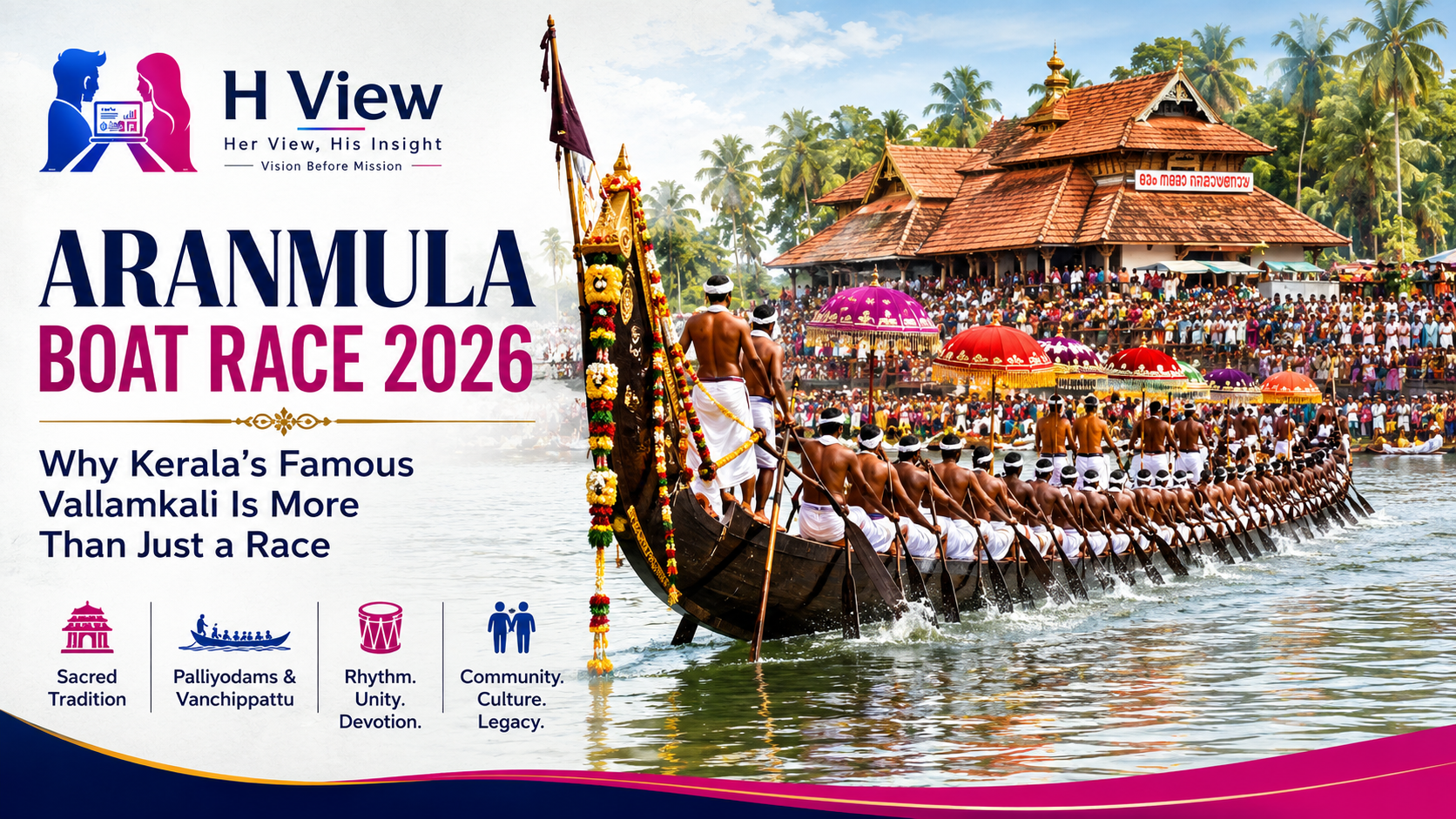
At first glance, the Aranmula Boat Race looks like exactly what its name suggests: long snake boats cutting through the Pamba River, rowers moving in perfect rhythm, drums and boat songs rising above the crowd, and thousands of spectators gathering along the banks to watch the spectacle unfold.
But calling it simply a race misses much of what makes Aranmula special.
The Aranmula Uthrittathi Vallamkali, held in Pathanamthitta district, is one of Kerala’s oldest and most revered boat traditions. Kerala Tourism describes it as a sporting and cultural spectacle unlike other boat races in the state because its history, legends, boats and setting are closely tied to the rituals of the Aranmula Sree Parthasarathy Temple.
In 2026, the festival is being held on August 30, with the ceremonial procession and competitive races taking place on the Pamba River. This year’s programme includes 51 Palliyodams, with 35 in Batch A and 16 in Batch B, and the competitive heats beginning in the afternoon.
Yet the boats are not treated merely as racing machines, and the event is not built only around who crosses the line first. To understand Aranmula, we have to look at the story behind the Palliyodams, the Thiruvonathoni, the songs of the rowers, the temple, and the community that has kept the tradition alive.
Many modern sporting events are easy to understand. Participants enter, rules are set, a winner emerges, and the competition is the main purpose.
Aranmula works differently.
The event is linked to a legend involving a devotee traditionally identified as the Bhattathiri of Kattoor Mangadu Illam. According to Kerala Tourism, he had undertaken to provide the Thiruvonam feast at the Aranmula Parthasarathy Temple. The provisions were carried toward the temple in a special boat known as the Thiruvonathoni.
During one journey, the boat was said to have been attacked, and people from nearby areas came to its assistance in their snake boats. The present-day ceremonial water procession is traditionally connected to the memory of that episode. Over time, the Palliyodams accompanying the sacred boat became part of the festival’s identity, and competitive racing developed alongside the ritual observance.
Whether one approaches that account as sacred tradition, local legend or cultural memory, it explains something that is immediately visible at Aranmula: the boats are participating in a story larger than the race itself.
They are not arriving at the Pamba merely as teams looking for a trophy. They are carrying identities attached to villages, temple tradition and inherited participation.
Kerala is famous for its chundan vallams, the long snake boats that feature in several major races across the state. But the boats used at Aranmula have a distinct identity.
They are known as Palliyodams.
Kerala Tourism explains that Aranmula Palliyodams differ in shape and size from the snake boats commonly associated with Kuttanad. They are relatively larger and taller, and their connection with the Parthasarathy Temple gives them a sacred status within the festival tradition.
That difference changes the way people relate to them.
A racing boat can be judged mainly by speed, design and competitive performance. A Palliyodam represents a local community as well. Preparing it, maintaining it, gathering the crew and appearing at the festival become acts of collective participation.
In 2026, reporting from Aranmula says each Palliyodam represents a different region associated with the area and that the boats remain closely connected with the temple.
That helps explain why victory is important without becoming the only important thing.
The crew is not simply racing for themselves. They are carrying the reputation and participation of the community behind their boat.
Anyone seeing a snake-boat event for the first time may naturally focus on the physical strength required. Dozens of rowers must move together, and a small breakdown in timing can affect the entire boat.
But Aranmula adds another layer through Vanchippattu, the traditional boat songs that organise rhythm and create much of the event’s atmosphere.
Kerala Tourism notes that Aranmula follows its own eastern style of Vanchippattu, with traditional compositions including Kuchelavritham, Bheeshmaparvam and Santhanagopalam.
The songs are not simply background entertainment.
Imagine trying to coordinate a long boat filled with rowers who must repeatedly pull through the water at exactly the right moment. Rhythm becomes practical. The song helps turn dozens of individual movements into one collective action.
That is what makes Vallamkali visually impressive. The beauty comes partly from synchronisation.
A fast boat with rowers moving chaotically would lose something essential to the experience.
This year, that relationship between performance and technique is recognised formally as well. Alongside the competitive trophies, the crew showing exceptional rhythm, song and rowing technique is scheduled to receive the R. Sankar Memorial Trophy.
The presence of such an award says something about what Aranmula values: how the boat moves matters, not merely how quickly it finishes.
The Thiruvonathoni remains one of the most important ceremonial symbols of the festival.
In the 2026 programme, the sacred boat leads the ceremonial procession before the Palliyodams move through the river.
That order is meaningful.
In an ordinary race, the fastest competitors become the centre of attention. At Aranmula, the ceremonial boat associated with the festival’s origin takes precedence before competition begins.
This keeps the event tied to its ritual foundation even as thousands arrive to watch an exciting race.
It is a subtle distinction but an important one. Tourism, media coverage and competitive organisation have made Aranmula more visible over time, but the festival still places a sacred narrative at the front of the spectacle.
That helps prevent it from becoming only another sports event with traditional costumes added around it.
Aranmula is a heritage village on the banks of the Pamba River, and the location is inseparable from the boat race itself.
The event does not happen in a purpose-built stadium where the surroundings could theoretically be replaced. The river, temple, ghats and village are part of the experience.
Kerala Tourism describes the annual Uthrittathi Vallamkali as being celebrated on the Pamba in connection with the Aranmula temple and the traditions of the Malayalam month of Chingam.
When spectators gather along the banks, they are watching a performance unfold in the same physical landscape that gave rise to the tradition.
That geographic continuity matters in culture.
A festival can be copied, televised or recreated elsewhere, but some traditions remain powerful because the place itself carries memory.
This is also why preservation of rivers and heritage spaces matters beyond tourism. When the physical environment changes dramatically, cultural practices attached to it are affected as well.
Protecting a river can therefore become part of protecting an intangible tradition.
Another important part of Aranmula’s cultural world is the Valla Sadya, the ceremonial feast associated with the Palliyodams and the temple.
The 2026 Valla Sadya season runs until September 16, and reporting says hundreds of feasts have already been booked. The larger Ashtamirohini Valla Sadya is scheduled for September 4 at the temple courtyard.
This feast is not a minor side event.
Kerala Tourism describes the Aranmula Valla Sadya as a major expression of community, spirituality and Kerala’s culinary tradition, with a wide variety of dishes served on plantain leaves and Vanchippattu playing a role in the experience.
That broadens the meaning of Vallamkali significantly.
The same cultural ecosystem includes competitive rowing, religious ritual, music, food, hospitality and community organisation.
Modern categories often force us to separate everything: sport belongs in one section, religion in another, food in another and tourism somewhere else.
Aranmula shows how traditional culture frequently refuses those boundaries.
The race is also a ritual. The song is also a rowing technique. The feast is also an offering. The boat is also a community symbol.
That interconnection is part of what makes the tradition difficult to reduce to a simple headline.
It would be incorrect to portray Aranmula as something frozen exactly as it existed centuries ago.
The event is changing.
In 2026, organisers are using digital timing systems for the competitive races, with the fastest boats progressing through heats toward the final.
That is a distinctly modern sporting feature.
There are formal categories, trophies, organised security, traffic arrangements and a programme designed to accommodate major crowds and dignitaries. The Vice President of India is scheduled to inaugurate this year’s festival, showing how nationally visible the event has become.
Purists might worry that increased competition, tourism and technology could gradually overshadow the ritual character.
That concern is worth taking seriously.
But modern organisation is not automatically the enemy of tradition. Digital timing can make competition fairer. Better crowd management can make the festival safer. Wider media coverage can introduce younger generations to cultural practices they might otherwise encounter only locally.
The challenge is maintaining the hierarchy of meaning.
Technology should support the event without rewriting what the event is for.
If future generations remember Aranmula only as “Kerala’s exciting snake-boat race,” something important will have been lost.
For Kerala tourism, boat races are visually perfect.
Long boats, synchronised crews, colourful crowds and the dramatic landscape of the Pamba photograph beautifully. That attracts visitors from India and overseas, and Kerala Tourism itself promotes Aranmula as a major cultural spectacle.
Tourism can support local economies, create employment and give communities another reason to preserve traditions.
But tourism also has a tendency to turn complex culture into easily marketable images.
The visitor sees the boat.
The local participant may see the temple, family history, village honour, inherited songs and a ritual obligation all at once.
Neither experience is necessarily wrong, but they are not identical.
Responsible cultural tourism should therefore encourage visitors to understand what they are watching rather than simply collect photographs from it.
Knowing why the Palliyodams are considered special changes the experience. Understanding the story of the Thiruvonathoni changes it again. Hearing Vanchippattu as part of the rowing tradition rather than generic festival music adds another layer.
The deeper the understanding, the less likely the festival is to become merely spectacle.
A visitor arriving at Aranmula for the first time will naturally notice the boats, but some quieter details deserve attention too.
Watch the way the crew responds to the song. Notice how the boat represents more than the people sitting in it. Observe the ceremonial order before the competitive heats begin. Look at the relationship between the temple, river and gathering crowds rather than treating the Pamba simply as a race track.
And if you see people speaking about a Palliyodam with unusual reverence, understand that they are not treating an expensive sporting object sentimentally.
They are relating to something that carries the identity of their community.
That is the difference between seeing Vallamkali and understanding it.
What makes Aranmula beautiful is that the spectacle never completely separates itself from belonging.
A rower may be performing before thousands of strangers, but behind him is a village that knows the boat by name, families who have watched the tradition for years, songs older than the individual crew and a temple connection that gives the event emotional depth.
That kind of participation is increasingly rare in modern entertainment. We often watch performers with whom we have no personal relationship, consume the event for a few hours and move on.
Aranmula asks people to inherit something.
The most meaningful part may therefore not be seeing which boat wins. It may be watching a community continue to care enough to return to the river year after year.
Aranmula is an excellent example of how traditions survive by adapting without completely surrendering their original structure.
Competition has become more formal. Digital timing has arrived. Tourism has increased. National dignitaries attend. The event now operates on a scale that requires sophisticated administration.
Yet the Palliyodams remain linked to the temple, the ceremonial procession still matters, the Thiruvonathoni retains symbolic importance and Vanchippattu continues to define the rhythm of the boats.
That balance is difficult to maintain.
If tradition refuses every modern change, it risks becoming inaccessible. If modernisation removes all ritual meaning, the tradition becomes a themed sporting event.
Aranmula’s long-term challenge is to remain alive rather than merely preserved.
The Aranmula Uthrittathi Vallamkali is being held on August 30, 2026, on the Pamba River in Pathanamthitta district. This year’s programme includes a ceremonial procession followed by competitive races in the afternoon.
Unlike many other Kerala boat races, Aranmula is closely connected with the rituals and traditions of the Aranmula Sree Parthasarathy Temple. Kerala Tourism describes it as both a cultural and sporting spectacle with distinctive legends, boats and practices.
Palliyodams are the distinctive snake boats associated with Aranmula. They are larger and taller than many other chundan vallams and are traditionally connected with the Parthasarathy Temple and individual communities around Aranmula.
The Thiruvonathoni is the sacred boat associated with the legend of carrying the Thiruvonam feast to the Aranmula temple. The ceremonial procession held today continues to place it at the centre of the festival tradition.
Vanchippattu is Kerala’s traditional boat-song genre. Aranmula follows a distinctive eastern style of boat song that helps create rhythm for rowers while also forming an important part of the cultural performance.
It contains both elements. Competitive races are held and trophies are awarded, but the event remains closely connected to temple rituals, sacred boats, ceremonial procession, traditional music and community practice.
Harika is the co-founder of H View and covers AI, technology, gadgets, digital tools, online platforms, and modern internet trends. Her articles focus on simplifying complex topics with practical explanations, balanced opinions, and reader-first insights.
Share your real experience and help other readers decide better.
No community views yet. Be the first to share yours.

Open LinkedIn for a few minutes and you will probably come across a colourful graphic…
Harika October 6, 2026 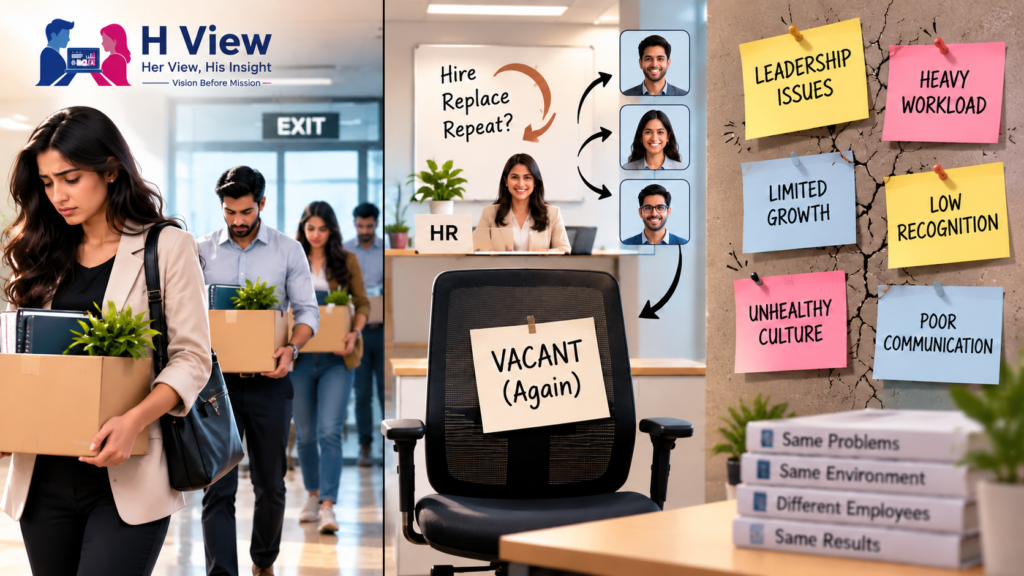
When an employee resigns, many organisations move quickly into replacement mode. The manager informs HR,…
Harika October 6, 2026 
For many corporate employees, the workday begins long before they actually start working. They wake…
Harika October 5, 2026 
Many projects begin with an assumption that sounds reasonable on paper: the client will explain…
Harika October 1, 2026