

Best Digital Marketing Tools in 2026: What Marketers Actually Need and What They Can Skip
Open LinkedIn for a few minutes and you will probably come across a colourful graphic…
 Harika October 6, 2026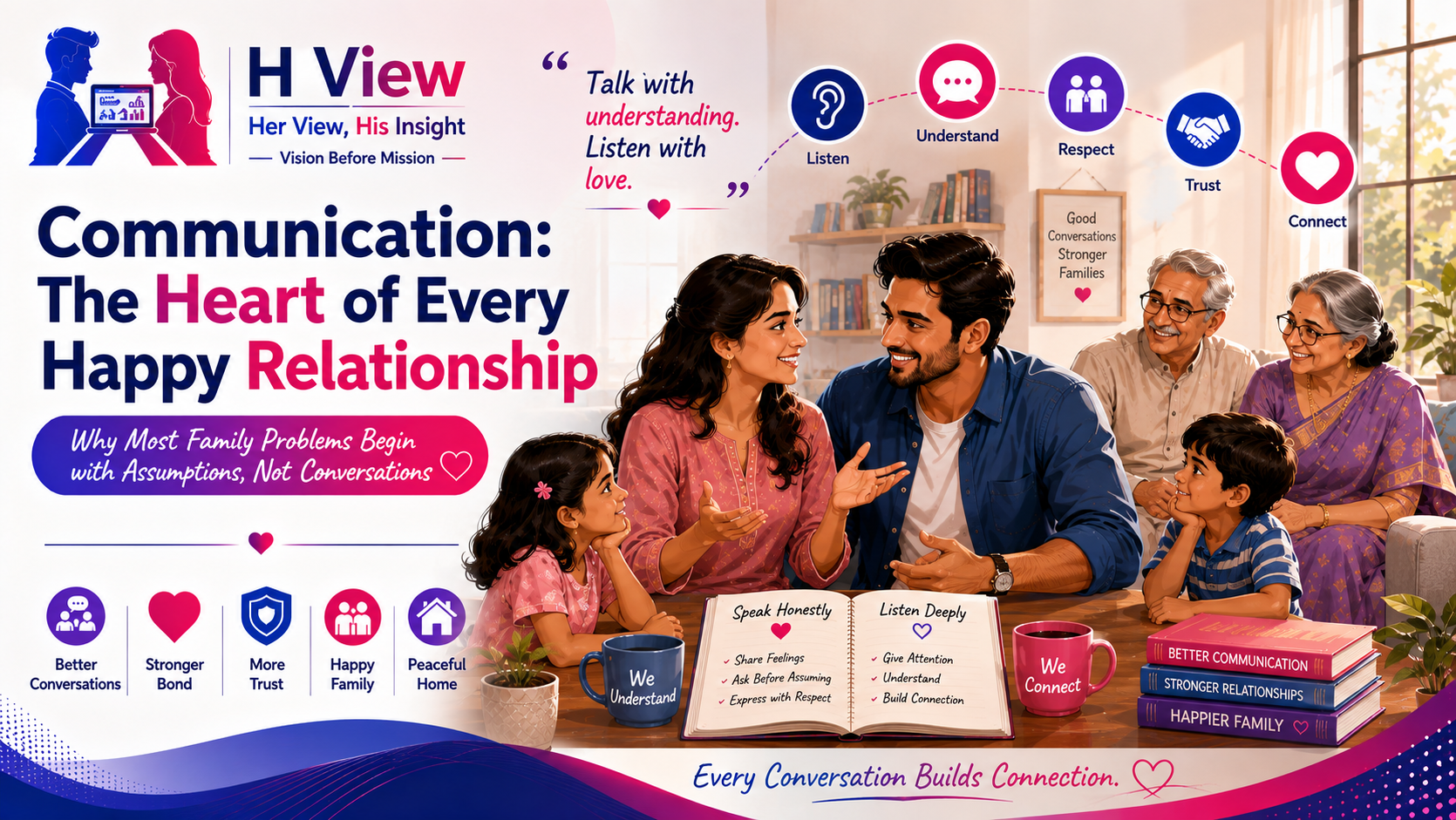
 By AnnapurnaUpdated September 20, 20264 min read110 views
Every relationship begins with communication.
Friendships grow through conversations.
Parents understand children by listening.
Couples build trust by sharing their thoughts.
Families stay connected when they speak honestly with one another.
Yet, communication is also the first thing to disappear when relationships become strained.
Many families don’t stop loving each other.
They simply stop talking to each other in the right way.
Silence replaces conversation.
Assumptions replace understanding.
Arguments replace listening.
Over time, even small misunderstandings become larger than they really are.
Healthy communication is not about talking more.
It is about understanding better.
Every person has different thoughts, emotions, expectations, and experiences.
No one can read another person’s mind.
When people expect others to understand without explaining, disappointment naturally follows.
Simple conversations prevent countless misunderstandings.
Many family problems could be avoided by asking one question:
“Can we talk about this?”
Communication creates clarity.
Silence creates confusion.
Most people listen only to prepare their next answer.
Few listen to truly understand.
Real listening means:
Sometimes people don’t need immediate advice.
They simply need someone willing to listen.
Feeling heard is often the first step toward healing.
Many conflicts begin because people assume rather than ask.
Examples include:
“He didn’t call because he doesn’t care.”
“She looks upset because she’s angry with me.”
“They ignored me intentionally.”
“My parents don’t understand me.”
“My spouse doesn’t value my opinion.”
Sometimes these assumptions are completely wrong.
A simple conversation can prevent days of unnecessary tension.
Ask before assuming.
Marriage becomes stronger when couples communicate openly.
Talk about:
Avoid waiting until frustration becomes anger.
Small conversations today prevent major conflicts tomorrow.
Children should never fear speaking honestly.
Parents who remain calm during difficult conversations encourage honesty.
Instead of asking:
“Why did you do this?”
Try asking:
“What happened?”
“What were you feeling?”
“How can we solve this together?”
Children who feel heard usually become adults who communicate well.
Respectful communication works both ways.
Younger family members should express themselves politely.
At the same time, elders should listen without immediately dismissing modern perspectives.
Different generations have different experiences.
Understanding grows when both sides listen with patience.
Simple words often have a powerful impact.
Say:
These small expressions build emotional security.
Some words leave lasting emotional wounds.
Avoid:
People often forget the argument but remember the words.
Choose language that corrects behaviour without attacking character.
Many women communicate indirectly because they fear being misunderstood or judged.
A healthy family encourages women to express their thoughts openly without labelling them as emotional or disrespectful.
Listening with empathy creates stronger marriages and stronger families.
Many men remain silent because they believe expressing emotions is a sign of weakness.
In reality, honest communication requires courage.
Sharing worries, fears, and dreams strengthens relationships far more than silent suffering.
Practice these habits every day:
Communication should bring people closer, not push them apart.
Healthy communication is not about speaking louder.
It is about listening deeper.
Families become stronger when people feel safe enough to share their thoughts honestly.
Every conversation is an opportunity to build trust or break it.
Choose words that heal, encourage, and unite.
Because in every happy family, communication is not just a habit.
It is the heartbeat of the relationship.
The strongest relationships are built one honest conversation at a time.
Communication builds trust, reduces misunderstandings, and helps family members solve problems together.
Assuming instead of asking. Clear conversations prevent unnecessary conflicts.
Listen without interrupting, discuss issues early, express appreciation, and avoid personal attacks.
Yes. Honest conversations, consistent actions, and mutual respect can rebuild trust over time.
Annapurna is an H View contributor covering relationships, family, lifestyle, entrepreneurship, and everyday decision-making. Her articles focus on emotional clarity, practical understanding, and human-centered perspectives that help readers think better about personal and professional situations.
Share your real experience and help other readers decide better.
No community views yet. Be the first to share yours.

Open LinkedIn for a few minutes and you will probably come across a colourful graphic…
Harika October 6, 2026 
When an employee resigns, many organisations move quickly into replacement mode. The manager informs HR,…
Harika October 6, 2026 
For many corporate employees, the workday begins long before they actually start working. They wake…
Harika October 5, 2026 
Many projects begin with an assumption that sounds reasonable on paper: the client will explain…
Harika October 1, 2026