

Love Doesn’t Keep a Marriage Alive—Daily Habits Do
Lasting relationships aren’t built by grand gestures. They’re built by the small things couples choose…
 Annapurna August 11, 2026
  By AnnapurnaUpdated September 20, 20264 min read41 views
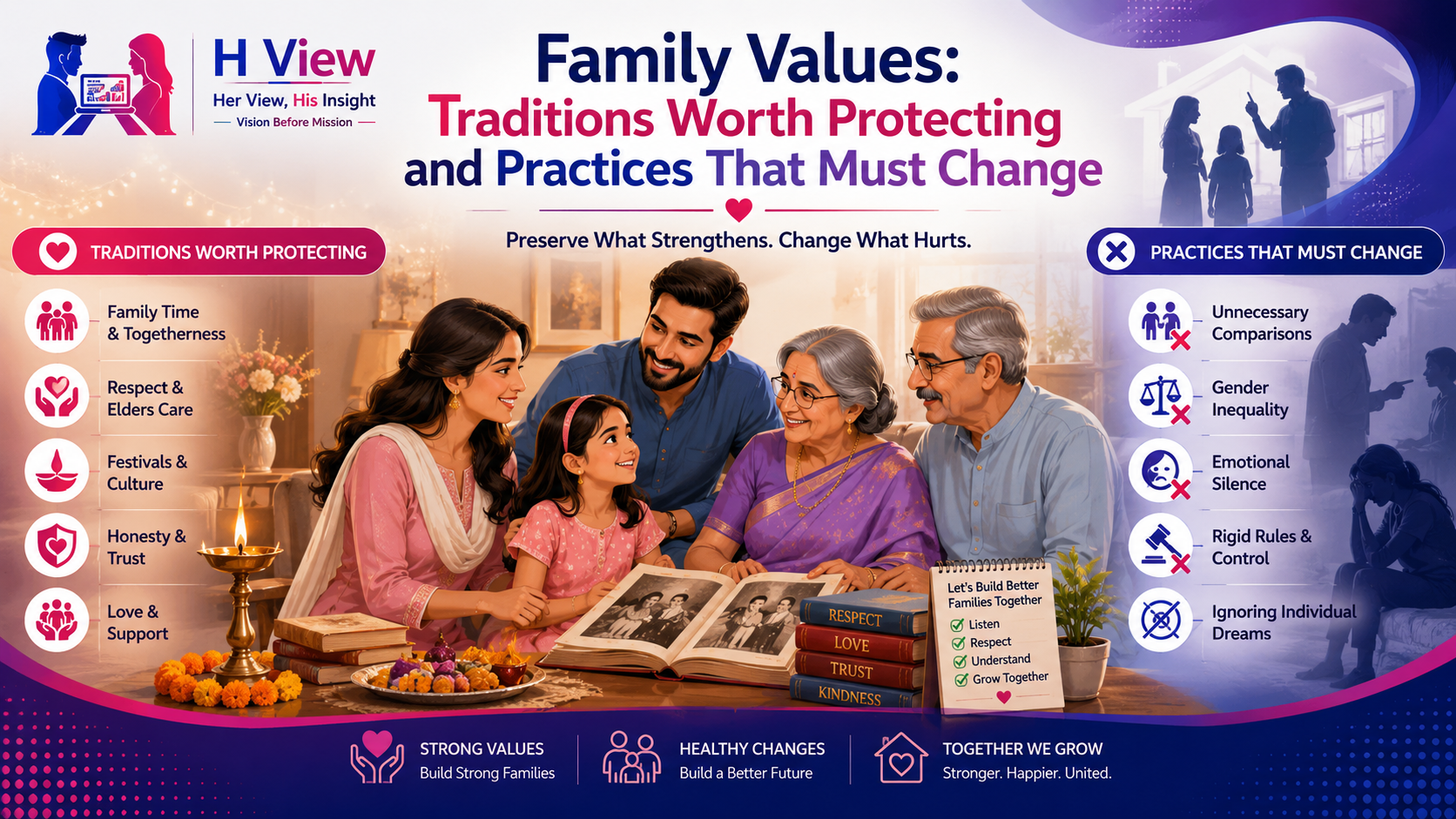
Every family has its own traditions.
Some families gather for festivals. Some eat together every night. Others pray together before starting the day. Many pass down recipes, stories, cultural customs, and celebrations from one generation to the next.
These traditions create identity and belonging. They connect children with their roots and help families stay united.
But every tradition deserves one important question:
Does this tradition strengthen our family, or does it hurt someone in the family?
Not everything that is old is automatically right, and not everything that is modern is automatically wrong.
Strong families preserve values while improving practices that no longer serve love, respect, or dignity.
Family values are the principles that guide how people treat one another.
They influence decisions, behaviour, communication, and relationships.
Healthy family values include:
These values help families remain connected even during disagreements.
They are passed to the next generation not through lectures, but through daily behaviour.
Children learn values by watching adults.
Traditions give families a sense of identity.
They create memories that children often carry throughout their lives.
Simple traditions such as celebrating birthdays together, visiting grandparents, cooking together during festivals, or eating one meal as a family strengthen emotional bonds.
These moments teach children that family is not only about responsibilities but also about togetherness.
Traditions become meaningful when they make every member feel included.
Problems begin when traditions are used to justify unfair treatment.
Some families say:
“This is how it has always been.”
“Our elders followed these rules.”
“Everyone must adjust.”
But traditions should never become an excuse for:
A practice should continue because it brings people closer—not because people are afraid to question it.
There is a difference between protecting culture and protecting harmful habits.
For example:
Teaching children to respect elders is a beautiful value.
Teaching children that they cannot respectfully disagree is unhealthy.
Celebrating festivals together builds unity.
Forcing one person to do all the work while others enjoy the celebration creates resentment.
Helping parents during old age reflects responsibility.
Controlling a married couple’s every decision in the name of family tradition weakens their relationship.
Values unite.
Control divides.
Children rarely remember every instruction they receive.
They remember what they see.
If parents speak respectfully, children learn respect.
If adults apologise after mistakes, children learn accountability.
If family members solve disagreements calmly, children learn healthy communication.
The next generation inherits our behaviour more than our advice.
Many women are told that certain restrictions exist because they are “family traditions.”
Sometimes those traditions preserve culture.
Sometimes they simply continue inequality.
A tradition deserves respect only when it respects every member of the family.
Many men inherit responsibilities from previous generations.
Some continue certain practices simply because they have never questioned them.
A responsible husband and son should ask:
“Does this tradition strengthen my family, or is it causing unnecessary pain?”
Real leadership means protecting values while improving outdated practices.
Every generation experiences change.
Parents may worry that modern thinking will weaken family values.
Young adults may fear that tradition will limit their freedom.
The truth is that families do not have to choose one over the other.
Strong families combine timeless values with thoughtful progress.
Families can preserve their culture while creating healthier relationships.
Keep traditions that create love, unity, gratitude, and belonging.
Change practices that create fear, inequality, or emotional pain.
Encourage respectful conversations between generations.
Allow customs to evolve without losing their meaning.
Teach children values through actions instead of fear.
Remember that family honour is strengthened when every member feels respected.
Traditions should be a bridge between generations—not a barrier between people.
The strongest families are not those that refuse to change.
They are the ones that know what is worth preserving and what is worth improving.
Values should protect people. Traditions should bring people together. Love should always remain greater than custom.
Yes. Healthy families adapt traditions to changing times while preserving their core values.
Yes, respectfully. Honest discussion helps families grow without losing their identity.
No. Respect, equality, communication, and dignity strengthen families regardless of the generation.
Annapurna is an H View contributor covering relationships, family, lifestyle, entrepreneurship, and everyday decision-making. Her articles focus on emotional clarity, practical understanding, and human-centered perspectives that help readers think better about personal and professional situations.
Share your real experience and help other readers decide better.
No community views yet. Be the first to share yours.

Lasting relationships aren’t built by grand gestures. They’re built by the small things couples choose…
Annapurna August 11, 2026 
The happiest marriages aren’t built by finding the perfect person. They’re built by choosing to…
Annapurna August 10, 2026 
People don’t always feel loved in the same way. Understanding that can transform a relationship.…
Annapurna August 6, 2026 
How Healthy Couples Disagree Without Hurting Each Other Many people believe that a happy couple…
Annapurna August 4, 2026