

Electric Scooters in India
Electric scooters are no longer a rare sight on Indian roads. A few years ago,…
 Harika July 15, 2026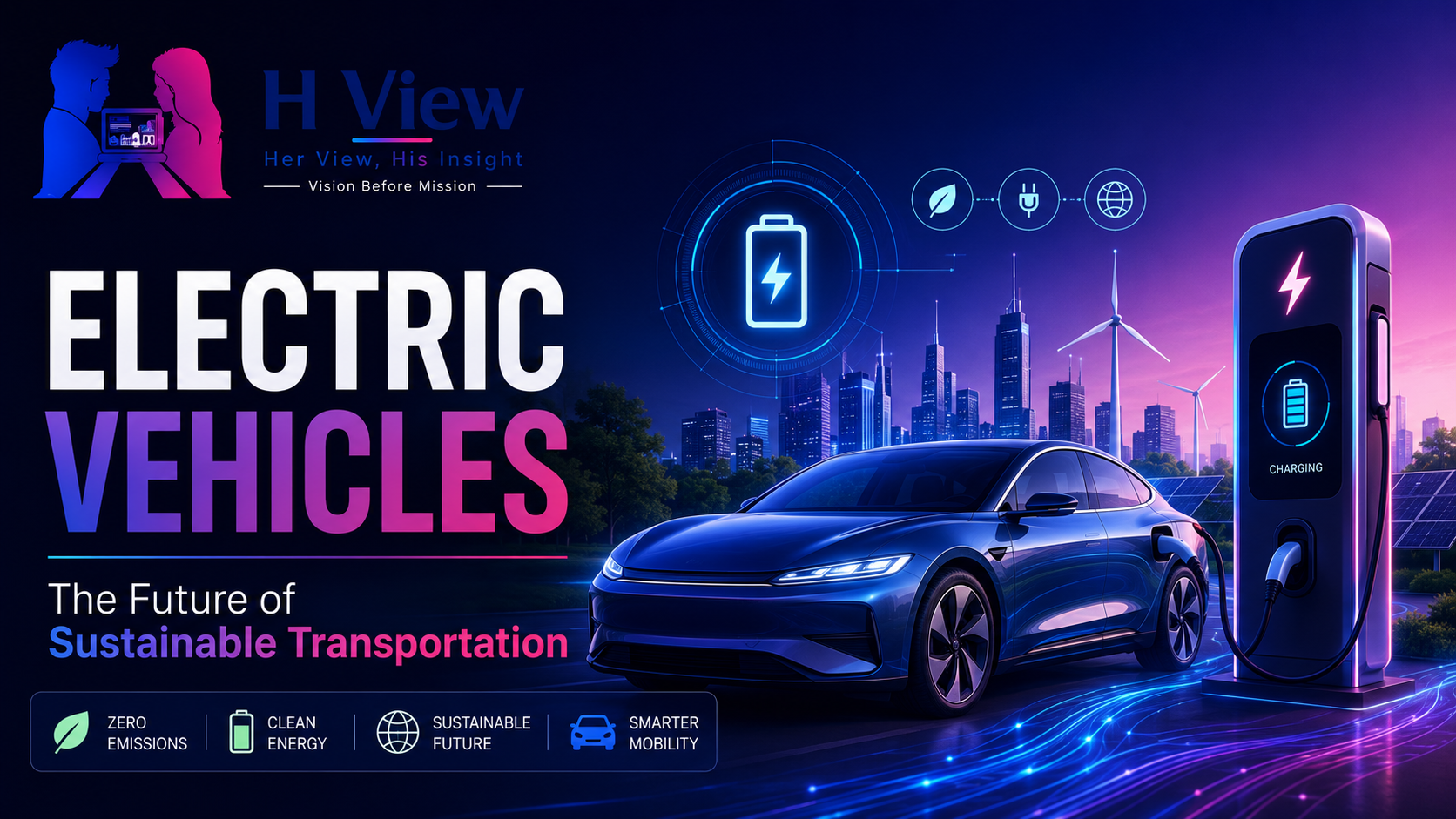
 By Satya HemanthUpdated September 20, 20269 min read33 views
Electric Vehicles, commonly known as EVs, are transforming the global transportation industry.
They offer a cleaner, more efficient, and environmentally friendly alternative to conventional petrol and diesel-powered vehicles. As concerns about climate change, air pollution, and the depletion of fossil fuels continue to grow, governments, manufacturers, and consumers are increasingly turning toward electric mobility.
Advances in battery technology, charging infrastructure, and vehicle performance have made EVs more practical and affordable than ever before.
The shift toward electric vehicles is not merely a technological trend. It is a significant step toward sustainable development. By reducing greenhouse gas emissions and dependence on fossil fuels, EVs have the potential to reshape transportation systems and contribute to a healthier planet.
An electric vehicle is a vehicle that uses one or more electric motors powered by rechargeable batteries instead of an internal combustion engine.
Unlike traditional vehicles that burn petrol or diesel, EVs operate using electricity stored in batteries. These batteries are charged by connecting the vehicle to an external power source, such as a home charger or a public charging station.
Electric vehicles come in several types:
Battery Electric Vehicles, or BEVs, run entirely on electricity and produce zero tailpipe emissions.
These are considered the cleanest type of EV because they do not use petrol or diesel at all.
Hybrid Electric Vehicles, or HEVs, combine a petrol engine with an electric motor.
They improve fuel efficiency but still depend on fuel.
Plug-in Hybrid Electric Vehicles, or PHEVs, can be charged externally and can operate using both electricity and fuel.
They are useful for people who want electric driving but still need fuel backup for longer trips.
Fuel Cell Electric Vehicles, or FCEVs, generate electricity using hydrogen fuel cells.
They emit only water vapor, making them another clean transportation option.
Among these, Battery Electric Vehicles are considered the cleanest option because they operate solely on electricity.
Although electric vehicles seem like a modern innovation, their history dates back to the early 19th century.
The first practical electric cars appeared during the late 1800s. They gained popularity because of their quiet operation and ease of use.
However, the invention of affordable petrol-powered vehicles, such as the Ford Model T, and the availability of cheap petroleum led to the decline of electric cars.
Interest in EVs revived during the oil crises of the 1970s. It grew significantly in the 21st century due to rising fuel prices, environmental concerns, and improvements in battery technology.
Today, leading automobile manufacturers are investing billions of dollars in electric vehicles, making them a central part of the future automotive industry.
Electric vehicles rely on rechargeable lithium-ion batteries to store electrical energy.
When the driver presses the accelerator, electricity flows from the battery to the electric motor. The motor converts electrical energy into mechanical energy, which moves the vehicle.
The main components of an EV include:
One of the most innovative features of EVs is regenerative braking.
During braking or slowing down, the electric motor acts as a generator. It converts kinetic energy back into electricity and stores it in the battery. This improves efficiency and helps extend the driving range.
Electric vehicles offer several advantages that make them important for the future of transportation.
Electric vehicles produce zero tailpipe emissions.
This reduces air pollution and greenhouse gas emissions, helping cities become cleaner and healthier.
Electricity is generally cheaper than petrol or diesel.
EVs also require less maintenance because they have fewer moving parts, no engine oil, and fewer mechanical components.
Electric motors are significantly more efficient than internal combustion engines.
While petrol engines convert only a portion of fuel energy into movement, electric motors can convert a much larger share of electrical energy into mechanical power.
Electric vehicles operate almost silently.
This reduces noise pollution in urban areas and provides a more comfortable driving experience.
Electric motors provide instant torque.
This results in quick acceleration and smooth performance. Many EVs can accelerate faster than comparable petrol or diesel vehicles.
Electricity can be generated from renewable energy sources such as solar, wind, and hydropower.
This helps reduce reliance on imported oil and fossil fuels.
Many governments encourage EV adoption through tax benefits, purchase subsidies, reduced registration fees, and support for charging infrastructure.
These incentives make EVs more attractive to buyers.
Despite their advantages, electric vehicles also face several challenges.
Although EV prices have reduced over time, many electric vehicles are still more expensive upfront than conventional vehicles.
This is mainly because of battery costs.
Many regions still lack sufficient public charging stations.
This makes long-distance travel more challenging compared to petrol or diesel vehicles.
Charging an EV takes longer than refueling a conventional vehicle.
Fast chargers can reduce charging time, but home charging may still take several hours.
Modern EVs can travel hundreds of kilometers on a single charge.
Still, range anxiety remains a concern for some consumers, especially in areas with limited charging infrastructure.
Over time, batteries lose some of their storage capacity.
Although modern batteries are designed to last many years, replacement can be costly.
Battery production requires minerals such as lithium, cobalt, and nickel.
Mining these materials raises environmental and ethical concerns. Manufacturers are working to address this through recycling and alternative battery technologies.
Electric vehicles play a crucial role in reducing environmental pollution.
Transportation contributes significantly to global carbon emissions. Replacing fossil-fuel vehicles with EVs can reduce these emissions.
However, the environmental impact of EVs also depends on how electricity is generated.
When electricity comes from renewable sources, EVs become significantly cleaner. If electricity is generated mainly from coal-fired power plants, the environmental benefits are reduced, though EVs may still perform better than conventional vehicles over their full life cycle.
Battery recycling is another important part of sustainability.
Recycling valuable materials from used batteries reduces waste and minimizes the need for additional mining.
Rapid technological innovation continues to improve electric vehicles in many areas.
Major developments include:
Solid-state batteries are considered one of the most promising future developments.
They may offer greater energy density, faster charging, longer lifespan, and improved safety compared to current lithium-ion batteries.
Charging infrastructure is essential for the widespread adoption of electric vehicles.
There are three primary charging methods.
Level 1 charging uses a standard household electrical outlet.
It is suitable for overnight charging but is slower than other charging methods.
Level 2 charging uses dedicated charging equipment.
It provides faster charging and is suitable for homes, workplaces, and public locations.
DC fast charging delivers high-power charging.
It can recharge a large portion of the battery in less than an hour, making long-distance travel more convenient.
Many countries are rapidly expanding public charging networks. Businesses, shopping centers, offices, and residential communities are also installing charging stations.
Countries across the world are actively promoting electric mobility.
Norway leads the world in EV adoption because of generous government incentives and strong charging infrastructure.
China is the largest producer and consumer of electric vehicles, investing heavily in battery manufacturing and charging networks.
European nations have introduced strict emission regulations that encourage automakers to shift toward electric transportation.
The United States continues to expand EV production through major automobile manufacturers and investments in charging infrastructure.
Many developing countries are also encouraging electric mobility by promoting electric buses, two-wheelers, three-wheelers, and affordable passenger vehicles.
India is rapidly embracing electric mobility to reduce pollution, decrease oil imports, and promote sustainable transportation.
The government has introduced policies and incentive programs to encourage EV manufacturing and adoption.
Electric two-wheelers and three-wheelers are growing particularly quickly because they offer lower operating costs and are well suited to urban transportation.
Public transportation systems in several cities are introducing electric buses to improve air quality and reduce emissions.
Indian manufacturers and international companies are investing in EV production, battery manufacturing, and charging infrastructure.
As technology becomes more affordable, electric vehicles are expected to become increasingly common across the country.
The growth of the electric vehicle industry creates several economic opportunities.
These include:
These developments contribute to economic growth while supporting environmental sustainability.
The future of electric vehicles looks highly promising.
Battery costs continue to decline. Charging infrastructure is expanding. Technological innovations are improving vehicle performance, safety, and affordability.
Experts predict that electric vehicles will become a dominant form of personal transportation over the coming decades.
Autonomous driving, artificial intelligence, renewable energy integration, and advanced battery technologies will further accelerate this transition.
Governments worldwide are setting ambitious targets to phase out new petrol and diesel vehicle sales, encouraging both manufacturers and consumers to adopt cleaner alternatives.
Electric vehicles are important because they are not just about modern cars or advanced batteries.
They are about cleaner cities, healthier families, quieter roads, and a better future for the next generation.
For daily users, the biggest value of EVs may come from lower running costs and smoother driving. But for society, the bigger value is environmental responsibility.
EVs are not a perfect solution yet.
Charging infrastructure, battery costs, raw material concerns, and range anxiety still need serious attention. But every major technology goes through an improvement cycle.
The direction is clear: mobility is becoming electric, connected, and smarter.
The real question is not whether EVs will grow. The real question is how quickly countries can build the infrastructure to support them.
Electric vehicles represent one of the most significant innovations in modern transportation.
They provide an effective solution to many environmental and economic challenges by reducing emissions, lowering operating costs, and decreasing dependence on fossil fuels.
Although challenges such as charging infrastructure, battery costs, and resource availability remain, continuous technological advancements are steadily addressing these issues.
The transition to electric mobility is not simply about replacing one type of vehicle with another. It is about creating a cleaner, healthier, and more sustainable future.
As governments, industries, and individuals continue to invest in electric transportation, EVs are expected to play a central role in shaping the future of mobility and protecting the environment for generations to come.
Electric vehicles are more than a trend.
They are part of a global shift toward cleaner, smarter, and more sustainable transportation.
The road ahead still has challenges, but the direction is strong. With better batteries, stronger charging networks, and wider adoption, EVs can become one of the most important mobility solutions of the future.
Satya Hemanth is the founder of H View and writes on careers, sports, leadership, digital trends, and practical decision-making. His articles focus on clear explanations, real-world examples, and useful insights for students, young professionals, and everyday readers.
Share your real experience and help other readers decide better.
No community views yet. Be the first to share yours.
Electric scooters are no longer a rare sight on Indian roads. A few years ago,…
Harika July 15, 2026