

Best Digital Marketing Tools in 2026: What Marketers Actually Need and What They Can Skip
Open LinkedIn for a few minutes and you will probably come across a colourful graphic…
 Harika October 6, 2026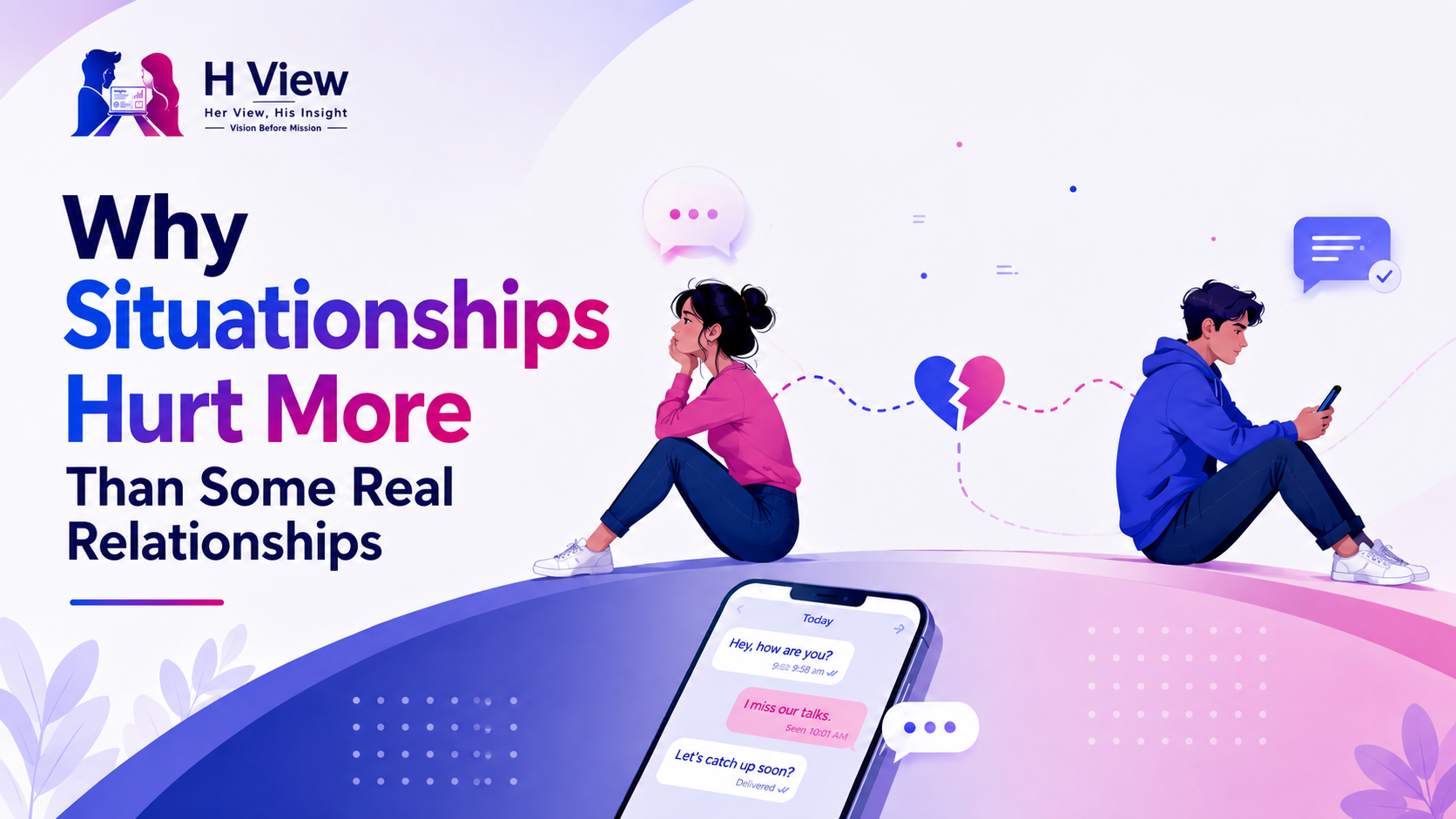
 By AnnapurnaUpdated August 12, 20269 min read32 views
There is a particular kind of heartbreak that is difficult to explain because technically, there may never have been a relationship to begin with. Two people talk every day, spend weekends together, share private thoughts, become physically or emotionally close, and behave very much like a couple. Yet when someone finally asks, “What are we?”, the answer is unclear.
That grey area is commonly called a situationship: a romantic or intimate connection that has emotional closeness but lacks a clearly agreed definition or commitment. Recent research involving young adults has found that ambiguity, unclear boundaries, and mismatched expectations are central features of these connections.
Situationships are not automatically unhealthy. Two adults can genuinely prefer something casual and be perfectly comfortable with it when both understand what they are agreeing to. The pain usually begins when the connection starts feeling like a relationship to one person while remaining conveniently undefined to the other.
Strangely, that kind of ending can sometimes hurt more than losing an official boyfriend or girlfriend.
Human emotions do not wait for Facebook statuses, introductions to parents, or conversations about exclusivity. If someone becomes part of your everyday life, attachment can develop regardless of what the relationship is called.
You may wake up expecting their message, tell them things you do not tell anyone else, spend hours talking at night, and slowly create routines around them. The brain and heart begin treating the connection as important even if neither person has officially defined it.
That is why the phrase “we were never actually together” does very little to reduce the pain when things end. Emotional investment is not measured by labels. Someone can be deeply attached after six undefined months and feel more devastated than they did after leaving a clearly defined relationship that had emotionally ended long before the breakup.
A situationship can therefore create a strange contradiction: you experience many of the emotions of a relationship without having the security that usually comes with one.
Clear rejection hurts, but at least it provides an answer. Situationships often keep people somewhere between hope and disappointment.
One day the other person may behave affectionately and make the connection feel serious. A few days later, they may become distant. Plans for the future appear in casual conversation but disappear whenever commitment is discussed. This inconsistency makes it difficult to understand what the relationship actually means.
Research on situationships has begun examining this emotional ambiguity specifically, with recent work linking undefined romantic connections to uncertainty and emotional strain among young adults.
The exhausting part is not simply wondering whether someone likes you. It is repeatedly trying to interpret what their behaviour means. You start analysing response times, changes in tone, weekends when they seem unavailable, and whether asking for clarity will make you appear demanding.
Instead of enjoying the connection, you begin managing uncertainty.
Many situationships survive because of one powerful word: eventually.
Perhaps eventually they will be ready for a relationship. Eventually work will become less stressful. Eventually they will heal from their previous breakup. Eventually they will realise how good the two of you are together.
There may be perfectly genuine reasons why someone is not ready to commit. The difficulty comes when those reasons have no timeline and the other person continues waiting.
Hope can make an emotionally unsatisfying situation surprisingly difficult to leave. Every affectionate moment feels like evidence that progress is happening, while every disappointment is explained away as temporary.
The relationship never becomes secure enough to feel peaceful, but it also never becomes clearly bad enough to make walking away easy.
That middle ground can last for months.
An official breakup usually comes with social permission to grieve. Friends understand why you are upset. People expect you to need some time. There is a clear before and after.
A situationship ending can be different.
Friends may say, “But you weren’t even dating,” without intending to be cruel. The other person may remind you that they never promised a relationship. You may even say the same thing to yourself and feel embarrassed by how deeply the ending affects you.
This can create a second layer of pain. Not only are you grieving the person, but you may also feel that your grief is somehow unreasonable.
Yet the loss is real because the emotional connection was real. You are losing conversations, routines, affection, expectations, and perhaps an imagined future. A relationship does not need an official anniversary date for its absence to be felt.
One of the hardest parts of an undefined relationship is that the ending may be equally undefined.
There may be no breakup conversation. Messages simply become less frequent. Someone takes longer to reply. Plans stop being made. Eventually, communication fades until both people understand that whatever existed between them is probably over.
Without a clear ending, the mind naturally looks for explanations. Was there another person? Did you ask for too much? Did they lose interest? Were they frightened of commitment? Could things have worked if you had waited longer?
When there is no honest conversation, people tend to fill the empty space themselves.
That is why closure can feel especially difficult. You are trying to recover from something whose beginning, meaning, and ending were never completely defined.
Undefined romantic connections are not entirely new, but dating apps and modern dating culture have given people more language to describe them and more opportunities to remain in uncertain relationships.
Current dating discussions increasingly focus on behaviours such as breadcrumbing, emotional detachment, mixed signals, and avoiding clear intentions. At the same time, there are signs that many singles are becoming tired of this culture and are looking for greater openness and intentionality in dating.
The problem with normalising ambiguity is that people can start believing that asking for clarity is somehow too serious.
Wanting to know whether someone is dating other people, whether the connection has a future, or whether both people want the same thing is not automatically pressure. Those are reasonable conversations when emotional involvement is growing.
Labels are not the most important part of a relationship. Shared understanding is.
A situationship becomes particularly painful when the ambiguity benefits one person while repeatedly hurting the other.
There are a few patterns worth noticing:
None of these automatically makes someone a bad person. Two people may simply want very different things. The real problem is remaining in a connection after that difference becomes obvious and hoping that time alone will solve it.
Relationship experts discussing modern dating consistently emphasise that terms such as “exclusive,” “casual,” and “situationship” can mean different things to different people. What matters is having an honest conversation about expectations rather than assuming both people understand the connection in the same way.
Situationships can become especially painful when emotional investment grows but clarity never does. Wanting to know where you stand should not be treated as being needy or demanding, particularly when the connection already includes regular communication, intimacy, and emotional dependence. If one person is hoping the relationship will eventually become serious while the other prefers to keep everything undefined, staying silent usually makes the imbalance worse. Clarity may sometimes lead to disappointment, but it also gives you the chance to make an honest decision about whether the relationship is giving you the kind of emotional security and commitment you actually want.
Avoiding a relationship conversation does not prevent expectations from forming. In many situationships, one person may enjoy the companionship, attention, and closeness while remaining uncertain about commitment, but that uncertainty should still be communicated honestly. Nobody needs to promise a long-term future after a few dates, yet both people should have a reasonable understanding of what they are building. Saying what you want, what you are unsure about, and what you cannot offer may feel uncomfortable in the moment, but prolonged ambiguity can create much deeper hurt later.
A situationship is a romantic or emotionally intimate connection that has many features of a relationship but lacks a clear definition, commitment, or shared understanding about where it is going. The two people may spend significant time together and become emotionally close without officially identifying themselves as a couple.
Situationships can hurt because emotional attachment develops even when the relationship has no clear label. The uncertainty can make someone constantly question how the other person feels, whether the connection has a future, and whether they should continue investing emotionally. When it ends, the person may also grieve the future they imagined rather than only the connection they actually had.
Yes, a situationship can develop into a committed relationship if both people eventually want the same thing and communicate openly about it. However, it is risky to remain in an undefined connection for a long time based only on the hope that the other person will eventually change their mind.
There is no fixed time limit that works for everyone. What matters more is whether both people are comfortable with the arrangement and whether expectations are being discussed honestly. If you are becoming increasingly anxious, confused, or emotionally attached while the other person continues avoiding clarity, it may be time to have a direct conversation.
A situationship may be unhealthy when you regularly feel insecure, avoid expressing your needs, receive mixed signals, or feel that you are giving much more emotionally than the other person. It can also become problematic when one person expects exclusivity or commitment while the other behaves as though they are completely single.
Yes, especially when the connection has become emotionally significant. Asking about expectations is not the same as forcing someone into commitment. It simply helps both people understand whether they are looking for the same kind of relationship.
Getting over a situationship often requires accepting that emotional closeness does not always lead to commitment. Creating some distance, reducing contact, avoiding repeated checking of the other person’s social media, and focusing on your own routines can help. It is also useful to stop judging your grief simply because the relationship was never officially defined.
No. A situationship can work when both people genuinely want something casual and understand the boundaries. The problem usually begins when one person wants greater commitment while the other prefers to keep the relationship undefined.
Annapurna is an H View contributor covering relationships, family, lifestyle, entrepreneurship, and everyday decision-making. Her articles focus on emotional clarity, practical understanding, and human-centered perspectives that help readers think better about personal and professional situations.
Share your real experience and help other readers decide better.
No community views yet. Be the first to share yours.

Open LinkedIn for a few minutes and you will probably come across a colourful graphic…
Harika October 6, 2026 
When an employee resigns, many organisations move quickly into replacement mode. The manager informs HR,…
Harika October 6, 2026 
For many corporate employees, the workday begins long before they actually start working. They wake…
Harika October 5, 2026 
Many projects begin with an assumption that sounds reasonable on paper: the client will explain…
Harika October 1, 2026