

Best Digital Marketing Tools in 2026: What Marketers Actually Need and What They Can Skip
Open LinkedIn for a few minutes and you will probably come across a colourful graphic…
 Harika October 6, 2026
  By HarikaUpdated August 15, 202610 min read15 views
Every country has symbols that outlive the moment in which they were created. Some begin as literature, some as speeches, some as songs. Over time, they stop belonging only to the person who wrote them and begin belonging to history itself. That is what happened with Vande Mataram.
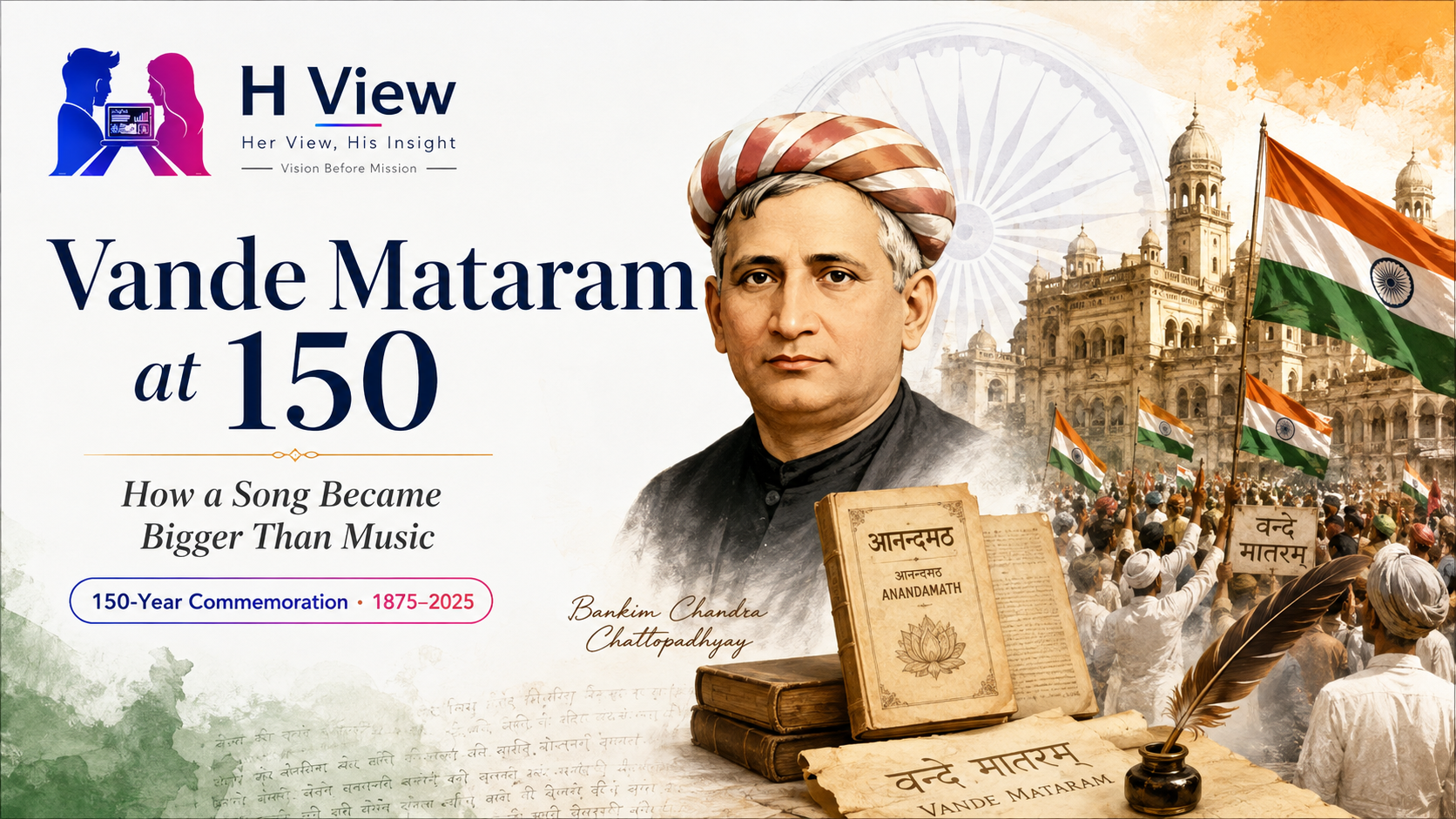
In 2025, Vande Mataram completed 150 years, and the commemoration has continued into 2026 through national cultural programmes, public performances and creative initiatives. That makes this year’s Independence Day a good moment to revisit the song—not as a routine patriotic reference, but as a historical force that became much bigger than music. It was not simply sung. It was remembered, repeated, carried into political spaces and turned into a symbol of belonging, resistance and national feeling.
The reason Vande Mataram still matters is not only that it sounds patriotic. Many songs do. What gives it a special place in Indian memory is the role it played in transforming emotion into shared identity during the freedom movement.
The story of Vande Mataram is therefore not just the story of a song. It is the story of how culture can become politics, how words can become a slogan and how a melody can become part of a nation’s memory.
Vande Mataram was written by Bankim Chandra Chattopadhyay, one of the most important literary figures of nineteenth-century India. The Government of India’s current commemoration traces its composition to 1875, which is why 2025 marked the 150-year milestone. Later, the song became part of his novel Anandamath, where it appeared within a larger imaginative and political context.
That beginning matters.
Today, many people encounter Vande Mataram as something already established—something familiar from school events, public celebrations, debates or ceremonial occasions. But when Bankim wrote it, India was still under British colonial rule, and the modern nationalist movement had not yet taken the mass shape it would later assume. The country was politically unfree, socially diverse and geographically vast. There was no single media system capable of giving millions of people a shared emotional vocabulary overnight.
In such a world, songs and poems could travel where formal political language often could not.
A beautifully written phrase could move from a book into public memory. A line could be recited, sung, repeated, printed and carried into gatherings. Vande Mataram did exactly that. It began as literature, but its emotional power gave it a life beyond the page.
One reason Vande Mataram became influential is that it did not speak of the nation in dry political terms. It imagined the country as mother.
That single imaginative move changed everything.
Political arguments can explain why a country deserves self-rule. But emotional symbols help people feel what that self-rule means. By presenting the land as mother, the song transformed India from an abstract territory into something intimate and deeply personal. A person may not respond emotionally to a discussion on administration or sovereignty, but they can respond to love, reverence and belonging.
This was especially powerful in a colonial setting. To say “Vande Mataram” was not merely to admire natural beauty or poetic expression. It increasingly suggested loyalty to India itself—to a civilisational and political identity that colonial rule could not fully control.
That is when a song begins to outgrow its original form.
The transition from literary composition to national symbol did not happen in a single moment. It happened gradually, through public performance, political use and historical circumstance.
One important milestone came in 1896, when Rabindranath Tagore sang Vande Mataram at a session of the Indian National Congress. That performance helped take the song from literary circles into a national political setting. Over time, Vande Mataram became increasingly associated with Congress gatherings, nationalist publications, protests and public mobilisations.
By the early twentieth century, the words had acquired a political charge. They were not merely heard; they were used. They appeared in newspapers, speeches and revolutionary contexts. The phrase “Vande Mataram” became a shared expression of Indian nationalism at a time when nationalism itself was still being shaped in public life.
This helps explain why the British authorities often viewed such cultural expressions with unease. A song can do something a policy speech cannot always do: it can unite people emotionally before it unites them organisationally. When that happens, culture becomes politically dangerous to those in power.
It may seem surprising from today’s perspective that a song could carry so much historical power. But the answer becomes clearer when we think about how collective movements grow.
Movements need ideas, but they also need symbols people can carry easily. A political essay requires literacy, time and patience. A song can be remembered in an instant. A slogan can pass from one person to another without explanation. A melody can be sung by crowds, students, workers and families who may differ in language, education and region but still recognise its emotional meaning.
This is why music has always mattered in public life.
Vande Mataram did not become important because it was officially imposed from above. It became important because ordinary people and national leaders alike found in it a language of shared feeling. It gave the freedom movement something more than a message. It gave it atmosphere, memory and rhythm.
That is what makes the song larger than its musical form. It became a bridge between personal emotion and public nationalism.
A good article on Vande Mataram should be respectful, but it should also be honest. The song’s history is not free from debate.
Over time, concerns emerged among some Muslim leaders about sections of the original composition—particularly later verses that personified the motherland through imagery associated with Hindu goddess traditions. Because India is religiously and culturally diverse, these concerns became part of the larger debate about how national symbols should function in a plural society.
This does not erase Vande Mataram’s importance. It adds necessary depth to it.
In independent India, Jana Gana Mana became the National Anthem, while Vande Mataram was given the status of the National Song. In public life, the first two stanzas of Vande Mataram have generally been the most widely used and accepted.
This history is important because it reminds us that national memory is rarely simple. India honours powerful symbols, but it also has to negotiate how those symbols live within a diverse democracy. That complexity does not weaken Vande Mataram. If anything, it shows that national symbols survive not by being frozen, but by being continually interpreted.
A fair question is this: why should a country focused on AI, jobs, infrastructure and development spend so much attention on a song written in the nineteenth century?
Because nations are not held together by economics alone.
They are also held together by memory.
The Government of India has continued the 150-year commemoration into 2026 through public events, performances and cultural programmes, including national-level creative initiatives and special Republic Day recognition. That continuation matters because most Indians alive today did not experience the freedom struggle directly. Many have grown up in a country where independence feels natural, permanent and unquestioned.
That is both a privilege and a challenge.
It is a privilege because generations before us fought to secure political freedom. It is a challenge because memory fades when people no longer have living contact with the moment that created it. Cultural symbols like Vande Mataram help carry that memory forward.
A song cannot teach the whole of Indian history. But it can make a generation pause and ask what kind of historical energy once lived inside those words.
For the freedom generation, Vande Mataram could be a cry of resistance. For people born into independent India, it carries a different responsibility.
Today, the song may not call people into anti-colonial struggle, but it can still raise a serious question: what does love for the country mean when freedom has already been won?
That is where the song remains relevant.
Patriotism cannot live only in slogans, school performances or annual celebrations. It also has to appear in conduct—how we treat public spaces, how honestly we work, how we speak to fellow citizens, how we respect difference, and how seriously we take the responsibilities of living in a democracy.
In that sense, Vande Mataram still matters not because it asks everyone to feel the same thing in the same way, but because it reminds us that national belonging is more than ceremonial emotion. It is something every generation has to define again in practice.
What makes Vande Mataram meaningful today is not simply its age or patriotic status. It is the emotional intelligence of the symbol itself. To imagine the nation as mother is to bring the country closer to everyday feeling. It turns nationalism from something cold and official into something felt and remembered.
At the same time, true respect for a national symbol also means being willing to understand its whole history. Reverence should not require simplification. A mature patriotism allows us to appreciate why people loved the song, why it became powerful, and why parts of its history also invited debate. That kind of understanding makes the symbol richer, not weaker.
From a communication perspective, Vande Mataram is a powerful reminder that movements need more than information. They need language people can carry with them. The freedom movement had leaders, strategies and ideologies, but it also had phrases and songs that gave people a shared emotional code.
That is why Vande Mataram became bigger than music. It condensed a large political feeling into something repeatable. The phrase did not need a long explanation every time it was spoken. People already understood what it pointed toward: the belief that India belonged to Indians and deserved freedom.
Very few cultural works achieve that level of public transformation.
Vande Mataram completed 150 years in 2025, but its story is not locked in that anniversary. It continues to matter in 2026 because it still represents one of the most important truths about national life: countries are built not only through laws and institutions, but also through the symbols that teach people how to feel connected to one another.
That is why the song became bigger than music.
It moved from literature into public life, from poetry into politics, from melody into memory. It became part of the soundscape of the freedom movement and later part of the symbolic inheritance of independent India.
For H View, the most valuable lesson is this: not every patriotic symbol deserves blind repetition, but some deserve serious understanding. Vande Mataram is one of them. It is not important only because it is old. It is important because it shows how culture can help create the emotional foundation of a nation.
A song became a slogan. A slogan became a symbol. And a symbol still asks each generation what love for the country should really mean.
Vande Mataram was written by Bankim Chandra Chattopadhyay, one of the most important Bengali writers of the nineteenth century. The Government of India’s 150-year commemoration dates its composition to 1875.
No. Vande Mataram completed 150 years in 2025, because it is officially dated to 1875. However, the commemoration has continued into 2026 through year-long cultural initiatives.
No. Jana Gana Mana is India’s National Anthem. Vande Mataram holds the status of India’s National Song.
It became a powerful nationalist symbol because it emotionally connected people to the idea of India as motherland. Over time, it was sung, quoted and used in political and public spaces associated with the freedom struggle.
Yes. Rabindranath Tagore sang Vande Mataram at the 1896 session of the Indian National Congress, an important moment in the song’s transition from literary work to public nationalist expression.
Its importance comes from its historical role in the freedom movement and the way it became associated with national identity and collective resistance. The continuing 150-year commemorations demonstrate that the song remains an important part of India’s cultural memory.
Harika is the co-founder of H View and covers AI, technology, gadgets, digital tools, online platforms, and modern internet trends. Her articles focus on simplifying complex topics with practical explanations, balanced opinions, and reader-first insights.
Share your real experience and help other readers decide better.
No community views yet. Be the first to share yours.

Open LinkedIn for a few minutes and you will probably come across a colourful graphic…
Harika October 6, 2026 
When an employee resigns, many organisations move quickly into replacement mode. The manager informs HR,…
Harika October 6, 2026 
For many corporate employees, the workday begins long before they actually start working. They wake…
Harika October 5, 2026 
Many projects begin with an assumption that sounds reasonable on paper: the client will explain…
Harika October 1, 2026