

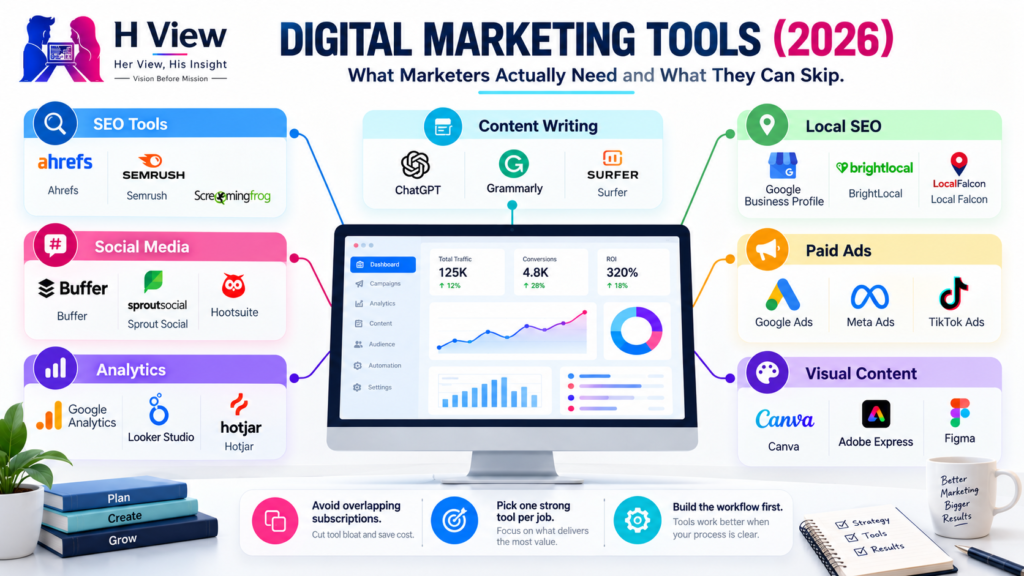
Best Digital Marketing Tools in 2026: What Marketers Actually Need and What They Can Skip
Open LinkedIn for a few minutes and you will probably come across a colourful graphic…
 Harika October 6, 2026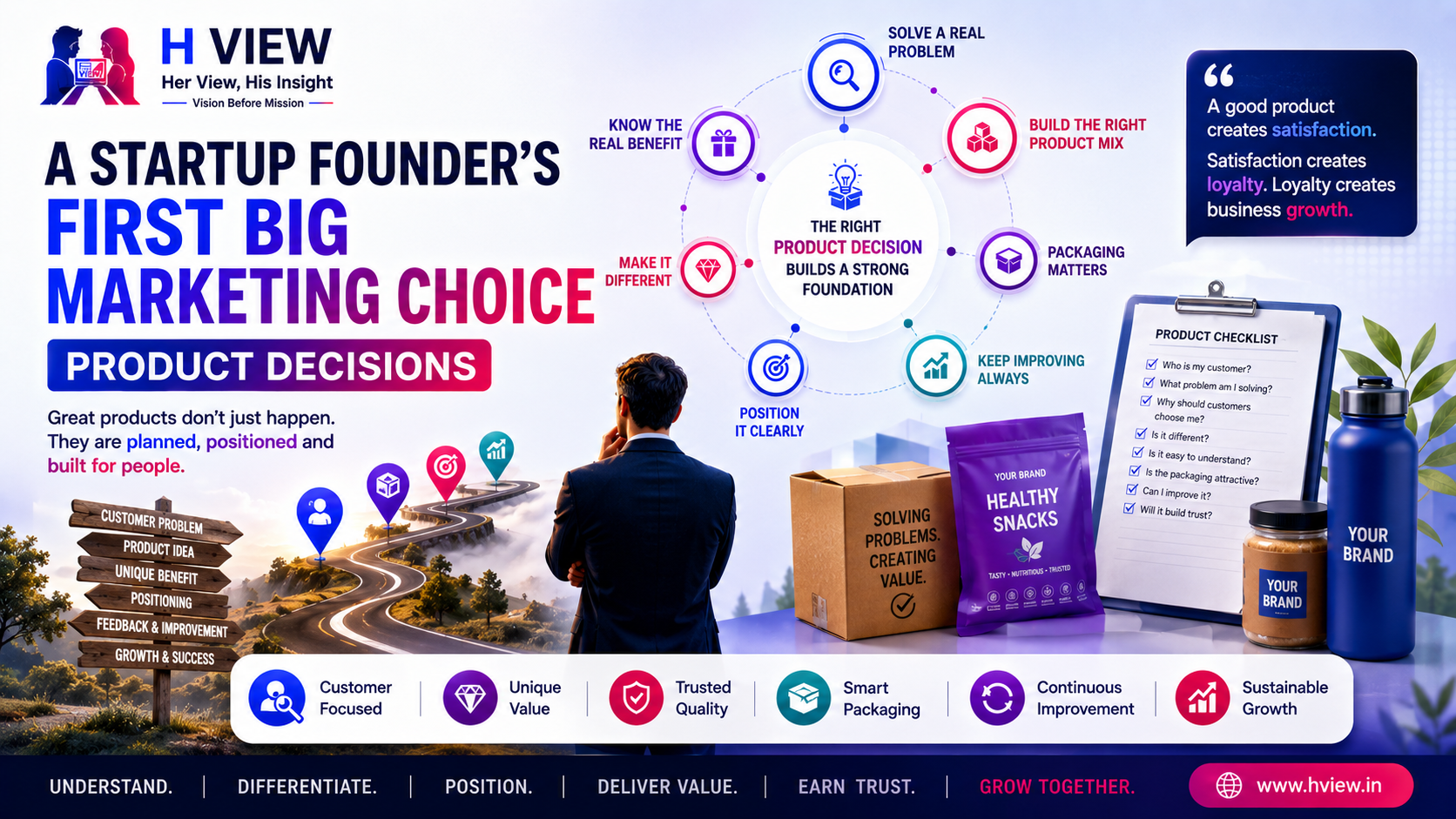
 By AnnapurnaUpdated June 10, 20266 min read45 views
Starting a business is exciting. You may have an idea, a product, or a service ready to launch. But before asking, “How do I sell it?”, every startup founder must ask a more important question:
Is my product really useful, different, and valuable to the customer?
This is where product decisions become important.
A product decision is not only about deciding what to sell. It includes choosing what to offer, how to design it, how to name it, how to package it, how to position it, and how to make customers prefer it over competitors.
For startups, this is one of the first and most important marketing choices.
A product decision means planning and improving everything related to the product or service offered to customers.
It includes:
A good product decision helps a startup create something that is not only available in the market but also meaningful to customers.
A product is not only a physical object. It is a solution to a customer’s problem.
A customer does not buy a mobile phone only for calling. They buy speed, camera quality, comfort, convenience, status, and experience.
Similarly, a customer does not use a food delivery app only for food. They use it to save time, avoid travel, enjoy convenience, and get quick service.
That is why startup founders must think beyond the product.
They must ask:
What problem does my product solve?
If a product does not solve a real problem, marketing alone cannot make it successful for long.
Every product has a basic purpose. This is called the core benefit.
The core benefit is the real reason why customers buy a product.
| Product | Real Benefit |
|---|---|
| Zomato | Convenient food delivery |
| Amul | Trustworthy dairy products |
| Tesla | Sustainable premium mobility |
| Apple iPhone | Innovation, status, and experience |
A startup must not fall in love only with the product. It must fall in love with the customer’s problem.
When founders understand the real benefit, they can design better products, write better messages, and connect more strongly with customers.
Many startups fail because they offer “one more similar product” in the market.
Customers already have choices. If your product looks the same, feels the same, and offers the same value, they may not find a strong reason to choose you.
A product can be different through:
For example, Amul became successful not just by selling dairy products. It built trust, affordability, quality, and wide availability.
That difference made customers remember the brand.
Product positioning means creating a clear place for your product in the customer’s mind.
Ask yourself:
What should people remember my product for?
Apple is remembered for premium innovation. Coca-Cola is remembered for happiness and refreshment. Tesla is remembered for electric innovation.
Your startup should also have one clear identity.
A simple positioning formula is:
My product helps [target customer] solve [problem] by offering [unique benefit].
Example:
Our homemade millet snacks help health-conscious families enjoy tasty food without guilt.
This statement is simple, clear, and customer-focused. It explains who the product is for, what problem it solves, and why it is useful.
As your startup grows, you may add more products. This is called a product mix.
A product mix is the complete range of products or services a business offers.
But startups should be careful. Adding too many products too early can create confusion, increase costs, and reduce focus.
It is better to start with one strong product, understand customer response, improve it, and then expand slowly.
For example, Amul started with dairy products and later expanded into butter, cheese, ice cream, chocolates, beverages, and many other categories.
The lesson is simple: build trust first, expand later.
For many customers, packaging is the first impression.
Before customers use the product, they see the packaging. That first impression can influence their buying decision.
Good packaging should:
For food, beauty, clothing, health, and lifestyle products, packaging can strongly influence customer perception.
A simple product with professional packaging can look more trustworthy. A good product with poor packaging may lose customer interest before it is even tried.
A product should not remain the same forever.
Customer needs change. Competitors improve. Technology changes. Trends shift. If a startup does not improve, it may slowly become outdated.
Successful companies continuously improve their products.
Samsung updates its phone models regularly. Apple improves features every year. Tesla improves vehicles using technology and software updates.
Startups should also collect customer feedback and keep improving.
Feedback can come from:
Every piece of feedback is a chance to improve the product.
A simple product decision flow looks like this:
Customer Problem
↓
Product Idea
↓
Unique Benefit
↓
Brand Name & Packaging
↓
Positioning
↓
Customer Feedback
↓
Improvement & Growth
This flow helps startups move in the right direction. It starts with the customer problem and ends with improvement and growth.
Before launching a product, every startup founder should ask:
If the answer to these questions is clear, the startup is in a stronger position to enter the market.
A product should make life easier for the customer.
Many businesses focus only on features, price, or promotion. But customers often remember how the product makes them feel. If the product is useful, easy to understand, and trustworthy, people are more likely to connect with it.
For startups, emotional trust matters as much as functional value.
A strong product reduces the pressure on marketing.
If the product solves a real problem, has a clear benefit, and stands out from competitors, marketing becomes easier. But if the product itself is weak, even heavy advertising may only bring temporary attention.
Long-term growth starts with strong product decisions.
A startup does not grow only because it has a product. It grows when the product is meaningful, useful, different, and trusted.
Good product decisions create customer satisfaction.
Customer satisfaction creates loyalty.
Loyalty creates business growth.
The goal is not just to create a product. The goal is to create a reason for customers to choose you.
Do not just create a product.
Create a solution.
Create value.
Create trust.
Create a reason for customers to come back.
Because in business, the first big marketing decision is not promotion. It is the product itself.
Annapurna is an H View contributor covering relationships, family, lifestyle, entrepreneurship, and everyday decision-making. Her articles focus on emotional clarity, practical understanding, and human-centered perspectives that help readers think better about personal and professional situations.
Share your real experience and help other readers decide better.
No community views yet. Be the first to share yours.
Open LinkedIn for a few minutes and you will probably come across a colourful graphic…
Harika October 6, 2026 
When an employee resigns, many organisations move quickly into replacement mode. The manager informs HR,…
Harika October 6, 2026 
For many corporate employees, the workday begins long before they actually start working. They wake…
Harika October 5, 2026 
Many projects begin with an assumption that sounds reasonable on paper: the client will explain…
Harika October 1, 2026