

Best Digital Marketing Tools in 2026: What Marketers Actually Need and What They Can Skip
Open LinkedIn for a few minutes and you will probably come across a colourful graphic…
 Harika October 6, 2026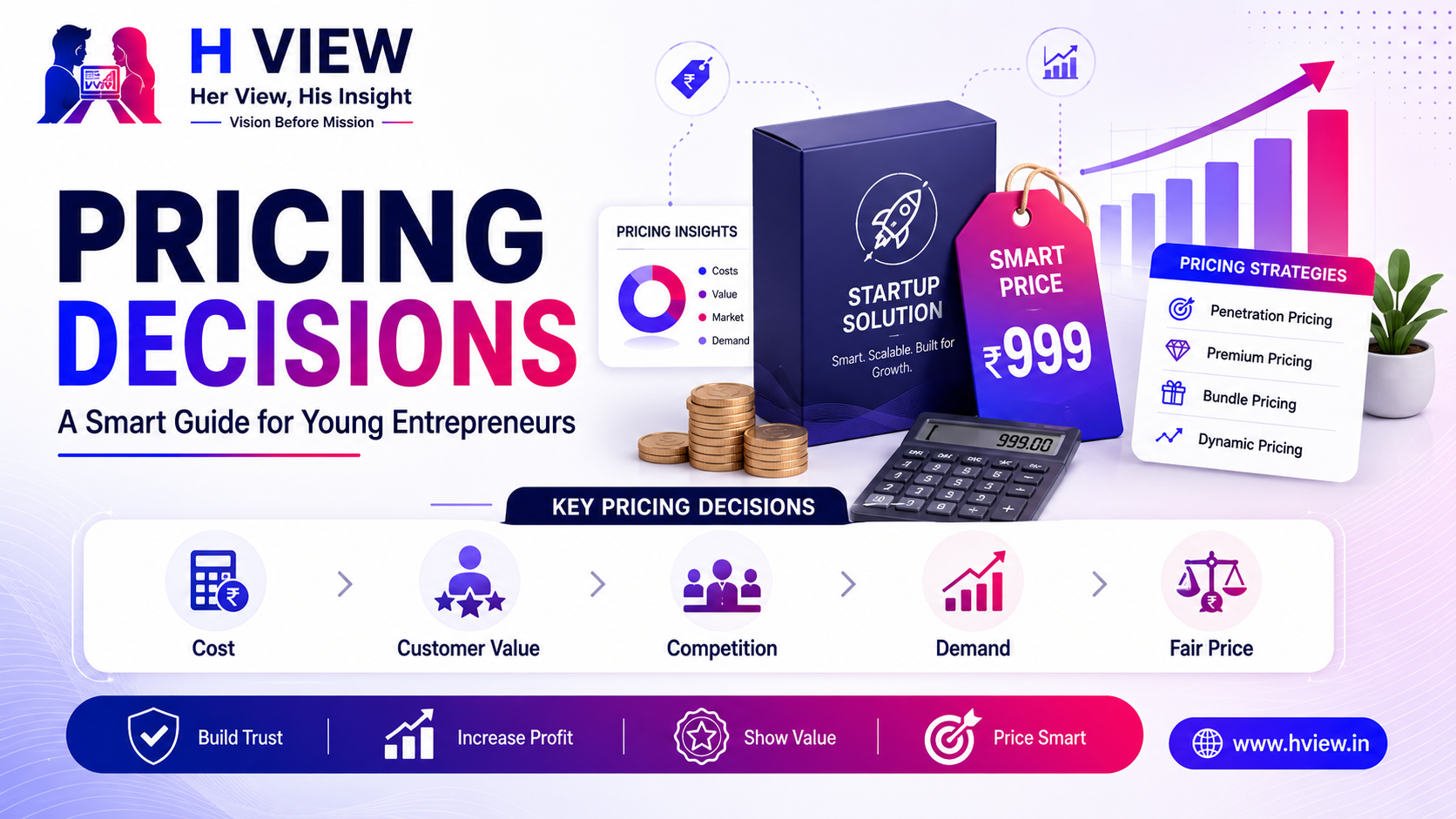
 By AnnapurnaUpdated June 19, 20267 min read58 views
Pricing is one of the most powerful decisions in any business.
A good product may fail if it is priced wrongly, while a well-planned price can attract customers, build trust, increase sales, and improve profit.
Many young entrepreneurs think pricing simply means adding profit to cost. But pricing is much more than that.
Price is not just a number.
It tells customers what your product is worth.
A very low price may create doubt about quality. A very high price may push customers away. That is why entrepreneurs must decide prices carefully by understanding cost, customer value, competition, demand, and market positioning.
Pricing directly affects how customers see your product.
Customers may ask:
A smart pricing decision helps a business balance both sides:
The customer should feel the price is fair.
The business should earn sustainable profit.
If either side fails, the pricing strategy becomes weak.
Before deciding the price, every entrepreneur should ask a few important questions:
These questions help entrepreneurs avoid random pricing.
A price should not be fixed only by guesswork. It should be based on logic, customer understanding, and market reality.
The most important lesson in pricing is simple:
Do not price only by adding profit to cost. Price should reflect the value customers feel they are receiving.
Customers are ready to pay more when they believe the product:
For example, two products may have similar production costs, but customers may pay more for the one that has better branding, packaging, service, and trust.
That is why value matters.
There are different ways to price a product. The right method depends on the type of business, target customers, competition, and brand positioning.
Penetration pricing means entering the market with a lower price to attract customers quickly.
This strategy is useful when a new business wants to gain attention, build a customer base, and compete with existing players.
Jio used low pricing to enter the telecom market and attract millions of customers. This helped the brand quickly gain market share and change customer behavior.
However, penetration pricing should be used carefully. If prices are too low for too long, the business may struggle to make profit.
Premium pricing is used when a product is positioned as high-quality, unique, or superior.
Customers pay more because they believe the product offers better design, better experience, better trust, or stronger brand value.
Apple uses premium pricing because customers see high value in its design, quality, ecosystem, and brand image.
Premium pricing works only when the product truly delivers strong value. A high price without quality can damage trust.
Bundle pricing means offering two or more products or services together at an attractive price.
This strategy increases perceived value and encourages customers to buy more.
Amazon Prime uses bundle pricing by offering shopping benefits, video, music, and faster delivery under one membership plan.
The customer feels they are receiving multiple benefits for one price.
Dynamic pricing means changing prices based on demand, season, time, availability, or customer behavior.
This strategy is common in online platforms, travel, hotels, food delivery, and e-commerce.
For example, flight tickets and hotel rooms often become expensive during high-demand periods. Ride-sharing platforms may also increase prices during peak hours.
Dynamic pricing can increase revenue, but it should be transparent and fair. If customers feel cheated, trust may reduce.
Many new entrepreneurs believe that a low price will automatically attract customers.
But low pricing is not always the best strategy.
A very low price may create questions such as:
Low prices can attract customers in the beginning, but they may not build long-term loyalty unless the product also delivers value.
A business should compete on value, not only on price.
Discounts can increase sales for a short time, but regular discounts can reduce brand value.
If customers always see discounts, they may stop buying at the original price. They may wait for offers instead of trusting the actual value of the product.
Too many discounts can also create the impression that the product is overpriced or not selling well.
Entrepreneurs should avoid depending only on discounts.
Instead, they should focus on:
Discounts should support the business strategy. They should not become the business strategy.
Price influences how customers perceive a brand.
A premium price may suggest quality and exclusivity.
A moderate price may suggest practicality and balance.
A low price may suggest affordability.
But the price must match the product experience. If a product is priced high but feels average, customers may feel disappointed. If a product is priced low but delivers good quality, customers may feel surprised and satisfied.
The best pricing strategy creates trust.
A simple pricing decision flow looks like this:
Understand Cost
↓
Study Competition
↓
Identify Customer Value
↓
Check Market Demand
↓
Choose Pricing Strategy
↓
Test Customer Response
↓
Adjust and Improve
This flow helps entrepreneurs make pricing decisions in a structured way.
Before fixing the final price, ask:
If the answers are clear, the pricing decision becomes stronger.
Customers do not always choose the cheapest product.
They choose the product that feels right for their need, budget, and trust. A fair price with good quality can create stronger relationships than a cheap price with poor experience.
For young entrepreneurs, pricing should not be about selling once. It should be about building repeat customers.
A smart entrepreneur does not simply ask, “What price should I charge?”
A smart entrepreneur asks:
What value am I giving, and how much will customers happily pay for it?
That question changes the entire approach to pricing. It moves the focus from cost to value.
Pricing influences customer perception, demand, sales, and profit.
A low price is not always the best strategy. A high price is not always wrong. The right price depends on cost, competition, customer value, demand, and brand trust.
The best price is one that customers accept and the business can sustain profitably.
Pricing is not just about numbers.
It is about value.
It is about trust.
It is about positioning.
It is about sustainability.
A successful entrepreneur does not simply sell at a price. A successful entrepreneur creates enough value that customers feel happy to pay.
Best wishes to every young entrepreneur building with clarity, confidence, and customer value.
Annapurna is an H View contributor covering relationships, family, lifestyle, entrepreneurship, and everyday decision-making. Her articles focus on emotional clarity, practical understanding, and human-centered perspectives that help readers think better about personal and professional situations.
Share your real experience and help other readers decide better.
No community views yet. Be the first to share yours.
Open LinkedIn for a few minutes and you will probably come across a colourful graphic…
Harika October 6, 2026 
When an employee resigns, many organisations move quickly into replacement mode. The manager informs HR,…
Harika October 6, 2026 
For many corporate employees, the workday begins long before they actually start working. They wake…
Harika October 5, 2026 
Many projects begin with an assumption that sounds reasonable on paper: the client will explain…
Harika October 1, 2026